
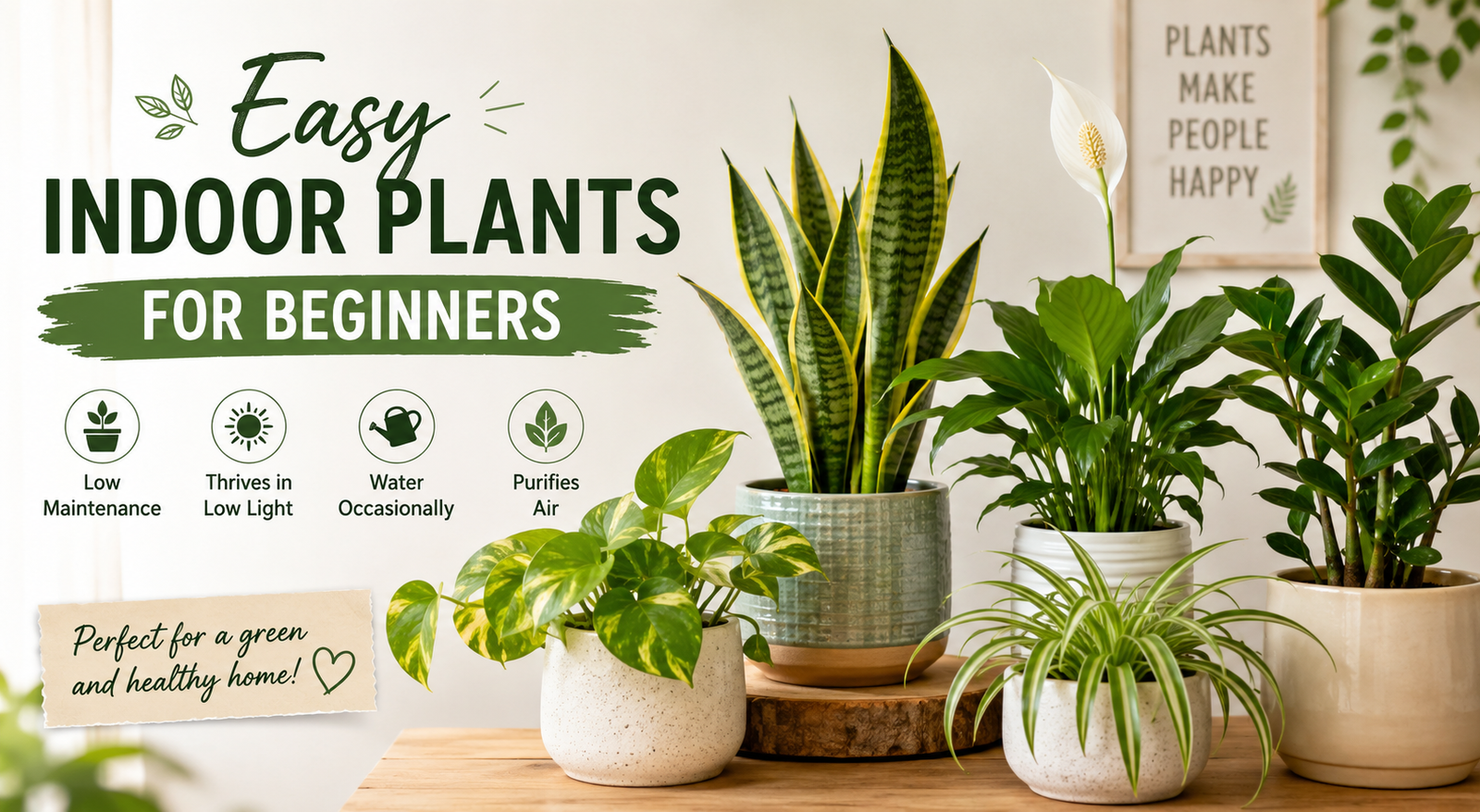
Starting a houseplant collection can feel harder than it should. You may wonder how much sunlight a plant needs, when to water it, or whether your room is too dry. The good news is that you do not need a green thumb to get started. The right easy indoor plants for beginners can tolerate ordinary household conditions and recover from a few common mistakes.
The best easy indoor plants for beginners are not plants that need zero care. They are forgiving Easy Indoor Plants for Beginners that handle inconsistent watering, moderate humidity, and less-than-perfect conditions better than fussier varieties. In this guide, you will find beginner-friendly choices, practical care tips, and simple ways to match a plant to your room and routine.
What Makes a Plant Easy for Beginners?
An easy plant should make the learning curve manageable. When choosing easy indoor plants for beginners, look for four traits: reasonable light tolerance, moderate watering needs, resilience after mistakes, and simple maintenance.
Light tolerance matters because every home has different windows. Some rooms receive bright indirect light, while others have only a small amount of natural light. Watering tolerance matters just as much. Beginners often water too frequently because they are trying to help the plant.
Humidity is another consideration, but most easy indoor plants for beginners do not require you to turn your home into a tropical greenhouse. Good drainage, suitable potting mix, and the right location usually matter more than constant misting.
Quick Comparison of Easy Indoor Plants for Beginners
| Plant | Light | Watering | Growth | Best For |
| Pothos | Low to bright indirect | Moderate | Fast | First-time owners |
| Snake plant | Low to bright | Low | Slow to moderate | Forgetful waterers |
| ZZ plant | Low to bright | Low | Slow | Offices and darker rooms |
| Spider plant | Medium to bright indirect | Moderate | Fast | Hanging baskets |
| Heartleaf philodendron | Low to bright indirect | Moderate | Fast | Trailing growth |
| Peperomia | Medium to bright indirect | Low to moderate | Slow | Small spaces |
| Chinese evergreen | Low to medium | Low to moderate | Slow | Low-light rooms |
| Cast iron plant | Low to medium | Low to moderate | Slow | Minimal maintenance |
12 Easy Indoor Plants for Beginners
1. Pothos
Pothos is one of the easiest choices for a first plant. It grows trailing vines, adapts to a range of indoor light conditions, and usually bounces back when care is not perfect. Allow the top portion of the potting mix to dry before watering again.
Pothos is especially useful for shelves, bookcases, and hanging planters. If you want visible growth, it is also a rewarding option because healthy vines can become long and full.
2. Snake Plant
Snake plant is ideal for people who tend to forget watering. Its thick, upright leaves store moisture, so it generally prefers drying out between waterings rather than sitting in wet soil.
For easy indoor plants for beginners, snake plant is a strong choice for bedrooms, offices, and corners with lower light. It still needs some natural or artificial light, so low light should never be confused with complete darkness.
3. ZZ Plant
The ZZ plant is another forgiving option. It stores water in underground rhizomes and can handle periods of dry soil. Its glossy foliage also gives it a polished look without requiring frequent pruning.
Among easy indoor plants for beginners, ZZ plants are particularly useful for busy people. Place one near a window with indirect light, avoid keeping the soil constantly wet, and check moisture before watering.
4. Spider Plant
Spider plants are fast-growing, adaptable, and fun to propagate. Mature Easy Indoor Plants for Beginners can produce small plantlets, giving beginners an easy way to learn how new plants develop.
They work well in hanging baskets or on a bright shelf. Give them indirect light and water when the soil begins to dry. Their arching leaves also make them visually different from upright snake plants and ZZ plants.
5. Heartleaf Philodendron
Heartleaf philodendron is a classic beginner houseplant because it combines attractive foliage with forgiving care. Its vines can trail from shelves or climb a support.
This is one of the easy indoor plants for beginners that works especially well when you want fast, leafy growth. Let excess water drain away and avoid leaving the roots in a soggy pot.
6. Peperomia
Peperomia is a smart choice for desks, shelves, and small apartments. Many varieties stay relatively compact, and their thick leaves can tolerate some drying between waterings.
For easy indoor plants for beginners, peperomia offers a good lesson in moderation. Give it suitable indirect light, use a well-draining mix, and do not water simply because a calendar says it is watering day.
7. Chinese Evergreen
Chinese evergreen is valued for attractive foliage and its ability to handle lower indoor light better than many decorative Easy Indoor Plants for Beginners. It prefers consistent but not excessive moisture.
It can be a useful choice for an office, hallway, or room where bright sunlight is limited. Check the care requirements of the particular cultivar because varieties can differ.
8. Cast Iron Plant
The cast iron plant has earned its reputation for toughness. It grows slowly but can tolerate lower light and periods of neglect better than many delicate houseplants.
For beginners who want a Indoor plant that does not demand constant attention, it is worth considering. Give it drainage and avoid treating “low maintenance” as permission to keep the soil permanently wet.
9. Peace Lily
Peace lily is attractive because of its green foliage and white flowers. It prefers indirect light and more consistent moisture than drought-tolerant plants such as snake plant or ZZ plant.
It is one of the easy indoor plants for beginners if you are willing to pay attention to watering. Its leaves may droop when it is thirsty, but repeated wilting should not become the normal care routine.
10. Ponytail Palm
Ponytail palm looks unusual because of its swollen trunk and long, narrow leaves. It stores water and generally prefers bright light and drying between waterings.
This plant is a good fit for a sunny room and someone who does not want a frequent watering schedule. It also adds height without demanding the same constant moisture as tropical foliage plants.
11. Rubber Plant
Rubber plant is a strong option when you want a larger statement plant. It prefers bright indirect light and a well-draining container. As it grows, it can become a substantial feature in a living room.
Keep the plant away from harsh sudden sunlight if it has been grown indoors under lower light. Gradual changes are safer when moving plants between different lighting conditions.
12. Dracaena
Dracaena varieties offer upright growth and a clean, architectural appearance. They can work well in offices, bedrooms, and living areas with suitable indirect light.
As with other easy indoor plants for beginners, drainage is important. Let the soil approach the appropriate level of dryness for the variety rather than following a rigid watering calendar.
How to Choose the Right Beginner Plant for Your Home
The best easy indoor plants for beginners are the ones that fit your actual environment. Before buying a plant, answer five questions.
How much light does the room receive?
How often do you realistically remember to water?
How much floor or shelf space do you have?
Do you have cats or dogs?
Do you prefer foliage, flowers, trailing vines, or an upright shape?
For example, a dark office and a forgetful owner point toward a ZZ plant or snake plant. A bright shelf and someone who wants fast growth point toward pothos or heartleaf philodendron. A tiny desk is better suited to peperomia than a large rubber plant.
Best Easy Indoor Plants for Low Light
Low light is one of the most common reasons beginners struggle. However, low light does not mean no light. Plants still need energy from light to grow.
Snake plant, ZZ plant, cast iron plant, pothos, and Chinese evergreen can be useful options for rooms with limited natural light. Even easy indoor plants for beginners may grow more slowly when light is weak.
If a room is extremely dark, consider moving the plant closer to a suitable window or using a grow light. Avoid assuming that a plant labeled “low light” will thrive in a windowless room indefinitely.
Best Plants for People Who Forget to Water
If your schedule is unpredictable, focus on plants that tolerate drying. Snake plant, ZZ plant, ponytail palm, and cast iron plant are good candidates.
The goal is not to ignore the plant. Instead, check the soil before watering. Pot size, temperature, humidity, season, and light can all change how quickly the soil dries.
Easy Indoor Plants for Apartments, Bedrooms, and Offices
Apartments often benefit from compact or vertical plants. Peperomia works well on a desk, while snake plants use vertical space efficiently. Pothos and heartleaf philodendron can trail from shelves without taking much floor space.
For bedrooms and offices, ZZ plants and snake plants can be practical because they generally do not require frequent watering. Choose based on the light available rather than assuming a particular room automatically has suitable conditions.
Pet Safety Matters
Not every beginner-friendly plant is suitable for a home where pets chew on leaves. Before purchasing easy indoor plants for beginners, check the safety profile of the exact species and cultivar using a trusted veterinary or plant-toxicity resource.
Spider plant and many peperomia varieties are commonly chosen by pet owners, while plants such as pothos, philodendron, ZZ plant, and snake plant require more caution around pets. If a pet may chew a plant, place it where the animal cannot reach it or choose a verified pet-safe alternative.
Basic Care Tips for Beginners
Give the Plant the Right Light
Light is the foundation of indoor plant health. If leaves become pale, growth becomes weak, or the plant stretches toward a window, it may need more light.
Water Based on the Soil and Plant
Do not water every plant on the same day each week. Check the soil and learn how quickly your specific container dries.
Use Drainage Holes
A decorative pot without drainage can trap excess water around the roots. If you like decorative covers, keep the plant in a nursery pot with drainage inside the cover.
Use Suitable Potting Mix
Indoor plants generally perform better in a potting mix designed for containers than in heavy outdoor garden soil. The exact mix depends on the plant.
Do Not Over-Fertilize
New plant owners often assume more fertilizer means faster growth. Too much can damage roots. Follow a product’s label and the plant’s seasonal growth pattern.
Common Beginner Mistakes
Even easy indoor plants for beginners can struggle when basic conditions are wrong.
The most common problems include overwatering, poor drainage, insufficient light, harsh direct sun, and moving a plant repeatedly from one location to another.
Another mistake is choosing a plant only because it looks attractive. A beautiful tropical plant may struggle in a dry, dark room, while a snake plant or ZZ plant may fit the same environment much better.
Also avoid assuming every yellow leaf has the same cause. Check soil moisture, light, drainage, recent changes, and the age of the foliage before deciding what to change.
A Simple Five-Step Plant Selection Method
Start by checking the light.
Next, consider your watering habits.
Then measure the available space.
After that, consider pets and other household needs.
Finally, choose the plant whose care requirements match your lifestyle.
This method makes it easier to select easy indoor plants for beginners without relying on popularity alone.
Plants Beginners May Want to Save for Later
Some houseplants are beautiful but less forgiving. Certain calatheas, delicate ferns, fiddle-leaf figs, and some orchids can require more consistent light, humidity, watering, or environmental stability.
That does not make them bad plants. It simply means they may be better choices after you have learned how your indoor environment behaves.
Easy Plants to Take Care of for Beginners: Final Advice
The best starter plant is not necessarily the trendiest one. It is the plant that matches your light, space, schedule, and willingness to care for it.
Pothos, snake plant, ZZ plant, spider plant, heartleaf philodendron, and peperomia are excellent starting points because they offer different growth habits and care requirements.
If you are completely new to houseplants, start with one or two plants instead of buying a dozen at once. Learn how the soil dries, how much light the room provides, and how the plant responds to your routine. Once you understand those basics, caring for more easy indoor plants for beginners becomes much simpler.
Conclusion
Choosing easy indoor plants for beginners becomes much simpler when you stop looking for a “no-care” plant and start matching a plant to your environment. Consider light, watering habits, space, drainage, and pet safety before you buy.
For a first plant, pothos, snake plant, ZZ plant, spider plant, or heartleaf philodendron are practical places to start. Choose one that fits your lifestyle, give it appropriate light and drainage, and learn its watering pattern. With that foundation, your indoor garden can grow naturally. The key is choosing easy indoor plants for beginners that match your real conditions. When you build your collection around those conditions, easy indoor plants for beginners are far more likely to thrive.
Frequently Asked Questions
What is the easiest indoor plant for a beginner?
Pothos, snake plant, and ZZ plant are among the most forgiving choices. The best option depends on your room. For example, a forgetful waterer may prefer a snake plant, while someone who wants fast trailing growth may prefer pothos.
What are the best easy indoor plants for beginners with low light?
Snake plant, ZZ plant, cast iron plant, pothos, and Chinese evergreen are useful choices for lower-light rooms. Remember that low light still requires some usable light.
Which plant is best for someone who forgets to water?
Snake plant and ZZ plant are strong choices because they tolerate drying between waterings. Ponytail palm is another option for a bright location.
Can beginners grow indoor vegetables?
Yes. Herbs and some vegetables can be grown indoors when they receive sufficient light, but the care requirements differ from ornamental houseplants. If your goal is easy plants to grow vegetables, choose the crop based on available light, container size, and growing season.
Are easy indoor plants safe for cats and dogs?
Not all of them are. Always check the exact plant before bringing it into a home with pets. If an animal likes chewing foliage, prioritize verified pet-safe options and keep questionable plants inaccessible.
What are the top 10 low-maintenance indoor plants?
Popular low-maintenance choices include pothos, snake plant, ZZ plant, spider plant, heartleaf philodendron, peperomia, Chinese evergreen, cast iron plant, ponytail palm, and rubber plant. The easiest choice depends on your home’s light and your watering routine.
Can easy indoor plants survive without direct sunlight?
Yes. Many houseplants prefer bright indirect light rather than direct sun. However, no plant can thrive indefinitely without a usable light source. For very dark rooms, a grow light may be necessary.
You May Also Read: low light indoor plants
