


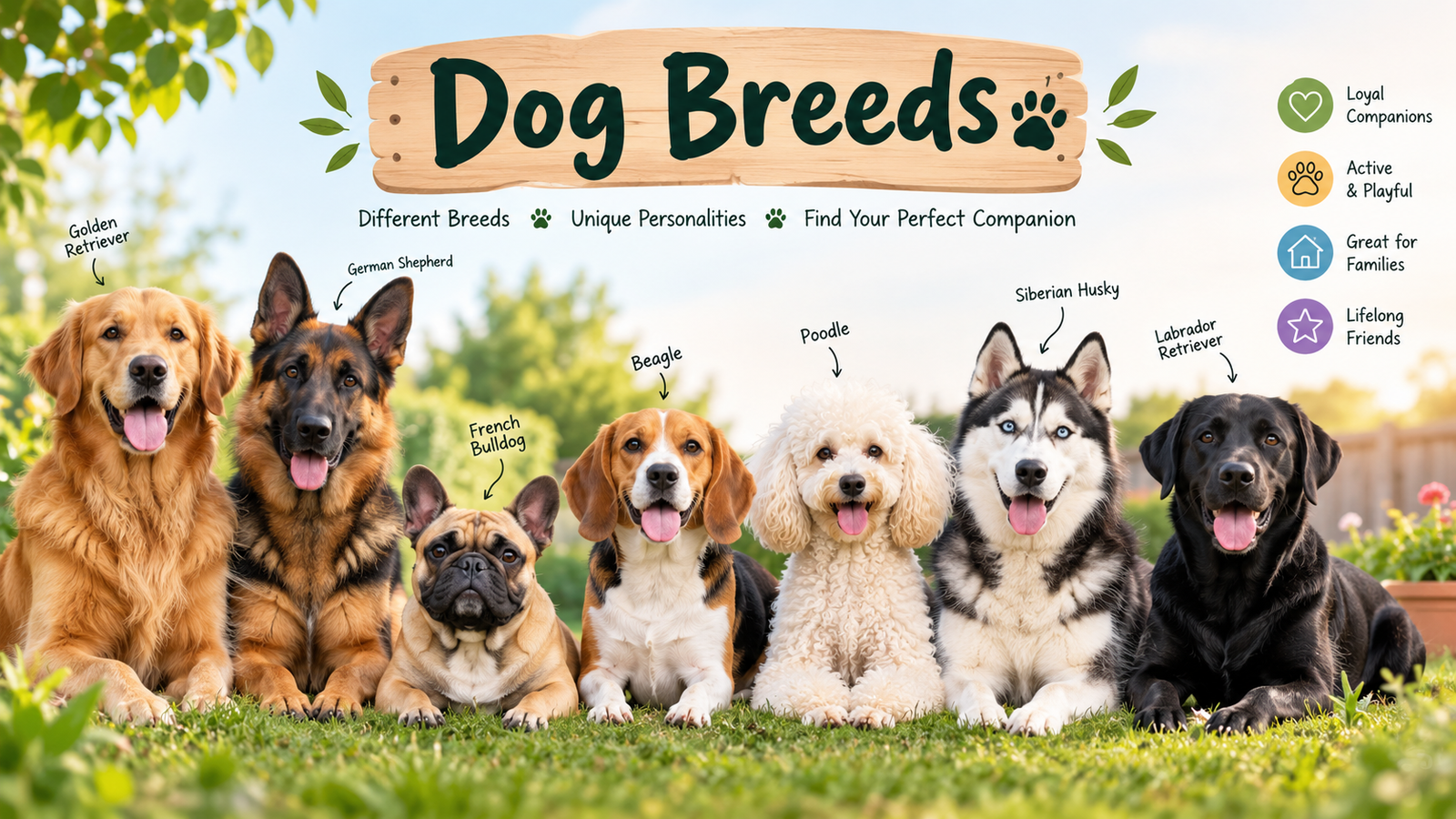
Choosing a dog is about much more than picking the cutest face. Different dog breeds can have very different energy levels, temperaments, grooming needs, sizes, and training requirements. A breed that is perfect for an active family may not be the right choice for someone living in a small apartment, while a calm companion may not satisfy someone who wants a running or hiking partner.
There are hundreds of recognized dog breeds, along with mixed breeds and designer crosses such as the Cavapoo. Understanding these differences can make it easier to find a dog whose needs match your lifestyle.
This guide explores popular dog breeds, breed groups, sizes, energy levels, temperament, grooming, and practical considerations. Whether you are researching Small dog breeds blog topics, comparing family companions, or simply asking, “Which dog is right for me?”, this guide can help you make a more informed decision.
What Is a Dog Breed?
A dog breed is a group of dogs developed over generations for particular physical characteristics, working abilities, or behavioral traits. Some dog breeds were developed for hunting, others for herding, guarding, retrieving, companionship, or other specialized jobs.
A breed’s original purpose can still influence its behavior today. For example, herding breeds may naturally enjoy activities that involve movement and mental stimulation, while sporting breeds often thrive when they have opportunities to exercise and retrieve.
However, breed tendencies are not guarantees. Every dog is an individual. Genetics, early socialization, training, health, environment, and previous experiences can all influence personality and behavior.
How Many Dog Breeds Are There?
There is no single worldwide number because different kennel clubs and organizations recognize different breeds. Some registries recognize breeds that others do not, while rare and developing breeds may have different classifications.
For that reason, it is better to think of dog breeds as a constantly evolving worldwide group rather than relying on one permanent number.
When researching a particular breed, check reliable breed organizations and veterinary sources rather than depending entirely on generalized online descriptions.
Major Types of Dog Breeds
Understanding breed groups can help explain why different dogs have different natural behaviors and needs.
Sporting Breeds
Sporting dogs were traditionally developed to assist hunters with locating, flushing, or retrieving game. Labrador Retrievers, Golden Retrievers, and Spaniels are familiar examples.
Many sporting breeds are energetic, intelligent, and people-oriented. They often benefit from regular physical activity combined with training and mental stimulation.
Working Breeds
Working dogs were developed for jobs such as guarding, pulling, rescue, and protection. Examples include Boxers, Rottweilers, and Great Danes.
These dogs can be loyal and capable, but their size, strength, and exercise requirements should be considered carefully.
Herding Breeds
Herding dogs were bred to control and move livestock. Border Collies, Australian Shepherds, and German Shepherds are well-known examples.
Many have considerable intelligence and energy. Without enough activity or mental enrichment, some may become bored or develop unwanted behaviors.
Hound Breeds
Hounds were developed for hunting using speed, scent, or sight. Beagles, Dachshunds, and Greyhounds are examples.
Their strong instincts can affect recall and behavior outdoors, so training should take their natural drives into account.
Terrier Breeds
Terriers were historically developed to hunt and control vermin. They can be energetic, confident, curious, and persistent.
Their small size does not necessarily mean low exercise requirements.
Toy Breeds
Toy breeds were primarily developed as companion animals. Chihuahua, Maltese, Shih Tzu, and Yorkshire Terrier are common examples.
Many are adaptable to smaller homes, but they still require exercise, training, socialization, and appropriate care.
Mixed and Designer Dogs
Mixed breeds have ancestry from more than one breed or type. Designer crosses such as the Cavapoo combine two established breeds, although individual characteristics can vary.
If you are wondering What is a Cavapoo dog breed?, the short answer is that a Cavapoo is generally a cross between a Cavalier King Charles Spaniel and a Poodle. Prospective owners should research both parent breeds and the individual dog’s needs rather than assuming every Cavapoo will have identical traits.
Popular Dog Breeds
Popularity can be useful when researching breeds, but it should never be confused with suitability. The most popular dog may not be the best match for your home, schedule, or experience.
Some widely recognized dog breeds include Labrador Retrievers, Golden Retrievers, German Shepherds, French Bulldogs, Dachshunds, Chihuahuas, Poodles, Beagles, Corgis, and Maltese.
A breed’s popularity can also change over time. If you are using popularity statistics in your own research, always check the year and the organization that collected the data.
Dog Breeds by Size
Size affects housing, transportation, food requirements, equipment, and sometimes exercise management. However, size alone should not determine whether a dog is suitable for your home.
Small Dog Breeds
Popular small dogs include Chihuahuas, Maltese, Shih Tzus, Yorkshire Terriers, and Dachshunds.
Many small dogs can adapt well to apartments, but they still need appropriate exercise and enrichment. Small dogs can also have strong personalities and may require consistent training.
A Maltese dog price can vary considerably depending on location, breeder reputation, health testing, pedigree, age, and other factors. Purchase price is only one part of the lifetime cost of dog ownership.
Medium Dog Breeds
Medium-sized options include Beagles, Border Collies, Cocker Spaniels, and Australian Cattle Dogs.
This size category offers considerable variety. Some medium dogs are relatively calm indoors, while others need substantial daily exercise.
Large Dog Breeds
Labrador Retrievers, Golden Retrievers, German Shepherds, and Rottweilers are examples of large dogs.
Large dogs generally require owners to think carefully about space, food, training, transportation, and veterinary costs.
Giant Dog Breeds
Great Danes, Saint Bernards, Newfoundlands, and Irish Wolfhounds are examples of giant breeds.
Their size makes responsible handling, appropriate living arrangements, nutrition, and veterinary care particularly important.
Dog Breed Comparison Chart
A comparison table can make it easier to narrow down your options. The ratings below describe general tendencies rather than guarantees.
| Breed | Size | Energy | Trainability | Grooming | Shedding | Often Suited To |
| Labrador Retriever | Large | High | High | Low-Moderate | Moderate | Active families |
| Golden Retriever | Large | High | High | Moderate | High | Families and active owners |
| German Shepherd | Large | High | High | Moderate | High | Experienced, active owners |
| Beagle | Medium | Moderate-High | Moderate | Low | Moderate | Active families |
| Chihuahua | Small | Moderate | Moderate | Low | Moderate | Adaptable homes |
| Maltese | Small | Moderate | Moderate | High | Low | Companion-focused homes |
| Dachshund | Small | Moderate | Moderate | Low-Moderate | Moderate | Engaged owners |
| Corgi | Small-Medium | Moderate-High | High | Moderate | High | Active households |
| French Bulldog | Small-Medium | Moderate | Moderate | Low | Moderate | Owners seeking a companion |
Dog Breeds by Energy Level
Energy level is one of the most important factors when choosing a dog.
Low-energy dogs may suit people who prefer relaxed walks and quieter routines. Moderate-energy dogs generally need regular daily exercise but may adapt to a wider range of schedules.
High-energy dog breeds can be wonderful companions for runners, hikers, outdoor enthusiasts, and active families. However, physical exercise is only part of the equation. Many energetic dogs also need training, problem-solving activities, play, and other forms of mental stimulation.
For example, a Border Collie may be physically tired after a long walk but still benefit from training or enrichment. Matching exercise needs with your actual daily schedule is more realistic than choosing a breed simply because it looks appealing.
Dog Breeds by Temperament
Temperament is another major consideration.
Friendly breeds may enjoy frequent interaction, while more independent breeds may prefer having some personal space. Protective breeds can require particularly thoughtful socialization and training.
If you are researching Corgi temperament with other dogs, remember that breed tendencies are only part of the answer. Early socialization, individual personality, previous experiences, and the temperament of the other dog all matter.
The same principle applies to questions such as Maltese with other dogs. A Maltese may be social and affectionate, but individual behavior can differ significantly.
Are Westies Intelligent Dogs?
Yes, West Highland White Terriers are generally considered intelligent and capable of learning. However, intelligence does not always mean effortless obedience. Terriers can be independent and determined, so consistent, reward-based training is important.
Best Dog Breeds for Different Lifestyles
There is no universally “best” breed. The best choice depends on the owner and the dog’s needs.
Best Dogs for First-Time Owners
First-time owners may want to prioritize manageable energy, trainability, sociability, and predictable care requirements.
Labrador Retrievers and Golden Retrievers are often considered by families and first-time owners, but their exercise and training needs still require commitment.
Best Dogs for Families
Families should consider temperament, energy, size, training, and how adults will supervise interactions between children and dogs.
No breed should automatically be labeled “safe with children.” Children should always be taught appropriate behavior around dogs, and interactions should be supervised.
Best Dogs for Apartments
Apartment suitability depends on more than size. Barking, exercise requirements, ability to relax indoors, and individual temperament all matter.
A small but extremely energetic dog may need more daily management than a larger dog with lower exercise requirements.
Best Dogs for Active Owners
People who enjoy hiking, running, outdoor activities, or dog sports may prefer energetic working, sporting, or herding breeds.
The important point is to choose a dog whose exercise requirements genuinely fit your routine.
Grooming, Shedding, and Maintenance
Grooming requirements vary widely among dog breeds.
Short coats may require less brushing, while long or curly coats can require regular brushing and professional grooming. Some breeds shed heavily, while others shed less visibly but still require coat maintenance.
Low-shedding does not mean completely allergy-free. People with allergies should spend time around a particular dog and discuss concerns with an appropriate health professional rather than relying on breed labels alone.
Purebred vs. Mixed-Breed Dogs
Purebred dogs generally have more predictable physical characteristics and established breed traits. However, individual temperament and health can still vary.
Mixed-breed dogs can have combinations of characteristics from different ancestry. Their adult size, coat, and behavior may sometimes be less predictable.
Neither option is automatically better. The most important factors are the individual dog’s health, temperament, care needs, and compatibility with your household.
How to Choose the Right Dog Breed
Before choosing from hundreds of dog breeds, ask yourself a few practical questions.
How active are you?
Be honest about your normal schedule rather than your ideal lifestyle.
How much time can you provide?
Dogs need exercise, companionship, training, enrichment, and routine care.
What is your living situation?
Consider your home’s size, outdoor access, local environment, and housing rules.
How much grooming can you manage?
A beautiful long coat may require considerably more maintenance than a short coat.
Do you have children or other pets?
Consider individual temperament, socialization, supervision, and safe introductions.
What can you realistically afford?
Budget for food, supplies, preventive veterinary care, grooming, training, and unexpected medical expenses.
Puppy or Adult Dog?
A puppy offers the opportunity to establish routines and training from an early age, but puppies require substantial supervision, socialization, house training, and patience.
Adult dogs can sometimes be easier to evaluate because their size and personality are already more established. Rescue organizations may also provide useful information about an adult dog’s behavior and needs.
The right choice depends on your experience, time, household, and willingness to manage the responsibilities involved.
Dog Adoption or Responsible Breeder?
Adoption can provide a home for a dog that needs one, and shelters or rescue organizations may have puppies, adults, mixed breeds, and purebred dogs.
If purchasing from a breeder, look for responsible practices such as appropriate health testing, transparency about the parents, proper veterinary records, and willingness to answer questions.
Do not choose a breeder solely because a puppy is inexpensive or immediately available. Responsible breeding requires attention to health, temperament, and welfare.
Dog Breed Myths to Avoid
Several common assumptions can make choosing a dog more difficult.
Myth 1: Small dogs do not need exercise.
Small dogs still need appropriate physical and mental activity.
Myth 2: Large dogs cannot live in apartments.
Living space matters, but energy level and the dog’s ability to settle indoors are also important.
Myth 3: Low-shedding means allergy-free.
No breed can guarantee an allergy-free experience.
Myth 4: A breed determines personality completely.
Genetics matter, but individual experiences, socialization, training, environment, and health also influence behavior.
Myth 5: The most popular breed is automatically the best.
Popularity does not guarantee compatibility with your lifestyle.
Conclusion
Choosing among dog breeds should be based on compatibility rather than appearance or popularity. Think about exercise, temperament, size, grooming, training, health considerations, and the amount of time you can realistically provide.
The right dog is not necessarily the most famous breed or the one that looks best in a photograph. It is the dog whose needs, personality, and lifestyle can fit comfortably into your household. Research carefully, meet individual dogs when possible, and seek professional veterinary or behavior guidance when you have specific concerns.
Frequently Asked Questions About Dog Breeds
What are the most popular dog breeds?
Popular breeds can vary by country and year. Labrador Retrievers, Golden Retrievers, German Shepherds, Dachshunds, Chihuahuas, and French Bulldogs are among the widely recognized choices in the United States.
How many dog breeds are there?
There is no single worldwide total because kennel clubs recognize different breeds. The number depends on which registry and definition of a recognized breed you use.
What are the best dog breeds for first-time owners?
Potential choices include breeds known for trainability and social behavior, such as Labrador Retrievers and Golden Retrievers. However, exercise, grooming, budget, and individual temperament should also be considered.
Are small dog breeds good for apartments?
Many small dogs can adapt well to apartments, but size is not the only consideration. Exercise needs, barking, temperament, and the ability to settle indoors are equally important.
Are Maltese dogs good pets?
Maltese dogs can be affectionate companion animals and may suit people looking for a small dog. Their coat requires regular maintenance, and individual temperament varies.
Are Corgis good with other dogs?
Corgis can live successfully with other dogs, but socialization, training, individual temperament, and careful introductions all influence compatibility.
How do I choose the right dog breed?
Start with your activity level, home environment, available time, grooming preferences, experience, household members, other pets, and realistic budget. Then research individual breeds that match those requirements.
You May Also Read: Over the Garden Wall
