
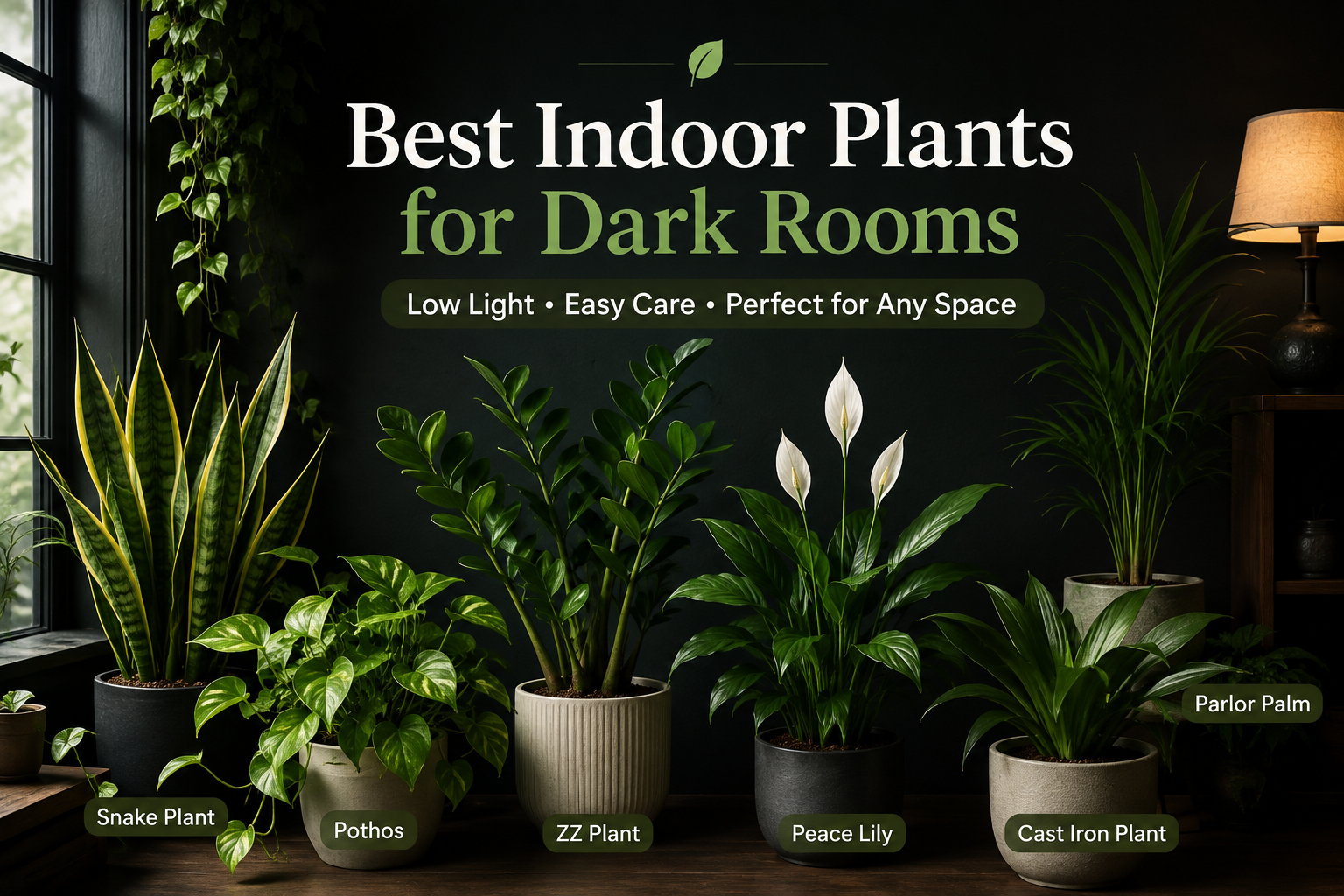
Finding the best indoor plants for dark rooms can be challenging when your home has small windows, shaded corners, or rooms that receive very little natural light. The good news is that several houseplants can tolerate low-light conditions and remain attractive with relatively little maintenance.
However, there is an important distinction: low light does not mean complete darkness. Plants still need usable light for photosynthesis. If a room has no natural light at all, a grow light may be necessary.
In this guide, we’ll look at the best indoor plants for dark rooms, compare their care requirements, and explain which plants work best for bedrooms, bathrooms, offices, hallways, and small corners. You’ll also learn how to avoid common low-light plant problems.
Can Indoor Plants Really Grow in Dark Rooms?
The best indoor plants for dark rooms are usually plants that naturally tolerate shaded environments. Many come from forest floors or tropical environments where direct sunlight is limited.
A dark room with some indirect daylight can be suitable for hardy houseplants. A completely windowless room is different. Plants placed there may eventually need artificial lighting to maintain healthy growth.
Low Light vs. No Light
Low light means a plant receives limited natural illumination, but there is still enough light for some photosynthesis. No light means there is essentially no usable light reaching the plant.
This difference matters when choosing the best indoor plants for dark rooms. A snake plant may tolerate a dim corner, but that does not mean it can grow indefinitely inside a completely dark cupboard.
How to Tell If a Room Is Too Dark
Look at your room during the daytime with the lights switched off. If you can comfortably see objects and there is some natural illumination, many low-light plants may work.
If the room remains almost completely dark throughout the day, consider placing the plant closer to a window or using a suitable LED grow light.
How We Selected the Best Indoor Plants for Dark Rooms
To choose the best indoor plants for dark rooms, consider more than just whether a plant is advertised as “low light.”
The most useful factors include:
- Tolerance of limited natural light
- Watering requirements
- Beginner friendliness
- Growth habit
- Mature size
- Humidity needs
- Maintenance level
- Room suitability
- Pet considerations
- Ability to cope with inconsistent care
A plant that survives low light but needs constant attention may not be the best choice for a beginner. The ideal low-light plant should combine reasonable shade tolerance with manageable care.
12 Best Indoor Plants for Dark Rooms
1. Snake Plant
The snake plant is one of the most reliable choices among the best indoor plants for dark rooms. Its upright leaves make it especially useful when floor or shelf space is limited.
Snake plants tolerate low light and do not require frequent watering. Allow the potting mix to dry between waterings, and always use a container with drainage.
Best for: Bedrooms, offices, hallways, and beginners.
2. ZZ Plant
The ZZ plant is another excellent option for the best indoor plants for dark rooms list. It has thick, glossy foliage and underground rhizomes that help it cope with periods of dryness.
It grows slowly in dim conditions, but that is not necessarily a problem. If you want a plant that does not demand constant attention, the ZZ plant is hard to beat.
Best for: Dark corners, offices, and forgetful plant owners.
3. Cast Iron Plant
Known for its toughness, the cast iron plant is particularly useful when searching for the best indoor plants for dark rooms with very limited natural light.
It has broad green leaves and a slower growth habit. It generally prefers consistent but moderate moisture and can handle shadier positions better than many decorative houseplants.
Best for: Deep-shade areas and traditional interiors.
4. Pothos
Pothos is one of the most popular trailing houseplants and deserves a place among the best indoor plants for dark rooms.
Its vines work beautifully on shelves, cabinets, and hanging planters. Green varieties generally cope better with low light than heavily variegated types.
Avoid keeping the soil constantly wet. Let the upper portion of the potting mix dry before watering again.
Best for: Shelves, hanging baskets, and small apartments.
5. Heartleaf Philodendron
Heartleaf philodendron is another trailing option among the best indoor plants for dark rooms. Its heart-shaped leaves create a soft, attractive appearance without requiring direct sunlight.
It prefers indirect light and moderate moisture. In very dim conditions, growth may slow, but the plant can remain attractive with appropriate care.
Best for: Shelves, bookcases, and hanging containers.
6. Peace Lily
Peace lilies are useful when you want one of the best indoor plants for dark rooms with decorative flowers.
They can tolerate relatively low light, although flowering may become less frequent when light levels are extremely low. They also appreciate humidity and evenly moist soil.
Avoid leaving the roots sitting in water because poor drainage can lead to root problems.
Best for: Bedrooms, bathrooms, and humid rooms.
7. Dracaena
Dracaena varieties provide a taller option among the best indoor plants for dark rooms. Their upright shape works particularly well in empty corners where a trailing plant would not provide enough visual height.
They generally prefer indirect light and should not be kept constantly wet.
Best for: Large corners, offices, and living rooms.
8. Spider Plant
If you are looking for beginner-friendly best indoor plants for dark rooms, consider a spider plant.
Its long, arching leaves and baby plantlets make it visually interesting. It prefers brighter indirect light for stronger growth, but can tolerate lower-light indoor locations.
Give it well-draining soil and avoid excessive watering.
Best for: Beginners, shelves, and hanging baskets.
9. English Ivy
English ivy can be a useful choice among the best indoor plants for dark rooms when you want trailing foliage.
It looks attractive cascading from a hanging planter or shelf. Keep in mind that ivy generally appreciates good air circulation and should not be treated as a completely maintenance-free plant.
Best for: Hanging displays and decorative shelves.
10. Rhipsalis
Rhipsalis is an unusual choice for the best indoor plants for dark rooms because it is a type of cactus that naturally grows in rainforest environments rather than dry deserts.
It prefers bright indirect light for stronger growth but can tolerate more shade than many traditional cacti. Its trailing stems make it excellent for hanging containers.
Best for: Hanging displays and unusual plant collections.
11. Begonia
Some begonias can work well when choosing the best indoor plants for dark rooms, particularly varieties grown for attractive foliage.
They generally appreciate indirect light, humidity, and careful watering. Avoid keeping the leaves and soil excessively wet for long periods.
Best for: Decorative foliage and colorful indoor displays.
12. Boston Fern
Boston fern can be considered among the best indoor plants for dark rooms when the space is also naturally humid.
Bathrooms can sometimes provide suitable humidity, although adequate light is still necessary. Ferns generally require more consistent moisture than snake plants or ZZ plants.
Best for: Humid bathrooms and sheltered indoor spaces.
Best Dark-Room Plants Compared
Here is a quick comparison of the best indoor plants for dark rooms so you can choose according to your lifestyle.
| Plant | Light Tolerance | Water Needs | Difficulty | Best Use |
| Snake Plant | Very low to low | Low | Easy | Bedrooms |
| ZZ Plant | Very low to low | Low | Very easy | Dark corners |
| Cast Iron Plant | Very low | Moderate | Easy | Shady rooms |
| Pothos | Low to medium | Moderate | Easy | Shelves |
| Philodendron | Low to medium | Moderate | Easy | Hanging pots |
| Peace Lily | Low to medium | Moderate | Moderate | Bathrooms |
| Dracaena | Low to medium | Moderate | Easy | Large spaces |
| Spider Plant | Low to medium | Moderate | Easy | Beginners |
| English Ivy | Low to medium | Moderate | Moderate | Hanging displays |
| Rhipsalis | Low to medium | Moderate | Moderate | Unique displays |
| Begonia | Low to medium | Moderate | Moderate | Foliage |
| Boston Fern | Low to medium | Higher | Moderate | Humid rooms |
Which Plant Is Best for Your Room?
The best indoor plants for dark rooms depend on where you intend to place them.
Best for a Dark Bedroom
Choose a snake plant or ZZ plant if you want low maintenance. Both are compact enough for many bedrooms and can handle limited light better than sun-loving plants.
Best for a Dark Bathroom
Peace lily and Boston fern can be attractive options where humidity is naturally higher. However, bathroom humidity cannot compensate for a complete lack of light.
Best for a Dark Office
A ZZ plant, snake plant, or pothos can add greenery without demanding constant care. These are especially useful if your desk is positioned away from a bright window.
Best for a Dark Hallway
Snake plants and cast iron plants are strong choices because their forms work well in narrow spaces and they can tolerate relatively low light.
Best Small Indoor Plants for Dark Rooms
For shelves and compact spaces, choose a small ZZ plant, young snake plant, pothos, or heartleaf philodendron. These are among the most practical best indoor plants for dark rooms when floor space is limited.
Best Large Low-Light Indoor Plants
If you want height, consider dracaena or a mature snake plant. They can create a stronger visual statement without needing a sunny position.
How to Care for Indoor Plants in Dark Rooms
Choosing the best indoor plants for dark rooms is only half the job. Correct care is equally important.
Water Less Often Than You Think
Plants usually use water more slowly when light levels are low. Check the potting mix before watering instead of following a fixed weekly schedule.
Overwatering is one of the most common problems in dim rooms.
Use Pots With Drainage
A drainage hole allows excess water to escape. Decorative pots without drainage can trap water around the roots and increase the risk of root rot.
Keep Leaves Clean
Dust can collect on foliage and reduce the amount of light reaching the leaves. Gently wipe broad leaves with a clean, damp cloth when necessary.
Don’t Expect Fast Growth
Even the best indoor plants for dark rooms may grow more slowly when light is limited. Slow growth does not automatically mean the plant is unhealthy.
Watch Seasonal Changes
A plant that receives enough light during summer may receive much less during winter. If growth suddenly changes, reassess its position rather than immediately increasing watering.
What If Your Room Has No Windows?
The best indoor plants for dark rooms cannot grow indefinitely without usable light. If a room has no window, artificial lighting can help provide the energy plants need for photosynthesis.
A dedicated LED grow light is generally more useful than ordinary decorative room lighting. Position the light according to the manufacturer’s recommendations and maintain a consistent daily schedule.
For a completely windowless bathroom, hallway, or basement, a grow light can make the difference between a plant merely surviving briefly and maintaining healthy long-term growth.
Best Indoor Plants for Low Light and Clean Air
Many people search for the best indoor plants for low light and clean air because they want greenery and a fresher-feeling home.
Plants can contribute to a pleasant indoor environment, but avoid exaggerated claims that a few houseplants will dramatically purify an entire room. Good ventilation, filtration, and reducing indoor pollutants are much more important for overall air quality.
Choose plants primarily according to their light and care requirements.
Best Indoor Plants for Low Light and Low Humidity
If your home is dry, the best indoor plants for dark rooms should also be reasonably tolerant of lower humidity.
Snake plants and ZZ plants are generally easier choices than humidity-loving ferns. Keep plants away from extreme heat sources and sudden temperature changes.
Best Indoor Plants for Low Light and Oxygen
The phrase best indoor plants for low light and oxygen is another common search. Plants naturally exchange gases through photosynthesis, but indoor air quality should not depend on houseplants alone.
For practical plant selection, focus first on light tolerance, watering, size, and maintenance.
Plants to Avoid in Truly Dark Rooms
Not every popular houseplant belongs on a list of the best indoor plants for dark rooms.
Be cautious with:
- Cacti
- Many succulents
- Fiddle-leaf figs
- Sun-loving palms
- Some ficus varieties
- Highly variegated plants requiring stronger light
A plant advertised as “low-light tolerant” may survive in dim conditions while growing poorly. The goal is not merely survival; it is choosing a plant that fits the actual environment.
Are Low-Light Plants Safe for Pets?
Pet owners should check plant-specific safety information before bringing a new houseplant home. Some popular low-light choices, including snake plants, pothos, ZZ plants, and peace lilies, can cause problems if chewed by pets.
If pet safety is your priority, research non-toxic alternatives and keep questionable plants out of reach.
Why Is My Low-Light Plant Dying?
Even the best indoor plants for dark rooms can struggle if the underlying problem is incorrect care.
| Symptom | Possible Cause | What to Check |
| Yellow leaves | Overwatering or stress | Soil moisture |
| Leggy growth | Insufficient light | Plant position |
| Soft stems | Excess moisture | Drainage |
| Brown edges | Water or humidity stress | Soil and environment |
| Little growth | Very low light | Available light |
| Drooping | Water stress | Check soil before watering |
Don’t diagnose a problem from one symptom alone. Check the plant’s soil, roots, light exposure, temperature, and recent care routine together.
Quick Guide to Choosing the Best Indoor Plants for Dark Rooms
Choose a snake plant if you want the easiest all-around option.
Choose a ZZ plant if you frequently forget to water.
Choose a cast iron plant for a particularly shady location.
Choose pothos if you want trailing vines.
Choose a peace lily if flowers are important to you.
Choose dracaena if you want a taller floor plant.
Choose a Boston fern if your room is humid and you can provide consistent care.
Choose spider plant if you’re a beginner looking for an attractive, easy-care option.
Conclusion
The best indoor plants for dark rooms are not necessarily the plants that require the least sunlight. The best choice is the one that matches your actual light level, watering habits, available space, and care routine.
Snake plants, ZZ plants, cast iron plants, pothos, philodendrons, peace lilies, and dracaenas provide several practical options. For truly windowless spaces, remember that even the best indoor plants for dark rooms still need usable light, so a grow light may be necessary.
Start with one hardy plant, observe how it responds to its location, and adjust its care rather than watering or moving it unnecessarily. With the right plant and realistic expectations, even a dim home can have healthy, attractive greenery.
FAQs About the Best Indoor Plants for Dark Rooms
What is the best indoor plant for a dark room?
Snake plants and ZZ plants are two of the strongest choices because they tolerate limited light and generally require less maintenance than many tropical houseplants.
Can plants survive in a room with no windows?
Plants cannot grow indefinitely in complete darkness. If there is no usable natural light, provide a suitable grow light to support photosynthesis.
How often should I water indoor plants in low light?
There is no universal schedule. Check the soil first because low-light plants often use water more slowly. Water when the plant’s specific moisture requirements indicate it is needed.
Are snake plants good for dark rooms?
Yes. Snake plants are among the most adaptable low-light houseplants, although brighter indirect light can support stronger growth.
What are the best indoor plants for small dark rooms?
Small ZZ plants, compact snake plants, pothos, and heartleaf philodendrons are practical options when space is limited.
What are the best indoor plants for dark bathrooms?
Peace lilies and Boston ferns can work well in humid bathrooms if there is sufficient light. For very dim bathrooms, consider a grow light.
Can low-light plants improve indoor air quality?
Houseplants can contribute to a pleasant indoor environment, but they should not be treated as a replacement for ventilation or proper air filtration. Choose plants primarily for their ability to thrive in your home’s conditions.
You May Also Read: easy indoor plants for beginners
