

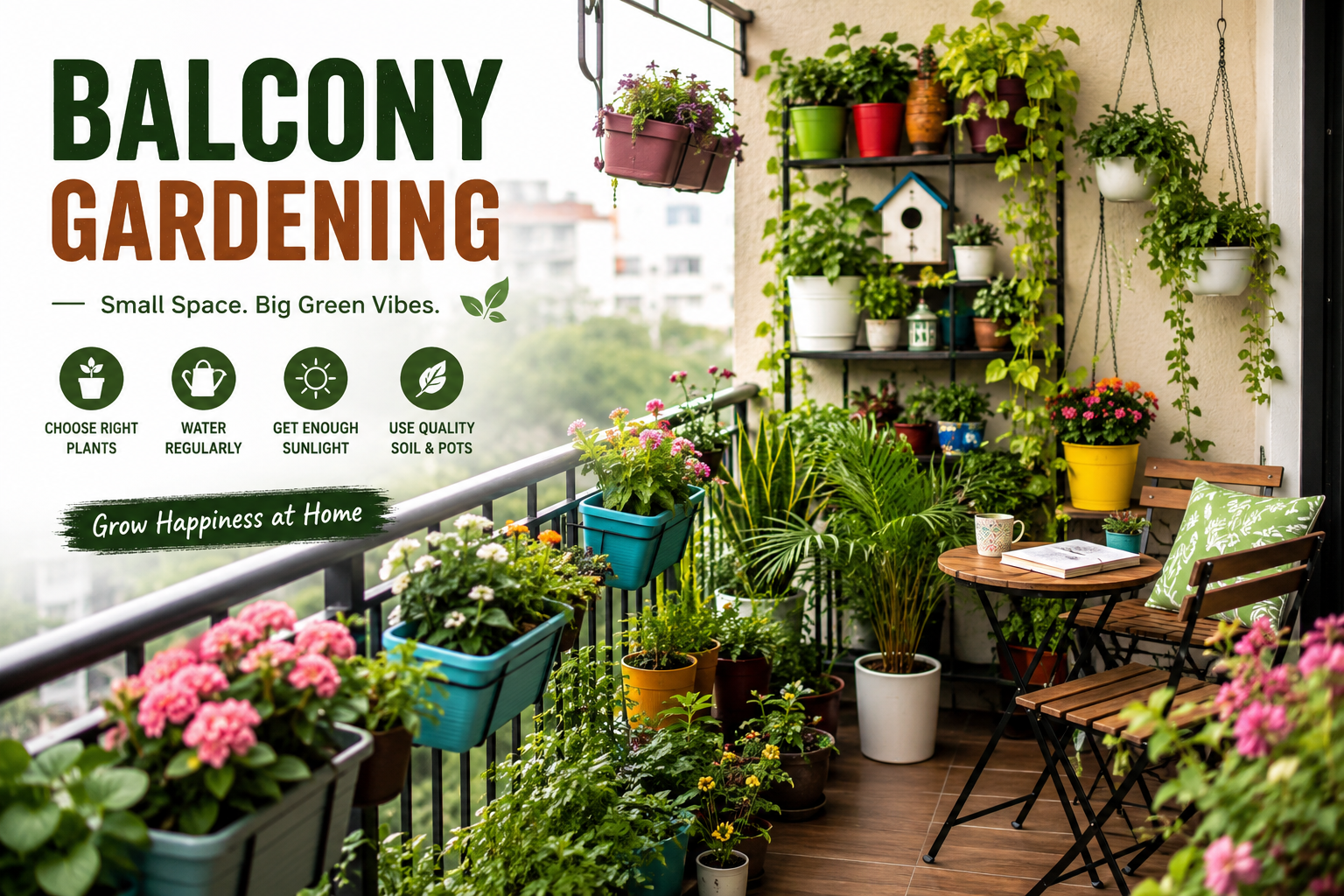
You don’t need a backyard to enjoy fresh herbs, colorful flowers, or homegrown vegetables. With the right containers, plants, and layout, even a small apartment balcony can become a productive green space. Balcony gardening is especially useful for renters and urban gardeners because it allows you to grow plants without digging beds or needing a large outdoor area.
The key is to work with your balcony rather than against it. Before buying plants, look at sunlight, wind, heat, available space, water access, drainage, and any building restrictions. Once you understand those conditions, choosing suitable plants becomes much easier.
This guide explains how to start balcony gardening from scratch, select containers and soil, grow herbs and vegetables, maximize a small space, avoid common mistakes, and create a garden that is practical as well as attractive.
What Is Balcony Gardening?
Balcony gardening means growing flowers, herbs, vegetables, fruiting plants, or ornamental greenery in containers on a balcony. Instead of planting directly into the ground, gardeners use pots, grow bags, window boxes, hanging baskets, railing planters, and vertical systems.
It can be as simple as keeping three herb pots beside a balcony door or as elaborate as creating a layered garden with vegetables, flowers, climbers, and hanging plants.
Balcony Gardening For beginners, the best approach is to start small. A few healthy plants are easier to manage than a crowded balcony filled with containers that have different watering and lighting requirements.
Before You Start Balcony Gardening, Assess Your Space
One of the biggest mistakes beginners make is buying plants before understanding their balcony. Spend some time observing the space first.
Check Sunlight
Notice how many hours of direct sunlight reach your balcony. A sunny balcony may support tomatoes, peppers, basil, rosemary, and many flowering plants, while a shaded balcony is better suited to plants that tolerate lower light.
Don’t rely only on whether your balcony faces east, west, north, or south. Nearby buildings, trees, walls, and glass can change actual sunlight exposure.
Consider Wind and Heat
High balconies can be surprisingly windy. Strong wind dries containers quickly and can damage tall or delicate plants. Hot walls, concrete, and metal railings can also increase temperatures around containers.
If your balcony is exposed, choose compact, sturdy plants and consider a safe windbreak that follows your building’s rules.
Check Weight and Drainage
Wet soil and large containers can become heavy. Before installing numerous planters or hanging containers, check your building’s requirements and any structural guidance that applies to your balcony.
Drainage matters too. Containers should have appropriate drainage, but water should not be allowed to damage flooring or drip onto neighbors below.
Choose the Right Containers
Balcony Gardening Container selection is one of the foundations of successful balcony gardening. Choose pots according to the mature size and root requirements of the plant rather than simply choosing the most attractive container.
| Container Type | Best For | Main Benefit | Consideration |
| Plastic pots | Herbs and vegetables | Lightweight and affordable | Can heat up in strong sun |
| Fabric grow bags | Vegetables | Lightweight and breathable | May dry faster |
| Terracotta pots | Herbs and flowers | Good airflow around roots | Heavy and dries quickly |
| Window boxes | Greens and herbs | Efficient use of space | Limited root depth |
| Hanging baskets | Trailing flowers | Saves floor space | Can require frequent watering |
| Self-watering pots | Busy gardeners | Helps maintain moisture | Usually costs more |
Always check that containers have suitable drainage holes. A beautiful pot without proper drainage can quickly become a problem.
Choose the Right Soil for Container Plants
Ordinary garden soil is often too dense for containers. It can become compacted, restrict airflow, and make containers unnecessarily heavy.
Use a quality container or potting mix designed for growing plants in pots. A suitable mix should balance moisture retention with drainage and air space around the roots.
Adding organic matter such as compost can be useful for many plants, but avoid assuming that more compost or fertilizer is always better. Different plants have different nutritional needs.
Best Plants for Balcony Gardening
The best balcony gardening plants are those that match your light, container size, climate, and available time.
For beginners, herbs and compact vegetables are excellent choices because they provide a useful harvest without requiring a large garden.
Easy Herbs
Consider:
- Basil
- Mint
- Parsley
- Chives
- Rosemary
Mint is vigorous, so keeping it in its own container is often a sensible choice.
Easy Vegetables
Compact varieties of lettuce, spinach, radishes, peppers, and cherry tomatoes can work well in containers. Look for patio, dwarf, or bush varieties when available because they are often easier to manage in restricted spaces.
Flowers and Ornamental Plants
Marigolds, petunias, geraniums, and other suitable flowering plants can add color. Trailing plants work particularly well in hanging baskets, while taller plants can create visual layers.
Always check local growing conditions before selecting plants. A plant that thrives in one climate may struggle in another.
Choose Plants Based on Your Balcony Conditions
A successful balcony garden begins with matching plants to the environment.
Sunny Balconies
If your balcony receives several hours of direct sunlight, consider sun-loving herbs, vegetables, and flowers. Tomatoes and peppers can be productive choices when they have enough light and appropriately sized containers.
Shady Balconies
Lower-light balconies can still support a useful collection of plants. Leafy greens and certain herbs may perform better than fruiting vegetables when direct sunlight is limited.
Windy Balconies
Choose compact plants with sturdy growth and use appropriate supports when necessary. Larger containers can also provide more stability, although you must consider balcony weight limits.
Low-Maintenance Balconies
If you travel frequently or have little time for plant care, choose fewer plants in appropriately sized containers. Self-watering containers can also reduce the frequency of manual watering.
How to Start a Balcony Garden Step by Step
If you’re completely new to balcony gardening, use this simple process.
1. Define Your Goal
Decide whether you want herbs, vegetables, flowers, privacy, pollinator plants, or simply attractive greenery.
2. Measure Your Space
Record the available floor, railing, and vertical space. Keep pathways clear.
3. Observe the Light
Track direct sunlight for several days so you can make better plant choices.
4. Select Containers
Choose lightweight, stable containers with suitable drainage.
5. Prepare the Growing Mix
Fill containers with a quality potting mix appropriate for container plants.
6. Select Suitable Plants
Match each plant to the available light, container size, climate, and maintenance level.
7. Arrange the Garden
Place taller plants where they won’t unnecessarily shade smaller ones. Use vertical space when safe and permitted.
8. Establish a Watering Routine
Check soil moisture regularly instead of following an inflexible watering calendar.
Starting with three to five containers is often better than filling the entire balcony immediately. Once you understand how quickly your containers dry out and which plants perform well, you can expand gradually.
How to Water Balcony Plants
Balcony Gardening Watering is one of the most important parts of balcony gardening because containers can dry out faster than plants growing in the ground.
There is no universal watering schedule. Temperature, wind, sunlight, container size, soil mix, and plant type all affect moisture requirements.
Check the growing medium regularly. If the upper layer is dry and the plant’s needs indicate watering is appropriate, water thoroughly until some moisture reaches the drainage holes.
Avoid keeping containers permanently saturated. Constantly wet soil can create root problems, while severe dryness can stress plants.
Self-watering containers and simple irrigation systems can be useful for gardeners who struggle to maintain a regular routine.
Fertilizing and Maintaining Your Garden
Plants growing in containers have a limited amount of growing medium, so nutrients can become depleted over time.
Use an appropriate fertilizer according to the plant’s requirements and the product label. Slow-release fertilizers can be convenient, while liquid feeds may be useful for some actively growing plants.
Regular maintenance should include checking leaves, removing dead growth, monitoring pests, harvesting edible crops, and inspecting plant supports.
Maximize a Small Balcony
One of the best balcony gardening ideas is to think vertically rather than spreading everything across the floor.
Use:
- Tiered plant stands
- Wall-mounted planters
- Hanging baskets
- Trellises
- Narrow shelves
- Railing planters where permitted
Combine different plant heights to make the space feel fuller without overcrowding it.
For example, a small balcony could have a cherry tomato in a large floor container, basil and parsley in medium pots, and trailing flowers in a hanging basket. This creates food, color, and vertical interest without requiring dozens of containers.
Balcony Gardening on a Budget
You don’t need an expensive balcony gardening kit to get started.
Save money by beginning with seeds, plant cuttings, inexpensive containers, or suitable reused containers. Make sure reused containers are clean, safe for plants, and have appropriate drainage.
Simple DIY shelves can also provide additional growing space. Instead of buying every accessory at once, purchase essentials first: containers, potting mix, plants or seeds, a watering method, and basic pruning tools.
If you’re looking for a balcony gardening book, choose one that focuses on your climate or growing conditions rather than relying on a generic plant list.
Balcony Gardening for Renters
Renters can enjoy apartment balcony gardening without making permanent changes.
Portable pots, grow bags, freestanding shelves, and removable plant supports make it easier to move the garden when necessary. Before attaching anything to railings, walls, or ceilings, check landlord and building rules.
Protect flooring from standing water and avoid arrangements that create hazards for people below.
Create a Pollinator-Friendly Balcony
Your balcony can also support beneficial insects. Choose flowering plants that are appropriate for your region and provide blooms across different periods when possible.
Native plants can be particularly valuable because they are adapted to local ecosystems. A small collection of suitable flowering plants can provide nectar and habitat while also making your balcony more attractive.
Avoid unnecessary pesticide use, particularly when your goal is to encourage pollinators.
Common Balcony Gardening Problems
Plants Keep Drying Out
Small pots, strong winds, intense sunlight, and hot weather can all increase water loss. Consider whether the container is appropriate for the plant and monitor moisture more frequently during demanding weather.
Leaves Turn Yellow
Yellowing leaves can have several causes, including watering problems, nutrient issues, natural aging, pests, or unsuitable conditions. Look at the entire plant and growing environment before changing fertilizer or watering.
Plants Fall Over
Tall plants may need support, particularly on exposed balconies. Check whether the container is stable and whether wind is contributing to the problem.
Plants Don’t Produce Fruit
Fruit production can be affected by insufficient light, temperature, plant maturity, nutrition, and pollination. Make sure the plant is receiving conditions appropriate for its particular variety.
Common Mistakes to Avoid
Successful balcony gardening is often less about doing more and more about avoiding preventable problems.
- Buying plants before checking sunlight
- Using containers without drainage
- Choosing pots that are too small
- Overwatering
- Crowding plants together
- Ignoring strong wind
- Choosing unsuitable varieties
- Using excessively heavy containers
- Forgetting plant support
- Starting with too many plants
Seasonal Balcony Garden Care
Your balcony gardening routine should change with the seasons.
In spring, refresh containers and introduce plants suited to the upcoming growing period. During summer, monitor moisture closely and protect plants from excessive heat where necessary.
In fall, harvest remaining edible crops and prepare plants for cooler conditions. During winter, protect sensitive plants where appropriate and adjust watering as growth slows.
The exact timing depends on your local climate, so use regional planting information when planning a seasonal garden.
A Simple First-Month Plan
If you’re wondering what to do first, use this practical approach.
Week 1: Observe sunlight, wind, heat, drainage, and available space.
Week 2: Buy containers, potting mix, and a small selection of plants.
Week 3: Plant and position containers according to their light requirements.
Week 4: Monitor moisture, growth, pests, and overall plant health.
Keep notes about which plants need more water and which locations perform best. This turns your first month into useful experience for future balcony gardening projects.
Conclusion
Good balcony gardening starts with understanding your space rather than buying as many plants as possible. Observe sunlight, consider wind and heat, choose suitable containers, use quality growing media, and match plants to their growing conditions.
Start with a few reliable plants, learn how your balcony behaves, and expand gradually. Whether you want fresh herbs, colorful flowers, vegetables, privacy, or a pollinator-friendly retreat, a thoughtfully planned balcony can become a productive and enjoyable garden—even when space is limited.
Frequently Asked Questions
Can you grow a garden on a balcony?
Yes. Containers, grow bags, hanging baskets, and vertical systems make it possible to grow herbs, vegetables, flowers, and ornamental plants on many balconies. The available light, space, wind, and building restrictions determine what will work best.
What are the easiest balcony plants for beginners?
Basil, mint, parsley, chives, lettuce, spinach, peppers, and suitable flowering plants can be good starting choices. Select plants according to your actual sunlight and climate.
How much sunlight does a balcony garden need?
It depends on what you’re growing. Many vegetables and flowering plants need several hours of direct sunlight, while some herbs and leafy greens tolerate less. Always check the requirements of individual plants.
How often should I water balcony plants?
Watering frequency varies with plant type, container size, weather, sunlight, wind, and growing medium. Check the soil rather than following a fixed schedule.
Can I grow vegetables on a small balcony?
Absolutely. Compact tomatoes, peppers, lettuce, spinach, radishes, and herbs can work well in suitable containers. Choose compact varieties and avoid overcrowding.
How can I maximize space on a tiny balcony?
Use vertical gardening, hanging baskets, tiered stands, narrow shelves, and suitable railing planters. Keep walkways open and ensure every installation is safe and permitted.
What should I do if my balcony gets very little sunlight?
Choose plants that tolerate lower light, particularly leafy greens and suitable herbs or ornamental plants. Avoid filling a shaded balcony with plants that require strong direct sunlight.
You May Also Read: Best Plants for Apartment Balconies
