

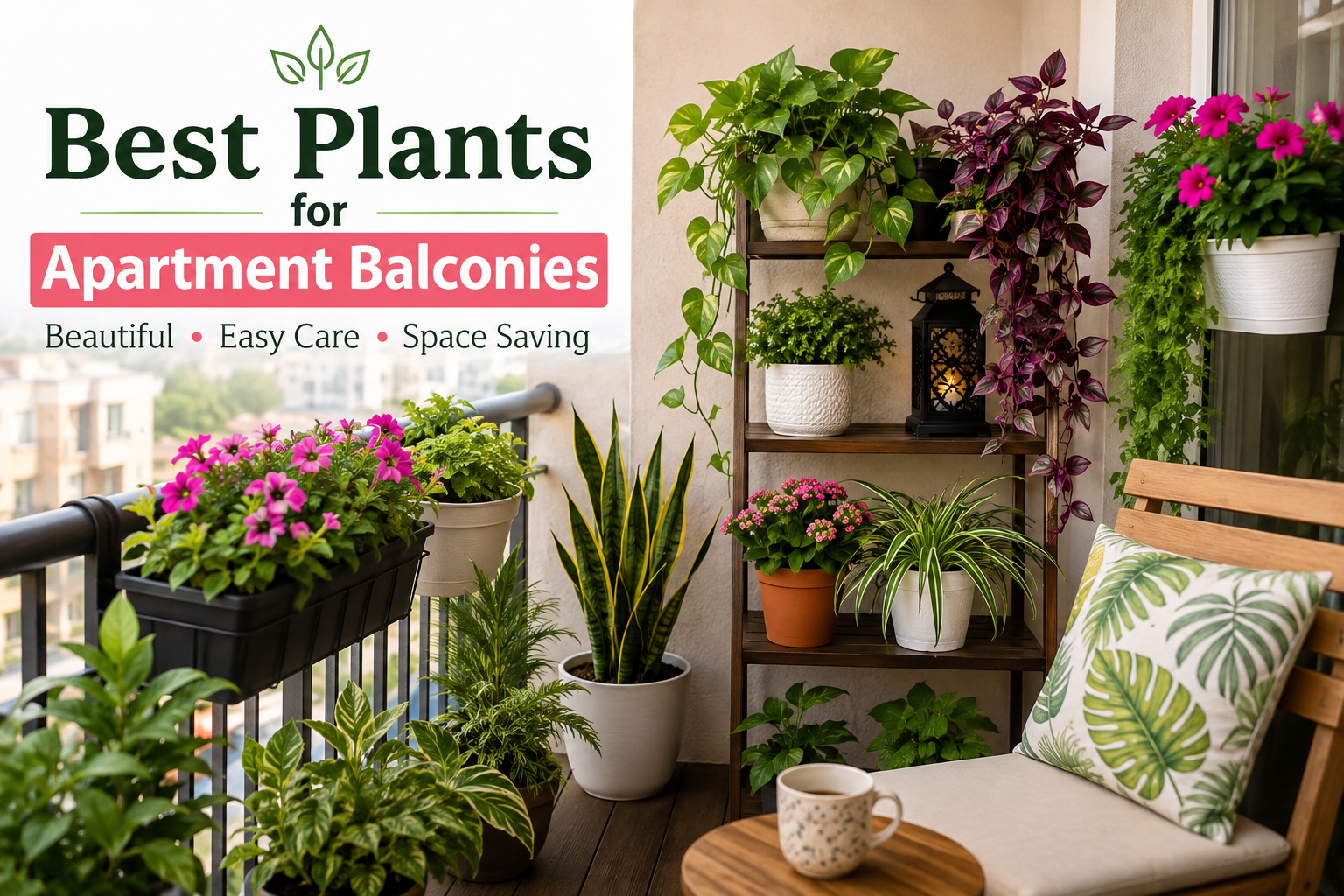
Finding the best plants for apartment balconies is easier when you stop looking for a single perfect plant and start considering your balcony’s conditions. The amount of sunlight, wind exposure, available space, temperature, and time you can dedicate to plant care all affect which plants will thrive.
The best plants for apartment balconies can include colorful flowers, fragrant herbs, edible vegetables, trailing plants, succulents, and attractive foliage plants. Whether you have a sunny high-rise balcony or a small shaded outdoor space, there are plenty of options to create a welcoming garden.
The trick is to choose plants that fit your lifestyle as well as your balcony. Some plants need frequent watering, while others tolerate dry conditions. Some enjoy strong sunlight, while others prefer shade. This guide explains the best plants for apartment balconies based on different growing conditions, uses, and maintenance levels.
How to Choose the Best Plants for Apartment Balconies
Before buying containers or visiting a garden center, evaluate your balcony. The best plants for apartment balconies are plants that can handle the conditions you actually have.
Check Your Sunlight
Start by observing how much direct sunlight your balcony receives.
A balcony with six or more hours of direct sunlight can support sun-loving plants such as lavender, rosemary, thyme, marigolds, and many succulents. If you receive only a few hours of direct light, consider begonias, ferns, spider plants, parsley, or mint.
Don’t assume a north- or south-facing balcony automatically tells you everything. Nearby buildings, trees, awnings, and walls can change the amount of light reaching your containers.
Consider Wind Exposure
Wind is particularly important for high-rise apartments. Strong gusts can dry potting mix quickly, damage delicate foliage, and knock over lightweight containers.
When choosing the best plants for apartment balconies, look for compact plants with sturdy growth. Stable containers and sheltered positions can also make a major difference.
Measure Your Available Space
A small nursery plant can become surprisingly large. Check the mature height and width before placing it on your balcony.
For a narrow balcony, use railing planters, hanging baskets, shelves, and vertical supports. This allows you to enjoy more of the best plants for apartment balconies without filling the entire floor with pots.
Match Plants to Your Routine
If you have limited time, focus on low maintenance balcony plants. Lavender, rosemary, thyme, and many succulents can be good options in suitable sunny conditions.
However, low maintenance doesn’t mean no maintenance. Every plant needs the right combination of light, water, drainage, and occasional care.
25 Best Plants for Apartment Balconies
Here are some of the best plants for apartment balconies for different conditions and gardening goals.
1. Lavender
Lavender is one of the best plants for apartment balconies that receive plenty of sunshine. Its purple flowers and fragrant foliage add color and a pleasant scent to an outdoor space.
Use a container with good drainage and avoid keeping the soil constantly wet. Lavender is particularly attractive when combined with other Mediterranean-style plants.
2. Rosemary
Rosemary is an excellent choice for sunny balconies because it combines ornamental appeal with culinary usefulness.
It prefers bright sunlight and well-draining soil. Its woody stems also make it more practical than delicate plants in moderately windy locations.
3. Thyme
Thyme is one of the best plants for apartment balconies when space is limited. It stays relatively compact and works well in small containers or herb boxes.
It generally prefers sunlight and well-drained soil, making it a useful option for gardeners looking for simple, low-maintenance herbs.
4. Marigolds
Marigolds provide bright flowers and are popular with beginner gardeners. They can add instant color to sunny containers and railing planters.
Remove faded blooms regularly to encourage a longer display.
5. Geraniums
Geraniums are classic container plants and can create a colorful balcony display without requiring large amounts of floor space.
They work particularly well in window boxes and decorative pots when their sunlight and watering needs are met.
6. Petunias
Petunias are excellent for hanging baskets and railing containers because many varieties have trailing growth.
If you want the best plants for apartment balconies that create a colorful cascading effect, petunias are worth considering.
7. Succulents
Succulents are among the best plants for apartment balconies for gardeners who prefer low watering requirements.
Many varieties enjoy bright light and excellent drainage. Because succulent care varies between species, check the requirements of the specific variety you purchase.
8. Spider Plant
Spider plants offer attractive arching foliage and work especially well in hanging containers.
They generally prefer bright, indirect light and can be a good choice for a sheltered balcony where direct outdoor exposure isn’t too intense.
9. Ferns
Ferns can bring a lush appearance to shady balconies. They are particularly useful where flowering plants struggle because of limited direct sunlight.
Keep the growing medium appropriately moist, especially during warm and dry weather.
10. Begonias
Begonias are valuable for balconies that receive partial shade. Their flowers and foliage can provide plenty of visual interest without demanding a large growing area.
Choose varieties appropriate for your local climate and available light.
11. Mint
Mint is a practical addition to an edible balcony garden. It grows readily and can be harvested for drinks, desserts, and cooking.
Keep mint in its own container because it can spread aggressively and compete with neighboring plants.
12. Basil
Basil is one of the best plants for apartment balconies for people who want an edible garden in a sunny location.
Place it where it receives sufficient sunlight, and harvest leaves regularly to encourage bushier growth.
13. Parsley
Parsley is compact enough for containers and can tolerate less direct sunlight than some Mediterranean herbs.
It is a practical choice when you want fresh herbs without dedicating much balcony space to a vegetable garden.
14. Chives
Chives are compact, useful, and easy to harvest. Their narrow leaves make them particularly suitable for small containers.
They can also produce attractive flowers, giving an edible balcony garden some additional decorative appeal.
15. Aloe Vera
Aloe vera is a strong candidate for warm, bright balconies. Its fleshy leaves store water, allowing it to tolerate periods of dryness better than many moisture-loving plants.
Use a container with excellent drainage and avoid frequent watering when the growing medium is already moist.
16. Snake Plant
Snake plants are known for their durability and relatively low maintenance needs. They can work well in sheltered balconies with bright indirect light.
Protect them from extreme cold and avoid overwatering.
17. Pothos
Pothos adds trailing greenery and can look attractive in hanging containers.
For apartment use, it is best suited to sheltered balconies with appropriate light and temperatures. Keep in mind that pothos is toxic if ingested by pets, so consider household circumstances before choosing it.
18. Coleus
Coleus is grown primarily for colorful foliage. Its leaves can provide dramatic shades and patterns even when flowering isn’t the main goal.
It can be useful for partially shaded balconies where you want visual interest from foliage.
19. Impatiens
Impatiens can brighten balconies that receive limited direct sunlight. Their flowers make them useful when you want color in a shady or partially shaded area.
They generally appreciate consistent moisture, so check their containers regularly during hot weather.
20. Strawberries
Strawberries are among the best plants for apartment balconies when you want to combine gardening with a small edible harvest.
They can grow in containers, hanging baskets, and vertical planters. Choose a sunny location and provide suitable growing conditions.
21. Cherry Tomatoes
Cherry tomatoes can produce a rewarding harvest from containers when they receive enough sunlight, water, nutrition, and support.
For a small balcony, look for compact or determinate varieties rather than choosing a vigorous plant that will quickly outgrow the space.
22. Chili Peppers
Chili peppers are well suited to sunny container gardens. Their relatively compact growth and useful harvest make them popular among apartment gardeners.
Use a stable container and provide adequate sunlight and watering.
23. Lettuce
Lettuce can be an excellent crop for small containers, particularly during cooler growing periods.
It doesn’t require the same amount of vertical space as tomatoes or climbing vegetables, making it practical for compact balconies.
24. Ornamental Grasses
Compact ornamental grasses can add height, texture, and movement to an outdoor space.
Select varieties that remain manageable in containers and can tolerate your local climate and balcony exposure.
25. Compact Evergreen Plants
Suitable dwarf evergreens can provide structure throughout much of the year. They can also contribute to privacy on larger balconies.
Always check the plant’s mature size before purchasing. A plant that starts small may eventually become unsuitable for a restricted container environment.
Best Plants for Sunny Apartment Balconies
If your balcony receives around six or more hours of direct sunlight, some of the best plants for apartment balconies include lavender, rosemary, thyme, marigolds, geraniums, petunias, succulents, basil, chili peppers, and compact tomatoes.
For example, a sunny beginner balcony could combine one rosemary pot, one thyme container, two flowering plants, and a small basil planter. This provides fragrance, color, and edible greenery without requiring dozens of containers.
Remember that intense afternoon heat can be more challenging than ordinary full sun. Dark containers and balconies surrounded by concrete or glass can become particularly hot, so monitor moisture carefully.
Best Plants for Shady Apartment Balconies
Not every balcony receives strong sunlight. Fortunately, some of the best plants for apartment balconies are suitable for shade or partial shade.
Consider ferns, begonias, impatiens, spider plants, coleus, mint, parsley, and chives.
Before deciding that your balcony is “too shady,” observe it throughout the day. Bright reflected daylight can provide different conditions from a balcony that receives almost no natural light.
Best Low Maintenance Balcony Plants
If you want a low maintenance balcony, prioritize plants that match your environment and don’t require constant attention.
| Plant | Light | Water Need | Maintenance | Best Use |
| Lavender | Full sun | Low | Easy | Fragrance |
| Rosemary | Full sun | Low | Easy | Herbs |
| Thyme | Full sun | Low | Easy | Small spaces |
| Succulents | Bright light | Low | Very easy | Beginners |
| Aloe vera | Bright light | Low | Very easy | Warm balconies |
| Spider plant | Bright indirect | Moderate | Easy | Hanging pots |
| Marigold | Full sun | Moderate | Easy | Flowers |
| Basil | Full sun | Moderate | Easy | Edible garden |
The best plants for apartment balconies aren’t necessarily the plants that need the least water. They are the plants whose care requirements match your schedule and growing conditions.
Best Plants for Small Apartment Balconies
Small balconies benefit from vertical thinking.
Use railing planters for herbs, hanging baskets for trailing plants, and tiered stands for compact containers. A narrow trellis can provide height while using very little floor space.
For example, a 4-by-6-foot balcony could include two compact floor containers, one railing planter, one hanging basket, and one small vertical planter. This creates variety while preserving room for a chair and walking area.
Best Balcony Plants for Privacy
Privacy is another reason to grow plants outdoors. The best plants for apartment balconies intended for screening should add height without becoming unstable or excessively large.
Consider compact evergreen plants, suitable ornamental grasses, and climbers grown with an appropriate support.
Place taller plants toward the back and shorter or trailing plants toward the front. On a high-rise balcony, avoid top-heavy arrangements that could become unstable during strong winds.
Best Flowering Plants for Apartment Balconies
If flowers are your priority, consider lavender, marigolds, geraniums, petunias, begonias, impatiens, and suitable fuchsia varieties.
For full sun, prioritize sun-loving flowering plants. For partial shade, choose varieties that specifically tolerate lower light.
This approach is more reliable than choosing flowers simply because they look attractive at the garden center.
Best Herbs and Vegetables for Apartment Balconies
Some of the best plants for apartment balconies are edible.
For herbs, consider basil, rosemary, thyme, mint, parsley, and chives. For vegetables and fruit, try compact cherry tomatoes, chili peppers, lettuce, and strawberries.
The amount of sunlight is especially important. Fruiting plants such as tomatoes and peppers generally need stronger light than many leafy herbs and greens.
Best Year-Round Plants for Apartment Balconies
For year-round interest, combine evergreen structure with plants that provide seasonal flowers or foliage.
However, don’t assume a plant will survive outdoors throughout the year everywhere. Winter temperatures, summer heat, wind, humidity, and container exposure vary significantly by climate.
Choose plants according to your local conditions, and move or protect vulnerable containers during extreme weather when possible.
Best Plants for Windy or High-Rise Balconies
High-rise balconies need special consideration. Strong wind can dry soil quickly and physically damage plants.
The best plants for apartment balconies in exposed locations are often compact and sturdy rather than tall and delicate. Lavender, rosemary, thyme, and suitable ornamental grasses can be considered where their climate requirements are met.
Use stable containers and avoid placing lightweight pots where strong gusts can easily move them.
Balcony Plant Care Tips
Use Containers With Drainage
Drainage holes allow excess water to escape. Without adequate drainage, roots can remain in saturated growing media and become unhealthy.
Choose the Right Potting Mix
Use a quality container growing medium rather than heavy garden soil. Container plants need an environment that balances moisture retention with drainage and aeration.
Water According to Conditions
Don’t water simply because it’s Tuesday. Check the growing medium and consider the plant type, pot size, temperature, sunlight, and wind.
A small pot in hot afternoon sun may dry considerably faster than a large container in a sheltered position.
Fertilize When Appropriate
Plants growing in containers have limited access to nutrients. Use a fertilizer suitable for the plant and follow its label directions.
Protect Plants From Extreme Weather
Move vulnerable pots to a sheltered position during severe storms, heat waves, or cold snaps when practical. Plants that aren’t suited to your local climate may need seasonal protection or indoor relocation.
Common Apartment Balcony Plant Mistakes
Even the best plants for apartment balconies can struggle if they’re planted in unsuitable conditions.
Ignoring sunlight: Always match the plant to the amount of direct and indirect light available.
Overwatering: Constantly wet soil can damage roots. Check the growing medium before watering.
Choosing plants based on current size: Consider mature height and width before buying.
Overcrowding: Leave enough room for airflow and future growth.
Ignoring wind: High-rise balconies can be considerably windier than ground-level gardens.
Using unstable containers: Heavy or properly secured containers are safer for exposed locations, subject to building rules.
Ignoring apartment restrictions: Check your lease or building regulations before installing railing planters, hanging pots, trellises, or other structures.
Three Easy Apartment Balcony Plant Setups
Sunny Beginner Balcony
Choose rosemary, thyme, marigolds, and basil. This combination gives you herbs, flowers, fragrance, and edible greenery.
Small Shady Balcony
Try a fern, spider plant, begonia, and mint. Use hanging or vertical containers to preserve floor space.
Windy High-Rise Balcony
Choose compact, sturdy plants such as lavender, rosemary, thyme, and appropriate ornamental grasses. Use stable containers and keep vulnerable plants away from the strongest exposure.
Conclusion
Choosing the best plants for apartment balconies is ultimately about matching plants to your real conditions. Before buying anything, check sunlight, wind, space, climate, and how much time you want to spend on maintenance.
For sunny balconies, consider lavender, rosemary, thyme, flowers, herbs, and compact edible crops. For shady areas, look toward ferns, begonias, spider plants, and suitable herbs. For tiny spaces, use hanging baskets, railing planters, shelves, and vertical systems.
Start with a few suitable plants rather than filling every available corner. Once you understand how your balcony behaves through different weather conditions, you can gradually build a healthier, more attractive garden.
Frequently Asked Questions
What are the best plants for apartment balconies?
The best plants for apartment balconies include lavender, rosemary, thyme, marigolds, geraniums, succulents, spider plants, ferns, begonias, basil, mint, and compact vegetables. Your balcony’s light, wind, climate, space, and maintenance requirements should determine the final selection.
What are the best plants for a sunny apartment balcony?
Lavender, rosemary, thyme, marigolds, geraniums, succulents, basil, chili peppers, and compact tomatoes can be suitable for sunny balconies when their individual growing requirements are met.
What plants are best for a shady balcony?
Ferns, begonias, impatiens, spider plants, coleus, mint, parsley, and chives can be useful choices for shady or partially shaded balconies. Check the exact light requirements of the variety you purchase.
Which balcony plants require the least maintenance?
Succulents, aloe vera, thyme, rosemary, and lavender can be relatively low maintenance in suitable conditions. Even these plants require proper light, drainage, and appropriate watering.
Can I grow vegetables on an apartment balcony?
Yes. Compact cherry tomatoes, chili peppers, lettuce, strawberries, and several herbs can be grown in containers. Fruiting crops generally need more sunlight and care than many leafy greens.
What plants can handle a windy apartment balcony?
Compact plants such as rosemary, thyme, lavender, and some ornamental grasses can be considered for windy locations. Stable containers and suitable placement are also essential.
How many plants should I put on a small balcony?
There is no universal number. Start with a few containers and leave enough room for walking, furniture, watering, airflow, and mature plant growth. Vertical gardening can increase your growing area without filling the floor.
You May Also Read: DIY Desk Organizer Ideas
