
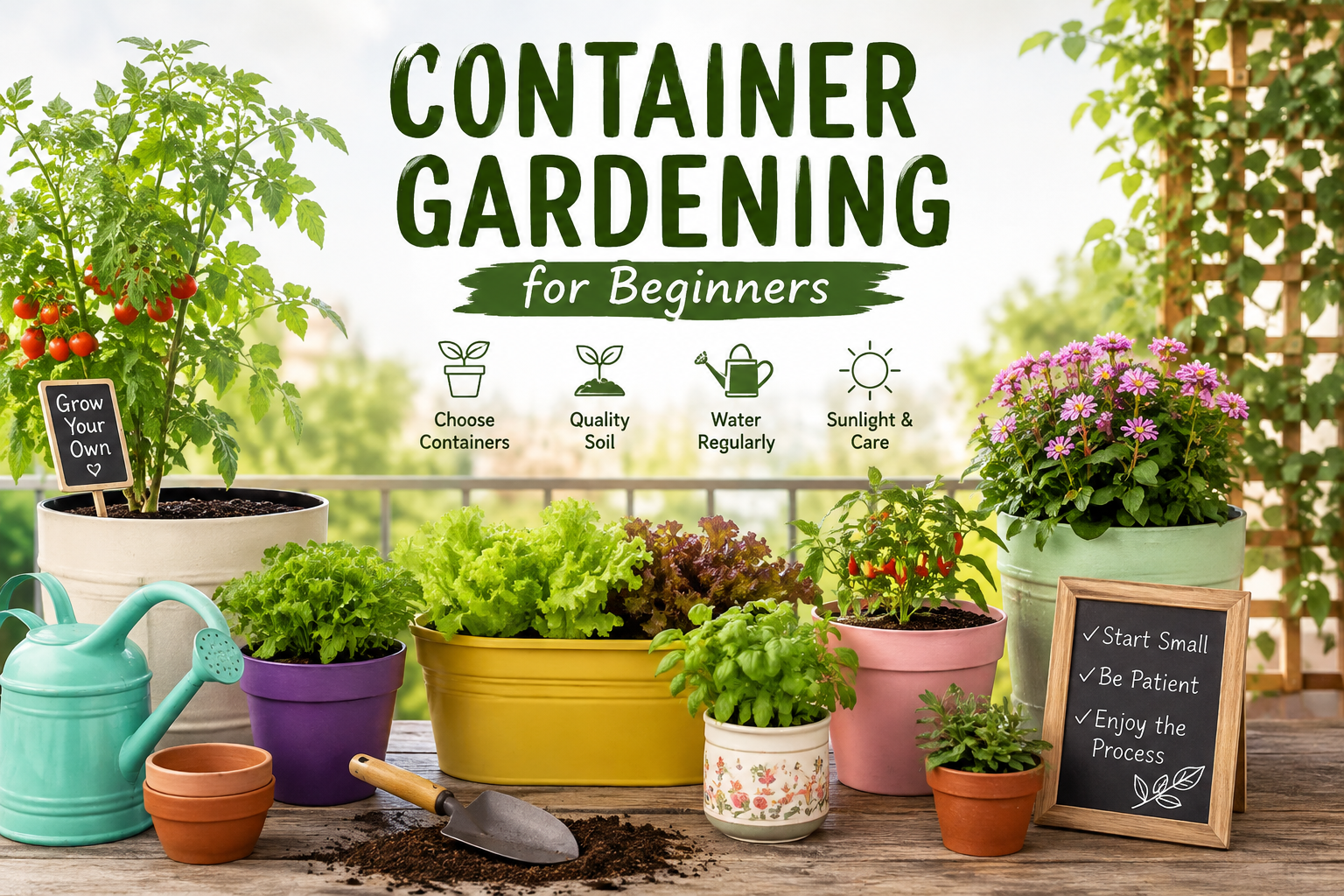
You don’t need a large backyard to grow fresh herbs, vegetables, flowers, or even fruit. With the right pots, potting mix, sunlight, and watering routine, almost anyone can create a productive garden in a small space. That’s what makes container gardening for beginners such a practical way to start growing plants.
Whether you live in an apartment, have a small balcony, rent a home, or simply don’t want to dig up your yard, containers give you more control over where and how you grow. You can start with one pot and expand as your confidence grows.
The key is not buying the biggest collection of pots or the most expensive equipment. Successful container gardening for beginners starts with matching the right plant to the right container and giving it suitable light, soil, water, and nutrients.
What Is Container Gardening?
Container gardening means growing plants in pots, planters, grow bags, boxes, or other suitable containers instead of planting directly into the ground.
It can include vegetables, herbs, flowers, ornamental plants, and some fruiting plants. Containers can sit on patios, balconies, porches, windowsills, rooftops, or other suitable outdoor spaces.
For container gardening for beginners, this method is especially useful because you can control the growing environment more easily than you can with an in-ground garden.
You can choose your own growing medium, move plants when necessary, and select containers based on the space available.
Why Is Container Gardening Good for Beginners?
One of the biggest advantages of container gardening for beginners is flexibility.
You don’t need to prepare a large garden bed. You can begin with two or three inexpensive pots and learn as you go.
Containers are also useful when your existing soil is poor. Instead of spending time improving a large area, you can fill a container with a suitable potting mix and create a better root environment immediately.
Another advantage is mobility. If a plant needs more sunlight, you can move it. If extreme weather is approaching, smaller containers can sometimes be relocated to a more protected position.
Who Can Benefit From Container Gardening?
Container Gardening for Beginners works particularly well for:
- Apartment residents
- Balcony gardeners
- Renters
- People with small yards
- Beginner gardeners
- Busy households
- Gardeners with poor ground soil
- People who want herbs close to the kitchen
What Do You Need to Start?
You don’t need a huge collection of tools for successful container gardening for beginners.
Start with the essentials:
- Containers with drainage holes
- Quality potting mix
- Seeds or healthy seedlings
- A watering can or hose
- Suitable fertilizer
- Small gardening trowel
- Plant labels
- Stakes or supports for plants that need them
A beginner-friendly approach is to start with three containers rather than ten. This makes it easier to learn how quickly your plants dry out and how much attention they require.
How to Choose the Right Container
Choosing the right container is one of the most important decisions in container gardening for beginners.
A container needs enough space for the plant’s roots and enough growing medium to support healthy growth. A small pot may dry out quickly and restrict roots, while an unnecessarily large container can be heavy and difficult to move.
Container Materials
Different materials have different advantages.
| Container Type | Best For | Main Advantage | Potential Drawback |
| Plastic | Beginners and vegetables | Lightweight and affordable | Can become hot in strong sun |
| Terracotta | Herbs and decorative plants | Attractive and breathable | Dries out faster |
| Fabric grow bags | Vegetables | Lightweight and easy to store | May need frequent watering |
| Ceramic | Flowers and ornamentals | Attractive and stable | Heavy |
| Wooden planters | Larger gardens | Spacious and decorative | Can deteriorate over time |
Whatever material you choose, make sure the container is appropriate for the plant and has adequate drainage.
Why Drainage Matters
Good drainage prevents excess water from remaining around the roots. Poor drainage can create conditions that contribute to root problems.
Don’t assume that adding a thick layer of rocks to the bottom automatically improves drainage. Instead, choose a container designed with drainage holes and use an appropriate container-growing medium.
Best Container Sizes for Different Plants
One of the most useful parts of container gardening for beginners is learning that different plants need different amounts of root space.
The following chart provides practical starting points. Exact requirements can vary by plant variety and growing conditions.
| Plant | Suggested Container | Difficulty |
| Lettuce | 1 gallon or larger | Easy |
| Radishes | 1 gallon or larger | Easy |
| Basil | 1–2 gallons | Easy |
| Chives | 1 gallon | Easy |
| Carrots | 2 gallons or larger | Easy |
| Peppers | 3–5 gallons | Easy to moderate |
| Tomatoes | 5 gallons or larger | Moderate |
| Cucumbers | 5 gallons or larger | Moderate |
| Zucchini | 10 gallons or larger | Moderate |
For vegetable container gardening for beginners, always check the mature size of the variety before planting. Compact or dwarf varieties are often easier to manage than vigorous plants.
What Is the Best Soil for Container Gardening?
Regular garden soil is usually not the best choice for container gardening for beginners because it can become compacted inside a pot and restrict drainage and air movement around roots.
Instead, choose a quality potting mix designed for containers.
A good growing medium should provide:
- Good drainage
- Moisture retention
- Air space around roots
- Support for root development
- Appropriate nutrient availability
If you’re interested in DIY Container Gardening for Beginners, you can eventually experiment with making your own potting mix. However, beginners often save time and avoid unnecessary complications by starting with a reliable commercial container mix.
How Much Sunlight Do Container Plants Need?
Before buying plants, observe your growing location.
Many fruiting vegetables, including tomatoes and peppers, perform best with several hours of direct sunlight. Leafy greens and some herbs can tolerate less light.
For container gardening for beginners, don’t simply assume that a balcony is sunny. Buildings, walls, trees, and neighboring structures can create significant shade.
Match Plants to Available Light
| Available Light | Plants to Consider |
| Low or filtered light | Some leafy greens and shade-tolerant ornamentals |
| Around 4–6 hours | Lettuce, spinach, herbs and some flowers |
| Around 6–8+ hours | Tomatoes, peppers, cucumbers and many flowering plants |
Observe the area at different times of day before deciding what to grow.
Best Plants for Container Gardening Beginners
Choosing forgiving plants can make container gardening for beginners much less frustrating.
Easy Herbs
Basil, chives, parsley, mint, and thyme are popular choices. Mint is vigorous, so keeping it in its own container can help prevent it from taking over other plants.
Easy Vegetables
Lettuce, radishes, leafy greens, peppers, bush beans, and carrots can be good starting points.
More Challenging Choices
Tomatoes, cucumbers, eggplants, and zucchini can grow successfully in containers, but they usually require more space, sunlight, water, or support.
Flowers for Beginners
Container gardening isn’t limited to food. Marigolds, petunias, geraniums, nasturtiums, and begonias can add color to balconies, patios, and entrances.
For flower container gardening for beginners, select plants with similar light and watering requirements when combining them in one pot.
Seeds or Seedlings: Which Is Better?
Both options work, but seedlings can make container gardening for beginners easier because they give you a head start.
| Factor | Seeds | Seedlings |
| Cost | Usually lower | Usually higher |
| Time to established plant | Longer | Faster |
| Variety | Very broad | Depends on availability |
| Beginner difficulty | Moderate | Easier |
| Best use | Easy crops | Larger or slower crops |
A practical approach is to combine both. Try seeds for radishes or leafy greens and purchase healthy seedlings for plants such as tomatoes or peppers.
How to Plant a Container Garden Step by Step
Follow these steps to create a simple container gardening for beginners setup.
Step 1: Choose Your Location
Determine how much sunlight the area receives and make sure you have easy access to water.
Step 2: Pick the Right Container
Choose a container large enough for the mature plant and make sure it has drainage holes.
Step 3: Add Potting Mix
Fill the container with quality potting mix, leaving enough room for planting and watering.
Step 4: Plant
Follow the spacing and planting-depth instructions for your chosen seed or seedling.
Step 5: Water Thoroughly
After planting, water the growing medium thoroughly without turning the container into a puddle.
Step 6: Label Your Plants
Labels are surprisingly useful, especially if you are growing several varieties.
Step 7: Position the Container
Place it where the plant receives the appropriate amount of light.
How Often Should You Water Container Plants?
Watering is one of the most important skills to develop in container gardening for beginners.
Don’t rely on a fixed schedule such as watering every Tuesday and Friday. Container plants can dry out at different rates depending on temperature, wind, sunlight, container size, plant size, and potting mix.
Instead, check the growing medium regularly.
A small container in hot, windy weather may require attention much more often than a large container in a sheltered location.
Signs of Underwatering
- Wilting
- Dry growing medium
- Drooping leaves
- Rapid loss of moisture
Signs of Overwatering
- Constantly wet soil
- Yellowing leaves
- Poor growth
- Root-related problems
The goal isn’t simply to water more. The goal is to maintain appropriate moisture for the plant.
How to Fertilize Container Plants
Plants grown in containers have limited access to nutrients compared with plants growing in the ground.
For container gardening for beginners, use a fertilizer suitable for the plants you’re growing and follow the label directions.
Avoid assuming that more fertilizer means faster growth. Excess nutrients can damage plants and create imbalances.
Leafy greens, herbs, flowering plants, and fruiting vegetables can have different nutritional needs, so choose your fertilizer accordingly.
Container Gardening for Small Spaces
One reason container gardening for beginners continues to appeal to new gardeners is that it works in surprisingly small areas.
Balcony Gardening
Use vertical space with shelves, plant stands, rail planters, or suitable trellises. Keep heavier containers in stable positions and consider wind exposure.
Apartment Gardening
A sunny window can support herbs and some compact plants. Outdoor balconies or patios provide additional opportunities where available.
Patio Gardening
Patios can accommodate larger containers for tomatoes, peppers, flowers, and compact fruiting plants.
Small Backyard
Containers can complement an existing garden by allowing you to grow herbs, seasonal vegetables, or decorative flowers separately.
How to Arrange Containers in a Small Space
For container gardening for beginners, organization matters almost as much as plant selection.
Group plants with similar watering requirements together. Place taller plants toward the back and shorter plants where they won’t be shaded.
For a small balcony, you might use:
- One container for tomatoes
- One for peppers
- One herb planter
- One container for leafy greens
- One vertical support for a climbing crop
This creates a useful garden without filling every available space.
Common Container Gardening Mistakes
Avoiding mistakes can save more plants than buying expensive equipment.
1. Choosing a Pot That’s Too Small
Restricted roots can lead to poor growth and frequent drying.
2. Using Heavy Garden Soil
Container plants generally perform better in an appropriate potting mix.
3. Ignoring Drainage
A beautiful pot isn’t useful if excess water cannot escape.
4. Overwatering
Check the moisture level before watering instead of following a rigid schedule.
5. Ignoring Sunlight
A plant cannot compensate for consistently inadequate light simply because it receives more fertilizer.
6. Overcrowding
Give plants enough space for their mature size.
7. Starting Too Big
One of the best principles of container gardening for beginners is to start small and expand gradually.
Common Problems and How to Fix Them
| Problem | Possible Cause | What to Check |
| Yellow leaves | Watering, roots, nutrients | Soil moisture and plant condition |
| Wilting | Dryness, heat or root problems | Moisture and temperature |
| Leggy growth | Insufficient light | Sun exposure |
| No flowers | Light, nutrition or plant maturity | Growing conditions |
| Slow growth | Root restriction or nutrition | Container and soil |
| Moldy surface | Excess moisture | Watering and airflow |
| Poor fruit production | Light, variety or pollination | Location and plant health |
Remember that plant symptoms can have multiple causes. Check the growing conditions before changing several things at once.
Seasonal Container Gardening Tips
Successful container gardening for beginners becomes easier when you adjust care throughout the year.
Spring
Start cool-season crops, prepare containers, and introduce warm-season plants when local conditions are appropriate.
Summer
Monitor moisture closely. Containers can dry quickly during hot weather, particularly in sunny or windy locations.
Fall
Grow suitable cool-season crops and remove declining annual plants.
Winter
Protect plants that are sensitive to cold and adjust watering according to temperature and plant activity.
Always adapt seasonal advice to your local climate rather than following a calendar designed for a completely different region.
Five Easy Container Garden Ideas
If you’re unsure where to begin, try one of these best container gardening for beginners setups.
1. Herb Garden
Grow basil, chives, parsley, and thyme in separate or appropriately sized containers.
2. Salad Garden
Combine lettuce, spinach, and radishes for a compact edible garden.
3. Pizza Garden
Grow tomatoes, basil, and oregano in nearby containers.
4. Balcony Vegetable Garden
Use a tomato, pepper, and leafy-green combination for a simple productive setup.
5. Flower Container
Combine compatible flowering plants to create a colorful patio or balcony display.
A Simple 30-Day Plan
A structured plan makes container gardening for beginners easier to implement.
Week 1
Observe sunlight, choose plants, and purchase containers.
Week 2
Buy potting mix and plants or seeds. Plant everything according to its requirements.
Week 3
Monitor moisture, sunlight, pests, and new growth.
Week 4
Adjust watering, add support where needed, and review plant health.
After your first month, you’ll have a much better understanding of what works in your particular space.
Can You Start Container Gardening on a Budget?
Absolutely. Cheap Container Gardening for Beginners doesn’t require sacrificing plant health.
Look for simple, food-safe containers that are suitable for gardening and can provide drainage. Reuse appropriate containers where practical, but avoid anything that may contain harmful residues.
Spend your money where it matters most:
- Good-quality growing medium
- Healthy plants or reliable seeds
- Suitable containers
- Appropriate fertilizer
You don’t need decorative designer pots or dozens of specialized tools to begin.
When Should You Repot Container Plants?
Repotting may become necessary when roots have filled the container, the plant dries out unusually quickly, growth slows, or the plant becomes unstable.
However, don’t automatically repot every plant every year. Some plants tolerate being in the same container longer than others.
When moving a plant into a larger container, increase the size sensibly rather than jumping into an enormous pot.
How to Keep Container Plants Healthy
A simple routine is often enough.
Regularly check:
- Soil moisture
- Leaf condition
- Pest activity
- Sunlight
- New growth
Weekly, when appropriate:
- Remove dead or damaged leaves
- Check supports
- Look beneath leaves for pests
- Inspect drainage
- Rotate containers if the plant benefits from more even light
Good observation is one of the most valuable skills in container gardening for beginners.
Conclusion
Container gardening for beginners doesn’t have to be complicated. Start with a few suitable containers, choose plants that match your sunlight, use quality potting mix, provide proper drainage, and learn to check moisture rather than following a rigid watering calendar.
The best garden is not necessarily the biggest one. A few healthy pots that you understand and can maintain are far more valuable than a crowded collection of plants that demand more time than you have.
Once you gain confidence, you can expand into herbs, vegetables, flowers, vertical gardens, and more creative setups. Whether you’re growing food on a balcony or adding flowers to a patio, container gardening for beginners gives you a practical way to start growing almost anywhere.
Frequently Asked Questions
What is the easiest plant to grow in a container?
Basil, chives, lettuce, radishes, and some leafy greens are generally beginner-friendly choices. Choose plants that match your available sunlight and climate.
What size container should a beginner use?
It depends on the plant. Small herbs and leafy greens can use relatively small containers, while tomatoes, peppers, and cucumbers generally need substantially more root space.
Can I use regular garden soil in containers?
It’s generally better to use a quality potting mix designed for containers because garden soil can become compacted and drain poorly in pots.
How often should I water container plants?
There is no universal schedule. Check the growing medium regularly and consider temperature, wind, sunlight, plant size, and container size.
Do container gardens need drainage holes?
Yes. Proper drainage is essential for most container-grown plants because excess water needs a way to escape.
Can vegetables really grow well in pots?
Yes. Many vegetables grow successfully in containers when you provide enough root space, sunlight, water, nutrients, and suitable varieties.
Is container gardening good for a balcony?
Yes. Balcony gardening is one of the best uses for containers. Just consider sunlight, wind, drainage, and the weight of large containers before setting up your garden.
You May Also Read: Balcony Gardening
