

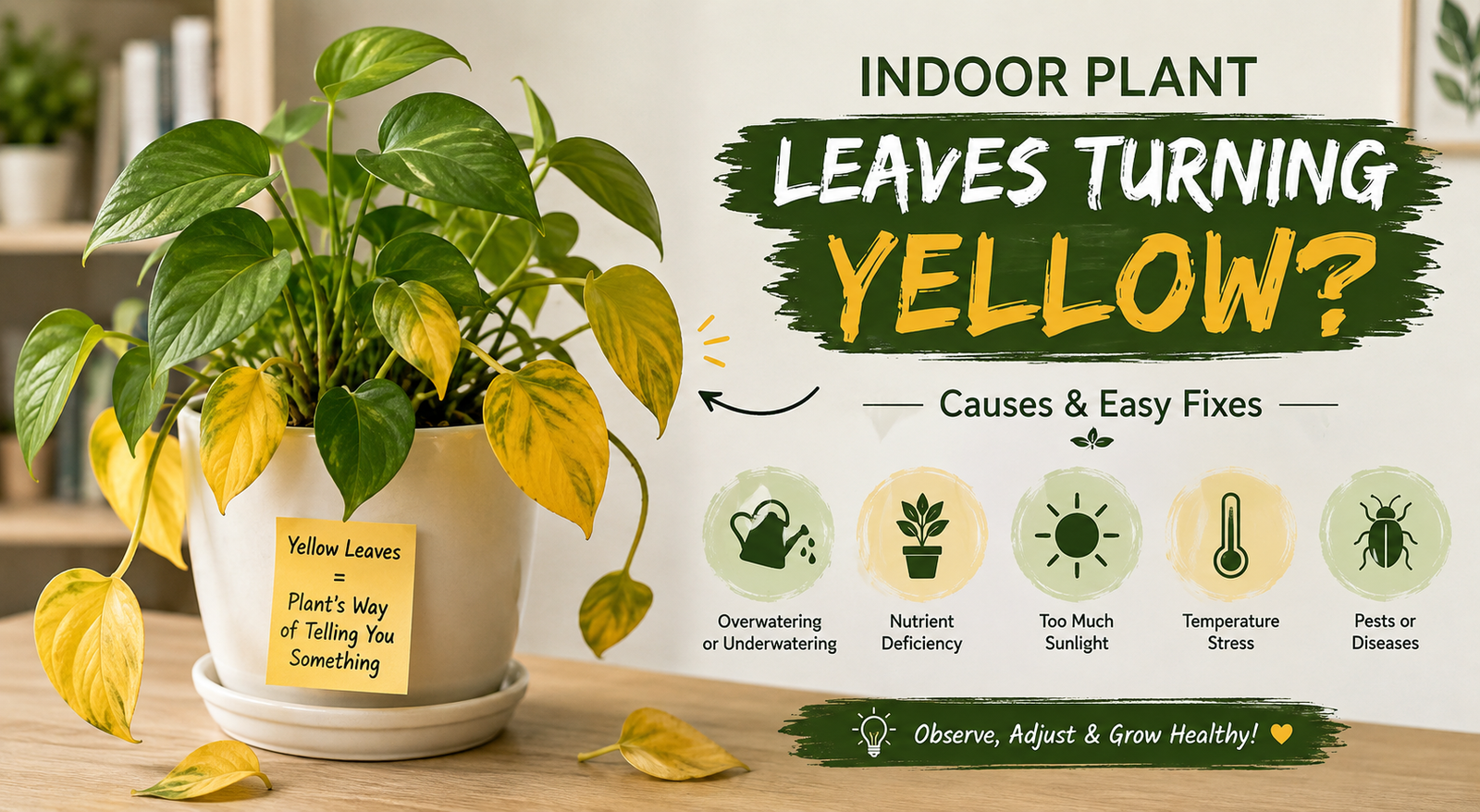
Indoor plant leaves turning yellow is a common warning sign, but it does not always mean your plant is dying. A single yellow lower leaf may be normal aging, while several yellow leaves can point to watering, drainage, light, roots, pests, or nutrition. If you notice indoor plant leaves turning yellow, resist the urge to immediately add fertilizer or water. First, identify the pattern and check the plant’s growing conditions.
The good news is that indoor plant leaves turning yellow can often be corrected when the underlying cause is found early. This guide explains the most common reasons, how to diagnose them, what to do, and how to prevent the problem from returning.
Why Are My Indoor Plant Leaves Turning Yellow?
Indoor plant leaves turning yellow usually means the plant is under some type of stress. The most common causes are overwatering, underwatering, poor drainage, insufficient light, nutrient problems, root damage, temperature changes, low humidity, pests, disease, or recent repotting.
Yellowing of leaves is due to deficiency of nutrients in some cases, but nutrient deficiency is only one possibility. Waterlogged roots, poor light, and environmental stress can also interfere with healthy foliage.
Diagnose the Problem Before You Treat It
When you see indoor plant leaves turning yellow, use a simple diagnostic process rather than changing several care habits at once.
1. Check the Soil
Push a finger into the potting mix or use a moisture meter. If the soil is still wet several days after watering, overwatering or poor drainage may be involved. If it is extremely dry and pulling away from the pot, underwatering is more likely.
2. Look at the Yellowing Pattern
Notice whether indoor plant leaves turning yellow are older leaves, new leaves, leaf tips, edges, or random spots. The location of the discoloration can provide useful clues.
3. Check the Roots
If the soil remains wet and the plant is declining, gently inspect the roots. Healthy roots are generally firm and light-colored, while severely damaged roots can be dark, soft, or mushy.
4. Review Recent Changes
Think about what changed before indoor plant leaves turning yellow appeared. Did you move the plant, repot it, place it beside an air conditioner, change its light, or alter your watering routine?
5. Inspect for Pests
Look under leaves and around stems for webbing, sticky residue, scale, thrips, or tiny moving insects. Pest damage can cause yellow patches or speckling.
12 Reasons Indoor Plant Leaves Turn Yellow
1. Overwatering
Overwatering is one of the most common reasons for indoor plant leaves turning yellow. Constantly wet soil reduces the air available around roots and can eventually contribute to root damage.
Check whether the pot has drainage holes and whether excess water can escape. Do not water again simply because the calendar says it is time. Let the plant’s moisture needs guide you.
2. Underwatering
Underwatering can also make indoor plant leaves turning yellow, especially when dry soil is combined with wilting or crispy brown edges. A lightweight pot and soil that feels dry well below the surface are useful clues.
Water thoroughly when the plant needs it, allowing excess water to drain away. Avoid giving a severely dry plant tiny amounts of water repeatedly if the potting mix has become difficult to rehydrate.
3. Poor Drainage
Sometimes the problem is not how much water you add but how long it stays in the pot. Poor drainage can leave roots sitting in saturated soil, increasing the risk of indoor plant leaves turning yellow.
Use a container with drainage holes and a suitable indoor potting mix. Empty decorative cachepots after watering if they collect excess water.
4. Natural Aging
Not every case of indoor plant leaves turning yellow is a care failure. Plants naturally shed older leaves as they redirect resources toward newer growth.
If one older, lower leaf slowly becomes yellow while the rest of the plant looks healthy, monitor it. Widespread or rapid yellowing is more concerning.
5. Too Little Light
Insufficient light can contribute to indoor plant leaves turning yellow and may also cause slow growth or stretched stems. Low light can reduce photosynthesis and may cause soil to dry more slowly.
Move the plant toward a brighter location appropriate for its species. Make changes gradually when a plant is sensitive to strong direct sun.
6. Too Much Direct Sun
Excessive direct sunlight can bleach or damage foliage, sometimes making indoor plant leaves turning yellow look pale before brown or crispy areas develop.
Check whether the affected foliage receives intense afternoon sun through glass. A sheer curtain or a better-positioned plant may help, depending on the species.
7. Nutrient Deficiency
Nutrient deficiency can cause indoor plant leaves turning yellow, particularly when the yellowing pattern is consistent with a specific nutrient issue. Nitrogen, magnesium, iron, and potassium can all play roles in plant health.
Yellowing between green veins may suggest a nutrient availability problem, but visual symptoms alone are not always enough for a precise diagnosis. Soil conditions and pH can affect nutrient uptake.
Do not automatically fertilize every plant with yellow leaves. If roots are stressed or the soil is constantly wet, fertilizer may not address the real problem.
8. Root Problems or Root Rot
Root damage is another important cause of indoor plant leaves turning yellow. A plant can have wet soil while still being unable to take up water properly if its roots are severely compromised.
Persistent wetness, poor growth, wilting, and soft or dark roots are warning signs. Correct the moisture and drainage problem and remove badly damaged roots only when repotting is genuinely necessary.
9. Cold Drafts and Temperature Changes
Indoor plants can react to sudden temperature changes. Air conditioners, open windows, exterior doors, and heating vents can create stressful conditions that contribute to indoor plant leaves turning yellow.
Keep sensitive plants away from strong drafts and avoid moving them repeatedly between very different environments.
10. Low Humidity
Dry indoor air can stress tropical houseplants. Although low humidity is not the explanation for every case of indoor plant leaves turning yellow, it can contribute to yellowing, browning, curling, or crispy edges in some plants.
Consider the plant’s natural humidity preference rather than trying to make every room extremely humid.
11. Pests or Disease
Pests such as spider mites, scale, and thrips can damage plant tissue and lead to indoor plant leaves turning yellow. Look for fine webbing, stippling, sticky residue, distorted growth, or insects.
Disease can also cause yellowing, particularly when discoloration appears with spreading spots or lesions. Isolate a suspicious plant from healthy plants while you investigate.
12. Repotting or Environmental Stress
Repotting, relocation, or a sudden change in light can temporarily stress a plant. If indoor plant leaves turning yellow begins soon after a major change, give the plant stable conditions while you monitor new growth.
Avoid repeatedly repotting or moving a stressed plant unless there is a clear problem such as severe root damage or unsuitable soil.
Yellow Leaves by Pattern: What Does It Mean?
The appearance of indoor plant leaves turning yellow can provide clues, although no single pattern proves a diagnosis.
| What you see | Possible cause | What to check |
| Yellow lower leaves | Aging, watering, low light | Soil and overall growth |
| Yellow new leaves | Nutrient availability, root stress | New growth and soil |
| Yellow between green veins | Possible nutrient issue | Soil, pH, feeding history |
| Yellow tips with brown edges | Water stress, dry air, light | Moisture and location |
| Yellow spots | Pests, disease, damage | Leaf undersides and spots |
| Whole plant yellowing | Significant stress | Roots, water, light, pests |
If indoor plant leaves turning yellow appears suddenly across many leaves, prioritize checking the roots, moisture level, drainage, temperature, and pests before making major changes.
Overwatering vs. Underwatering
It is easy to confuse these two problems because both can produce indoor plant leaves turning yellow.
| Sign | Overwatering | Underwatering |
| Soil | Stays wet | Very dry |
| Pot | Often heavy | Often light |
| Leaves | Soft, yellow, sometimes droopy | Dry, wilted, crispy |
| Roots | May become dark or mushy | May become dry or stressed |
| First step | Check drainage and roots | Rehydrate thoroughly |
The key is to inspect the soil rather than relying on the appearance of indoor plant leaves turning yellow alone.
How to Fix Indoor Plant Leaves Turning Yellow
Once you identify the likely cause, make one or two targeted changes.
For overwatering, allow the appropriate portion of the potting mix to dry, improve drainage, and reassess the watering routine. For underwatering, water thoroughly when the plant’s needs indicate it is time.
If light is the issue, move the plant to a suitable brighter or more protected location. If nutrition appears to be the problem, review the plant’s feeding routine and soil conditions before applying fertilizer.
For pests, isolate the affected plant and inspect neighboring plants. For temperature stress, move it away from drafts. If roots are damaged, address the drainage and soil conditions instead of simply increasing watering.
Can Yellow Leaves Turn Green Again?
Completely yellow leaves usually do not return to their original green color. However, stopping the cause of indoor plant leaves turning yellow can prevent further damage and allow healthier new leaves to develop.
Do not judge recovery only by old foliage. New, properly colored growth is often a better sign that the plant is responding to improved care.
Should You Cut Off Yellow Leaves?
If a leaf is completely yellow, dying, or badly damaged, you can usually remove it with clean, sharp scissors. If only a small section is yellow, there is often no need to remove the entire leaf immediately.
Removing a yellow leaf improves appearance but does not cure the reason for indoor plant leaves turning yellow. Always correct the underlying problem.
When Should You Worry?
A single old yellow leaf is usually less concerning than rapid, widespread indoor plant leaves turning yellow. Pay closer attention when yellowing is accompanied by mushy roots, foul-smelling soil, severe wilting, pests, spreading lesions, or sudden plant collapse.
If several leaves change color quickly, inspect the plant promptly rather than waiting for the problem to resolve by itself.
How to Prevent Yellow Leaves on Indoor Plants
Preventing indoor plant leaves turning yellow starts with consistent, species-appropriate care.
Check the soil before watering instead of following a rigid schedule. Use containers with drainage holes, provide suitable light, keep plants away from harsh drafts, and inspect leaves regularly for pests.
Avoid unnecessary fertilizer and avoid making several major changes at once. When you change a plant’s environment, observe how it responds before making another adjustment.
Yellow Leaves on Popular Indoor Plants
Different houseplants can show similar symptoms for different reasons. For pothos, snake plants, peace lilies, monstera, and spider plants, start with the basics: soil moisture, drainage, light, roots, and pests.
For example, if a pothos develops indoor plant leaves turning yellow while its soil stays wet, check drainage before adding fertilizer. If a snake plant has yellow leaves and consistently damp soil, watering frequency and pot drainage deserve attention. With a peace lily, compare yellowing with its watering and light conditions rather than assuming one universal cause.
Conclusion
Indoor plant leaves turning yellow are a signal to investigate, not a reason to panic. Start with the soil, drainage, light, roots, leaf pattern, and recent environmental changes. Once you identify the most likely cause, make a targeted correction and give the plant time to respond.
The most important lesson is simple: do not treat yellow leaves blindly. Diagnose first, correct the underlying condition, and watch the new growth. With consistent care, many plants can recover and continue producing healthy foliage.
Frequently Asked Questions
Why are my indoor plant leaves turning yellow?
The most common causes are overwatering, underwatering, poor drainage, insufficient or excessive light, nutrient problems, root stress, pests, temperature changes, low humidity, and natural aging.
Are yellow leaves always caused by overwatering?
No. Overwatering is common, but indoor plant leaves turning yellow can have many causes. Always check soil moisture, drainage, light, roots, and the leaf pattern before deciding what to change.
How do I know if yellow leaves are from overwatering or underwatering?
Check the soil first. Wet, heavy soil combined with soft yellow foliage points more toward excess moisture, while very dry soil with crispy or wilted foliage points more toward underwatering.
What deficiency causes yellowing of leaves?
Nitrogen, magnesium, iron, and potassium deficiencies can contribute to yellow foliage. However, yellowing of leaves is due to deficiency of a particular nutrient only in some cases, so symptoms should be interpreted alongside soil, roots, watering, and growth conditions.
Can yellow plant leaves turn green again?
A completely yellow leaf usually will not become green again. The goal is to correct the underlying cause so healthy new foliage can develop.
Should I remove yellow leaves?
You can remove leaves that are completely yellow or dying using clean scissors. Removing them improves appearance, but it will not solve the cause of indoor plant leaves turning yellow.
How quickly can yellow leaves recover?
Recovery depends on the cause and the plant. Existing yellow leaves may remain yellow, while new growth can show improvement after care conditions become suitable. Avoid making repeated changes too quickly.
You May Also Read: How Often to Water Indoor Plants
