


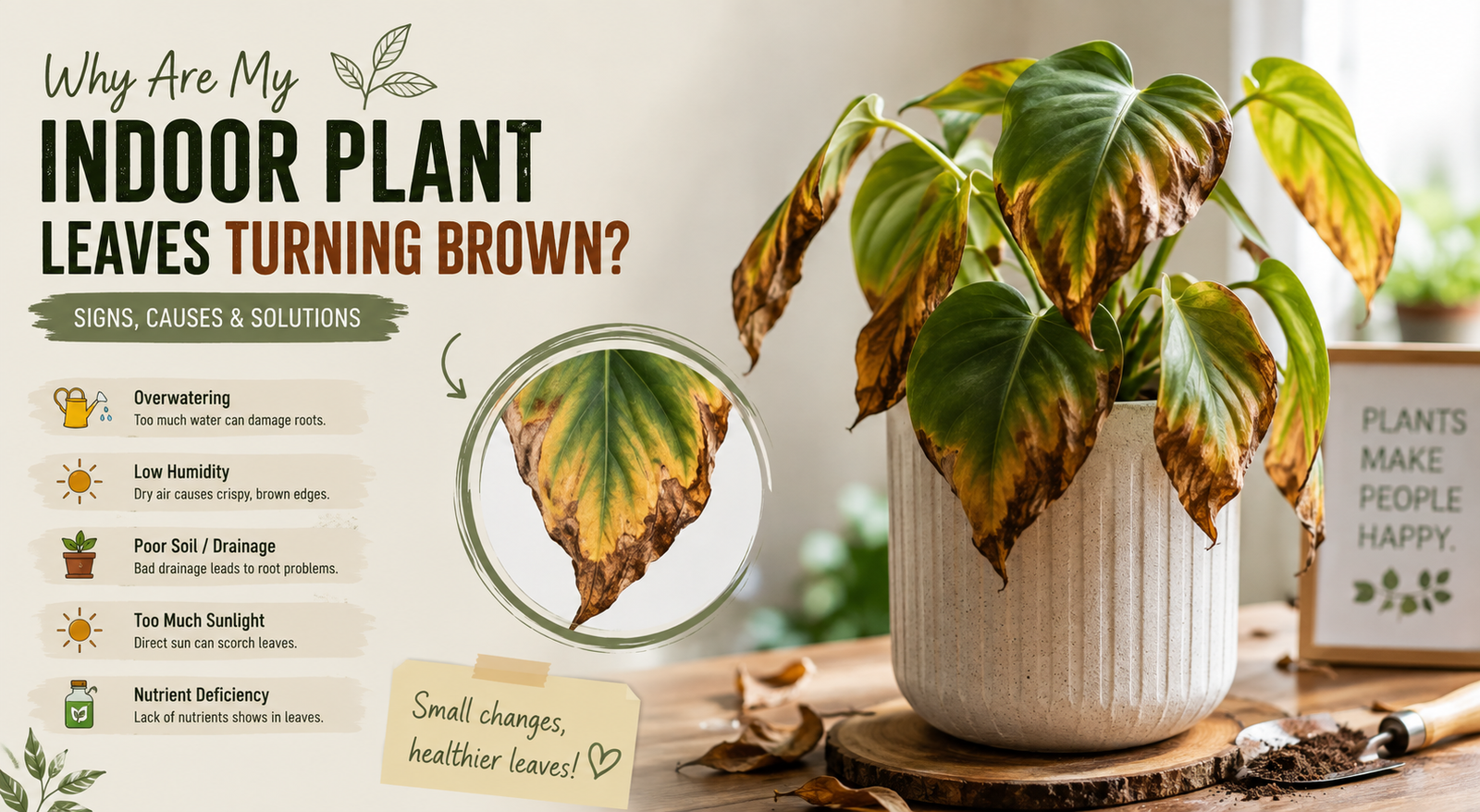
Indoor plant leaves turning brown can be frustrating, especially when your plant looked healthy just a few weeks ago. The good news is that brown foliage is usually a symptom of stress, not automatically a sign that your plant is dying.
If you are wondering why indoor plant leaves turning brown is happening, start by checking the soil, watering routine, drainage, light, humidity, roots, fertilizer, water quality, temperature, pests, and disease. The important thing is to identify the cause before changing your plant’s care routine.
Why Are My Indoor Plant Leaves Turning Brown?
There is no single reason indoor plant leaves turning brown. Underwatering, overwatering, dry air, excessive sunlight, poor drainage, fertilizer buildup, pests, and environmental changes can all produce brown foliage.
The pattern of the damage provides useful clues. Crispy brown tips are different from soft brown patches, while brown areas directly exposed to strong sunlight may point toward sun scorch.
Think of brown leaves as a warning signal. Your plant is telling you that something in its growing conditions needs attention.
Quick Diagnosis: What Does the Browning Look Like?
| What You See | Possible Cause | What to Check |
| Crispy brown tips | Dry air, inconsistent watering, mineral buildup | Soil and humidity |
| Brown edges | Water stress, low humidity, salts | Moisture and feeding |
| Brown patches near a window | Sun scorch | Light exposure |
| Soft brown leaves | Overwatering or root damage | Soil and roots |
| Brown spots spreading | Pest or disease issue | Both sides of leaves |
| Brown tips with white soil crust | Fertilizer or mineral buildup | Soil surface |
| One old lower leaf | Natural aging | New growth |
This quick check can help you understand indoor plant leaves turning brown before making a major change to the plant’s environment.
10 Common Causes of Brown Leaves
1. Underwatering
A common reason for indoor plant leaves turning brown is allowing the soil to become too dry for too long. Underwatered leaves often become thin, crispy, curled, or droopy. Brown tips and edges may appear first.
Instead of watering according to a fixed calendar, check the soil. If it is very dry and the pot feels unusually light, the plant may need a thorough watering.
A plant’s water needs can change with season, temperature, light, pot size, and species, so observation is more reliable than a universal schedule.
2. Overwatering
Surprisingly, indoor plant leaves turning brown can also be connected to excessive watering. The problem is often soil that stays saturated for too long rather than one heavy watering.
Constantly wet soil reduces the air available around roots. Damaged roots may then struggle to supply the foliage properly.
Look for:
- Soil that remains wet for days
- Yellowing mixed with browning
- Soft or weak foliage
- Poor drainage
- Unpleasant-smelling soil
Never assume a brown leaf automatically means the plant needs more water.
3. Low Humidity
Dry indoor air is another common reason indoor plant leaves turning brown, especially for tropical houseplants. Heating systems, air conditioners, and dry rooms can increase moisture loss from foliage.
Crispy tips and edges are common clues. Calatheas, ferns, prayer plants, and some palms can be particularly sensitive to dry conditions.
A humidifier can provide more consistent room humidity than repeatedly misting leaves. Keeping plants away from heating and cooling vents can also help.
4. Too Much Direct Sunlight
Not every case of indoor plant leaves turning brown is caused by watering. Strong direct sunlight can scorch foliage that is not adapted to intense exposure.
Sun-scorched leaves often develop tan or brown patches, particularly on the side facing a bright window. This can happen when a plant is suddenly moved from low light into strong sunlight.
If browning started after changing the plant’s location, review its light exposure before changing your watering routine.
5. Poor Drainage
Poor drainage is an overlooked cause of indoor plant leaves turning brown. A container without drainage holes can trap excess water around the roots, while compacted potting mix can create similar conditions.
Always use a suitable container with drainage. If your plant sits inside a decorative outer pot, empty standing water rather than allowing the inner container to remain submerged.
Good drainage does not mean keeping the soil completely dry. It means giving roots access to both moisture and air.
6. Root Rot or Root Stress
When indoor plant leaves turning brown continues despite reasonable watering, investigate the roots if the soil stays wet and the plant keeps declining.
Root appearance varies between species, but mushy, severely decayed, or foul-smelling roots are warning signs. Root damage can interfere with normal water uptake and cause foliage problems above the soil.
The solution is not simply trimming brown leaves. Correct the underlying drainage, soil, and root problem first.
7. Fertilizer Burn and Salt Buildup
Too much fertilizer can contribute to indoor plant leaves turning brown, particularly around leaf tips and margins. Excess soluble salts may accumulate in the potting mix and stress roots.
A white or crusty deposit on the soil surface or container can be an additional clue. Avoid increasing fertilizer when a plant is already stressed.
Established horticultural guidance recognizes fertilizer and salt buildup as potential causes of brown leaf tips and edges. The Pennington guide also emphasizes fertilizer salts and root-related problems as important factors.
8. Water Quality
Tap water works well for many houseplants, but some sensitive species may react to minerals or chemicals that accumulate over time. This is another possible explanation for indoor plant leaves turning brown when your watering routine appears consistent.
Spider plants, dracaenas, and calatheas can be sensitive to water-quality issues. If browning repeatedly affects these plants, consider water quality alongside humidity, watering, and fertilizer.
Do not assume every houseplant needs distilled or filtered water. Consider the species and your overall growing conditions.
9. Pests and Disease
Pests can cause indoor plant leaves turning brown when damage appears as spots, stippling, discoloration, or spreading patches. Always check both the upper and lower surfaces of leaves.
Look for:
- Fine webbing
- Tiny insects
- Cottony clusters
- Brown scale-like bumps
- Sticky residue
Spider mites, mealybugs, scale, and aphids are common indoor plant pests.
Disease can also cause brown or black spots. Rapidly spreading lesions, yellow halos, soft tissue, or persistent wet foliage deserve closer attention. If pests are present, isolating the affected plant can help protect nearby plants.
10. Natural Aging and Environmental Stress
Sometimes indoor plant leaves turning brown is simply part of natural aging. If one older lower leaf gradually yellows, turns brown, and drops while the rest of the plant remains healthy, there may be no serious problem.
Environmental changes can also trigger browning. Repotting, moving a plant to a different window, sudden temperature changes, cold drafts, and major changes in watering can all cause stress.
Look at the entire plant rather than judging its health from one old leaf.
Overwatering vs. Underwatering
When indoor plant leaves turning brown appears suddenly, the first question is often whether the plant needs more water or less.
| Sign | Underwatering | Overwatering |
| Soil | Very dry | Remains wet |
| Leaves | Often crispy | May be soft |
| Browning | Tips and edges common | Patches may occur |
| Yellowing | Possible | Common |
| Roots | Dry or stressed | May become mushy |
| Main problem | Lack of moisture | Poor root aeration |
These symptoms can overlap. A plant with damaged roots may look dehydrated even though its soil is wet because the roots cannot function properly.
How to Diagnose Indoor Plant Leaves Turning Brown
Instead of changing several things at once, use a simple troubleshooting process.
1. Check the soil. Determine whether it is dry, appropriately moist, or staying wet for too long.
2. Check drainage. Make sure the container has drainage holes and that water is not collecting underneath.
3. Evaluate light. Look for strong direct sunlight, insufficient light, or a recent change in location.
4. Check humidity and temperature. Look for dry rooms, heating vents, air conditioners, and cold drafts.
5. Inspect the leaves. Check both sides for insects, webbing, scale, or unusual spots.
6. Review fertilizer. Think about when you last fed the plant and whether you may have used too much.
7. Inspect roots when necessary. Persistent wet soil combined with declining foliage is a reason to look below the surface.
8. Monitor new growth. Healthy new leaves are a better recovery signal than damaged older leaves.
How to Fix Indoor Plant Leaves Turning Brown
The best solution for indoor plant leaves turning brown depends on the underlying cause.
| Cause | What to Do |
| Underwatering | Water thoroughly when the plant actually needs it |
| Overwatering | Improve drainage and allow appropriate drying |
| Low humidity | Increase room humidity and move away from vents |
| Sun scorch | Provide suitable filtered or indirect light |
| Poor drainage | Use a well-draining container and growing mix |
| Root damage | Correct wet soil and address damaged roots |
| Fertilizer buildup | Reduce unnecessary feeding and address salts |
| Water-quality issue | Consider the plant’s sensitivity and water source |
| Pests | Isolate and treat according to the pest |
| Disease | Remove severely affected tissue and improve conditions |
Avoid making dramatic changes based on one brown leaf. A plant can experience more than one type of stress at the same time.
Can Brown Leaves Turn Green Again?
Once indoor plant leaves turning brown has resulted in dead tissue, that tissue will not become green again. However, a partly damaged leaf may still have healthy green areas and can continue contributing to the plant.
The goal is to stop new damage rather than restore dead tissue. Once the cause is corrected, watch for healthier new growth.
This distinction is important because pruning a brown leaf without fixing its underlying problem will not prevent more browning.
Should You Cut Off Brown Leaves?
If only a small tip or edge is brown, you can trim the damaged area while preserving as much healthy tissue as possible. Follow the natural shape of the leaf rather than cutting deeply into green tissue.
If most of the leaf is dead, removing the entire leaf may be appropriate. Use clean, sharp scissors, particularly when disease is suspected.
Pruning improves appearance, but it should be treated as a finishing step rather than the primary solution.
Brown Leaves on Common Indoor Plants
Different plants can show similar symptoms for different reasons.
Spider plants: Brown tips may be associated with inconsistent watering, dry air, or water-quality issues.
Calatheas: Dry air, water quality, and sudden environmental changes can contribute to damaged foliage.
Snake plants: Prolonged wet soil and poor drainage are important concerns.
Peace lilies: Check soil moisture, humidity, drainage, and root health when leaves begin to deteriorate.
Monsteras: Consider watering, root condition, light exposure, and recent environmental changes together.
This is why plant-specific care matters. A watering routine that works for a snake plant may be unsuitable for a moisture-loving tropical plant.
How to Prevent Brown Leaves
Preventing indoor plant leaves turning brown starts with consistent observation.
Check soil moisture before watering. Use containers with adequate drainage. Give each plant an appropriate level of light and avoid sudden environmental changes.
Keep humidity and temperature reasonably stable, particularly for tropical plants. Fertilize according to the plant’s needs rather than assuming more fertilizer produces faster growth.
Regularly inspect foliage for pests and monitor new growth. If browning repeatedly returns, investigate water quality, humidity, salts, roots, and light instead of simply cutting off damaged leaves.
Common Mistakes That Make Browning Worse
One common mistake is watering immediately after noticing a brown tip. The plant could already be sitting in wet soil.
Another mistake is following a strict watering calendar without checking the soil. Overfertilizing a stressed plant can also increase root stress.
Moving a plant suddenly into intense sunlight can create additional damage. Likewise, ignoring the roots can allow an underground problem to continue while you focus only on the leaves.
The safest strategy is simple: observe, diagnose, make targeted changes, and monitor the results.
How Long Does Recovery Take?
The recovery time for indoor plant leaves turning brown depends on the plant species and severity of the problem. Existing brown tissue will remain damaged, but new browning should slow after the underlying cause is corrected.
During the following weeks, monitor soil moisture, light, humidity, and new growth. Avoid repeatedly moving the plant or changing its watering routine every few days.
Healthy new growth is one of the clearest signs that your care adjustments are working.
When Should You Worry?
If indoor plant leaves turning brown spreads quickly across several leaves, stems become soft, roots are severely decayed, soil smells rotten, or pests are widespread, investigate the problem promptly.
One old brown leaf is usually less concerning than rapid deterioration across new and old foliage.
If symptoms continue after correcting basic care, the plant may have a more specific root, pest, disease, or environmental problem that requires closer diagnosis.
Conclusion
Indoor plant leaves turning brown is a warning that something in the plant’s growing conditions may need attention. The most useful clues are the location, texture, and speed of the browning.
Check the soil first, then evaluate drainage, roots, light, humidity, fertilizer, water quality, pests, and recent environmental changes. Once you identify the cause, make targeted adjustments and give the plant time to respond.
Brown tissue will not turn green again, but stopping new damage and encouraging healthy new growth can bring a stressed houseplant back to good condition.
FAQs About Indoor Plant Leaves Turning Brown
Why are my indoor plant leaves turning brown at the tips?
Brown tips are commonly associated with inconsistent watering, low humidity, fertilizer or salt buildup, and water-quality issues. Check the soil, humidity, and recent feeding before changing your routine.
Why are the edges of my plant leaves turning brown and crispy?
Crispy brown edges can occur when foliage loses moisture faster than the plant can replace it. Dry air, underwatering, inconsistent watering, and mineral buildup are possible causes.
Does overwatering cause brown leaves?
Yes. Overwatering can contribute to indoor plant leaves turning brown when constantly wet soil damages roots or interferes with normal root function. Check the soil and drainage before watering again.
Can brown plant leaves turn green again?
No. Dead brown tissue will not return to green. Correcting the underlying problem can prevent further damage and help the plant produce healthier new growth.
Should I cut off brown leaves?
You can trim small damaged sections for appearance or remove leaves that are mostly dead. Use clean scissors and focus on fixing the underlying cause.
Why are my indoor plant leaves turning brown and yellow?
Brown and yellow foliage can occur with overwatering, root stress, aging, inconsistent watering, or environmental changes. Check the soil, drainage, roots, and age of the affected leaves.
How do I stop indoor plant leaves turning brown and crispy?
Start by checking soil moisture, drainage, humidity, light, fertilizer, and water quality. Correct the most likely cause and monitor new growth rather than making several major changes at once.
You May Also Read: Indoor Plant Leaves Turning Yellow
