


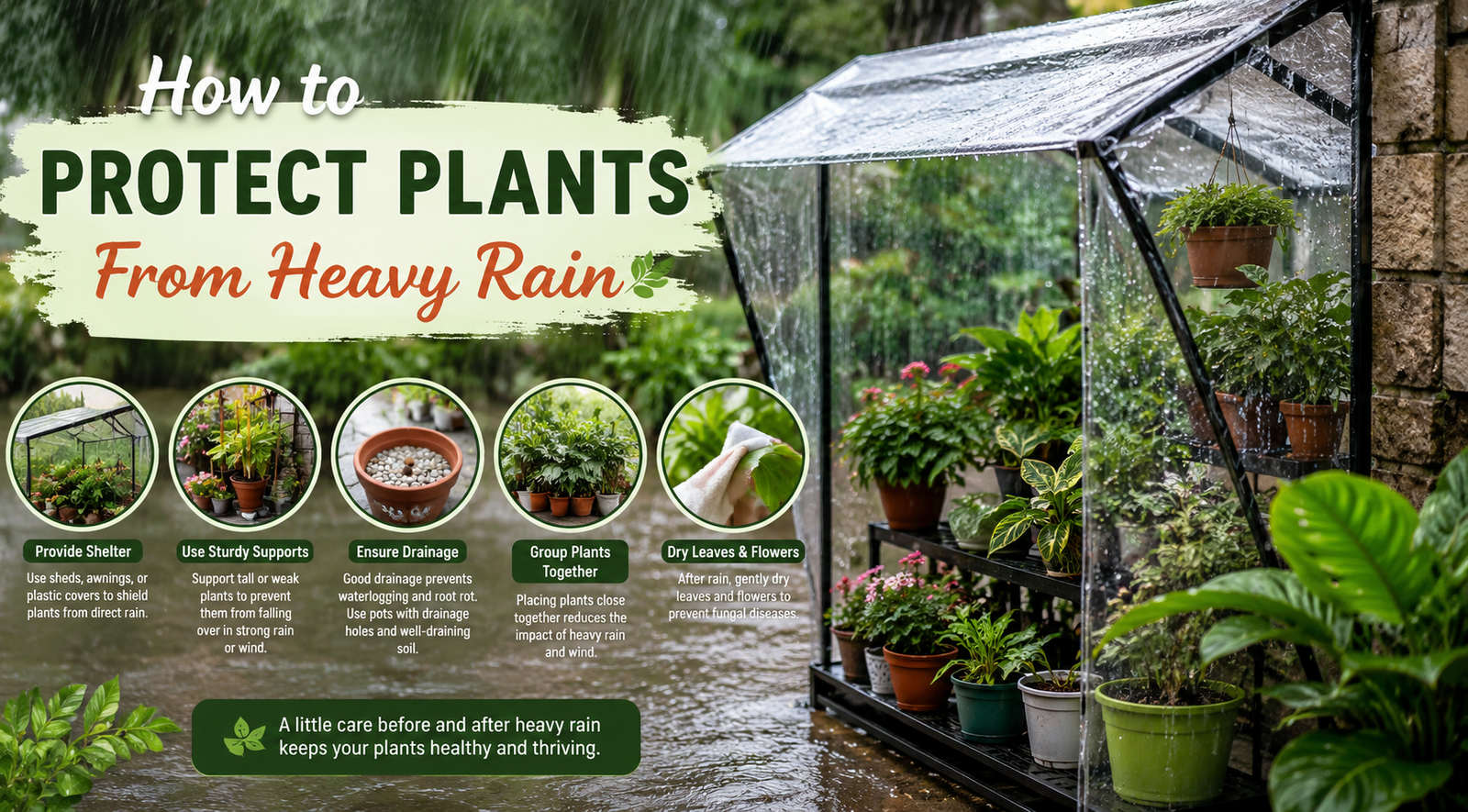
Heavy rain can be a welcome sight in the garden, but too much rainfall in a short period can quickly turn into a problem. Waterlogged soil, exposed roots, broken stems, soil erosion, fungal diseases, and nutrient loss can all affect otherwise healthy plants.
Knowing how to protect plants from heavy rain can help you prevent much of this damage before a storm arrives. The best approach isn’t simply covering every plant. Instead, you need to consider the type of plant, soil drainage, rainfall intensity, wind, and how long the soil stays saturated.
This guide explains how to protect plants from heavy rain before, during, and after a storm. You’ll also learn how to protect potted plants from heavy rain, protect seedlings, manage wet soil, and help damaged plants recover.
Can Heavy Rain Damage Plants?
Yes. A few hours of normal rainfall usually isn’t a problem for most established plants, but intense or prolonged How to Protect Plants From Heavy Rain can create several problems.
The biggest issue is waterlogged soil. When soil stays saturated, there is less air available around plant roots. Poor drainage can therefore stress roots and increase the risk of root-related problems.
Heavy rainfall can also wash soil away from roots, flatten delicate stems, damage flowers, and splash soil onto foliage. Wet leaves combined with poor airflow can create favorable conditions for certain fungal and bacterial diseases.
According to UF/IFAS, gardeners should inspect plants after How to Protect Plants From Heavy Rain for symptoms such as leaf spots, discoloration, stem problems, and fruit or root rot.
Understanding these risks makes it easier to decide how to protect plants from heavy rain instead of relying on one solution for every garden.
How to Protect Plants From Heavy Rain
1. Check the Weather Forecast Before the Storm
The easiest way to prepare is to know when severe weather is approaching. Check the forecast before watering, planting, or leaving vulnerable plants exposed.
If heavy rain is expected, focus first on:
- Newly planted seedlings
- Potted plants
- Tall flowers
- Young trees
- Newly transplanted vegetables
- Plants growing in poorly drained areas
Preparing a few hours before rainfall gives you enough time to move containers, secure plants, and install temporary covers.
2. Move Potted Plants to a Sheltered Area
One of the simplest answers to how to protect plants from heavy rain is moving vulnerable containers.
Place pots under a covered porch, patio, greenhouse, or another sheltered area where they can avoid direct rainfall. This is particularly helpful for plants that dislike consistently wet roots, such as many succulents and drought-tolerant species.
However, don’t put containers somewhere completely dark for several days. Temporary shelter is useful, but plants still need appropriate light and airflow.
Also check the drainage holes. A pot with blocked holes can remain saturated even after rainfall stops.
3. Use Plant Covers for Vulnerable Plants
Plant covers can reduce the impact of intense rain and wind on young or delicate plants.
Depending on the plant, you can use:
- Row covers
- Garden fabric
- Large overturned pots
- Buckets
- Temporary plant shelters
- Protective frames
When considering how to protect plants from heavy rain, remember that the cover needs to be secured properly. A loose cover can blow away or damage the plant.
Avoid placing heavy material directly on delicate foliage. If plastic sheeting is used as a temporary rain barrier, support it with a frame rather than allowing it to rest heavily on the plant.
Remove temporary protection when the severe weather has passed so plants can receive normal light and airflow.
4. Protect Seedlings From Heavy Rain
Young seedlings are more vulnerable than established plants because their stems and root systems are still developing.
Intense rainfall can disturb the soil around seedlings, expose roots, or create a crust on the soil surface. K-State Extension notes that heavy rainfall can contribute to soil crusting, which may interfere with seed emergence and root oxygen.
For how to protect plants from heavy rain at the seedling stage, consider:
- Using a cloche or small plant cover
- Adding a light protective barrier above seedlings
- Securing loose soil around the root zone
- Growing seedlings in containers that can be moved
- Avoiding exposed, low-lying areas
5. Stake Tall and Newly Planted Plants
Heavy rain becomes even more damaging when strong winds accompany it.
Tall plants can bend, lean, or break when wet foliage becomes heavy. Newly planted trees and shrubs may also shift because their roots haven’t established fully.
Use appropriate stakes and soft ties to provide temporary support. Don’t tie plants so tightly that stems cannot move naturally.
If a plant has already fallen over, avoid immediately forcing it upright. K-State Extension notes that some leaning plants can gradually straighten themselves, while forcing fragile stems can cause additional damage.
This is an important part of how to protect plants from heavy rain and storms without creating new damage.
6. Improve Garden Drainage
Covering plants is only part of the solution. If water remains around the roots, the plant can continue suffering long after the rain stops.
Look for:
- Low spots where water collects
- Compacted soil
- Blocked drainage routes
- Poorly draining containers
- Areas where runoff flows directly toward plants
Clay-heavy or compacted soil can drain slowly and contribute to standing water after intense rainfall.
If your garden regularly floods after storms, consider long-term solutions such as raised beds, improved soil structure, appropriate grading, or better runoff management.
7. Use Mulch Correctly
Mulch can be helpful before How to Protect Plants From Heavy Rain because it reduces direct impact on soil and can help limit erosion.
However, thick mulch isn’t always ideal when the soil is already saturated.
If an area remains extremely wet after prolonged rainfall, temporarily moving excessive mulch away from the root zone can help expose the soil to air and improve drying. UF/IFAS recommends removing mulch from saturated areas for a period when excessive moisture is a concern.
So, how to protect plants from heavy rain isn’t about always adding more mulch. It’s about adjusting mulch according to soil conditions.
How to Protect Different Plants From Heavy Rain
Different plants need different levels of protection. Use the following guide when deciding how to protect plants from heavy rain.
| Plant Type | Main Risk | Best Protection |
| Seedlings | Soil erosion and broken stems | Cloches or temporary covers |
| Tomatoes | Bent stems and wet foliage | Stakes and good airflow |
| Flowers | Damaged blooms and stems | Support and temporary cover |
| Potted plants | Waterlogged roots | Move to shelter and check drainage |
| Young trees | Leaning and root disturbance | Appropriate temporary support |
| Succulents | Excess moisture | Move under shelter |
| Established shrubs | Wind and branch damage | Prune damaged material after the storm |
Vegetable Plants
Vegetables such as tomatoes and peppers may benefit from staking and improved airflow. Keeping foliage from constantly touching wet soil can also reduce disease pressure.
Avoid unnecessary watering immediately after rainfall. Instead, check the soil first.
Flowering Plants
Fragile flowers can be damaged by strong rainfall even when the rest of the plant remains healthy. If severe weather is forecast, temporary protection can help preserve blooms.
Newly Planted Trees and Shrubs
Focus on root stability, exposed soil, and wind damage. Check whether the plant has shifted after the storm and inspect the surrounding soil for erosion.
What to Do After Heavy Rain
Knowing how to protect plants from heavy rain also means knowing what to do once the clouds clear.
Check for Standing Water
Walk around the garden and identify areas where water remains for an extended period.
Check containers, beds, low spots, and areas around tree trunks. If water consistently collects in the same place, you likely have a drainage issue that needs a long-term solution.
Stop Watering Temporarily
Don’t assume a wilted plant needs water.
A plant can wilt even when the soil is extremely wet because damaged roots may struggle to function properly. Always check soil moisture before watering again.
Inspect Stems, Leaves, and Roots
Look for:
- Broken branches
- Bent stems
- Exposed roots
- Yellowing leaves
- Leaf spots
- Soft or damaged tissue
- Washed-away soil
Remove debris that is pressing against plants and inspect vulnerable areas carefully.
Improve Airflow
Wet foliage that remains crowded can dry slowly. Remove fallen debris and, when appropriate, thin damaged material to improve airflow.
If pruning is necessary, avoid aggressively pruning soaking-wet plants. UF/IFAS recommends waiting until plants are dry when possible because wet conditions can increase opportunities for disease spread.
Wait Before Fertilizing
Heavy rainfall can move nutrients through the soil, but immediately adding fertilizer isn’t always the right response.
UF/IFAS recommends waiting before fertilizing after significant rainfall rather than automatically applying more nutrients.
How to Protect Potted Plants From Heavy Rain
Container plants deserve special attention because pots have a limited amount of soil and can become saturated quickly.
If you’re wondering how to protect potted plants from heavy rain, follow these steps:
- Move vulnerable pots under temporary shelter.
- Make sure drainage holes are open.
- Raise containers slightly off surfaces where appropriate.
- Empty saucers that contain standing water.
- Avoid watering again until the soil moisture level requires it.
- Return plants to suitable light once severe weather passes.
Large containers can be difficult to move, so placing vulnerable plants in a sheltered location before storm season can save time.
How to Tell if a Plant Has Had Too Much Rain
Knowing the signs helps you decide how to protect plants from heavy rain in the future.
Watch for:
- Yellowing foliage
- Persistent wilting despite wet soil
- Soil that remains saturated
- Leaf spots
- Soft stems
- Root discoloration or decay
- Exposed roots
- Soil erosion
- Mold or fungal growth
One particularly confusing symptom is wilting. Beginners often assume wilting always means the plant needs water. After heavy rainfall, however, adding more water can make the problem worse.
What Not to Do After Heavy Rain
Avoid these common mistakes:
Don’t water automatically. Check soil moisture first.
Don’t walk repeatedly over saturated beds. Wet soil is more vulnerable to compaction. UF/IFAS warns against walking on wet soil because it can increase compaction.
Don’t force bent plants upright. Fragile stems can snap.
Don’t fertilize immediately. Give the soil and roots time to recover.
Don’t leave pots sitting in standing water. Improve drainage or move them.
Don’t leave damaged leaves and debris everywhere. Remove material that may contribute to disease problems.
Don’t keep temporary covers on indefinitely. Plants need normal airflow and light once the severe weather has passed.
How Soil Type Affects Heavy Rain Damage
Soil type can significantly change the way your garden responds to rainfall.
| Soil Condition | Heavy Rain Risk | Helpful Approach |
| Clay soil | Slow drainage | Improve soil structure over time |
| Sandy soil | Erosion and nutrient movement | Protect the soil surface |
| Loamy soil | Usually balanced drainage | Maintain organic matter and structure |
| Compacted soil | Poor infiltration | Reduce compaction |
| Container soil | Rapid saturation | Check drainage holes and potting mix |
If your garden experiences flooding repeatedly, don’t simply search for how to protect plants from heavy rain every time a storm arrives. Identify why water is accumulating and fix the underlying drainage problem.
Long-Term Ways to Make Your Garden More Rain-Resistant
Temporary covers are useful, but permanent improvements can make your garden much easier to manage.
Build Raised Beds
Raised beds can improve drainage where existing ground conditions are unsuitable, although they aren’t a solution for every flooding situation.
Improve Soil Structure
Healthy soil structure helps water move through the root zone more effectively. Avoid unnecessary foot traffic on wet garden beds.
Manage Runoff
Observe where rainwater naturally travels. Redirecting runoff away from vulnerable plants can reduce repeated waterlogging.
Consider a Rain Garden
A rain garden is designed to temporarily capture and infiltrate runoff. It can be useful where water naturally collects, provided the site is appropriate.
For larger drainage or erosion problems, professional assessment may be necessary rather than attempting a major drainage project without understanding the site.
Choose Plants for the Location
The best long-term strategy is often choosing plants suited to the conditions you already have.
If one area stays wet while another drains quickly, don’t treat both areas exactly the same. Match plant selection and garden design to the site.
Heavy Rain Protection Checklist
Use this quick checklist whenever a major storm is approaching.
Before the rain:
- Check the forecast
- Move vulnerable pots
- Secure tall plants
- Protect seedlings
- Check drainage holes
- Clear blocked runoff routes
- Prepare plant covers
After the rain:
- Check standing water
- Stop unnecessary watering
- Inspect plants for damage
- Check exposed roots
- Look for disease symptoms
- Remove harmful debris
- Reassess mulch
- Wait before fertilizing
This simple routine makes how to protect plants from heavy rain much easier to remember.
Heavy Rain vs. Thunderstorms
Heavy rain and thunderstorms aren’t exactly the same gardening problem.
Heavy rain primarily creates risks related to:
- Waterlogging
- Soil erosion
- Nutrient movement
- Disease
- Root stress
Thunderstorms can add:
- Strong winds
- Hail
- Broken branches
- Flattened plants
- Physical impact
Therefore, how to protect plants from heavy rain may involve drainage and covers, while storm preparation may also require staking, securing structures, and protecting plants from wind.
Conclusion
Learning how to protect plants from heavy rain is mostly about preparation, drainage, and careful recovery. You don’t need to shelter every plant every time it rains.
Focus on the plants most at risk, move vulnerable containers, protect seedlings, support tall plants, keep drainage routes clear, and inspect the garden after the storm. Most importantly, don’t confuse a wilted plant with a thirsty plant when the soil is already saturated.
With a little preparation and better garden drainage, you can reduce the damage caused by intense rainfall and help your plants recover more quickly after the weather clears.
Frequently Asked Questions
1. How do I protect plants from heavy rain?
Move vulnerable potted plants to shelter, cover delicate seedlings, secure tall plants, improve drainage, and check soil moisture after rainfall. The best method depends on the plant and how long the soil stays wet.
2. Should I cover plants during heavy rain?
You can cover young or fragile plants when intense rainfall is expected. Use a supported and secure cover rather than placing heavy plastic directly on foliage, and remove temporary protection after severe weather passes.
3. How do I protect potted plants from heavy rain?
Move containers to a sheltered location, make sure drainage holes are clear, elevate pots where appropriate, empty standing water from saucers, and avoid watering again until the soil needs it.
4. Should I water plants after heavy rain?
Usually, not immediately. Check the soil first. If it is still wet, additional watering can increase the risk of waterlogging and root stress.
5. Should I remove mulch after heavy rain?
Not automatically. Mulch can help protect soil from rainfall and erosion, but excessive mulch around saturated plants may slow drying. If soil remains very wet, temporarily moving some mulch away can be helpful.
6. Can heavy rain cause root rot?
Prolonged soil saturation can increase the risk of root problems, especially in poorly drained soil. Watch for persistent wetness, wilting despite wet soil, yellow leaves, and unhealthy roots.
7. What should I do if my plant is leaning after heavy rain?
Inspect the stem and root area first. If the plant is not badly damaged, provide appropriate support rather than forcing it upright. Some plants can gradually recover their position as they regain strength.
You May Also Read: Best Flowers for Gardens
