


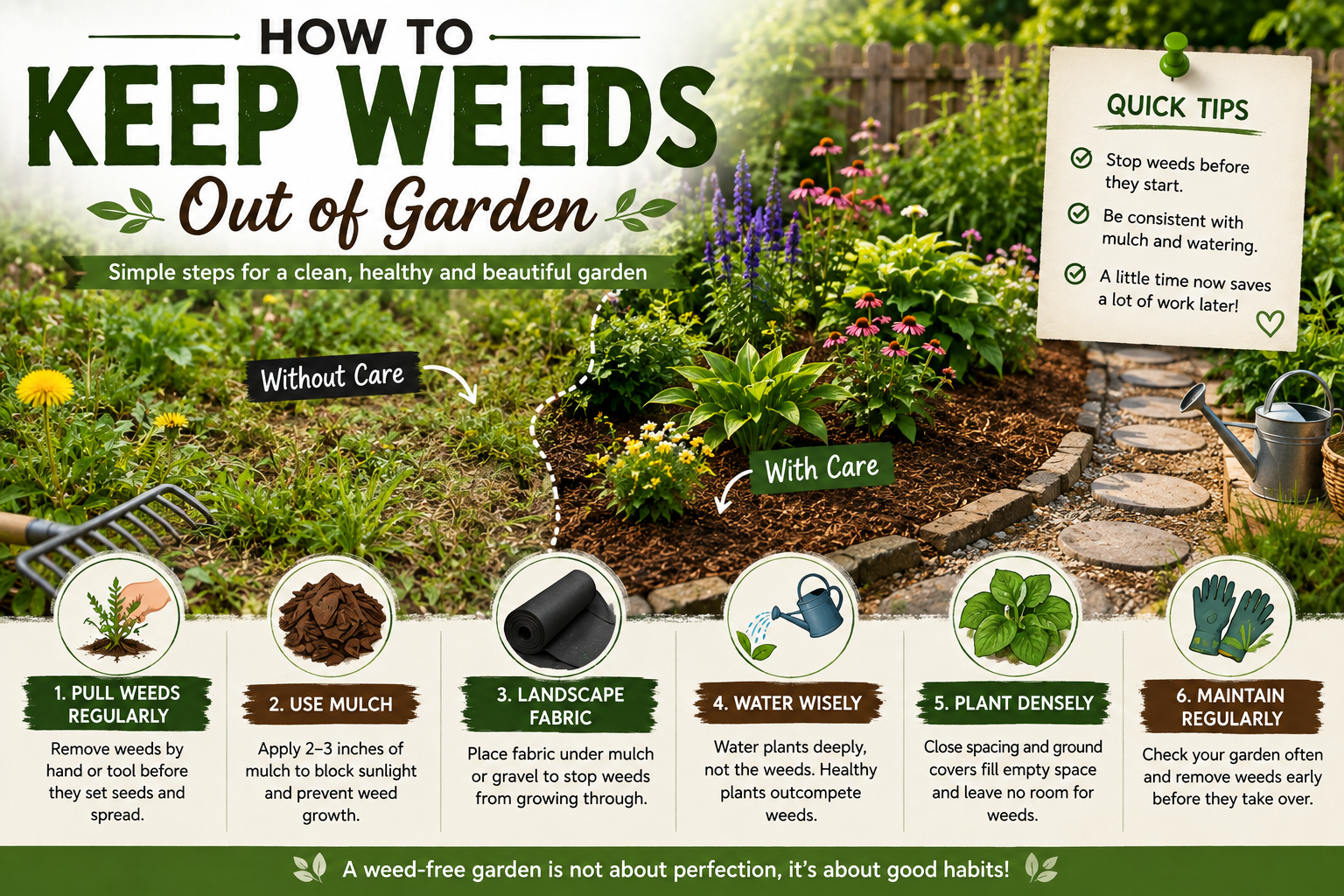
Keeping a garden healthy is much easier when weeds are under control. Unfortunately, weeds can appear almost overnight, competing with flowers, vegetables, herbs, and other plants for water, nutrients, sunlight, and growing space. If you’re wondering how to keep weeds out of garden, the best approach is to prevent them from becoming established in the first place.
The good news is that you don’t need to spend hours pulling weeds every weekend. A combination of mulch, proper planting, early removal, clean gardening materials, and regular maintenance can dramatically reduce weed growth. In this guide, you’ll learn how to keep weeds out of garden naturally, cheaply, and with methods that work for vegetable gardens, flower beds, raised beds, and containers.
Why Do Weeds Keep Coming Back in a Garden?
Before learning how to keep weeds out of garden, it helps to understand why weeds return so easily. Weed seeds can remain in soil for years and may germinate whenever they receive the right combination of light, moisture, temperature, and space.
Bare soil is particularly vulnerable. Every uncovered area gives weed seeds somewhere to land and grow. Digging or tilling soil can also bring buried seeds closer to the surface, where they may receive enough light to germinate.
Some weeds are annuals, meaning they complete their life cycle within one growing season. Others are perennial weeds that can return from roots, rhizomes, bulbs, or other underground structures. This is why simply cutting off the visible portion doesn’t always solve the problem.
How to Keep Weeds Out of Garden can also accidentally introduce weed seeds through compost, manure, soil, straw, mulch, or garden equipment. Preventing those introductions is an important part of understanding how to keep weeds out of garden for the long term.
How to Keep Weeds Out of Garden
The most effective strategy is not one magic product. Instead, combine several simple techniques. Here are 11 practical ways to learn how to keep weeds out of garden with less ongoing effort.
1. Cover Bare Soil With Mulch
One of the easiest answers to how to keep weeds out of garden is to cover exposed soil with mulch. Mulch reduces the amount of light reaching the soil surface and makes it harder for many weed seeds to germinate and grow.
Organic options include shredded leaves, straw, grass clippings, composted materials, bark, and wood chips. Inorganic options such as gravel can also work in appropriate areas.
A typical garden mulch layer is around 2 to 4 inches, although the ideal depth depends on the material and where it is being used. Avoid piling mulch directly against plant stems or tree trunks because excessive moisture around the base can create other problems.
| Mulch Type | Best Use | Main Advantage | Potential Drawback |
| Shredded leaves | Vegetable and flower beds | Cheap and easy to find | May mat when wet |
| Straw | Vegetable gardens | Good soil coverage | May contain weed seeds |
| Wood chips | Shrubs and perennial beds | Long-lasting | Needs occasional replenishing |
| Bark | Flower beds | Attractive appearance | Usually costs more |
| Gravel | Paths and decorative areas | Durable | Does not improve soil |
2. Remove Existing Weeds Before Mulching
If you’re researching how to keep weeds out of garden, don’t make the mistake of simply covering a bed full of mature weeds with mulch.
First remove existing weeds as thoroughly as practical. Small annual weeds can often be pulled by hand, while larger or persistent weeds may require a hand tool to loosen the roots.
Once the area is reasonably clean, apply your mulch. This gives the mulch a better chance of suppressing new seedlings instead of simply hiding established weeds.
3. Use Cardboard for New Garden Beds
Cardboard can be one of the cheapest solutions when you’re figuring out how to keep weeds out of garden without buying specialized materials.
It works particularly well when converting a weedy patch of lawn or neglected ground into a new garden bed. Lay plain, untreated cardboard over the area, overlap the pieces so weeds cannot easily grow through gaps, wet the cardboard, and cover it with several inches of suitable organic material.
Over time, the cardboard breaks down and contributes organic matter while helping suppress vegetation underneath.
Example: If you’re creating a new flower bed over an area covered with grass, sheet mulching with cardboard and organic mulch can reduce the amount of digging required.
4. Use Landscape Fabric Selectively
Landscape fabric is another option for how to keep weeds out of garden, but it should not be treated as a permanent guarantee against weeds.
It can be particularly useful beneath certain pathways, gravel areas, and some garden installations. However, dust, leaves, soil, and other organic material can eventually collect on top of the fabric, allowing weeds to establish above it.
For planted beds, organic mulch may be easier to maintain because it can be refreshed and incorporated into a broader soil-management strategy.
5. Plant Ground Covers to Shade the Soil
Another useful answer to how to keep weeds out of garden is to reduce the amount of exposed soil through appropriate planting.
Ground-cover plants spread across open areas and can shade the soil surface. Dense planting can also reduce the space available for weeds.
Choose ground covers carefully. A plant that spreads aggressively may create a new maintenance problem, so select varieties that are appropriate for your climate, soil, light conditions, and garden design.
6. Pull or Hoe Weeds While They Are Small
Learning how to keep weeds out of garden doesn’t mean eliminating every weed forever. Some weeds will inevitably appear, so timing matters.
Young weeds are usually easier to remove than mature plants. A quick weekly inspection can prevent a small problem from becoming a major infestation.
For shallow-rooted annual weeds, light hoeing can disturb young seedlings. Avoid unnecessary deep cultivation because bringing buried seeds to the surface can encourage another flush of weeds.
The goal is simple: remove weeds before they become large, establish extensive roots, or produce seeds.
7. Never Let Weeds Go to Seed
If you’re serious about how to keep weeds out of garden, stop thinking only about today’s weeds. Think about next year’s weeds too.
A mature weed that flowers and produces hundreds or thousands of seeds can create a much bigger problem later. Removing weeds before they reach the seed-producing stage helps reduce the number of new weeds entering the soil.
Make a habit of walking through your garden regularly. Pay special attention to corners, pathways, bed edges, and areas where weeds can easily go unnoticed.
8. Avoid Bringing Weed Seeds Into the Garden
Clean gardening materials are an overlooked part of how to keep weeds out of garden.
Weed seeds can potentially enter your garden through:
- Compost
- Manure
- Topsoil
- Straw
- Mulch
- Potting materials
- Dirty gardening tools
Buy soil amendments and mulch from reliable sources when possible. If you use homemade compost, make sure your composting process is appropriate for breaking down unwanted plant material and seeds.
This simple precaution can save considerable work later.
9. Try Soil Solarization for Heavily Infested Beds
For gardeners dealing with a severely infested, empty bed, soil solarization can be another tool for how to keep weeds out of garden.
Solarization involves covering moist soil with clear plastic during a period of strong sunlight. Heat builds beneath the covering and can reduce certain weed seeds, seedlings, and other unwanted organisms near the soil surface.
This method requires patience and an area that can remain unplanted during treatment. It is therefore more suitable for empty beds than established vegetable or flower gardens.
10. Keep Garden Paths Weed-Free
Gardeners often focus on planting beds and forget that pathways can become major sources of weed seeds.
If you’re looking for how to keep weeds out of garden, maintain the surrounding paths as well. Gravel, pavers, mulch, or other suitable materials can reduce exposed soil, while regular removal keeps small weeds from becoming established.
Pay particular attention to the boundary between paths and garden beds. Weeds growing along these edges can quickly spread into cultivated areas.
11. Create a Weekly Weed-Prevention Routine
The simplest long-term answer to how to keep weeds out of garden is consistency.
You don’t need an entire afternoon. A short weekly inspection can make a noticeable difference.
During your routine:
- Walk through every garden bed.
- Pull visible young weeds.
- Check for exposed soil.
- Inspect mulch depth and coverage.
- Look along garden edges.
- Check pathways.
- Remove weeds before they flower.
- Look for areas where mulch or barriers have shifted.
A few minutes every week is generally easier than dealing with an overgrown garden once weeds have matured.
Best Weed-Control Methods Compared
There is no single best method for every situation. The right approach depends on the size of your garden, the type of weeds you’re dealing with, and how much maintenance you’re willing to do.
| Method | Best For | Cost | Effort | Long-Term Benefit |
| Mulch | Most garden beds | Low–Medium | Low | High |
| Hand weeding | Small gardens | Low | Medium–High | Medium |
| Cardboard | New beds | Very Low | Low | High |
| Landscape fabric | Paths and selected areas | Medium | Medium | Medium–High |
| Ground covers | Established ornamental beds | Medium | Low | High |
| Solarization | Empty, heavily infested beds | Low | Medium | High |
| Herbicides | Specific difficult weeds | Medium | Low–Medium | Variable |
For most home gardeners, combining two or three methods is more practical than relying on one technique.
How to Keep Weeds Out of a Vegetable Garden
When learning how to keep weeds out of garden, vegetable beds deserve special attention because you don’t want to damage edible plants while removing weeds.
Start with clean soil and remove existing weeds before planting. Once vegetables are established, use an appropriate mulch to cover exposed soil while leaving enough space around plant stems.
Hand-pull weeds close to vegetables where tools could damage roots. Keep pathways maintained and inspect the garden regularly.
If you grow rows of vegetables, plan spacing carefully. Extremely wide gaps create more bare soil where weeds can establish.
How to Keep Weeds Out of Flower Beds
Flower beds can benefit from a combination of decorative mulch, appropriate ground covers, and dense planting.
If you’re wondering how to keep weeds out of garden beds around ornamental plants, start by clearing existing weeds before adding mulch. Maintain a consistent layer of mulch and avoid piling it against plant crowns or stems.
Perennial flowers that fill available space can naturally reduce the amount of exposed soil. However, give each plant enough room for healthy growth rather than overcrowding the bed.
How to Keep Weeds Out of Raised Beds
Raised beds are often easier to manage because the growing area is clearly defined.
For how to keep weeds out of garden beds that are raised, begin with a clean growing medium. Cover exposed soil with suitable mulch after planting and remove weeds while they are small.
Avoid unnecessary deep digging every time a weed appears. Shallow cultivation or hand removal is often more appropriate for established beds.
Don’t forget the area around the raised bed. Weed-filled paths can quickly undermine your efforts inside the bed.
How to Keep Weeds Out of Garden Naturally
For gardeners who prefer how to keep weeds out of garden naturally, the best strategy is prevention rather than homemade weed-killing mixtures.
Natural approaches include:
- Organic mulch
- Hand pulling
- Shallow hoeing
- Cardboard sheet mulching
- Ground covers
- Preventing weeds from producing seeds
- Keeping garden paths maintained
- Using clean soil and compost
Remember that “natural” does not automatically mean harmless. Any substance used to kill plants can potentially harm desirable vegetation, soil organisms, or nearby plants if used incorrectly.
How to Stop Weeds From Growing Permanently
Many people search for how to stop weeds from growing permanently, but a completely weed-free garden is not a realistic promise.
Seeds can arrive through wind, animals, water, soil movement, compost, and other sources. Some perennial weeds can also survive underground even after their visible growth is removed.
A better goal is to create conditions where weeds struggle to establish and are removed before they reproduce.
The combination of soil coverage, appropriate planting, early removal, and regular maintenance is a more realistic form of long-term weed prevention.
Cheapest Way to Keep Weeds Out of Garden
If cost is your main concern, the cheapest way to keep weeds out of garden is usually to combine materials you already have with consistent maintenance.
Hand pulling costs nothing. Cardboard boxes can often be reused for sheet mulching. Shredded leaves may be available for free, depending on your yard and local resources.
However, free material isn’t always suitable. Avoid using cardboard with excessive coatings or unwanted materials, and make sure organic mulch is appropriate for the garden.
A low-cost strategy might look like this:
Remove existing weeds → cover bare soil with cardboard → add available organic mulch → inspect weekly.
This approach can dramatically reduce the amount of exposed soil without requiring expensive landscape products.
Common Weed-Control Mistakes to Avoid
Knowing how to keep weeds out of garden is only half the battle. Avoiding common mistakes is equally important.
Mulching over mature weeds: Established weeds may continue growing underneath the mulch.
Using too much mulch: Excessively thick mulch can create moisture and plant-health problems.
Piling mulch against stems: Keep mulch slightly away from plant bases.
Ignoring garden edges: Weeds in pathways and borders can spread seeds into beds.
Waiting too long to weed: Small weeds are easier to remove.
Allowing weeds to flower: Seed production increases future weed pressure.
Disturbing soil unnecessarily: Repeated deep cultivation can bring buried seeds toward the surface.
Assuming fabric eliminates weeds forever: Landscape fabric can reduce weeds but does not guarantee permanent control.
A Simple 15-Minute Weed-Prevention Routine
If you want a practical system for how to keep weeds out of garden, try this once a week.
Spend the first five minutes inspecting the beds and identifying new weeds.
Spend the next five minutes removing young weeds and checking garden edges.
Use the final five minutes to inspect mulch, exposed soil, pathways, and areas where weeds could soon produce seeds.
This routine is especially useful during periods of rapid plant growth or after rain, when weeds can emerge quickly.
When Mulch Isn’t Enough
Mulch is one of the most useful tools for how to keep weeds out of garden, but it won’t solve every weed problem.
Persistent perennial weeds may continue to emerge through gaps or from underground roots and rhizomes. In these situations, identify the weed and use a strategy appropriate for its growth habit.
For a few weeds, repeated hand removal may be enough. For a heavily infested empty bed, solarization may be worth considering. In difficult cases, targeted control may be necessary.
The important thing is to match the method to the problem rather than repeatedly using a technique that isn’t working.
Conclusion
Learning how to keep weeds out of garden is less about finding one perfect weed killer and more about preventing weeds from getting established. Cover bare soil, remove existing weeds early, use mulch or suitable barriers, choose plants that provide good ground coverage, and keep an eye on garden paths and edges.
For most home gardens, consistency makes the biggest difference. A few minutes of maintenance each week can prevent small weeds from becoming a major problem. With the right combination of prevention and timely action, you can spend less time fighting weeds and more time enjoying a healthier, more productive garden.
Frequently Asked Questions
What is the best way to keep weeds out of a garden?
The best approach to how to keep weeds out of garden is a combination of mulch, early weed removal, reduced bare soil, clean gardening materials, and regular maintenance. No single method prevents every weed.
Does mulch completely stop weeds?
No. Mulch can significantly suppress many weeds, but some weeds may grow through thin mulch or establish in organic material that accumulates on the surface. Regular inspection is still necessary.
How thick should mulch be to prevent weeds?
A general range of about 2 to 4 inches works for many garden situations, although the appropriate depth depends on the mulch material and the plants being protected. Avoid burying plant stems or crowns.
Is cardboard good for preventing weeds?
Yes. Cardboard can be particularly useful for creating new garden beds or suppressing existing vegetation before planting. It works best when overlapping pieces are covered with an additional layer of mulch.
What is the cheapest way to keep weeds out of garden?
The cheapest way to keep weeds out of garden is usually regular hand weeding combined with inexpensive or free organic materials such as suitable leaves or cardboard. Prevention reduces future labor.
Can I keep weeds out of a vegetable garden naturally?
Yes. How to keep weeds out of garden naturally often involves mulch, hand weeding, shallow cultivation, ground coverage, and preventing weeds from producing seeds. These methods can reduce reliance on chemical controls.
How do I stop weeds from coming back every year?
You cannot guarantee that weeds will never return, but you can reduce them substantially. Keep soil covered, remove weeds before they produce seeds, maintain mulch, use clean gardening materials, and inspect the garden regularly.
You May Also Read: How to Protect Plants From Heavy Rain
