
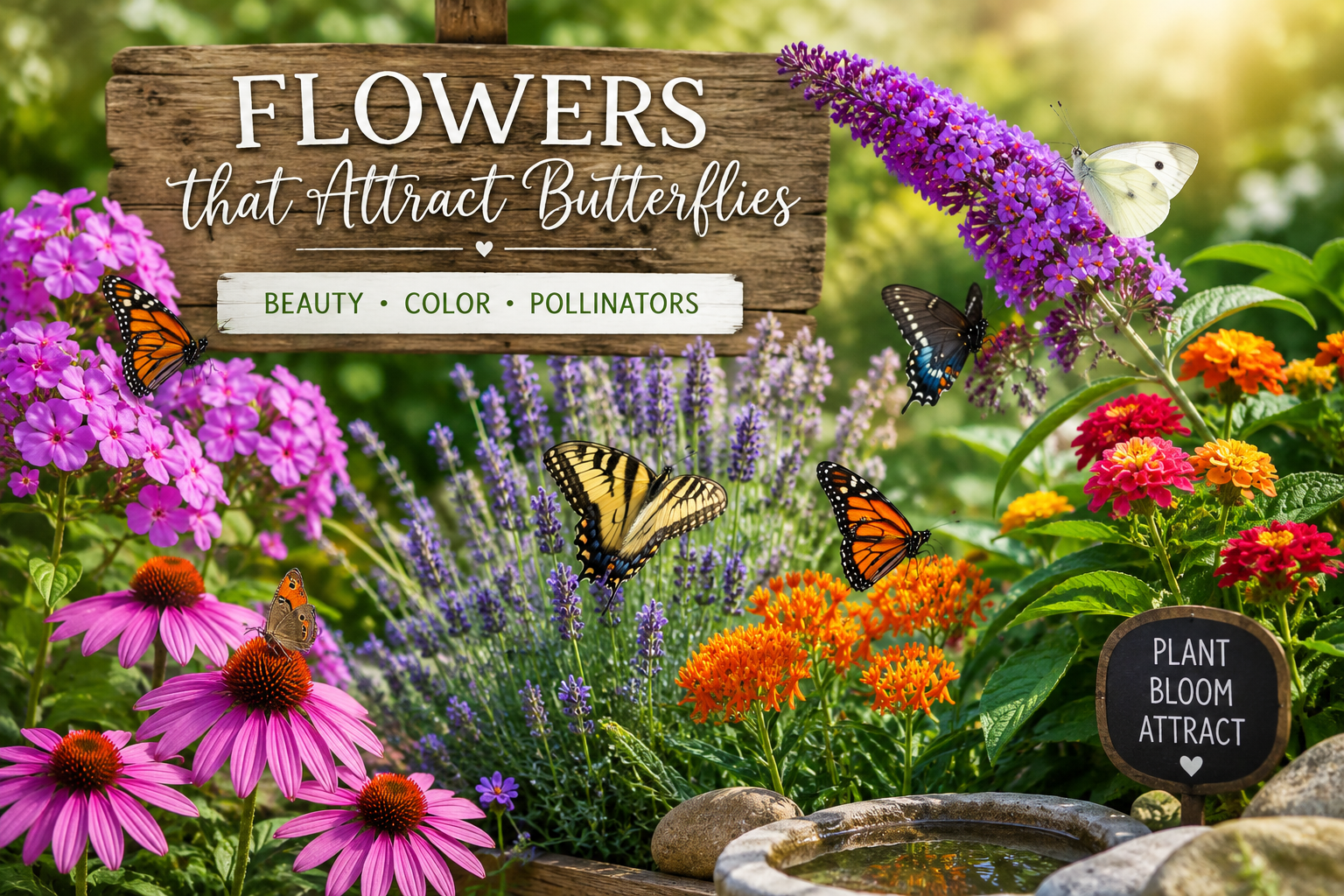
A garden filled with colorful butterflies feels alive, and choosing the right plants can make that experience much easier to achieve. The best flowers that attract butterflies provide accessible nectar, bright blooms, and a steady food supply throughout the growing season.
However, creating a butterfly-friendly garden involves more than planting a few colorful flowers. Butterflies need nectar as adults, while caterpillars depend on specific host plants for food and shelter. A thoughtful combination of both can turn an ordinary garden into a useful habitat.
Whether you have a large backyard, a small flower bed, or a few containers on a patio, there are plenty of flowers that attract butterflies that are easy to grow. The key is choosing plants suited to your climate, sunlight, available space, and gardening experience.
What Flowers Attract Butterflies?
The most effective flowers that attract butterflies generally offer abundant nectar and provide an easy place for butterflies to land while feeding. Butterflies are often drawn to brightly colored flowers, particularly shades of purple, pink, yellow, orange, red, and white.
Flower shape also matters. Flat-topped blooms and clusters can provide convenient landing platforms, while tubular flowers may be particularly useful for butterflies with longer proboscises.
Another important factor is bloom time. Planting several types of flowers that attract butterflies that bloom at different times can provide nectar from spring through fall instead of creating a short period of food availability.
21 Flowers That Attract Butterflies
1. Milkweed
Milkweed is one of the most valuable flowers that attract butterflies, particularly for monarchs. Its flowers provide nectar for adult butterflies, while the leaves serve as an essential food source for monarch caterpillars.
There are several milkweed species, so choose one that is appropriate for your region. Plant it in a sunny location and allow it to develop naturally.
2. Purple Coneflower
Purple coneflower is a hardy perennial and one of the easiest flowers that attract butterflies to grow. Its large purple petals surround a prominent central cone that provides butterflies with an accessible feeding platform.
It prefers full sun and well-drained soil. Once established, it can tolerate periods of dry weather, making it useful for low-maintenance gardens.
3. Bee Balm
Bee balm produces colorful clusters of tubular flowers and is among the popular flowers that attract butterflies and hummingbirds.
The plant performs best in a sunny to partly shaded location with reasonably moist soil. Its tall growth also adds vertical interest to pollinator beds.
4. Black-Eyed Susan
Black-eyed Susan produces cheerful yellow flowers with dark centers and is another dependable choice among flowers that attract butterflies.
It works well in cottage gardens, borders, and native plant gardens. Give it plenty of sunlight and avoid keeping the soil constantly soggy.
5. Zinnias
Zinnias are colorful annuals that provide some of the easiest flowers that attract butterflies for beginner gardeners.
They bloom for a long period when regularly deadheaded and come in numerous colors and sizes. Dwarf varieties can also work well as potted plants.
6. Asters
Asters are especially valuable because they provide nectar later in the growing season. These perennial flowers that attract butterflies can help support butterflies when many summer flowers are beginning to fade.
Plant asters in a sunny spot with well-drained soil. Native varieties can be particularly valuable for local pollinators.
7. Blazing Star
Blazing star, also called Liatris, produces tall spikes covered with small flowers. It is one of the flowers that attract butterflies that can add height and structure to a garden.
It prefers full sun and well-drained soil. Its upright growth makes it especially useful when combined with shorter flowering plants.
8. Sunflowers
Sunflowers are familiar flowers that attract butterflies because their large blooms are highly visible and produce valuable nectar and pollen resources.
Large varieties work well in spacious gardens, while dwarf types are better suited to containers and small yards. They prefer full sun and regular watering while establishing.
9. Verbena
Verbena produces clusters of small flowers over a long period, making it a useful addition to gardens containing several flowers that attract butterflies.
Many varieties tolerate heat and can work particularly well in containers. Place them where they receive plenty of sunlight.
10. Lavender
Lavender combines attractive purple flowers with fragrance, making it a popular choice among flowers that attract butterflies.
It requires plenty of sunlight and excellent drainage. Avoid overly wet soil, especially during winter, because excessive moisture can damage the roots.
11. Goldenrod
Goldenrod is one of the important late-season flowers that attract butterflies. Its bright yellow flowers provide nectar when many early and midsummer plants have stopped blooming.
Choose a suitable species for your area and give it enough room to spread. Native goldenrods can provide significant ecological value.
12. Joe-Pye Weed
Joe-Pye weed is a tall perennial that produces large clusters of pinkish-purple flowers. It is one of the flowers that attract butterflies that works particularly well in larger naturalistic gardens.
Its height makes it useful at the back of a flower border. It generally prefers sunny locations and consistent moisture.
13. Yarrow
Yarrow produces flat-topped flower clusters that provide convenient landing surfaces for butterflies. This makes it one of the useful flowers that attract butterflies for sunny, relatively dry gardens.
It is generally low maintenance once established and comes in several flower colors.
14. Catmint
Catmint produces spikes of blue or purple flowers and can bloom for an extended period. It is a useful perennial among flowers that attract butterflies, especially for borders and cottage-style gardens.
It prefers full sun and well-drained soil. Cutting back spent flowers can encourage additional blooming.
15. Sedum
Sedum is an excellent late-season plant for gardeners looking for flowers that attract butterflies while also wanting drought tolerance.
Many varieties produce dense clusters of tiny flowers that become especially valuable in late summer and fall. Sedums work well in rock gardens, borders, and containers.
16. Butterfly Bush
Butterfly bush produces long flower clusters that can be highly attractive to adult butterflies. It is one of the well-known flowers that attract butterflies, although gardeners should choose species and cultivars appropriate for their region.
Because some butterfly bush types can become invasive in certain areas, check local recommendations before planting.
17. Cosmos
Cosmos is an easy annual that produces delicate flowers throughout much of the warm season. It is one of the beginner-friendly flowers that attract butterflies and can be grown from seed.
It prefers full sun and relatively well-drained soil. Taller varieties can benefit from support in windy locations.
18. Marigolds
Marigolds produce bright yellow, orange, and gold flowers and can complement other flowers that attract butterflies in a mixed garden.
They are particularly useful for beginners because they grow readily in sunny locations and can also be grown in containers.
19. Phlox
Phlox produces clusters of colorful, often fragrant flowers. Depending on the species, it can provide an attractive nectar source for butterflies while adding strong visual interest.
It works well alongside other flowers that attract butterflies, particularly in perennial borders and cottage gardens.
20. Dill and Fennel
Dill and fennel are included for an important reason: they can act as host plants for swallowtail caterpillars. While their flowers can attract adult insects, their foliage provides food for developing larvae.
Adding these plants alongside nectar-rich flowers that attract butterflies creates a more complete habitat rather than supporting adults alone.
21. Lantana
Lantana produces clusters of small colorful flowers and can bloom for a long period in warm conditions. It is another option among flowers that attract butterflies, particularly for sunny gardens and containers.
In colder regions, it may be grown as an annual or brought indoors depending on the variety.
Best Butterfly Flowers at a Glance
| Flower | Bloom Period | Sun | Maintenance | Best Use |
| Milkweed | Summer | Full sun | Low | Monarch habitat |
| Purple Coneflower | Summer–fall | Full sun | Low | Beginner gardens |
| Bee Balm | Summer | Sun/part shade | Medium | Butterflies & hummingbirds |
| Zinnia | Summer–fall | Full sun | Low | Containers and beds |
| Aster | Late summer–fall | Sun | Low | Late-season nectar |
| Blazing Star | Summer | Full sun | Low | Native gardens |
| Sunflower | Summer–fall | Full sun | Low | Large and small gardens |
| Verbena | Summer–fall | Full sun | Low | Containers |
| Yarrow | Summer | Full sun | Low | Dry gardens |
| Sedum | Late summer–fall | Full sun | Low | Low-maintenance beds |
Why Do Butterflies Like Certain Flowers?
Understanding why butterflies choose certain plants can help you select better flowers that attract butterflies instead of relying only on flower color.
Bright Colors
Butterflies can detect colors and are often attracted to vivid flowers. Purple, pink, yellow, orange, and other bright shades can make a garden more noticeable.
However, no single flower color guarantees butterfly visits. A mixture of colors is usually more useful than relying on one shade.
Easy Landing Platforms
Butterflies often feed while standing on a flower. Flat clusters and broad blooms can provide convenient places to land.
This is one reason plants such as coneflower, yarrow, asters, and other clustered flowers that attract butterflies work well in pollinator gardens.
Accessible Nectar
Different butterflies have different feeding structures. Flowers with easily accessible nectar can support a wider variety of species.
Planting several flower shapes creates more opportunities for different butterflies to feed.
Long Blooming Periods
A garden becomes much more useful when it provides food over an extended period. Instead of planting only summer flowers, combine early, midsummer, late-summer, and fall-blooming flowers that attract butterflies.
Nectar Plants vs. Host Plants
One of the most important things to understand about butterfly gardening is the difference between nectar plants and host plants.
| Plant Type | Main Purpose | Examples |
| Nectar plants | Feed adult butterflies | Coneflower, zinnia, verbena |
| Host plants | Feed caterpillars | Milkweed, dill, fennel |
| Both | Support multiple life stages | Depends on species |
Nectar-rich flowers that attract butterflies help adult butterflies feed and refuel. Host plants, meanwhile, give female butterflies suitable locations to lay eggs and provide food for caterpillars.
For this reason, a garden with only beautiful nectar flowers may attract adult butterflies without supporting the next generation.
Best Flowers for Different Butterfly Species
Flowers for Monarch Butterflies
Monarchs are strongly associated with milkweed because monarch caterpillars depend on milkweed plants. Adult monarchs also visit many nectar-producing plants, including asters, goldenrod, bee balm, and coneflowers.
Plants for Swallowtails
Swallowtail butterflies can benefit from host plants such as dill, fennel, and parsley. Adding these plants alongside nectar-producing flowers that attract butterflies can make a garden more useful for the entire life cycle.
Flowers for Painted Ladies
Painted ladies use a variety of nectar plants. Asters, coneflowers, sunflowers, and verbena can all contribute to a diverse butterfly garden.
Best Flowers for Different Garden Conditions
Best Flowers for Full Sun
Most butterfly gardens perform well with several hours of direct sunlight. Coneflower, zinnia, sunflower, yarrow, lavender, and many other flowers that attract butterflies prefer sunny locations.
Best Flowers for Small Gardens
Choose compact plants and avoid filling a small space with too many tall species. Zinnias, verbena, catmint, and compact sedums can work well.
Best Butterfly Flowers for Containers
Containers can still support butterflies. Try dwarf zinnias, verbena, lantana, compact salvia, or other suitable flowers that attract butterflies.
Use a container with drainage holes and choose plants according to the amount of sunlight available.
Best Low-Maintenance Options
If you want fewer chores, consider coneflower, yarrow, sedum, milkweed, and other hardy perennials suited to your climate.
Create a Butterfly Garden With Flowers That Bloom All Season
Instead of planting all your flowers that attract butterflies at the same time, build a succession of blooms.
In spring, use early flowering plants appropriate for your area. During summer, rely on plants such as bee balm, coneflower, zinnias, and sunflowers. As summer ends, asters, sedums, goldenrod, and other late-season plants can continue supplying nectar.
This approach creates a more dependable food source and also keeps the garden visually interesting.
How to Design a Butterfly-Friendly Garden
Choose a Sunny Location
Butterflies often use sunny areas to warm themselves before becoming active. Select a location with good sunlight and some protection from strong wind.
Plant Flowers in Groups
Rather than scattering one plant of every variety throughout the garden, group several plants together. Larger patches of flowers that attract butterflies can make nectar sources easier for butterflies to locate.
Provide Shelter
Shrubs, ornamental grasses, fences, and dense plants can provide protection from wind and harsh weather.
Add a Shallow Water Area
Butterflies may gather around damp soil or shallow muddy areas to obtain water and minerals. A simple butterfly puddling area can be more suitable than a deep water feature.
Avoid Unnecessary Pesticides
Broad-spectrum pesticides can harm beneficial insects as well as pests. If you want to maintain a butterfly-friendly garden, use the least disruptive pest-management approach possible.
How to Attract More Butterflies Without Planting More Flowers
Adding more flowers that attract butterflies is not always the only solution.
Leave some caterpillar host plants available, provide shelter, avoid unnecessary pesticide use, and allow parts of the garden to look slightly natural. Caterpillars may chew leaves, but this is a normal part of supporting butterflies.
You can also extend the value of your garden by adding different plant heights and flowering periods. Diversity is generally more useful than having a large quantity of just one plant.
Three Simple Butterfly Garden Plans
Small 4 × 4-Foot Garden
For a small sunny bed, combine:
- 1–2 milkweed plants
- 2 coneflowers
- 1 bee balm
- Several zinnias
- 1 fall-blooming aster
This combination provides a mixture of nectar and host-plant resources without requiring a huge amount of space.
Container Butterfly Garden
For a patio or balcony, combine a compact zinnia with verbena and lantana. Choose a large container with drainage and place it somewhere that receives several hours of sunlight.
Larger Backyard Garden
A larger space can combine milkweed, coneflower, bee balm, blazing star, Joe-Pye weed, asters, goldenrod, and several annuals.
Arrange shorter flowers that attract butterflies toward the front and taller plants toward the back. This creates layers while keeping the garden accessible.
Native vs. Non-Native Butterfly Flowers
Native plants can be particularly valuable because local insects may have developed relationships with them over generations. Many caterpillars have specific host-plant requirements that make native species important.
That does not mean every non-native plant is useless. Some can provide excellent nectar and extend flowering periods. The important consideration is whether a plant is suitable and non-invasive in your location.
When possible, choose locally appropriate native flowers that attract butterflies and supplement them with well-behaved ornamental plants.
Common Butterfly Garden Mistakes to Avoid
Avoid planting only one type of flower. A diverse selection provides different flower shapes, bloom periods, and resources.
Do not focus exclusively on adult butterflies. Without host plants, caterpillars may have nowhere to feed or develop.
Avoid putting every plant in deep shade if your selected species require full sun.
Do not remove every chewed leaf. Some leaf damage is evidence that caterpillars are using the garden.
Finally, don’t expect a newly planted garden to become crowded with butterflies immediately. Establishing plants and creating suitable habitat takes time.
Conclusion
The best flowers that attract butterflies are not necessarily the most exotic ones. Reliable choices such as milkweed, coneflower, bee balm, zinnias, asters, sunflowers, yarrow, and sedum can provide valuable nectar while adding color and structure to the garden.
For the strongest results, combine nectar plants with host plants, select flowers with different blooming periods, provide sunny and sheltered areas, and avoid unnecessary pesticide use.
Even a small patio container can make a difference. Start with a few well-suited flowers that attract butterflies, observe which visitors arrive, and gradually expand your garden into a diverse, butterfly-friendly habitat.
Frequently Asked Questions
What is the best flower for attracting butterflies?
Milkweed, coneflower, bee balm, zinnias, asters, and several other flowers that attract butterflies are excellent choices. The best option depends on your location, growing conditions, and which butterfly species you want to support.
What color flowers attract butterflies?
Butterflies are commonly attracted to bright colors such as purple, pink, yellow, orange, red, and white. Instead of relying on one color, plant a mixture of colorful flowers that attract butterflies.
What flowers attract monarch butterflies?
Milkweed is particularly important because monarch caterpillars feed on it. Adult monarchs also visit nectar-producing flowers such as asters, goldenrod, bee balm, and coneflowers.
Can flowers attract butterflies and hummingbirds?
Yes. Some plants can attract both butterflies and hummingbirds. Bee balm, verbena, salvia, lantana, and other nectar-producing plants can be useful choices when designing a garden for multiple pollinators.
Can I grow butterfly flowers in pots?
Yes. Several flowers that attract butterflies can grow successfully in containers, including zinnias, verbena, lantana, and compact varieties of other nectar-producing plants.
Do butterflies need more than flowers?
Yes. A successful butterfly habitat should provide nectar, host plants, shelter, sunlight, water or damp soil, and protection from unnecessary pesticide exposure.
Are there flowers that attract butterflies but not bees?
There is no reliable way to guarantee that a flower will attract butterflies while completely excluding bees. Many nectar-rich flowers that attract butterflies are also valuable to bees and other pollinators. A diverse pollinator garden is usually the better goal.
You May Also Read: Fairy Garden Ideas
