
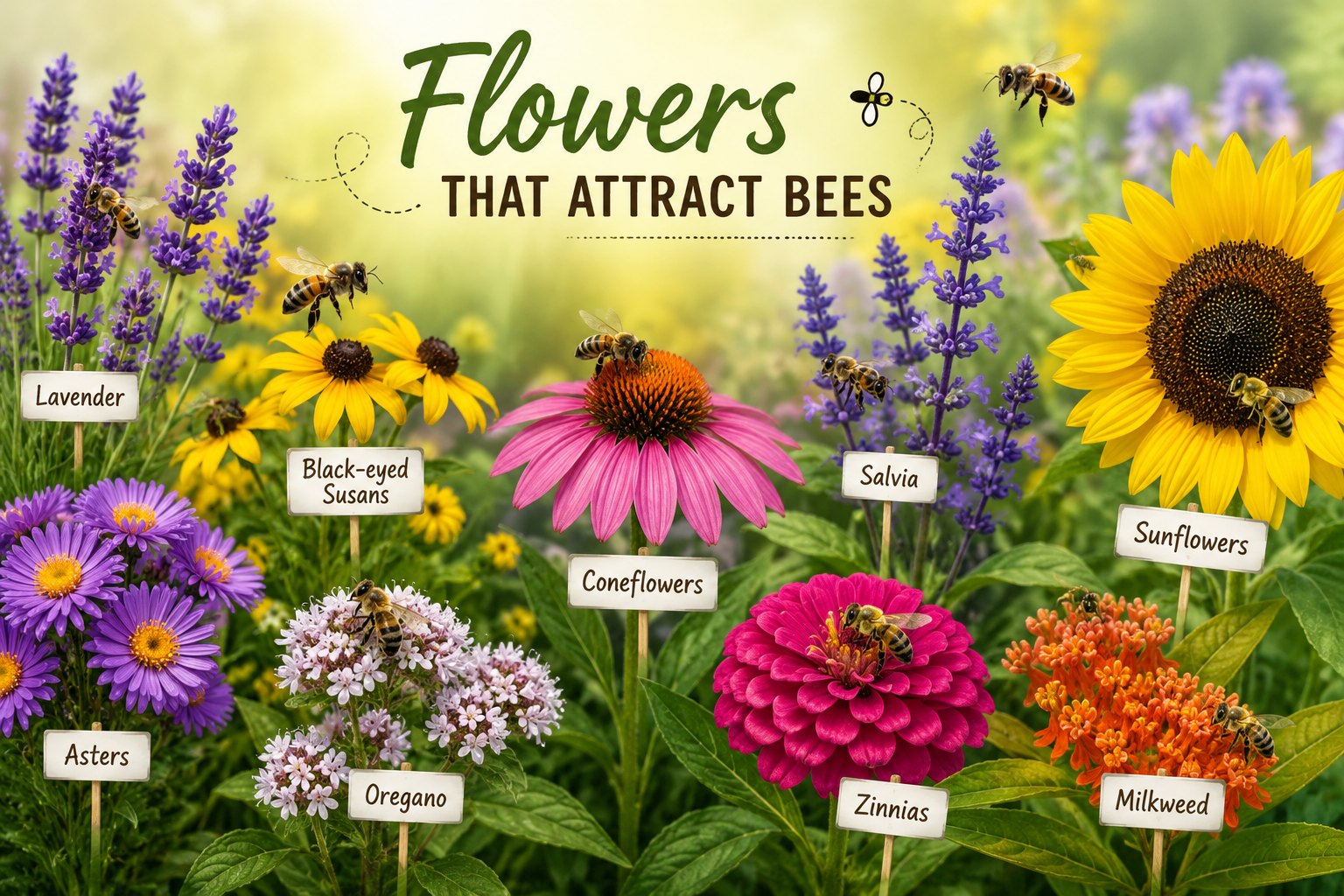
If you want to make your garden more lively while supporting pollinators, planting flowers that attract bees is one of the easiest places to start. Bees visit flowers for nectar and pollen, so a garden filled with the right blooms can provide valuable food throughout the growing season.
The best flowers that attract bees are not necessarily the showiest varieties at the garden center. Bees are drawn to flowers that provide accessible nectar and pollen, suitable shapes, and reliable blooms. Color, fragrance, flower structure, and bloom timing can all influence which Flowers That Attract Bees visit.
A successful bee-friendly garden also does not need to be huge. A few containers on a balcony, a small flower border, or a larger backyard planting can all provide useful resources. The key is choosing a mixture of plants that bloom at different times.
Whether you are looking for perennial flowers that attract bees, annual flowers that attract bees, or plants that attract bees and butterflies, the following guide will help you choose the right options.
What Makes a Flower Attractive to Bees?
Before choosing flowers that attract bees, it helps to understand what bees are actually looking for.
Nectar and Pollen
Nectar provides bees with carbohydrates and energy, while pollen supplies important nutrients. Flowers That Attract Bees offer accessible supplies of both can be particularly valuable to visiting bees.
Not every flower provides the same amount or accessibility of nectar and pollen. Choosing a diverse collection of flowering plants gives bees more opportunities to find suitable food.
Flower Color
Bees can see colors differently from humans and commonly visit flowers in shades such as blue, purple, yellow, and white. However, color is only one part of the equation.
A purple flower may attract bees, but its usefulness also depends on whether it produces nectar or pollen and whether bees can easily reach those resources.
Flower Shape
Flower structure matters because different bees have different body sizes and tongue lengths. Open, accessible blooms can be easier for many bees to use.
Single flowers are often preferable to extremely double flowers because dense layers of petals may make pollen and nectar harder to reach.
Continuous Blooming
One of the smartest ways to use flowers that attract bees is to plan for flowers across multiple seasons.
Instead of having everything bloom in June and nothing available later, combine early spring flowers with summer and fall bloomers. This creates a more consistent food supply.
20 Flowers That Attract Bees
Here are some reliable choices to consider when planning a pollinator-friendly garden.
1. Lavender
Lavender is one of the most popular flowers that attract bees. Its fragrant purple flower spikes provide nectar and are especially attractive during the warmer months.
Plant lavender in full sun and well-drained soil. Once established, many varieties tolerate relatively dry conditions, making them useful for low-maintenance gardens and containers.
2. Bee Balm
Bee balm is almost made for a pollinator garden. Its colorful, tubular Flowers That Attract Bees can attract, butterflies, and hummingbirds.
It prefers sunlight and reasonably moist soil. Because it can spread, give it enough room to grow.
3. Purple Coneflower
Purple coneflower is a hardy perennial and one of the easiest flowers that attract bees for beginners.
Its daisy-like blooms provide a long period of summer color, while the seed heads can remain attractive after flowering. Plant it in full sun with well-drained soil.
4. Sunflowers
Sunflowers provide large flower heads that can attract bees while adding height and drama to a garden.
Choose pollen-producing varieties rather than assuming every decorative cultivar offers the same benefit. Sunflowers generally prefer full sun and are excellent choices for vegetable gardens and larger borders.
5. Asters
Asters are particularly useful because many varieties bloom late in the growing season.
Adding asters to your garden can help provide food when some earlier summer flowers have finished blooming. They come in attractive shades of purple, pink, blue, and white.
6. Zinnias
Zinnias are excellent annual flowers that attract bees and are especially suitable for beginners.
They grow quickly in warm weather and produce colorful flowers over a long period when regularly deadheaded. Compact varieties can also work well in containers.
7. Black-Eyed Susan
Black-eyed Susan produces bright yellow flowers with dark centers. It is a dependable perennial in many gardens and works well in sunny borders.
Its cheerful flowers also make it one of the plants that attract bees and butterflies, giving your garden additional wildlife interest.
8. Goldenrod
Goldenrod is an excellent late-season choice. Its clusters of small yellow flowers can provide important resources when fewer plants are flowering.
Some gardeners mistakenly associate goldenrod with seasonal allergies, but ragweed is a more common source of airborne pollen responsible for hay fever.
9. Catmint
Catmint produces spikes of small purple or blue flowers and is a useful low-maintenance choice.
It works particularly well along pathways, borders, and sunny garden edges. Its flowering stems can attract bees while also adding a soft texture to the landscape.
10. Coreopsis
Coreopsis produces cheerful daisy-like flowers and generally performs well in sunny locations.
Depending on the variety, it can be grown as an annual or perennial. Its bright flowers make it another useful option for gardens designed around flowers that attract bees.
11. Borage
Borage has star-shaped blue flowers and is highly attractive to visiting bees.
It is a good option for informal gardens and can reseed itself under suitable conditions. Give it enough space because mature plants can become fairly large.
12. Yarrow
Yarrow produces flat clusters of small flowers that provide an accessible landing surface for pollinators.
It is drought tolerant once established and works particularly well in sunny, naturalistic gardens.
13. Sedum
Late-blooming sedums are useful for extending the flowering season into late summer and fall.
Their dense flower clusters can attract bees and butterflies while adding structure to perennial borders.
14. Phlox
Phlox comes in several forms, with many varieties producing fragrant, colorful flowers.
Choose varieties suited to your local growing conditions. Phlox can add height, fragrance, and seasonal color to a bee-friendly planting.
15. Blanket Flower
Blanket flower produces red, yellow, and orange blooms and performs well in sunny locations.
It is a good choice for gardeners who want colorful flowers that attract bees while also looking for plants that tolerate heat and relatively dry conditions.
16. Salvia
Salvia includes numerous species and cultivars with flower spikes that are especially useful to bees and hummingbirds.
Because varieties differ considerably, check the mature size and growing requirements before planting.
17. Marigolds
Marigolds are easy-to-grow annuals that can provide bright seasonal color.
Although their value to bees can vary by variety, open-flowered types can be useful additions to a diverse planting rather than relying on marigolds alone.
18. Calendula
Calendula produces cheerful yellow or orange flowers and is a useful cool-season option in appropriate climates.
Its open blooms make it an attractive addition to informal pollinator gardens and vegetable beds.
19. Oregano
When oregano flowers, its small blooms can become surprisingly busy with pollinators.
Allowing some culinary herbs to flower instead of harvesting every stem can increase the number of useful food sources available in your garden.
20. Milkweed
Milkweed is particularly valuable in pollinator gardens because it supports monarch butterflies during their life cycle while also producing flowers that can be visited by bees.
If your goal is to create a garden for multiple pollinators, milkweed can help make the planting more diverse.
Quick Comparison of Bee-Friendly Flowers
| Flower | Bloom Period | Sun | Type | Beginner Friendly | Container Option |
| Lavender | Summer | Full sun | Perennial | Yes | Yes |
| Bee Balm | Summer | Sun/part shade | Perennial | Yes | Sometimes |
| Coneflower | Summer–fall | Full sun | Perennial | Yes | Sometimes |
| Sunflower | Summer–fall | Full sun | Annual | Yes | Some varieties |
| Aster | Late summer–fall | Sun | Perennial | Yes | Sometimes |
| Zinnia | Summer–fall | Full sun | Annual | Yes | Yes |
| Catmint | Spring–summer | Full sun | Perennial | Yes | Yes |
| Coreopsis | Summer | Full sun | Annual/perennial | Yes | Yes |
| Yarrow | Summer | Full sun | Perennial | Yes | Sometimes |
| Salvia | Spring–fall | Sun | Annual/perennial | Yes | Yes |
Growing requirements can vary by species and cultivar, so check the plant label for your specific variety.
Best Flowers That Attract Bees by Season
Choosing flowers that attract bees by bloom season helps prevent gaps in your garden.
Spring
Early-flowering plants can provide food when relatively few garden plants are blooming. Consider spring bulbs, fruit-tree blossoms, early flowering shrubs, and suitable native plants.
Summer
Summer offers the widest selection. Bee balm, lavender, coneflower, sunflower, zinnia, salvia, catmint, and coreopsis can all contribute to a productive pollinator garden.
Fall
Late-season flowers that attract bees include asters, goldenrod, sedum, and other late-blooming plants.
A garden that continues producing flowers into fall can provide valuable resources after many summer flowers have finished.
Best Flowers for Different Garden Conditions
Not every gardener has the same space or sunlight.
For Full Sun
Choose lavender, sunflowers, coneflowers, zinnias, yarrow, and many salvias.
For Small Gardens
Compact varieties of lavender, catmint, salvia, zinnia, and coreopsis can work well without overwhelming a small space.
For Containers
Some flowers that attract bees can thrive in pots. Lavender, zinnias, compact salvia, catmint, and suitable coneflower varieties are worth considering.
Choose a container with good drainage and match the pot size to the mature plant.
For Beginners
If you are new to gardening, start with forgiving plants such as coneflower, zinnia, sunflower, catmint, and yarrow.
A small collection is often easier to maintain than trying to grow 20 different species at once.
Native vs. Non-Native Flowers for Bees
Native plants deserve special consideration when selecting flowers that attract bees.
Native bees can have close relationships with particular plant species, and native plants are often well adapted to local soil, weather, and wildlife.
That does not mean every non-native flower is useless. Many generalist bees visit introduced plants when they provide accessible nectar and pollen.
The best approach is to prioritize locally appropriate native plants while maintaining a diverse selection of flowering species.
Annual vs. Perennial Flowers
Both types can have a place in a pollinator garden.
Annuals provide flexible seasonal color and can be particularly useful when you want quick results. Perennials return year after year and can form the long-term structure of a garden.
A combination of both gives you more options for extending the flowering season.
How to Create a Bee-Friendly Flower Garden
Planting flowers that attract bees is only the beginning. A thoughtful garden should also provide a suitable environment.
Plant in Groups
Instead of planting one flower of every type across a large area, consider grouping several plants together.
A larger patch of the same flowering plant can be easier for visiting pollinators to locate.
Provide Continuous Flowers
Aim for a succession of blooms rather than one short flowering period.
For example, you could combine spring bloomers with summer lavender and coneflower, followed by asters and sedum in fall.
Avoid Unnecessary Pesticides
Pesticides can pose risks to pollinators, particularly when flowering plants are treated while bees are actively visiting.
Use nonchemical methods where practical and always follow the product label if a treatment is necessary.
Provide Nesting Habitat
Many native bees do not live in managed honeybee hives. Some nest in soil, hollow stems, dead wood, or other small natural spaces.
Leaving a little natural habitat can therefore complement your flowering plants.
Can Flowers Attract Bees, Butterflies, and Hummingbirds?
Yes. Some flowers can attract several types of pollinators.
Plants such as bee balm, salvia, coneflower, zinnia, and sunflower can contribute to gardens designed for multiple visitors.
If you want flowers that attract bees and butterflies, focus on diverse plants with different flower shapes and bloom periods.
For a broader wildlife garden, combine nectar-producing flowers with plants that provide habitat for butterfly caterpillars and other beneficial insects.
Example Bee-Friendly Garden Plans
Small Backyard Plan
Try combining:
- Lavender
- Coneflower
- Bee balm
- Zinnia
- Aster
This gives you different flower forms and can provide color across much of the growing season.
Beginner Plan
Start with four easy choices:
- Sunflower
- Zinnia
- Coneflower
- Catmint
These can provide a manageable introduction to pollinator gardening.
Container Plan
For a balcony or patio, consider compact varieties of:
- Lavender
- Salvia
- Zinnia
- Catmint
Use large enough pots, provide drainage, and place containers where they receive the sunlight required by the selected plants.
Conclusion
Adding flowers that attract bees does not require a complicated landscape or a large backyard. Even a few well-chosen plants can create useful feeding opportunities for visiting pollinators.
The strongest approach is to combine different flowers that attract bees across spring, summer, and fall. Include a mixture of annuals and perennials, prioritize locally appropriate plants, avoid unnecessary pesticide use, and leave some natural habitat for nesting.
Whether you grow lavender in a pot, sunflowers beside your vegetables, or a full perennial pollinator border, your choices can turn an ordinary garden into a more welcoming space for bees and other wildlife.
Frequently Asked Questions
What is the best flower for attracting bees?
There is no single best flower for every bee species or garden. Lavender, bee balm, coneflower, sunflower, asters, and other nectar- and pollen-producing plants are strong choices when matched to local growing conditions.
What flowers attract bees the most?
The answer varies by bee species, location, season, and flower availability. A diverse garden containing several productive flowering plants is generally more useful than relying on one species.
What color flowers do bees prefer?
Bees commonly visit blue, purple, yellow, and white flowers, but color is not the only factor. Nectar, pollen, flower shape, scent, and accessibility also influence flower choice.
Are perennial flowers better for bees?
Perennial flowers can be excellent because they return each year, but annuals are useful too. A mixture of annual and perennial plants can provide more continuous flowering.
Do native flowers attract more bees?
Native plants can be particularly valuable for native bee species, including bees with specialized relationships with certain plants. However, many generalist bees also visit non-native flowers that provide accessible food.
Can I attract bees with a balcony garden?
Yes. Containers can support a small pollinator garden. Choose bee-friendly flowering plants suited to pots, provide adequate sunlight and drainage, and group several flowering containers together.
Should I avoid double flowers?
Highly double flowers can sometimes make nectar and pollen less accessible. When supporting bees is the priority, open or single-flowered varieties are often a better choice.
You May Also Read: Flowers That Attract Butterflies
