


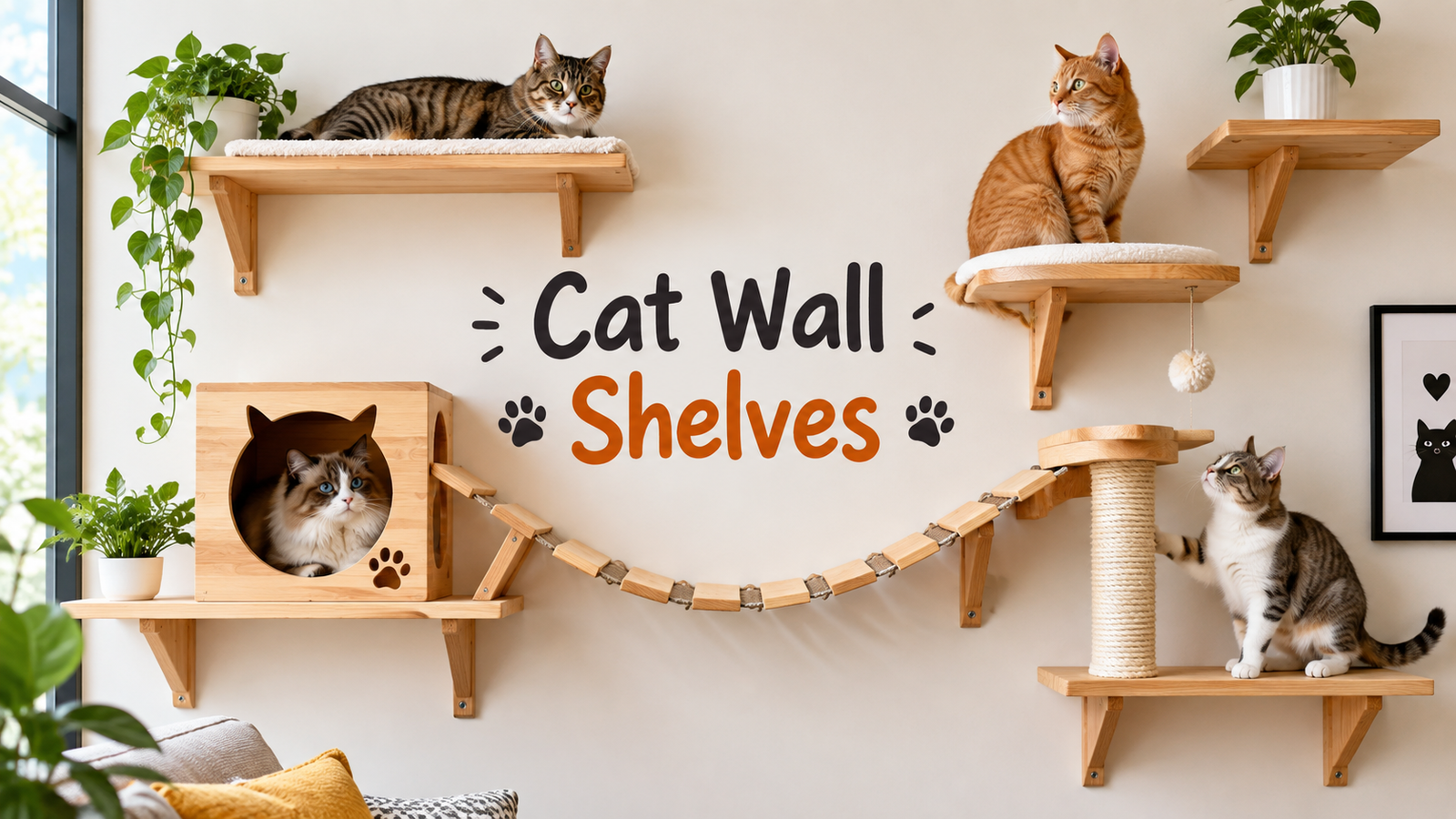
If your cat loves climbing, watching the room from above, or finding quiet places to nap, cat wall shelves can turn unused wall space into an engaging vertical playground. Unlike bulky floor furniture, a well-planned cat wall can give your pet places to climb, rest, scratch, and observe without taking over the room.
The best cat wall shelves are not simply attractive pieces mounted at random heights. They work as part of a route that matches your cat’s size, age, confidence, and activity level. A small apartment may need a compact arrangement of staggered shelves, while a home with several active cats may benefit from a larger climbing system with multiple resting spots.
Whether you want modern cat wall furniture, inexpensive DIY options, or a complete climbing route, the key is to combine good design with secure installation. The following ideas will help you plan a functional wall that your cat can actually enjoy.
What Are Cat Wall Shelves?
Cat wall shelves are wall-mounted platforms designed to give cats elevated areas for climbing, resting, playing, and observing their surroundings. They can be simple floating platforms or part of a larger system containing bridges, hammocks, scratching surfaces, tunnels, and enclosed cubbies.
A single shelf can provide a high resting point, while several shelves arranged at different heights can create a complete DIY cat wall climbing system. This makes vertical furniture especially useful when floor space is limited.
Before choosing shelves, think about the entire route rather than one platform. Your cat should have an accessible starting point, comfortable landing areas, and a practical way to move back down.
Why Do Cats Like Wall Shelves?
Cats naturally use elevated areas to observe their environment and find comfortable resting places. For indoor cats, vertical furniture can also add variety to an otherwise limited environment.
Well-positioned cat wall shelves can provide:
- Elevated observation points
- Additional resting areas
- Climbing and movement opportunities
- Space away from busy household activity
- Better use of small rooms
- Extra options for multi-cat households
They can also reduce the need for large floor-standing furniture. Instead of filling a corner with a tall cat tree, you can use several cat wall shelves to create a customized route along an otherwise empty wall.
25 Cat Wall Shelves Ideas for Every Home
The best setup depends on your room and your cat. These ideas can be combined rather than treated as separate designs.
1. Staggered Floating Shelves
Arrange floating cat wall shelves in a gentle zigzag pattern. This creates a simple climbing route and works particularly well in modern rooms.
2. Cat Staircase Shelves
Install several platforms like steps leading toward a higher resting area. Keep transitions manageable and provide enough landing space.
3. Corner Cat Shelves
Corner shelves make excellent use of awkward spaces. They can also allow the route to turn naturally without covering an entire wall.
4. Window Perch Shelf
A sturdy shelf near a safe window can become an attractive observation point. Keep blind cords and other hazards away from the cat’s route.
5. Cat Hammock Wall
Combine a few platforms with a fabric hammock for lounging. This gives the climbing route a comfortable destination.
6. Shelf and Bridge Combination
Connect two sections with a cat bridge. This is useful when you want to span a wider wall while keeping the design visually interesting.
7. Wall-Mounted Cubbies
Cubbies provide a partially enclosed place for cats that prefer privacy. Place one near, but not directly in, the busiest household traffic.
8. Minimalist Cat Wall
Use simple wooden platforms with clean lines and neutral finishes. The result can look more like intentional home décor than traditional pet furniture.
9. Rustic Wooden Shelves
Natural wood can complement farmhouse, rustic, or Scandinavian interiors. Make sure the finish is appropriate for indoor use and the surface isn’t excessively slippery.
10. Modern White Cat Wall
White platforms can blend into light-colored interiors while creating a subtle vertical route.
11. Floor-to-Ceiling Cat Wall
For active cats, use multiple levels from low entry platforms to a high perch. Every transition should remain accessible.
12. Small Apartment Cat Wall
A narrow wall can support several compact platforms without consuming floor space. This is one of the most practical cat wall shelves setups for apartments.
13. Living Room Cat Wall
Place shelves where they complement existing furniture. A route above a sofa or along a relatively unused wall can make efficient use of vertical space.
14. Bedroom Cat Wall
A bedroom setup can include a quiet upper perch and a comfortable resting platform.
15. Home Office Cat Shelves
Position shelves away from monitors, cables, unstable equipment, and anything that could be knocked over.
16. Multi-Cat Wall System
Multiple cats may benefit from several resting points and more than one route. Avoid creating a single narrow path where cats could block one another.
17. Kitten-Friendly Shelves
Use lower platforms and shorter transitions for young cats. As they grow, the arrangement can be modified.
18. Senior-Cat-Friendly Layout
Older or less mobile cats may benefit from shorter transitions, generous platforms, and good traction rather than a very high climbing course.
19. Large-Cat Shelves
Large cats need platforms that provide enough room to stand, turn, and rest comfortably. Check the manufacturer’s load rating carefully.
20. DIY Wooden Cat Shelves
A basic wooden board can become a useful platform when properly supported and finished. This is a practical option for cheap DIY cat wall shelves.
21. Budget-Friendly Cat Wall
You don’t need dozens of pieces. A few strategically placed platforms can create a useful route if the layout is planned well.
22. Shelves Above Existing Furniture
Existing furniture can sometimes form part of the route, reducing the number of shelves required. Make sure furniture is stable and doesn’t create a dangerous jump.
23. Around-the-Corner Cat Wall
Use two adjoining walls to create a longer route. Corner transitions can make a small number of platforms feel like a larger climbing system.
24. Scratching and Shelf Combination
Combine an elevated platform with a vertical scratching surface. This adds another useful activity to the wall.
25. Full Cat Superhighway
For energetic or multi-cat homes, connect platforms, bridges, scratching sections, and resting areas into one continuous route. This is the most ambitious form of cat wall furniture.
How to Choose the Right Cat Wall Shelves
When shopping for or building cat wall shelves, don’t choose solely according to appearance.
Consider your cat’s weight, body size, age, mobility, and jumping ability. A platform that works for a small adult cat may not be suitable for a much larger breed.
Also examine the shelf’s width and depth. Resting platforms generally need more usable surface than simple stepping platforms. Look for manufacturer-provided load information and use the specified mounting hardware whenever possible.
Surface traction matters too. Smooth wood may look attractive but can be less suitable for energetic jumps than a surface with carpet, sisal, or another appropriate covering.
Cat Wall Shelf Size and Spacing Guide
There is no single spacing measurement that works for every cat. A healthy adult cat may manage larger transitions than a kitten or senior cat, while a large cat may need more generous landing areas.
As a practical starting point, many cat-wall designs use approximately 12–18 inches between platforms, but this should be adjusted according to the individual cat and the size of each landing area.
| Cat or Setup | Starting Approach | Main Consideration |
| Healthy adult cat | Moderate transitions | Confidence and jumping ability |
| Kitten | Shorter transitions | Smaller body and developing coordination |
| Senior cat | Shorter, easier route | Mobility and traction |
| Large cat | Wider/deeper platforms | Body size and load capacity |
| Multiple cats | Multiple routes or resting areas | Passing and retreat space |
The important point is that cat wall shelves should create a comfortable route, not a series of unnecessarily difficult jumps.
How to Design a Cat Wall Layout
Start with the lowest accessible platform and build upward. Avoid making the first jump the hardest part of the entire route.
Next, create a logical sequence of platforms. Staggering shelves can make movement easier than placing everything directly above one another.
Add at least one comfortable resting platform where your cat can turn around and settle down. For multi-cat homes, consider additional resting spots so one cat doesn’t control the only desirable perch.
Finally, think about the way down. A wall that looks impressive from the floor can become inconvenient if your cat has no comfortable descent route.
Cat Wall Shelves for Small Apartments
Small homes are one of the best use cases for cat wall shelves because walls provide vertical space without taking up much floor area.
Use corners, narrow wall sections, areas above suitable furniture, and window-adjacent spaces. A compact zigzag arrangement can provide several climbing and resting opportunities while leaving the floor open.
For renters, always check the lease before drilling. Some alternatives may reduce permanent alterations, but they should only be used when their load capacity and mounting method are appropriate for the cat and shelf.
How to Install Cat Wall Shelves Safely
Safety should come before aesthetics when installing cat wall shelves.
First identify the wall construction. Drywall, plaster, brick, and concrete require different mounting approaches. When possible, attach brackets to suitable structural support such as wall studs, following the shelf manufacturer’s installation instructions.
Don’t assume that a screw that holds a shelf under static conditions will automatically handle a cat jumping onto it. Dynamic forces can be different from the simple weight of the cat.
After installation, check every platform for movement. Tighten hardware where appropriate and periodically inspect brackets, boards, carpet, sisal, and other components for wear.
For higher platforms, good traction is particularly important. Avoid placing shelves where a fall could put your cat near sharp objects, hot appliances, fragile equipment, or other hazards.
DIY Cat Wall Shelves on a Budget
A DIY cat wall shelves project can be simple, but structural safety still matters.
A basic setup can use wooden boards, suitable brackets, screws or anchors appropriate to the wall, and a cat-friendly surface covering. Sand unfinished edges and make sure there are no exposed sharp points.
You can also create a DIY cat wall climbing system by combining several platforms with a bridge or scratching section. Plan the complete route on paper before drilling.
For a cheap DIY approach, start with three or four strategically positioned platforms instead of attempting an entire wall immediately. You can expand the system later if your cat actually uses it.
Cat Wall Shelves vs. Cat Trees
Both options provide vertical space, but they suit different homes.
| Feature | Cat Wall Shelves | Cat Tree |
| Floor space | Very low | Moderate to high |
| Layout | Highly customizable | Mostly fixed |
| Installation | Requires secure mounting | Usually simpler |
| Rental suitability | Depends on wall rules | Often easier |
| Design integration | Can blend with décor | More visible furniture |
| Expansion | Easy to add sections | Depends on model |
Neither option is automatically right for every home. Choose according to your available space, wall restrictions, cat’s needs, and installation preferences.
Common Mistakes to Avoid
One of the most common mistakes is designing the wall entirely around appearance. A beautiful arrangement isn’t useful if the platforms are too difficult to reach.
Other mistakes include:
- Using unsuitable wall anchors
- Ignoring the cat’s weight
- Making platforms too small
- Creating slippery landing areas
- Leaving no comfortable way down
- Building a route with dead ends
- Placing shelves near household hazards
- Failing to inspect hardware periodically
Think of cat wall shelves as functional pet furniture first and decorative furniture second.
How to Get Your Cat to Use New Shelves
Don’t force your cat onto a new wall system. Start by making the lowest platform familiar and attractive.
A favorite blanket, toy, or occasional treat can encourage exploration. Positioning a shelf near an area your cat already enjoys can also make the transition easier.
If your cat consistently avoids one platform, don’t assume the cat is simply being stubborn. The shelf may be too exposed, too slippery, too difficult to reach, or positioned somewhere the cat doesn’t prefer.
Cleaning and Maintaining Cat Wall Shelves
Regular maintenance keeps cat wall shelves comfortable and secure.
Vacuum or brush away loose hair, clean removable fabric according to its care instructions, and inspect scratching surfaces for excessive wear. Check screws and brackets periodically, particularly if the shelves receive frequent jumping and climbing.
If a platform becomes loose, damaged, or unstable, stop your cat from using it until the problem has been corrected.
Cat Wall Shelf Buying Checklist
Before buying or building cat wall shelves, check:
- Cat’s current weight
- Shelf dimensions
- Manufacturer load rating
- Wall construction
- Mounting hardware
- Surface traction
- Number of platforms
- Resting space
- Route back down
- Cleaning requirements
- Installation requirements
- Room layout
- Cat’s age and mobility
This checklist is useful whether you’re purchasing a complete system or searching for IKEA cat wall shelves that you plan to adapt into a larger setup. Always verify that any furniture or shelf is structurally suitable before using it for a cat.
Conclusion
Well-designed cat wall shelves can turn unused wall space into a practical climbing, resting, and observation area. The best setup isn’t necessarily the largest or most expensive one. It is the one that fits your cat, your room, and your home’s construction.
Start with a simple route, choose appropriately sized platforms, use suitable mounting hardware, add traction where needed, and provide comfortable resting points. Whether you prefer modern cat wall furniture, a budget project, or a complete DIY cat wall climbing system, thoughtful planning will make the finished setup more useful and enjoyable for both you and your cat.
Frequently Asked Questions
Are cat wall shelves safe?
They can be safe when properly designed, securely mounted, and maintained. The wall type, hardware, shelf construction, cat’s weight, and installation method all matter.
How far apart should cat wall shelves be?
There is no universal distance. Around 12–18 inches can be a useful starting range for many healthy adult cats, but kittens, senior cats, and individual cats may need different spacing.
How deep should a cat wall shelf be?
The shelf should provide enough usable space for the cat’s intended activity. A resting platform generally needs more room than a simple stepping platform. Always consider the cat’s body size.
Can cat shelves be installed on drywall?
Yes, but the correct mounting method depends on the drywall construction and shelf design. Use suitable anchors or structural attachment points according to the manufacturer’s instructions rather than assuming any wall plug is sufficient.
Do cats actually use wall shelves?
Many cats enjoy elevated resting and observation areas, but individual preferences differ. Location, surface texture, accessibility, and the overall route can affect whether a cat uses a particular shelf.
Are wall shelves suitable for large cats?
They can be, provided the platforms offer enough room and the mounting system is rated appropriately. Large cats require particular attention to platform size and structural support.
How can I get my cat to use wall shelves?
Introduce them gradually. Start with an easy platform, use familiar bedding or toys, and avoid forcing the cat onto the shelves. Adjust the design if your cat consistently avoids a particular section.
You May Also Read: Toilet Paper Roll
