

When grocery costs become difficult to manage, a food pantry can provide an important source of free groceries and community support. These local programs help individuals and families access food when their regular grocery budget is not enough. For someone visiting for the first time, however, it is normal to have questions: Who can use a food pantry? What foods are available? Do you need identification? What should you bring?
A food pantry generally distributes groceries directly to people in the community, while a food bank usually collects, stores, and distributes large quantities of food to local organizations. Feeding America explains that local pantries may have their own requirements, hours, and procedures, so checking details before visiting is always a good idea.
Whether you need emergency groceries, want to donate food, or are looking for ways to volunteer, understanding how these programs work can make the process much easier.
What Is a Food Pantry?
A food pantry is a community-based location where people can receive groceries at no cost or with assistance. Pantries may operate through nonprofit organizations, community centers, religious organizations, schools, or other local groups.
The exact services vary. Some provide pre-packed boxes, while others allow visitors to choose from available shelves or produce selections. Some also offer household or personal-care products when supplies are available.
How Does a Food Pantry Help the Community?
A food pantry can help bridge the gap between household income and grocery expenses. It may support families facing temporary financial problems, seniors, students, unemployed individuals, or anyone who needs additional help affording food.
The goal is not necessarily to replace someone’s normal grocery shopping. Instead, many programs provide supplemental groceries that can help a household stretch its food budget.
What Food Is Usually Available?
Available food depends on donations, local needs, storage capacity, and distribution schedules. Common items include:
| Food Category | Common Examples |
| Grains | Rice, pasta, cereal, oats |
| Protein | Beans, peanut butter, canned meat |
| Produce | Fresh or canned fruits and vegetables |
| Pantry staples | Pasta sauce, soups, flour |
| Dairy | Milk, cheese, shelf-stable alternatives |
| Other items | Bread, snacks, cooking ingredients |
Fresh produce and refrigerated foods may also be available at some locations. Feeding America notes that its network moves donated groceries through food banks and partner organizations to communities where they are needed.
How Does a Food Pantry Work?
The process often begins with food donations or food purchased by a food bank or community organization. Food may come from grocery retailers, manufacturers, farmers, food drives, government programs, and other sources.
The general process looks like this:
Donor or food program → Food bank → Local pantry → Individual or family
A food bank can collect, sort, store, and distribute food to partner organizations. The local pantry then provides that food directly to community members.
Where Does the Food Come From?
A food pantry may receive food from several sources, including:
- Local food banks
- Grocery stores
- Farmers and agricultural producers
- Food manufacturers
- Community food drives
- Government food programs
- Individual donors
USDA programs can also contribute food to emergency assistance networks. For example, TEFAP provides USDA Foods to states, which then distribute them through local agencies such as food banks and pantries.
A Simple Example
Imagine a supermarket has extra packaged food that it can no longer sell but that is still suitable for donation. A food bank may receive and organize those products. The food can then be distributed to a local food pantry, where families can receive groceries.
This system helps move usable food toward communities that need it while supporting local food assistance programs.
Food Bank vs. Food Pantry: What’s the Difference?
The terms are related but they are not interchangeable.
| Food Bank | Food Pantry |
| Collects and stores larger quantities of food | Provides food directly to community members |
| Often works with retailers, farmers, manufacturers, and donors | Often receives food from food banks and other sources |
| Supplies partner organizations | Serves individuals and families |
| Operates as part of a larger distribution network | Usually operates at a local or community level |
Feeding America describes food banks as organizations that collect, sort, and distribute food to local pantries and meal programs, while pantries distribute food directly to people.
Who Can Use a Food Pantry?
Eligibility is different from one location to another. Feeding America states that anyone who needs extra help affording food can visit a pantry or meal program, although some locations may have requirements such as living within a particular area.
Some programs may ask about:
- Household size
- ZIP code or address
- Income
- Dietary needs
- Identification
- Existing participation in assistance programs
Do not assume that every location uses the same rules. Always check directly with the organization before traveling.
Do You Have to Be Low Income?
Not necessarily for every community program. Some pantries have broad access policies, while others participate in programs with specific eligibility requirements.
For example, USDA’s TEFAP program has income-related eligibility rules determined through states, while individual community food distributions can have different procedures.
What to Expect at Your First Food Pantry Visit
Visiting a food pantry for the first time can feel unfamiliar, but the process is usually straightforward. Feeding America notes that visitors may be asked questions or asked to complete a form about their family’s needs.
Before You Go
Check these details first:
- Opening and closing hours
- Whether registration is required
- Whether appointments are needed
- Eligibility requirements
- What identification is requested
- Whether there are household-size limits
- Whether reusable bags are recommended
A quick phone call or website check can prevent an unnecessary trip.
What Should You Bring?
Depending on the location, you may want to bring:
- Identification if required
- Proof of address if requested
- Household information
- Reusable grocery bags
- A cooler for refrigerated items when appropriate
- Any required registration paperwork
Requirements vary, so don’t assume that every pantry requires the same documents.
How to Find a Food Pantry Near You
If you need groceries quickly, start with a reputable local food bank network. Feeding America provides a ZIP-code search that connects people with local food banks and information about nearby pantries and meal programs.
You can also search for:
- Community food programs
- Local nonprofit organizations
- 211 community resources
- Religious organizations
- School-based food programs
- Mobile food distributions
- Local social-service agencies
If you need immediate food assistance in the United States, the USDA National Hunger Hotline can also connect callers with local food providers and other resources.
Different Types of Food Pantries
Not every food assistance location operates in exactly the same way.
Traditional Food Pantries
A traditional pantry operates from a fixed location. Visitors generally arrive during designated hours, complete any required check-in process, and receive groceries.
Mobile Food Pantries
A mobile food pantry brings groceries to different communities rather than requiring people to travel to a permanent location. These programs may operate at schools, churches, community centers, shopping areas, or other locations.
Drive-Through Food Pantries
Drive-through distributions allow people to receive groceries without leaving their vehicles. Visitors may check in from their car before volunteers load pre-packed boxes or bags into the vehicle.
School and Senior Programs
Some food assistance programs focus on students, families, or older adults. The services and eligibility requirements depend on the specific program and location.
What Should You Donate to a Food Pantry?
If you’re wondering about food pantry needs, start by asking the local organization what it currently needs most. Feeding America recommends contacting a local food bank because donation requirements differ by location.
Useful donations commonly include:
- Canned vegetables
- Canned fruit
- Beans
- Rice
- Pasta
- Cereal
- Peanut butter
- Shelf-stable milk
- Canned protein
- Pasta sauce
- Cooking staples
A good non-perishable food pantry list should focus on unopened, safe, usable foods that the organization has requested.
Overlooked Food Pantry Items
People often think only of canned vegetables and boxed pasta. However, some programs may also need items such as:
- Cooking oil
- Whole-grain products
- Low-sodium foods
- Baby food
- Shelf-stable milk
- Personal-care products
- Household cleaning products
The most useful donation is the one that matches current local demand.
What Should You Avoid Donating?
Never assume that every item in your cupboard is appropriate. Feeding America recommends donating unopened food in original packaging and checking local rules because individual organizations have their own acceptance policies.
Avoid donating food that is:
- Opened
- Damaged
- Unsafe
- Contaminated
- Not accepted by the organization
- In packaging that cannot be safely distributed
When in doubt, ask before donating.
How to Volunteer at a Food Pantry
Volunteering is another practical way to support a community food program. Common tasks include sorting donations, packing grocery boxes, stocking shelves, preparing distributions, loading vehicles, and helping visitors.
For example, a family looking to volunteer together should first check age requirements and available shifts. Some locations may have specific rules for children or large groups.
You can also organize a food drive with friends, coworkers, a school, or a community group. Feeding America recommends partnering with a local food bank to learn which foods are needed and how donations should be delivered.
How Food Pantries Support Healthy Eating
A modern food pantry may provide more than traditional shelf-stable foods. Depending on local supply, visitors may receive fresh fruits and vegetables, dairy products, meat, bread, grains, and ingredients for complete meals.
USDA’s TEFAP program includes categories such as fruits, vegetables, legumes, proteins, dairy products, grains, and soups, showing how emergency food programs can include a variety of foods.
If you have allergies or dietary restrictions, tell staff before selecting or accepting food. They may be able to explain which options are available.
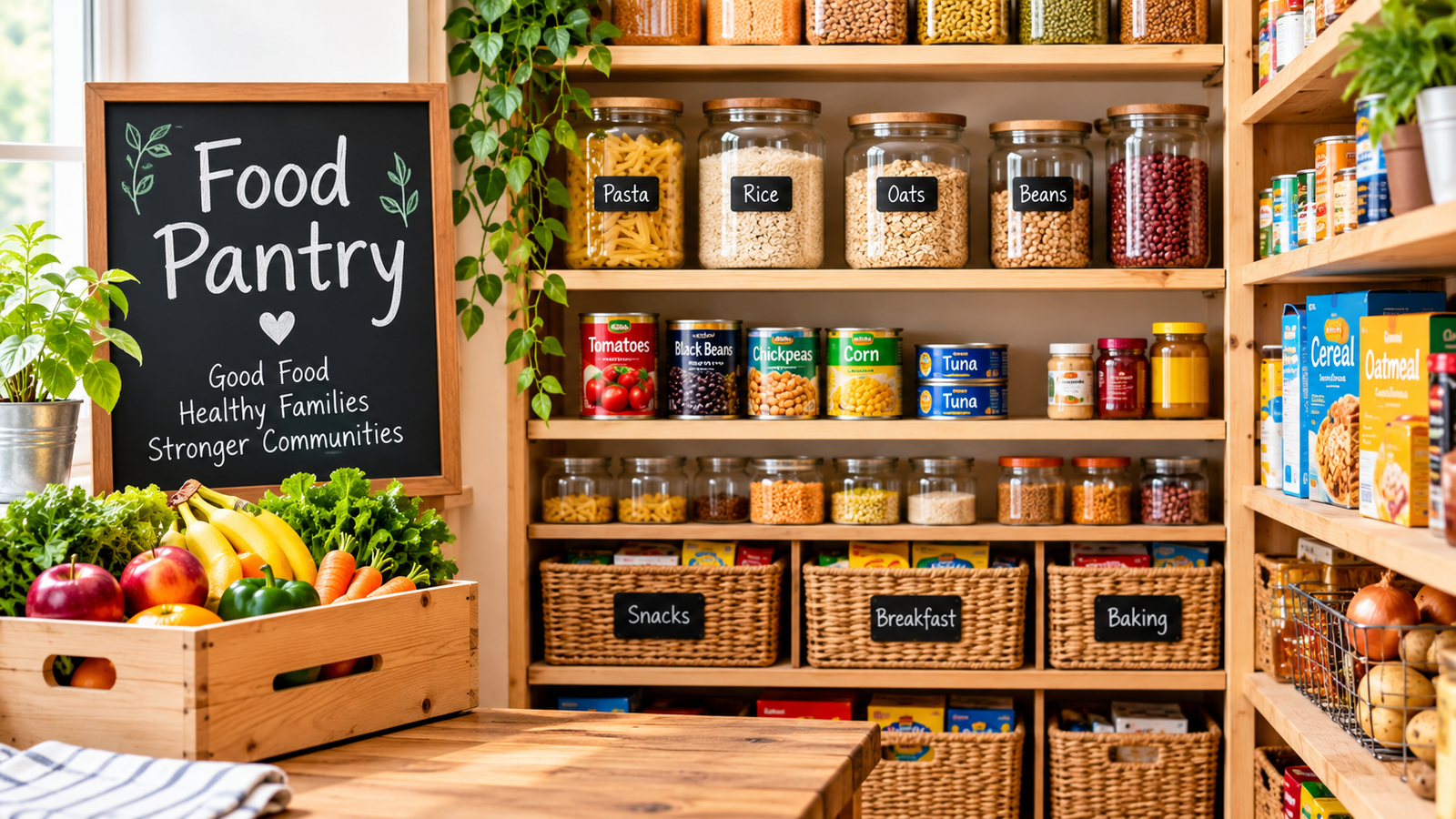
A well-organized food pantry can make everyday meal planning much easier while helping you save time, reduce food waste, and keep your kitchen clutter-free. Start by grouping similar items together, such as canned foods, grains, snacks, baking supplies, breakfast foods, and cooking essentials. Clear containers and labeled baskets can make frequently used ingredients easy to find, while keeping older products at the front helps ensure that nothing gets forgotten. Whether you have a large walk-in pantry or a small kitchen cabinet, simple storage solutions can turn an overcrowded space into a practical and attractive food pantry that works smoothly for the whole family.
Food Pantry Etiquette for First-Time Visitors
A little preparation can make the experience easier for everyone.
- Follow the location’s instructions.
- Arrive during the stated distribution period.
- Bring requested documents.
- Be respectful to volunteers and other visitors.
- Ask questions if you are unsure about the process.
- Tell staff about allergies or dietary restrictions.
- Take only the amount permitted.
- Check whether you need to register for another visit.
Remember that every food pantry can have different procedures. Being prepared and patient helps the distribution run smoothly.
Food Pantry Tips for First-Time Visitors
If you’re nervous about your first visit, keep these simple tips in mind:
Check before you go: Confirm the address, schedule, requirements, and available services.
Bring bags: Grocery bags or sturdy reusable totes can make carrying food easier.
Ask questions: Volunteers are there to help you understand the process.
Learn about other assistance: A local pantry may know about SNAP, meal programs, senior assistance, or other community resources.
Keep local information: Save the pantry’s phone number, website, or schedule for future reference.
What Other Food Assistance Programs Are Available?
A food pantry is only one part of the wider food assistance system. Depending on your circumstances, other programs may include SNAP, WIC, school meals, senior food programs, mobile distributions, and USDA food assistance programs.
USDA currently administers multiple nutrition programs, including SNAP, WIC, the Commodity Supplemental Food Program, and TEFAP.
For federal nutrition assistance programs, applications are generally handled through state, tribal, territorial, or local agencies rather than directly through USDA.
Conclusion
A food pantry can be an important community resource for people who need help keeping groceries on the table. Understanding how these programs work makes it easier to find assistance, prepare for a first visit, donate useful items, or volunteer your time.
If you need help today, begin by checking a local food bank or trusted food-assistance directory for current locations and hours. Requirements, available food, and schedules can change, so confirming details before you visit is always the safest approach.
Frequently Asked Questions About Food Pantries
Is food from a food pantry free?
Generally, community pantries provide groceries at no cost to eligible or participating visitors. However, individual programs can have different rules and eligibility requirements.
Who qualifies for a food pantry?
There is no single rule for every location. Some programs have broad access, while others may consider income, location, household size, or participation in specific assistance programs.
What should I bring to a food pantry?
Bring identification, proof of address, or other documents only if the location requests them. Reusable bags can also be useful for carrying groceries.
How often can I visit a food pantry?
Visit frequency varies. Some locations may allow regular visits, while others operate according to specific distribution schedules or household limits. Ask the pantry directly.
Do food pantries require identification?
Some do, while others may ask only for basic information such as your ZIP code or household size. Check the requirements before visiting.
What food is best for a food pantry donation?
Unopened, safe, shelf-stable foods such as canned vegetables, beans, rice, pasta, cereal, and peanut butter are commonly useful. However, local food pantry needs should guide your donation.
Can I donate money instead of food?
Many organizations accept monetary donations, and some report that financial contributions help them purchase food and cover operating costs. Check with your chosen local organization to see which donation method is most useful.
You May Also Read: DIY Home Decor
