


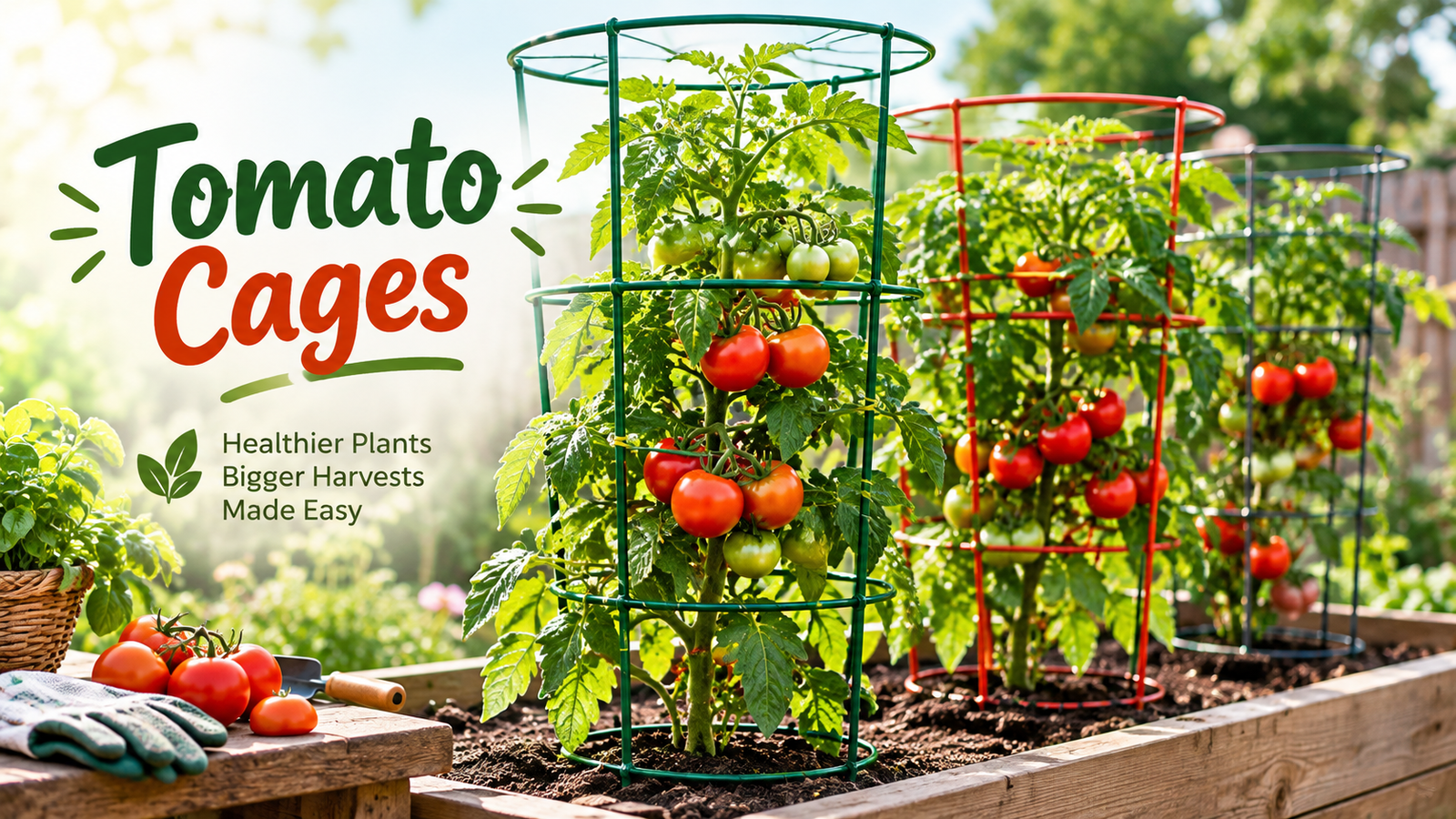
Growing healthy tomatoes is much easier when your plants have the right support. As tomato plants become larger, their stems can bend under the weight of foliage and fruit, eventually spreading across the soil. This is where tomato cages become useful. They provide a simple structure that helps keep plants upright, organized, and easier to harvest.
However, not every cage works for every tomato plant. A small, lightweight cage may be fine for a compact patio variety but can quickly become unstable around a vigorous indeterminate tomato. The best choice depends on the plant’s mature size, growing habit, garden space, and local conditions.
Whether you’re growing tomatoes in a raised bed, container, or traditional garden, this guide explains how to choose the right support, understand tomato cage dimensions, install your structure properly, and avoid common mistakes.
What Are Tomato Cages?
A tomato cage is a supportive framework placed around a tomato plant as it grows. Most are made from metal wire, fencing, reinforcing mesh, or plastic and have openings that allow branches to grow outward while remaining supported.
Unlike a single stake, a cage surrounds the plant from several sides. As stems grow, you can gently guide them through the openings. This distributes the weight of the plant instead of forcing one central stake to carry everything.
The best tomato cages are strong enough to support mature plants and have openings large enough for harvesting. They should also be stable enough to remain upright when plants become heavy or exposed to wind.
Why Do Tomato Plants Need Support?
Tomato plants can become surprisingly large. Even varieties with relatively compact fruit may produce many branches and a heavy crop.
Support can help:
- Keep fruit away from the soil
- Make harvesting easier
- Keep plants more organized
- Reduce branches sprawling across pathways
- Improve access around the plant
- Support stems carrying heavy fruit
Good support does not guarantee that a tomato plant will avoid disease, but keeping foliage and fruit elevated can contribute to a cleaner, more manageable growing environment.
Do All Tomato Plants Need Tomato Cages?
Not necessarily. Some compact varieties can grow successfully without a cage, while large indeterminate varieties usually benefit from substantial support.
The most important factor is the tomato’s growth habit.
Determinate Tomatoes
Determinate tomatoes grow to a relatively defined size and produce much of their crop within a shorter period. Because they tend to stay more compact, they can often be supported with shorter cages.
A small determinate variety may not need a tall, heavy-duty structure. A sturdy cage around 3 to 4 feet tall can be sufficient for many compact plants.
Indeterminate Tomatoes
Indeterminate tomatoes continue producing new growth throughout the growing season and can become tall, sprawling plants.
These varieties usually require taller, stronger tomato cages. A flimsy cage may bend or tip once the plant becomes loaded with fruit.
If you’re growing a vigorous indeterminate variety, choose the cage based on the plant’s expected mature size rather than its appearance when you transplant it.
What About Cherry Tomatoes?
Don’t assume a cherry tomato needs a tiny cage. Some cherry varieties are highly vigorous and can produce long, sprawling vines.
For example, an indeterminate cherry tomato may need a support structure similar to a larger-fruited indeterminate variety.
How to Choose the Right Tomato Cage
Choosing the right support starts with understanding your plant.
Consider these factors before buying or building a cage:
- Tomato variety
- Mature plant height
- Plant width
- Cage height
- Cage diameter
- Wire strength
- Opening size
- Soil and wind conditions
- Available garden space
- Storage requirements
The strongest tomato cages aren’t necessarily the biggest ones. A cage that is too wide can waste valuable garden space, while one that is too narrow can restrict a vigorous plant.
Look for openings that are large enough to reach through comfortably. Small openings can make harvesting frustrating, especially when fruit becomes hidden deep inside the foliage.
What Size Should a Tomato Cage Be?
There isn’t one universal size because tomato varieties differ considerably. The following ranges provide a useful starting point.
| Tomato Type | Approx. Cage Height | Suggested Diameter |
| Patio or dwarf | 2–3 feet | 12–18 inches |
| Small determinate | 3–4 feet | 15–20 inches |
| Large determinate | 4–5 feet | 18–24 inches |
| Indeterminate | 5–7+ feet | 20–30+ inches |
These are practical ranges rather than strict rules. Always check the expected mature size of the specific cultivar you’re growing.
How Tall Should a Tomato Cage Be?
Height should match the eventual size of the plant. A cage that looks oversized around a young seedling may be exactly what the plant needs later in the season.
For compact determinate varieties, shorter structures are usually adequate. For vigorous indeterminate plants, look for taller supports or consider a trellis system.
How Wide Should a Tomato Cage Be?
Diameter matters because tomatoes don’t simply grow straight upward. Branches spread outward as the plant develops.
A wider cage gives a vigorous plant more room to develop and makes it easier to distribute branches around the support.
If space is limited, don’t automatically choose the widest cage available. Instead, balance the plant’s expected size with the space between neighboring plants.
Tomato Cage Shapes: Which Is Best?
Shape affects stability, storage, and how much growing room is available inside the structure.
| Cage Shape | Best For | Advantages | Drawbacks |
| Round | General gardens | Simple and widely available | Lightweight versions may tip |
| Square | Larger plants | Good interior space | Can take more storage space |
| Cone-shaped | Compact tomatoes | Affordable and easy to find | Often too small for vigorous plants |
| DIY wire cylinder | Large plants | Customizable and strong | Requires construction |
Round tomato cages are familiar and easy to use, but a sturdy square or custom-built cage can provide more usable space for large plants.
Ultimately, strength and dimensions matter more than shape alone.
Best Materials for Tomato Cages
The material you choose affects durability, stability, and cost.
Concrete Reinforcing Wire
Concrete reinforcing mesh is a popular material for DIY tomato cages. It is strong, durable, and has relatively large openings.
It works particularly well when you’re growing vigorous plants that outgrow lightweight commercial cages.
Garden or Livestock Fencing
Fencing can also be turned into sturdy homemade supports. It allows gardeners to customize the height and diameter according to their plants.
Always handle cut wire carefully and protect sharp ends.
Lightweight Garden Wire
Light wire can work for small determinate tomatoes, but it may bend under the weight of a large plant.
For large varieties, choose a stronger material.
Plastic Cages
Plastic supports are lightweight and won’t rust. They can be convenient for containers and smaller plants.
However, lightweight plastic may not provide enough stability for a large, fruit-heavy indeterminate plant.
How to Install Tomato Cages
The easiest time to install tomato cages is when you plant the tomato or while it is still small.
Waiting until a plant becomes large can make installation more difficult and may disturb its roots.
Step 1: Choose the Location
Position the cage where the tomato has adequate sunlight and enough room to grow.
Step 2: Place the Cage Around the Plant
Center the tomato inside the structure. Avoid pressing the cage directly against the main stem.
Step 3: Push the Legs Into the Soil
Insert the cage legs deeply enough to provide firm support. Exact depth depends on the cage design and soil, but shallow placement can make the structure unstable.
Step 4: Add Extra Anchoring
In windy gardens, add stakes or other suitable anchors to prevent the cage from tipping.
Step 5: Guide Growing Branches
As the plant develops, gently guide branches through the openings rather than forcing thick stems into tight spaces.
How to Keep Tomato Cages From Falling Over
A mature tomato can act like a sail during strong winds, especially when its foliage is dense.
To improve stability:
- Choose heavy-duty wire for large plants
- Push support legs firmly into the soil
- Use additional stakes when necessary
- Avoid placing oversized plants in tiny cages
- Check supports after storms
- Use wider or heavier structures for vigorous varieties
A strong cage is only useful if it stays upright.
How to Train Tomatoes Inside a Cage
Caging is relatively simple because the plant can naturally grow outward through the openings.
As branches develop, gently redirect them into the cage instead of allowing them to fall outside.
You don’t need to constantly force every branch into a perfect position. The goal is simply to distribute growth around the structure and prevent major stems from collapsing onto the ground.
Do Tomatoes in Cages Need to Be Tied?
Not always. A strong cage can provide enough support without frequent tying.
However, very heavy branches may occasionally benefit from soft plant ties. If you tie a branch, avoid materials that can cut into growing stems.
Do Caged Tomatoes Need Pruning?
Caging doesn’t automatically mean that a tomato must be heavily pruned. Pruning decisions depend on the variety and the gardener’s preferred growing method.
Some gardeners allow plants to develop naturally inside a sturdy cage, while others remove selected suckers or crowded growth.
Tomato Cages for Raised Beds
Raised beds have limited space, so cage diameter becomes particularly important.
Before installing a cage, consider:
- The width of your raised bed
- Distance between plants
- Expected plant size
- Cage diameter
- Access for harvesting
For example, placing two vigorous indeterminate tomatoes too close together with large cages can quickly create an overcrowded bed.
Plan the support structure at the same time you plan your planting layout.
Tomato Cages for Containers
Tomato cages can work well in containers, particularly with patio and determinate varieties.
The biggest concern is stability. A tall plant combined with a lightweight pot can become top-heavy.
Choose a container large enough for the tomato variety and make sure the cage is firmly supported by the container or growing medium.
For very vigorous indeterminate tomatoes, a sturdy trellis may be more practical than a small container cage.
DIY Tomato Cages: How to Make One
DIY tomato cages are useful when standard garden-center supports aren’t large or strong enough.
Materials
You may need:
- Reinforcing wire or fencing
- Wire cutters
- Pliers
- Gardening gloves
- Stakes
- Measuring tape
Basic Construction
Measure and cut a suitable piece of wire. Form it into a cylinder around the desired diameter and secure the overlapping ends.
Leave enough wire at the bottom to create legs that can be pushed into the soil.
A DIY cage lets you customize the dimensions according to your tomato variety. This is especially useful for gardeners growing large indeterminate plants.
Tomato Cages vs. Stakes vs. Trellises
Cages aren’t the only way to support tomatoes.
| Support Method | Best For | Maintenance | Space Efficiency | Support |
| Tomato Cage | Home gardens | Low–Medium | Medium | Medium–High |
| Single Stake | Compact plants | High | High | Medium |
| Trellis | Vigorous vines | Medium–High | High | High |
| Florida Weave | Multiple plants | Medium | High | High |
Tomato cages are convenient when you want a relatively simple system with less tying.
Stakes can work well when garden space is limited, but plants generally need more regular tying.
Trellises are useful for vigorous vines and can make efficient use of vertical space, although they often require more training.
Common Tomato Cage Mistakes to Avoid
Even good tomato cages can fail when they’re used incorrectly.
Choosing a Cage That’s Too Short
The plant can quickly outgrow the support and spill over the top.
Using Weak Wire
Thin wire may bend once branches become heavy with fruit.
Installing the Cage Too Late
Trying to push a cage around a mature plant can damage roots or branches.
Not Anchoring the Structure
Wind can easily turn a tall, leafy plant into a source of leverage.
Ignoring Tomato Growth Habit
Always check whether your tomato is determinate or indeterminate before choosing support.
Using Tiny Openings
Small openings make it difficult to reach fruit and guide branches.
Overcrowding Plants
Give each tomato enough space for air movement, growth, and harvesting access.
How to Store Tomato Cages
At the end of the growing season, remove plant debris and soil from reusable supports.
Metal cages should be allowed to dry before long-term storage. Stack collapsible supports together and store them somewhere they won’t become a safety hazard.
If you build DIY wire cages, cover or safely position sharp ends to prevent accidental injuries.
When Should You Put Tomato Cages Around Plants?
The best time is generally at planting time or while plants are still small.
Installing support early means you don’t have to push a large structure through established branches later.
Early installation also gives growing stems a chance to naturally develop around the support instead of requiring aggressive repositioning.
Are Tomato Cages Worth It?
For many home gardeners, tomato cages are an easy and practical way to support plants.
They can reduce the amount of tying required, keep branches organized, make harvesting easier, and help keep fruit away from the soil.
The key is choosing a cage that matches the tomato. A cheap, narrow cage may be perfectly adequate for a compact patio variety but disappointing for a vigorous indeterminate plant.
If you’re unsure, prioritize strength, appropriate height, sufficient diameter, and secure anchoring over appearance.
Conclusion
The right tomato cage can make a noticeable difference in how manageable your garden becomes during the growing season. Instead of choosing a support based only on price or appearance, consider your tomato’s mature size, growth habit, available space, and local conditions.
For compact varieties, a simple cage may be all you need. Larger indeterminate tomatoes often benefit from tall, heavy-duty support with plenty of room for branches. Install the structure early, anchor it securely, and guide growing stems through the openings as the plant develops.
Whether you choose a store-bought cage, build a DIY version, or use a trellis instead, the goal is the same: give your tomato plant reliable support so it can grow upward and produce a healthy, accessible crop.
Frequently Asked Questions About Tomato Cages
1. What is the best size tomato cage?
The best size depends on the variety. Compact determinate tomatoes can often use cages around 3 to 4 feet tall, while vigorous indeterminate varieties generally need taller and stronger support.
2. How tall should a tomato cage be?
Choose the height according to the mature growth of your tomato. A 5- to 7-foot structure may be appropriate for some vigorous indeterminate varieties, while smaller determinate plants can use shorter supports.
3. Do tomato cages work for indeterminate tomatoes?
Yes, but the cage needs to be tall, wide, and strong enough for the variety. Small cone-shaped cages often become inadequate for vigorous indeterminate plants.
4. How deep should tomato cages go into the ground?
The cage should be inserted deeply enough to remain stable in your soil. Follow the design’s recommended installation depth and add stakes if the plant or local wind conditions require extra support.
5. Do tomatoes need to be tied to a cage?
Usually not if the cage is sturdy and properly sized. However, occasional soft ties can help support particularly heavy or awkward branches.
6. Can you use tomato cages in pots?
Yes. Smaller cages work well with many patio and determinate tomatoes. Make sure the container and cage are stable enough to support the mature plant.
7. Are tomato cages better than stakes?
Neither is universally better. Cages generally require less tying, while stakes can save space. Trellises may be preferable for vigorous vines or gardeners who want to maximize vertical growing space.
You May Also Read: Garden Soil
