
Healthy plants begin below the surface. Whether you are growing vegetables, flowers, herbs, or fruit, the quality of your garden soil can affect root growth, drainage, moisture, and nutrient availability. Poor soil can leave plants struggling even when they receive enough sunlight and water.
The good news is that you do not need perfect soil from the beginning. By identifying your soil type, checking its condition, and adding the right organic materials, you can gradually create a healthier environment for plants.
This guide explains what makes good garden soil, how to identify different soil types, how to test it, how to correct common problems, and how to maintain healthy soil throughout the growing season.
What Is Garden Soil?
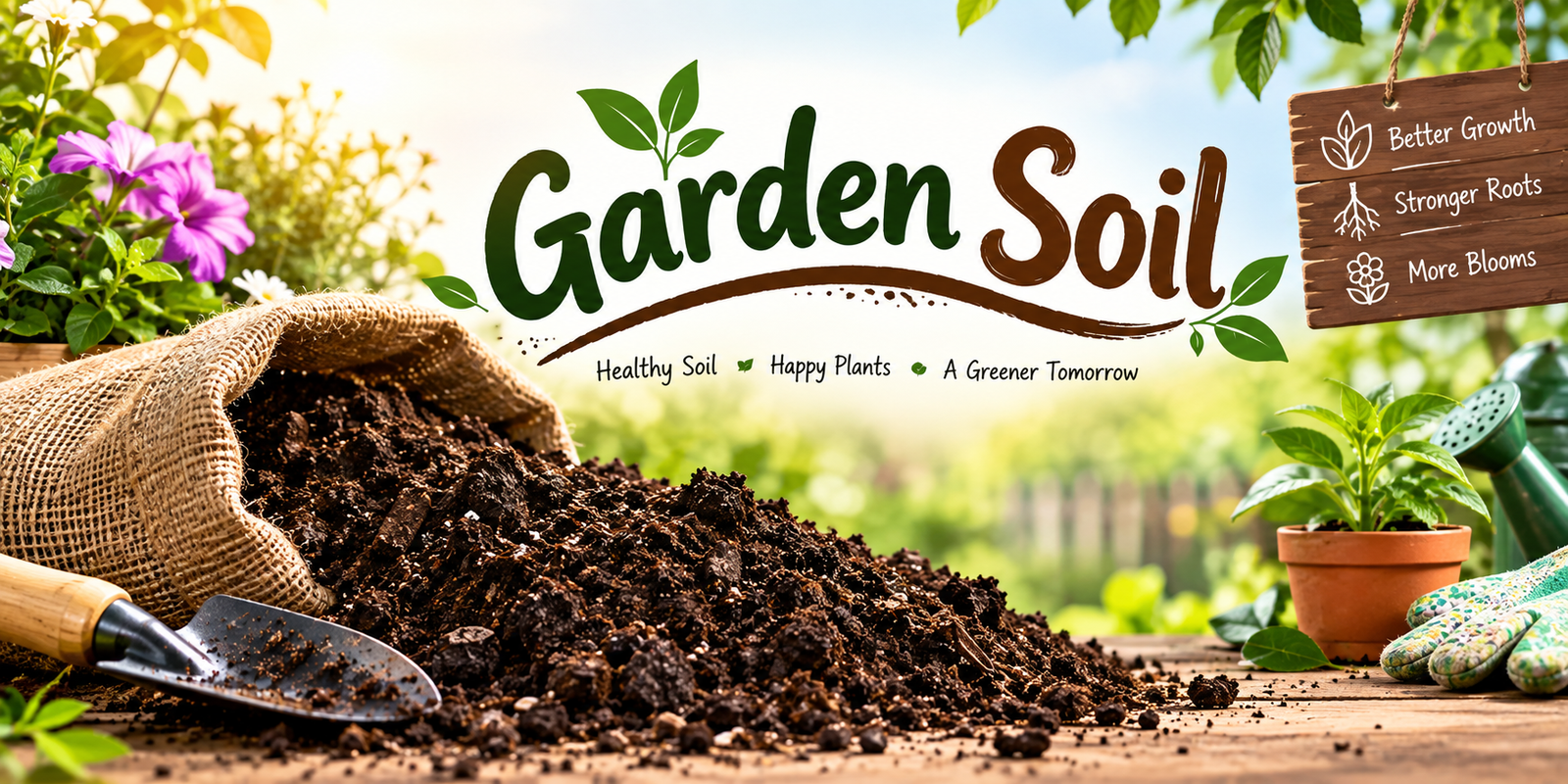
Garden soil is the natural growing medium found in outdoor planting beds. It contains mineral particles such as sand, silt, and clay, along with organic matter, water, air, and living organisms.
Healthy soil provides physical support for roots while allowing them to access moisture, oxygen, and nutrients. Its structure also influences how quickly water drains and how easily roots can move through the soil.
It is important to remember that soil that looks dark or rich is not automatically healthy. Texture, drainage, organic matter, pH, and nutrient availability all contribute to productive growing conditions.
Why Soil Quality Matters
Plants rely on soil for much more than physical support. Their roots need access to water and nutrients while also requiring oxygen.
If the ground is heavily compacted, roots may struggle to expand. If it drains too quickly, plants may dry out. If it stays saturated, roots may suffer from poor aeration.
Healthy garden soil provides a balance between moisture retention and drainage while creating favorable conditions for roots and beneficial organisms.
What Makes Good Garden Soil?
Good garden soil does not have to be expensive or purchased in bags. The goal is to create a growing environment with suitable structure, moisture, drainage, nutrients, and organic matter.
A productive soil should generally be loose enough for roots to penetrate but stable enough to hold moisture and nutrients.
| Soil Feature | Healthy Condition | Warning Sign |
| Texture | Loose and crumbly | Hard or sticky |
| Drainage | Water infiltrates steadily | Standing water |
| Moisture | Holds water without remaining saturated | Extremely dry or soggy |
| Organic matter | Adequate decomposed material | Very little organic material |
| Structure | Stable aggregates | Dense or compacted |
| Root space | Easy root penetration | Hard layers |
Rather than searching for a universal formula, focus on what your particular plants and growing conditions require.
Different Types of Garden Soil
Not every planting area has the same texture. The proportions of sand, silt, and clay determine many of the physical characteristics of soil.
Clay Soil
Clay particles are very fine and can hold considerable moisture and nutrients. However, clay can become dense and difficult to work, particularly when it is wet.
Adding organic matter gradually can improve structure. Avoid repeatedly digging or cultivating saturated clay because doing so can worsen compaction.
Sandy Soil
Sandy soil contains larger particles and usually drains quickly. This can reduce problems associated with waterlogging, but it can also mean that moisture and nutrients move through the root zone rapidly.
Adding suitable organic matter can help improve moisture retention and overall structure.
Silty Soil
Silty soil has fine particles and can be fertile, but it may compact or erode more easily than well-structured loam.
Mulching and maintaining organic matter can help protect the surface and support better soil structure.
Loamy Soil
Loam is often considered desirable because it combines sand, silt, and clay in a relatively balanced way.
However, even naturally productive garden soil requires maintenance. Organic matter can decline, while foot traffic and cultivation can cause compaction over time.
Chalky or Alkaline Soil
Chalky soil generally has a higher pH. This can influence nutrient availability and may make some plants more difficult to grow.
If you suspect that your soil is alkaline, testing is a better approach than adding random amendments.
How to Identify Your Garden Soil Type
You can get a useful first impression of your soil without immediately sending a sample to a laboratory.
Take a small amount of slightly moist soil and rub it between your fingers. Notice whether it feels gritty, smooth, sticky, or crumbly.
Sandy soil usually feels gritty, clay tends to feel sticky when wet, and loamy material often has a crumbly texture.
Try a Soil Jar Test
A jar test can give you an approximate idea of soil texture.
- Place some soil in a clear jar.
- Remove large stones and plant debris.
- Add water.
- Close the jar and shake it thoroughly.
- Leave it undisturbed.
- Observe how the particles settle into layers.
Heavier particles settle first, followed by finer particles. This makes the test useful for understanding the general texture of your garden soil.
However, a jar test does not provide accurate information about nutrient levels or pH. For those measurements, use an appropriate soil-testing service.
Check Soil Drainage
Dig a small hole and fill it with water. Observe how quickly the water disappears.
Very slow drainage may indicate heavy clay, compaction, or a broader site drainage issue. Very rapid drainage can indicate sandy conditions or low organic matter.
Knowing the cause is important before deciding how to modify the soil.
How to Test Garden Soil
A professional soil test is one of the most useful ways to understand what your growing area actually needs.
Depending on the test, you may receive information about pH, nutrient levels, organic matter, and other characteristics.
What Does a Soil Test Tell You?
A soil report may include:
- Soil pH
- Nitrogen
- Phosphorus
- Potassium
- Calcium
- Magnesium
- Organic matter
- Other nutrients depending on the laboratory
Testing can prevent you from adding fertilizer or amendments that your plants do not need.
How to Collect a Soil Sample
Take samples from representative areas rather than relying on one unusual location.
Use a clean tool and follow the instructions provided by the testing service. Remove obvious plant debris, mulch, stones, and large roots unless the laboratory says otherwise.
If you have noticeably different beds, lawns, or planting areas, consider testing them separately because their conditions may differ.
How Often Should You Test?
There is no single schedule that works for every garden. Testing frequency depends on the soil, crops, previous amendments, and local recommendations.
Testing is particularly useful when establishing a new planting area or when you are considering significant changes to nutrient levels or pH.
How to Read a Garden Soil Test
A soil report can look complicated at first, but several measurements are particularly useful for home gardeners.
Understanding Soil pH
pH indicates how acidic or alkaline the soil is. It affects the availability of several nutrients.
Different plants prefer different pH ranges, so avoid trying to force every planting area toward one number.
Understanding N-P-K
N-P-K refers to three major plant nutrients:
- N — Nitrogen: Supports leafy growth.
- P — Phosphorus: Plays an important role in roots, flowers, and reproduction.
- K — Potassium: Supports several plant processes and overall plant function.
More fertilizer is not automatically better. Use test results and plant requirements to guide applications.
Understanding Organic Matter
Organic matter comes from decomposed plant and animal materials. It can improve structure, moisture management, nutrient retention, and biological activity.
Building organic matter is often a long-term process rather than a one-time treatment.
How to Improve Garden Soil Naturally
Improving garden soil usually takes time. Instead of trying to change everything at once, identify the main limitation and address it gradually.
Add Finished Compost
Finished compost is one of the most useful amendments for many garden beds. It contributes organic matter and can support better structure and moisture management.
Use mature compost rather than fresh organic waste. More is not necessarily better, so avoid applying excessive amounts without considering existing soil conditions.
Use Well-Composted Organic Materials
Depending on availability and local recommendations, suitable materials can include finished compost, leaf-based compost, and properly aged manure.
Organic amendments should be mature and appropriate for the plants you intend to grow.
Apply Mulch
Mulch protects the soil surface from weather, helps reduce moisture loss, and can contribute organic material as it decomposes.
Keep mulch away from direct contact with plant stems to reduce moisture-related problems around the base of plants.
Consider Cover Crops
Cover crops can protect bare ground and contribute organic material. Certain species can also support nutrient cycling and improve the overall condition of the planting area.
Choose species according to your climate, available growing period, and gardening goals.
Reduce Unnecessary Soil Disturbance
Repeated digging and tilling can disturb soil structure. A low-disturbance approach can help preserve existing aggregates and biological activity.
However, no single method is ideal for every garden. Consider your soil type, climate, crops, and existing problems before changing your cultivation practices.
How to Fix Common Garden Soil Problems
The best solution depends on the actual problem. Adding fertilizer should not be the automatic response to every plant-growth issue.
How to Improve Clay Soil
For heavy clay, focus on gradually increasing organic matter and reducing compaction.
Avoid working the soil when it is very wet. Repeated foot traffic can also compress the planting area.
How to Improve Sandy Soil
Sandy conditions may benefit from additional organic matter and surface mulch.
These practices can help the soil retain moisture and nutrients for longer while supporting a more stable root environment.
How to Fix Compacted Soil
First identify the source of compaction. Foot traffic, machinery, construction, and inappropriate cultivation can all contribute.
Reduce unnecessary traffic and improve organic matter over time. Plant roots can also contribute to improved structure in suitable situations.
How to Improve Poor Drainage
Poor drainage may be caused by heavy texture, compaction, slope, or a larger site-level problem.
Do not assume that adding compost alone will solve severe drainage issues. Diagnose the cause before making major changes.
Garden Soil vs Topsoil vs Compost vs Potting Soil
These materials are often confused, but they are not interchangeable.
| Material | Main Use | Suitable for Containers? |
| Garden soil | In-ground beds | Usually no |
| Topsoil | Filling and landscaping | Usually no |
| Compost | Adding organic matter | As an amendment |
| Potting mix | Container growing | Yes |
| Raised-bed mix | Raised beds | Yes |
Garden soil is intended for outdoor beds and behaves differently from a container growing medium.
Topsoil is a broad term, and its quality can vary considerably. Before purchasing it, check what the product contains and what it is intended for.
Potting mix is specifically formulated for containers, where drainage and aeration behave differently from an open garden bed.
Best Garden Soil for Different Plants
There is no single “best” formula for every plant. The ideal growing medium depends on the crop, climate, drainage, and existing conditions.
Soil for Vegetables
Vegetables generally benefit from fertile, well-structured soil with suitable drainage and moisture retention.
Root vegetables particularly benefit from loose soil that allows roots to expand without encountering severe compaction.
Soil for Flowers
Flowering plants have different preferences, so check the requirements of individual species.
Most garden beds benefit from soil that drains properly while retaining enough moisture for healthy root development.
Soil for Herbs
Many herbs prefer well-draining conditions. Avoid keeping the root zone constantly wet simply because you want to provide plenty of water.
Soil for Raised Beds
Raised beds can be filled or amended according to their design. An open-bottom bed has different requirements from a raised container sitting above the ground.
Consider drainage, depth, crop requirements, and the materials already present before choosing a growing medium.
How to Maintain Healthy Garden Soil
Once you improve garden soil, maintenance helps preserve those gains.
Add suitable organic matter when necessary, protect the surface with mulch, avoid unnecessary compaction, monitor moisture, and test nutrients or pH when there is a reason to do so.
In vegetable gardens, crop rotation can also be useful. Different crops interact with the soil in different ways, and rotation can contribute to better long-term garden management.
The most effective approach is to observe how your soil changes instead of automatically repeating the same treatment every year.
Garden Soil Maintenance Calendar
A seasonal routine makes soil care easier.
| Season | Recommended Tasks |
| Spring | Test soil, prepare beds, address compaction |
| Summer | Mulch, monitor moisture, protect planting areas |
| Fall | Add suitable organic material and protect bare soil |
| Winter | Minimize compaction and protect exposed areas |
Timing will vary depending on your climate, growing season, and plants.
Common Garden Soil Mistakes to Avoid
Even simple soil-care practices can go wrong when they are applied without considering the actual conditions.
Avoid adding fertilizer without understanding nutrient needs. Do not work extremely wet soil, and do not assume that dark-colored soil automatically means high fertility.
Other common mistakes include using garden-bed soil in containers, ignoring drainage, applying too many amendments, and changing pH without testing.
Another mistake is trying to solve every plant problem with fertilizer. Poor growth can also result from insufficient light, watering problems, pests, diseases, root damage, unsuitable temperatures, or poor drainage.
Quick Garden Soil Troubleshooting Guide
Use this chart as a starting point when something seems wrong with your soil.
| What You Notice | Possible Cause | First Step |
| Water sits on the surface | Poor drainage or compaction | Investigate drainage |
| Soil dries very quickly | Sandy texture or low organic matter | Increase organic matter |
| Soil is hard to dig | Compaction or poor structure | Reduce traffic |
| Plants grow poorly | Nutrient or pH issue | Consider testing |
| Surface becomes crusty | Compaction or weak structure | Improve organic matter |
| Plants show nutrient symptoms | Nutrient availability problem | Test before fertilizing |
These symptoms are not definitive diagnoses. The same visible problem can have several causes, so consider the entire growing environment.
Conclusion
Healthy garden soil provides the foundation for strong roots and productive plants. Instead of searching for one perfect soil formula, learn what your existing soil needs and make improvements based on evidence.
Start by identifying its texture, checking drainage, and testing pH and nutrients when appropriate. Then use suitable organic matter, mulch, and targeted amendments to gradually improve growing conditions.
Whether you are growing vegetables, flowers, herbs, or other plants, good soil management is a long-term process. Test before making major changes, avoid unnecessary amendments, and protect the soil throughout the growing season.
Frequently Asked Questions About Garden Soil
What is the best garden soil?
The best garden soil has suitable structure, drainage, moisture retention, organic matter, and nutrient availability for the plants being grown. There is no universal formula that works for every garden.
How do I know if my garden soil is good?
Look for soil that is reasonably crumbly, drains appropriately, supports root growth, and does not remain excessively wet or dry. A soil test can provide information that appearance alone cannot.
How can I improve poor garden soil?
Start by identifying the main problem. Depending on the situation, adding suitable organic matter, reducing compaction, applying mulch, improving drainage, or following soil-test recommendations can help.
What is the difference between garden soil and topsoil?
Garden soil is generally intended for planting beds, while topsoil refers broadly to the upper layer of soil or a purchased soil product. Commercial topsoil can vary in composition and quality.
Can compost improve garden soil?
Yes. Finished compost can contribute organic matter and help improve structure and moisture management. However, it should be used appropriately rather than applied excessively.
How often should I test my soil?
The appropriate frequency depends on your soil, crops, amendments, and local recommendations. Testing is especially useful when starting a new garden or before making significant nutrient or pH changes.
Can I use garden soil in pots?
Ordinary garden soil is generally not ideal for containers because it can become compacted and may not provide the drainage and aeration required by container plants. A quality potting mix is usually more appropriate.
You May Also Read: How to Make a Garden Bed
