

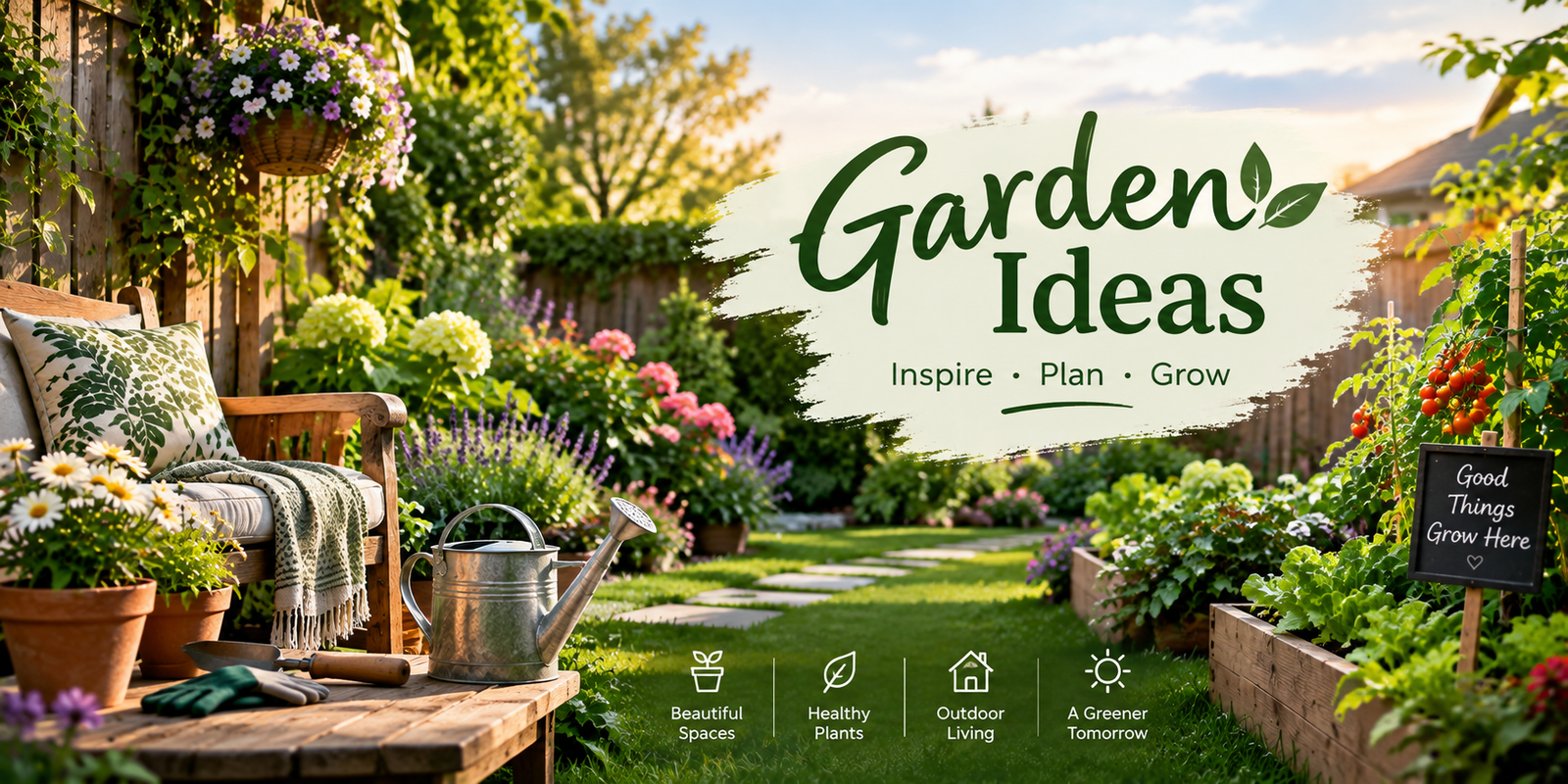
A beautiful outdoor space does not have to be large, expensive, or difficult to maintain. The right garden ideas can turn a small balcony, plain backyard, narrow side yard, or front entrance into a space that feels useful and inviting. The key is choosing an approach that matches your available space, sunlight, budget, gardening experience, and the amount of time you can give to maintenance.
This guide brings practical garden ideas together in one place, from beginner-friendly containers and raised beds to flower borders, vegetable plots, vertical planting, and relaxing outdoor corners. Instead of copying a design simply because it looks attractive, use each idea as a starting point and adapt it to your own conditions.
Quick Garden Ideas by Goal
If you want an easy project, start with containers, herbs, or a small raised bed. For a tiny area, vertical planters and hanging baskets make better use of limited floor space. If your priority is food, try a compact vegetable bed. For curb appeal, use layered flowers and shrubs near the entrance. Busy gardeners can focus on perennials, native plants, mulch, and simple layouts.
These garden ideas work especially well when you first decide what you want the space to accomplish rather than choosing plants at random.
Easy Garden Ideas for Beginners
One of the smartest garden ideas for beginners is to start small. A few well-chosen plants are easier to water, observe, and care for than a large planting project.
Container gardens are especially forgiving. Use pots with drainage holes and choose plants that suit the amount of sunlight available. Herbs such as thyme, basil, and parsley can provide useful harvests while flowers add color.
Another practical option is a small raised bed. It gives you a defined growing area and makes it easier to manage soil, spacing, and plant selection. Start with one bed rather than filling the entire yard.
Small Garden Ideas for Limited Spaces
Small spaces often benefit from vertical thinking. A trellis can support climbing plants while leaving valuable ground area open. Wall planters, railing containers, tiered pots, and hanging baskets can add planting space without making a compact garden feel crowded.
For a narrow side yard, use a simple path with planting beds along one or both edges. Repeating a few plants creates visual consistency and can make the space feel more intentional.
A balcony can become a productive mini garden with compact containers, herbs, leafy greens, and suitable flowering plants. Keep heavier containers positioned safely and avoid blocking access or drainage.
One of the most useful garden ideas for home is to treat unused corners as opportunities instead of problems. Even a small entrance, patio edge, or balcony wall can hold plants when the layout is planned vertically.
Backyard Garden Ideas
Backyards offer room for several functions, so divide the area into simple zones. One section can grow vegetables, another can hold flowers, and a third can provide seating.
Raised vegetable beds work well when you want a defined growing area. A mixed flower and herb border can soften the edges, while a trellis can add height and privacy.
If relaxation is the goal, create a small seating area surrounded by fragrant plants and foliage. You do not need an elaborate structure; a bench, chairs, or a small table can make an ordinary corner feel like a destination.
For larger yards, avoid filling every section with plants. Leave some open space so the garden remains comfortable to walk through and maintain.
Front Yard Garden Ideas
The front yard is often the first part of a home visitors see. Instead of filling it with random plants, choose a simple planting theme and repeat key species.
Flower borders can frame a walkway, while shrubs and compact trees can provide structure. Containers near the entrance are useful when you want seasonal color without redesigning the entire bed.
For a lower-maintenance front garden, select plants suited to the local climate and group plants with similar water needs. Mulch can help conserve moisture and give planting beds a neat appearance.
Simple garden ideas for home front areas can include a curved flower border, symmetrical containers, a small tree surrounded by ground cover, or a narrow bed along the walkway.
Budget-Friendly Garden Ideas
You can create attractive garden ideas without buying expensive landscaping materials. Reuse suitable containers, propagate plants, grow from seed, and build simple projects from materials you already have.
A recycled container garden is one of the easiest low-cost options. Make sure reused containers are clean, safe for plants, and have adequate drainage.
Another inexpensive approach is to improve one small section at a time. Rather than buying everything at once, establish a bed, learn what works, and expand gradually.
If you are looking for cheap garden ideas, concentrate your spending on essentials such as healthy plants, suitable growing media, drainage, and basic tools. Decorative items can be added later.
Low-Maintenance Garden Ideas
A low-maintenance garden is not a garden that requires no care. It is a space designed to reduce unnecessary work.
Choose plants that naturally suit your growing conditions instead of forcing unsuitable plants to survive. Perennials, native plants, ground covers, and drought-tolerant choices can be useful where appropriate.
Grouping plants with similar water requirements also simplifies care. Keep frequently used plants close to the house and make beds easy to reach for watering, pruning, harvesting, and weeding.
The best low-maintenance garden ideas focus on smart planning. A well-positioned bed that is easy to access can save more effort over time than an elaborate design that looks impressive but is difficult to maintain.
Flower Garden Ideas
Flower gardens can be formal, relaxed, colorful, or almost completely natural-looking. One useful approach is to layer plants by height, placing taller varieties toward the back and shorter ones near paths or borders.
A cottage-style bed can combine different flower shapes and heights for a relaxed appearance. A pollinator garden can focus on flowering plants that provide useful resources for bees and butterflies.
You can also create a simple color theme. For example, repeating two or three complementary flower colors throughout a bed often looks more cohesive than using every color available.
For small garden ideas, use containers, narrow borders, or one concentrated flower bed rather than spreading plants thinly across the entire space.
Vegetable Garden Ideas
Vegetable gardens do not need a large backyard. Raised beds, containers, and vertical supports can make productive growing possible in limited spaces.
Choose vegetables based on your climate, available sunlight, season, and available room. Leafy greens and herbs can work well in smaller containers, while climbing crops can take advantage of vertical space.
A kitchen garden can also combine vegetables, herbs, and flowers. This creates a productive area that still feels decorative and can attract beneficial insects.
A simple vegetable garden can be divided into sections for herbs, leafy crops, root vegetables, and climbing plants. This organization makes planting and harvesting easier.
Garden Ideas for Full Sun and Shade
Before choosing plants, spend time observing how sunlight moves across your garden. A location that looks sunny in the morning may become shaded later in the day.
For full-sun areas, consider plants that are naturally adapted to strong light and the local climate. Herbs, many vegetables, and numerous flowering plants can perform well when their specific growing requirements are met.
Shady areas need a different strategy. Instead of treating shade as a problem, use plants that naturally tolerate lower light. Woodland-style planting, foliage plants, and shade-tolerant flowers can create a calm and layered appearance.
The right garden ideas for home should always consider the growing conditions first. Matching plants to sunlight, moisture, soil, and temperature gives you a much better chance of maintaining healthy growth.
DIY Garden Ideas
DIY projects can add character without requiring a complete landscape renovation. A basic trellis can support climbing plants, while homemade plant markers can organize vegetable and herb beds.
You can also create simple edging, a small raised bed, recycled planters, or a compact vertical garden. Before starting, measure the space and make sure the materials are weather-resistant and safe.
The best DIY projects are those that solve a real problem. A trellis adds growing space, edging defines a bed, and a raised planter can improve organization and accessibility.
For garden ideas drawing inspiration, sketch your proposed layout on paper before buying materials. Mark paths, beds, containers, seating, and large plants so you can spot problems early.
Garden Ideas by Style
Modern gardens usually rely on clean lines, repeated plants, restrained materials, and simple shapes. Cottage gardens take a softer approach with abundant flowers and informal planting.
Rustic gardens can combine natural-looking materials, weathered wood, stone, and relaxed planting. Mediterranean-inspired spaces often use gravel, herbs, drought-tolerant plants, and warm, sunny conditions.
The style you choose should complement the home rather than compete with it. Repeating materials or plant forms between the house and garden can create a more connected appearance.
Unique garden ideas do not have to be complicated. A distinctive container arrangement, unusual pathway material, sculptural plant, or creative vertical planter can give a familiar garden a personal touch.
How to Plan Your Garden Before Planting
Good garden ideas start with a realistic plan. First, measure the area and mark existing paths, doors, fences, trees, utilities, and structures.
Next, observe sunlight and drainage. Decide whether the garden is primarily for food, flowers, wildlife, privacy, relaxation, or a combination of purposes.
Then create a simple layout. Place paths and larger structures first, followed by planting areas. Check the mature size of plants before deciding where they belong.
Finally, plan maintenance. Think about how you will water, weed, prune, harvest, and access each area. A beautiful design that is difficult to reach will become frustrating over time.
Common Garden Design Mistakes
One common mistake is choosing plants before checking the site. A beautiful plant is still a poor choice if it cannot handle the available light, moisture, temperature, or soil conditions.
Another mistake is overcrowding. Young plants may look far apart at first, but many will expand significantly as they mature.
Avoid making paths too narrow and beds too deep to reach comfortably. Also, do not create a high-maintenance design when your schedule only allows occasional care.
When comparing garden ideas, always consider how the finished space will look after plants mature. A design that works on paper may become crowded if plant size is ignored.
Garden Ideas Comparison Table
| Garden Idea | Space | Cost | Difficulty | Maintenance | Best For |
| Container garden | Very small | Low | Easy | Low-Medium | Beginners |
| Vertical garden | Small | Low-Medium | Easy | Low-Medium | Small spaces |
| Raised bed | Small-Medium | Medium | Easy | Medium | Vegetables |
| Cottage garden | Medium | Medium | Medium | Medium | Flowers |
| Pollinator garden | Small-Medium | Low-Medium | Easy | Low-Medium | Wildlife |
| Gravel garden | Small-Medium | Medium | Easy | Low | Busy gardeners |
| Kitchen garden | Medium | Medium | Medium | Medium | Homegrown food |
| Formal garden | Medium-Large | High | Advanced | Medium-High | Structured designs |
How to Choose the Best Garden Idea
The best choice depends on what you can realistically maintain. If you have little space, prioritize vertical planting, containers, and compact beds. If you have more room, divide the garden into functional zones.
Your budget should influence materials and scale, but it does not have to limit creativity. A simple design with healthy, well-placed plants can look better than an expensive space with too many unrelated features.
Most importantly, match plants to the site. Check sunlight, drainage, soil, mature size, climate, and watering needs before purchasing them.
Whether you need garden ideas for school, a home, or a community project, begin by defining the purpose. A school garden might prioritize learning and vegetables, while a home garden may focus more on beauty, food, privacy, or relaxation.
Conclusion
The most successful garden ideas are not necessarily the most complicated. They are the ones that fit your space, lifestyle, growing conditions, and goals. Whether you want flowers, vegetables, privacy, wildlife, or a quiet place to relax, start with one manageable project and build from there.
Measure your space, observe its sunlight, choose suitable plants, and keep maintenance realistic. With thoughtful planning, even a small area can become a productive and attractive part of your home.
FAQs About Garden Ideas
What are some easy garden ideas for beginners?
Start with containers, herbs, a small flower border, or one raised bed. These projects are manageable and let beginners learn watering, spacing, soil, and seasonal care without taking on an entire yard.
What are the best garden ideas for small spaces?
Vertical gardens, hanging baskets, tiered planters, balcony containers, and narrow planting beds make efficient use of limited space. Choose compact plants and avoid overcrowding.
How can I create a garden on a budget?
Reuse suitable containers, grow plants from seed, propagate existing plants, and complete projects gradually. Focus your budget on healthy plants, suitable soil, and practical infrastructure.
What are good low-maintenance garden ideas?
Choose plants suited to your local conditions, group plants with similar needs, use appropriate mulch, and avoid designs that require constant pruning or watering. Native and perennial plants can be useful where suitable.
What garden ideas work well in full sun?
Many herbs, vegetables, and flowering plants can thrive in full sun, but the best choices depend on climate, soil, and water availability. Always check the requirements of individual plants.
How can I make a small garden look bigger?
Use vertical elements, repeat plants, keep pathways simple, and avoid filling every available area. A limited plant palette and clear sightlines can make a compact space feel more open.
How do I choose garden ideas for my home?
Start with the garden’s purpose, available space, sunlight, budget, and maintenance time. Then select a style and plants that fit those conditions rather than copying a design that was created for a different site.
You May Also Read: Tomato Cages
