


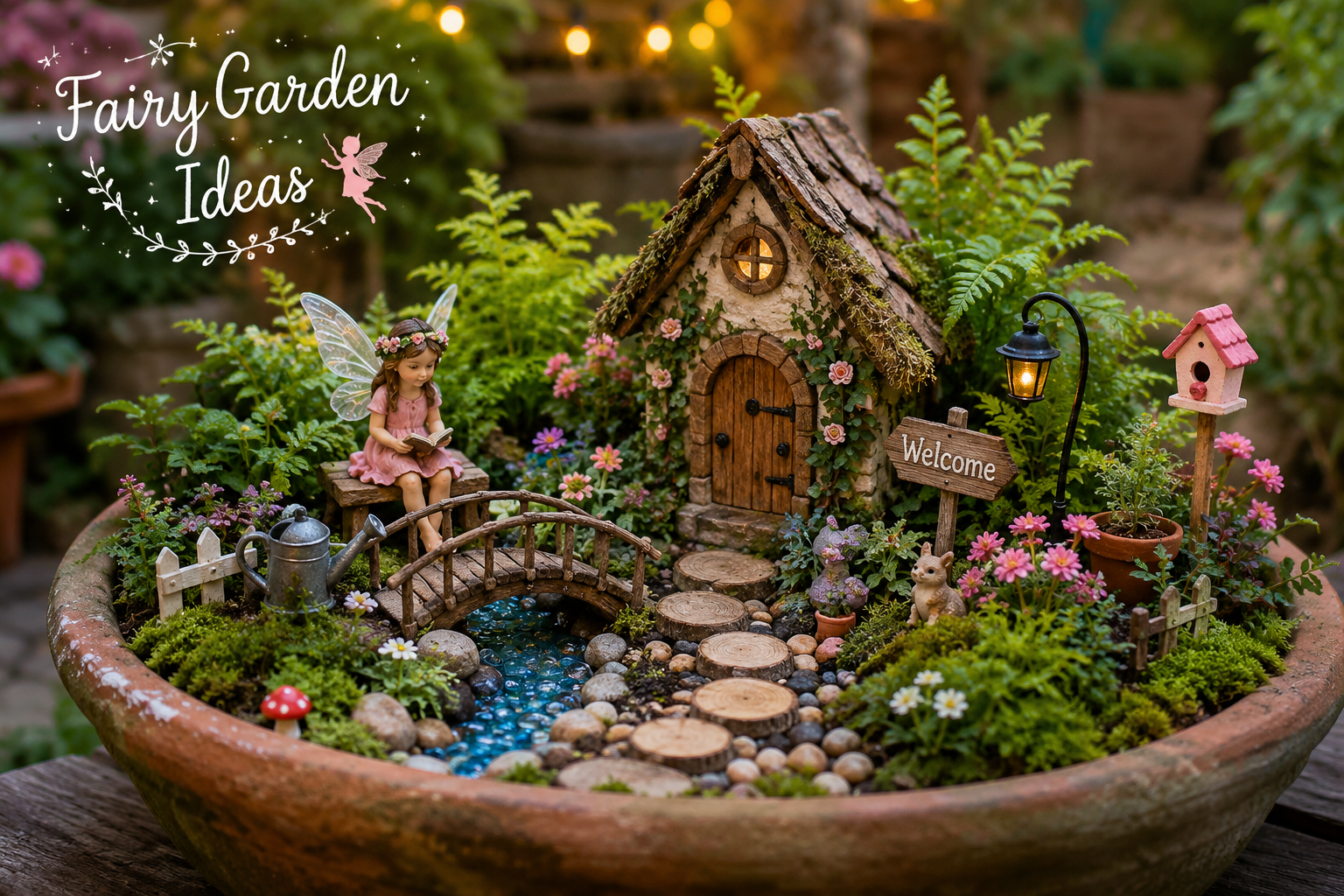
Creating a tiny magical world in your garden can be surprisingly simple. With the right plants, a small container, a miniature house, and a few natural decorations, you can transform an ordinary corner into something charming and imaginative. Whether you have a large backyard or only a windowsill, there are plenty of fairy garden ideas that can fit your space, budget, and gardening experience.
The best part is that you don’t need expensive decorations to create something beautiful. Pebbles, twigs, bark, pinecones, recycled pots, and other natural materials can become paths, fences, furniture, and tiny houses. These fairy garden ideas are also flexible enough for adults who want an elegant garden feature and children who enjoy creative DIY projects.
From simple container displays to large outdoor fairy villages, the following fairy garden ideas will help you design a miniature landscape that feels magical while still being practical to maintain.
What Is a Fairy Garden?
A fairy garden is a miniature landscape designed around tiny plants, houses, pathways, furniture, figurines, and natural decorations. It can be planted directly in the ground or created inside a container such as a terracotta pot, bowl, planter, or old wheelbarrow.
Unlike a purely decorative miniature display, a living Fairy Garden Ideas combines plants with miniature features. Choosing plants according to their mature size, light requirements, and watering needs is important if you want the garden to stay attractive.
Good fairy garden ideas also pay attention to scale. A huge plant beside a tiny chair can make the entire scene look unbalanced, while small-leaved plants and compact groundcovers usually create a more convincing miniature effect.
What Do You Need to Make a Fairy Garden?
You can start with only a few basic supplies. The exact materials depend on whether you’re making an indoor container garden, an outdoor display, or a larger village.
| Item | Purpose | Budget-Friendly Alternative |
| Container | Holds the garden | Old pot, bowl, or basket |
| Potting mix | Supports plants | Quality container soil |
| Small plants | Creates the living landscape | Cuttings or divisions |
| Pebbles | Makes paths and borders | Small stones |
| Fairy house | Creates a focal point | DIY twig or bark house |
| Moss | Adds woodland texture | Suitable groundcover |
| Accessories | Adds personality | Bottle caps, twigs, shells |
| Fairy figure | Adds the magical theme | Handmade clay figure |
One useful principle behind successful fairy garden ideas is to spend more attention on the plants and layout than on the number of accessories. A few well-positioned details often look better than a crowded collection of miniature objects.
35 Fairy Garden Ideas to Try
1. Classic Fairy Pot Garden
Start with a medium-sized terracotta pot, add a compact plant, and place a tiny Fairy Garden Ideas house near the back. A curved pebble path leading toward the house can make this one of the easiest fairy garden ideas for beginners.
2. Broken Pot Fairy Garden
Don’t throw away a cracked terracotta pot. Position the broken pieces to create different levels, then fill the spaces with soil, plants, stones, and miniature decorations. The uneven structure gives the garden a natural hillside appearance.
3. Teacup Fairy Garden
A large teacup or decorative bowl can become a tiny garden for a windowsill, desk, or shelf. Use one compact plant and only a few accessories so the small container doesn’t feel overcrowded.
4. Pebble Path Fairy Garden
Make the pathway the star of your design. Arrange tiny stones in a gentle curve from the front of the container toward the Fairy Garden Ideas house. This simple detail adds depth without requiring many decorations.
5. Fairy Door at the Base of a Tree
Attach or place a miniature door at the base of a suitable tree and surround it with moss, stones, and small plants. It creates the illusion that fairies have their own hidden entrance.
6. Tree-Base Fairy Garden
Use the natural space around a tree as a miniature woodland. Add groundcover, bark, mushrooms, stones, and a small house while leaving enough room around the tree for healthy growth.
7. Fairy Flower Bed
Add a miniature house and pathway to an existing flower bed. Rather than creating an entirely separate garden, integrate the fairy features among your current plants.
8. Wheelbarrow Fairy Garden
An old wheelbarrow makes an excellent upcycled container. Fill it with suitable soil and compact plants, then arrange a house, stones, and miniature furniture to create a mobile-looking Fairy Garden Ideas village.
9. Log Fairy Garden
A partially hollow log can become a natural container. The wood immediately provides texture, while moss, small plants, and a tiny door create a woodland atmosphere.
10. Fairy Village
Instead of using one house, create several miniature cottages. Connect them with small paths and place different plants around each home to make the scene feel like a tiny community.
11. Fairy Garden Under a Tree
A shady tree can provide a perfect setting for woodland-inspired fairy garden ideas. Choose shade-tolerant plants and use bark, moss, and stones to create a soft forest floor.
12. Raised Fairy Garden
A raised container is useful if you prefer not to work at ground level. It can also make a miniature garden easier to view from a patio, porch, or seating area.
13. Windowsill Fairy Garden
A shallow container with a compact plant and miniature house can turn a sunny windowsill into a tiny landscape. Always select plants that suit the available indoor light.
14. Indoor Bowl Fairy Garden
Use a decorative bowl or shallow planter to create an indoor display. This is especially useful for apartments where outdoor gardening space is limited.
15. Fairy Terrarium
A suitable terrarium can create a miniature enclosed landscape. Choose plants that tolerate the conditions inside the container and avoid overcrowding the space with decorations.
16. Fairy Garden Shelf Display
A small tray or planter can become a charming shelf display. This is one of the most practical fairy garden ideas for renters or anyone with limited outdoor space.
17. DIY Twig Fairy House
Collect small dry twigs and arrange them into a miniature cottage. Add bark for the roof and tiny pebbles around the entrance. Natural materials can make a DIY Fairy Garden Ideas house look surprisingly realistic.
18. Popsicle Stick Fairy House
Craft sticks can be cut and assembled into walls, doors, and fences. This project works particularly well as a weekend activity for families.
19. Painted Rock Fairy Garden
Paint small rocks as mushrooms, doors, signs, flowers, or stepping stones. Place them among plants to add personality without purchasing expensive accessories.
20. DIY Twig Fence
Create a tiny fence by tying short twigs together with garden string. Keep the fence slightly irregular to maintain a natural appearance.
21. Bottle-Cap Fairy Furniture
Bottle caps can become miniature tables, stools, flower containers, or other accessories. This is an inexpensive way to reuse household materials.
22. DIY Fairy Bridge
Use small pieces of wood or craft sticks to create a bridge over a pebble “stream.” Position it beside a winding path to make the garden feel more like a complete landscape.
23. Pinecone Fairy Garden
Pinecones can become tiny trees, decorative structures, or woodland accents. Combine them with bark, stones, and compact plants for a rustic look.
24. Enchanted Woodland Garden
Use moss, bark, stones, ferns, and woodland-style accessories to create a mysterious forest scene. Keep the colors natural for a more mature appearance.
25. Fairy Cottage Garden
For a softer cottage look, combine a miniature cottage with flowering plants, a tiny fence, a curved path, and a few garden accessories. These fairy garden ideas work especially well in flower beds and larger planters.
26. Fairy Tea Party Garden
Add a tiny table, chairs, cups, and miniature flowers around a fairy house. This theme can be playful for children or styled more elegantly for an adult garden.
27. Mushroom Fairy Garden
Mushroom decorations can create an instantly recognizable magical theme. Use several different sizes to add height while keeping the rest of the garden relatively simple.
28. Fairy Village With a Pathway
Create a longer pathway connecting two or three miniature houses. Add small plants along the edges instead of filling the entire garden with decorations.
29. Mermaid-Inspired Fairy Garden
Use shells, blue-toned stones, miniature water features, and aquatic-inspired decorations to create an imaginative seaside theme. Make sure any materials placed outdoors are suitable for weather exposure.
30. Butterfly Fairy Garden
Combine miniature fairy features with plants that support pollinators. A small fairy house surrounded by flowering plants can create both a magical display and a useful garden habitat.
31. Gnome and Fairy Garden
Mix fairy houses with small gnome decorations for a playful miniature village. Keep the scale consistent so the different figures don’t compete visually.
32. Fairy Story Garden for Kids
Give the garden a simple story. Children can decide where the fairies live, where their path leads, and what each miniature object represents. This turns gardening into a creative storytelling activity.
33. Fairy Treasure Garden
Hide small decorative objects around the garden and create a tiny path leading to them. This can make the garden more interactive for children.
34. Budget Fairy Garden
Use a recycled container, garden stones, twigs, pinecones, and one or two plants. These fairy garden ideas prove that a magical display doesn’t require a large budget.
35. Large Outdoor Fairy Village
If you have enough room, create several connected zones with houses, paths, plants, bridges, seating areas, and natural features. Large outdoor fairy garden ideas work best when the design has open spaces instead of decorations packed together.
Best Plants for a Fairy Garden
Plants can make or break your miniature garden. Choose varieties based on their mature size rather than how small they look when purchased.
Compact plants, groundcovers, mosses, sedums, creeping thyme, small ferns, and suitable miniature grasses can work well depending on the growing conditions.
For sunny locations, drought-tolerant plants such as sedum and some compact succulents may be useful. Shadier locations can suit mosses, ferns, and other shade-loving plants.
Always check the plant’s mature size, water requirements, and light preference before adding it. A plant that quickly outgrows the container can hide your fairy house and overwhelm the miniature landscape.
How to Make a Fairy Garden Step by Step
Step 1: Choose the Location
Observe the area before choosing plants. Determine whether it receives full sun, partial shade, or mostly shade.
Step 2: Select the Container
Choose a container that has enough room for roots and, for outdoor gardens, adequate drainage.
Step 3: Prepare the Soil
Use an appropriate quality potting mix for container-grown plants. Avoid leaving the roots in constantly saturated soil.
Step 4: Plant the Largest Features First
Place larger plants toward the back or sides and shorter plants toward the front. This creates depth and keeps the miniature features visible.
Step 5: Create a Path
Use pebbles, bark chips, or other small materials to form a curved path. A path helps connect different parts of the garden visually.
Step 6: Add the Fairy House
Position the main house where it can be seen easily. It should act as the focal point rather than getting lost behind plants.
Step 7: Add Accessories
Add furniture, signs, fences, figures, mushrooms, bridges, or other details gradually.
Step 8: Leave Some Empty Space
One of the most overlooked principles in fairy garden ideas is negative space. Leaving a few open areas makes the garden easier to appreciate and prevents it from looking cluttered.
Fairy Garden Ideas for Adults
Not every Fairy Garden Ideas needs to look like a children’s craft project. Adults can create sophisticated displays using muted colors, natural stone, aged wood, terracotta, moss, and carefully selected plants.
A woodland cottage, elegant tea garden, or minimalist fairy village can blend naturally into an established landscape. For adult-friendly fairy garden ideas, choose fewer accessories and focus on texture, proportion, and plant health.
Fairy Garden Ideas for Small Spaces
You don’t need a backyard to enjoy a miniature garden. A balcony, patio, porch, windowsill, or indoor shelf can provide enough room.
| Space | Recommended Garden Style |
| Windowsill | Teacup or shallow planter |
| Balcony | Medium container |
| Patio | Large pot or planter |
| Porch | Wheelbarrow garden |
| Small yard | Tree-base garden |
| Indoor shelf | Tray or bowl |
Small-space fairy garden ideas should use vertical details carefully. A tiny house, narrow pathway, and one taller plant can create depth without requiring a large footprint.
Fairy Garden Ideas on a Budget
You can build a beautiful garden without buying every miniature accessory from a garden store.
Look around your home and garden for useful materials. Twigs can become fences, stones can become paths, bottle caps can become furniture, and old containers can become planters.
If you have a limited budget, spend first on healthy plants and a suitable container. Then add DIY decorations over time. This approach keeps the garden affordable while giving you opportunities to change the design.
How to Design a Fairy Garden That Looks Real
The most convincing fairy garden ideas usually have a sense of proportion and purpose.
Start with one focal point, such as a cottage or fairy door. Place taller plants behind it and lower plants toward the front. Create a pathway that visually leads toward the focal point.
Avoid using miniature accessories from completely different scales. A tiny house beside oversized furniture can make the scene look artificial.
Natural textures also help. Combine stone, wood, soil, leaves, moss, and plants instead of relying entirely on manufactured decorations.
Most importantly, don’t fill every available space. A little empty ground can make the miniature elements stand out.
Common Fairy Garden Mistakes to Avoid
Choosing plants that grow too large: Always check mature size.
Ignoring drainage: Excess water can damage container plants.
Mixing scales: Keep houses, figures, furniture, and plants visually compatible.
Overcrowding: Too many accessories can hide the plants and focal point.
Ignoring sunlight: Select plants according to the actual location.
Using fragile outdoor decorations: Materials designed for indoor crafts may not survive rain and direct sun.
Overwatering: Check soil moisture before watering rather than following a rigid daily schedule.
Forgetting maintenance: Even tiny gardens need pruning, cleaning, and occasional redesigning.
How to Maintain a Fairy Garden
A Fairy Garden Ideas is still a garden, so the plants need appropriate care. Check the soil regularly and water according to the plants and growing conditions.
Remove dead leaves, trim plants when necessary, and watch for pests. Keep pathways visible and clean miniature accessories when they become dirty.
Outdoor decorations should also be inspected after severe weather. Replace damaged items and move fragile pieces indoors when appropriate.
A simple weekly check can include:
- Checking soil moisture
- Removing dead leaves
- Trimming overgrown plants
- Inspecting for pests
- Checking drainage
- Cleaning accessories
- Looking for weather damage
Conclusion
The best fairy garden ideas don’t require a huge yard, expensive decorations, or advanced gardening skills. A small container, suitable plant, miniature focal point, and a few natural materials can be enough to create a charming miniature world.
Start with the space you have and choose plants according to its light and moisture conditions. Then build around one focal point, add a pathway, and introduce decorations gradually. Whether you prefer a simple pot, an indoor display, a children’s DIY project, or a large outdoor village, the most successful fairy garden ideas balance imagination with practical gardening.
The goal isn’t to create the most expensive miniature garden. It’s to create a small space that feels personal, magical, and enjoyable to look after.
Frequently Asked Questions
What is the easiest fairy garden to make?
A simple container garden is usually the easiest starting point. Use a pot with drainage, one compact plant, a small fairy house, and a pebble path. This setup requires relatively few materials and can be expanded later.
What plants are best for fairy gardens?
Compact, slow-growing, or naturally small plants are generally useful. Depending on the location, options can include sedum, creeping thyme, moss, small ferns, compact grasses, and suitable succulents. Always check mature size and growing requirements.
Can I make a fairy garden indoors?
Yes. Indoor gardens can be created in bowls, shallow planters, terrariums, or other suitable containers. Choose plants according to the available light and avoid placing water-sensitive materials where they can be damaged.
How do I make a fairy garden cheaply?
Use recycled containers and natural materials such as stones, twigs, bark, pinecones, and leaves. Buy only a few key items, such as one healthy plant and a miniature house, then make additional decorations yourself.
What should I put in a fairy garden?
Common elements include a miniature house, plants, pathways, stones, moss, fairy figures, fences, furniture, signs, bridges, and natural decorations. You don’t need all of them; choose pieces that support your chosen theme.
How do I keep a fairy garden from becoming overgrown?
Choose plants based on their mature size and prune them when necessary. Avoid aggressive growers in small containers, and periodically remove plants that are crowding the house, path, or other features.
Can adults enjoy fairy gardens?
Absolutely. Adult-friendly fairy garden ideas can use natural colors, elegant containers, woodland plants, stone pathways, and understated miniature accessories. A restrained design can make the garden feel sophisticated rather than overly whimsical.
You May Also Read: Flower Garden Ideas
