

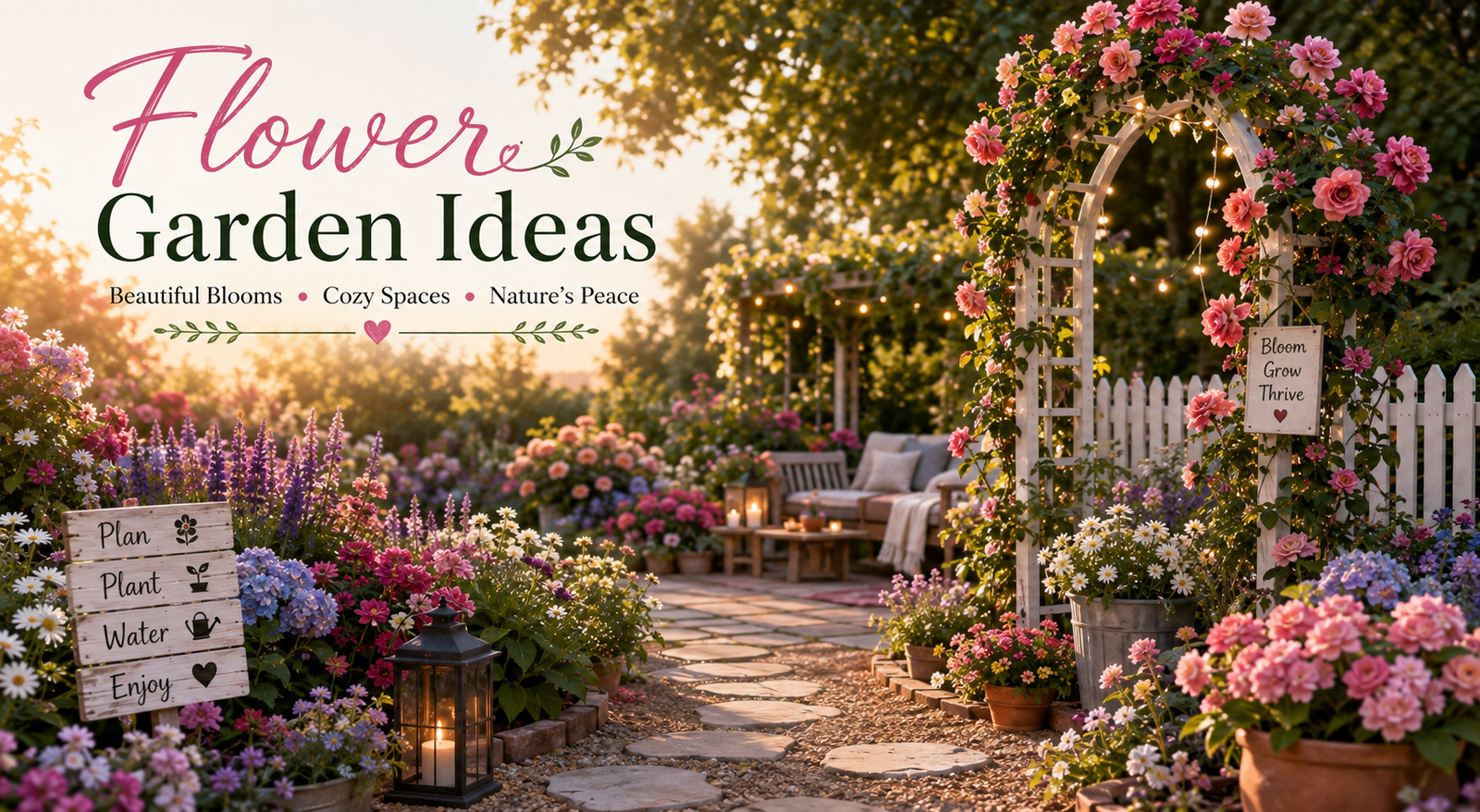
A beautiful garden does not need to be huge, expensive, or difficult to maintain. With the right plants, colors, and layout, even a small corner can become an inviting outdoor space. The best flower garden ideas combine beauty with practicality, taking into account sunlight, available space, soil, climate, and how much time you want to spend caring for your plants.
Whether you want simple flower garden ideas for the front of your home, a colorful backyard border, or flower garden ideas for small spaces, there are plenty of ways to create a garden that feels personal and polished. From cottage-style beds to containers and pollinator-friendly plantings, these flower garden ideas can help you choose a design that fits your space and lifestyle.
How to Choose the Right Flower Garden Idea
Before buying plants, look at the conditions in your garden. Measure the available area and observe how much direct sunlight it receives during the day. Also consider drainage, soil quality, mature plant size, and how easily you can reach the bed for watering and maintenance.
Your garden’s purpose matters too. A front-yard bed may focus on curb appeal, while a backyard garden might be designed for relaxation, wildlife, or cutting Flower Garden Ideas for bouquets.
| Your Space or Goal | Good Garden Idea | Maintenance |
| Small patio | Container flower garden | Low to moderate |
| Sunny front yard | Layered flower border | Moderate |
| Shady corner | Woodland-style garden | Low to moderate |
| Balcony | Vertical or railing planters | Moderate |
| Large backyard | Mixed perennial border | Moderate |
| Fresh bouquets | Cut flower garden | Moderate to high |
| Busy gardener | Low-maintenance perennial bed | Low |
35 Flower Garden Ideas to Try
1. Curved Front-Yard Flower Bed
A curved bed can soften the straight lines of a house, driveway, or walkway. Use taller flowers toward the back, medium-height plants in the center, and low-growing flower Garden Ideas along the edge.
This is one of the most practical flower garden ideas for improving curb appeal without redesigning the entire yard.
2. Cottage-Style Flower Garden
Cottage gardens have an informal, abundant appearance. Mix flowers of different heights and textures instead of planting everything in rigid rows.
Roses, lavender, daisies, coneflowers, and other flowering perennials can create a relaxed look. Repeat a few favorite plants throughout the bed so the design still feels connected.
3. Layered Flower Border
Layering is a simple design technique that makes a flower Garden Ideas bed look fuller. Place tall plants at the rear, medium plants in the middle, and shorter varieties near the front.
This works particularly well along fences and property boundaries.
4. Flower Garden Along a Fence
Use a fence as a natural backdrop for your planting. Taller flowers can hide an unattractive fence while shorter flower Garden Ideas soften the foreground.
For simple flower garden ideas, repeat three or four flower varieties instead of trying to grow too many different plants.
5. Flower Garden Around a Tree
An empty area around a mature tree can become a beautiful planting zone, but avoid piling soil against the trunk or unnecessarily disturbing major roots.
Choose plants suited to the available light and moisture. A woodland-inspired design can work particularly well beneath trees with filtered light.
6. Small Corner Flower Garden
Turn an unused backyard or side-yard corner into a small focal point. A triangular or curved planting bed can make an awkward space feel intentional.
Use a small number of plants and repeat them to avoid a cluttered appearance.
7. Narrow Flower Garden
A narrow strip beside a walkway, driveway, or fence does not need to remain empty. Choose plants with suitable mature widths and arrange them in repeated groups.
Vertical interest is especially useful when horizontal space is limited.
8. Raised Flower Bed
Raised beds can define a garden clearly while making planting and soil improvement easier. Wood, brick, stone, and other materials can create different visual styles.
Keep the bed accessible from at least one side and choose construction materials appropriate for outdoor use.
9. Container Flower Garden
Containers are among the easiest flower garden ideas for patios, decks, porches, and rental properties. Combine a tall focal plant, a rounded filler, and a trailing plant in larger containers.
Choose containers with drainage holes and remember that pots usually require more frequent watering than plants growing in the ground.
10. Balcony Flower Garden
A balcony can become a colorful garden with railing planters, hanging baskets, and compact containers.
Before adding several heavy pots, check the property’s rules and make sure containers are positioned safely. Select flower Garden Ideas according to the amount of sunlight the balcony receives.
11. Vertical Flower Garden
When floor space is limited, look upward. Trellises, wall planters, hanging baskets, and vertical systems can add flowers without taking up much ground space.
These are especially useful flower garden ideas for small spaces.
12. Walkway Flower Border
Frame a walkway with flowers while keeping enough room for comfortable passage. Low-growing plants near the path can create a neat edge, while taller flower Garden Ideas can be placed farther away.
Avoid plants that spread aggressively into walking areas.
13. Porch-Entry Flower Garden
A flower bed near the entrance can make a home feel more welcoming. Use repeated colors that complement the exterior of the house.
Containers can be added around the porch when an in-ground bed is not practical.
14. Low-Maintenance Flower Garden
Low-maintenance does not mean maintenance-free. The easiest approach is to choose plants that are well suited to your local growing conditions.
Use hardy plants, appropriate native species, mulch, and repeated plant groups to reduce unnecessary work. These low maintenance flower garden ideas are particularly useful for busy homeowners.
15. Wildflower Garden
A wildflower garden can create a relaxed, natural appearance while providing resources for pollinators.
Choose a seed mix or plants appropriate for your region rather than assuming every wildflower will perform well everywhere.
16. Pollinator Flower Garden
Plant flowers with different shapes and bloom periods to provide food for pollinators across more of the growing season.
Coneflowers, salvia, yarrow, and other pollinator-friendly choices can be combined with native plants suited to your area.
17. Butterfly Garden
Butterflies benefit from nectar-rich flowers, but a wildlife-friendly garden can offer more than flower Garden Ideas alone. Include a variety of plants and consider providing sheltered areas where appropriate.
Avoid designing the entire garden around one species. Diversity generally creates a more useful habitat.
18. Cut Flower Garden
If you love bouquets, dedicate part of the garden to flowers grown specifically for cutting. Zinnias, cosmos, dahlias, snapdragons, and other productive flowers can provide material for arrangements.
Leave paths or stepping areas so you can harvest without walking through planting beds.
19. Herb and Flower Garden
Mix culinary herbs with flowering plants for a garden that is both attractive and useful. Flowering herbs such as lavender, oregano, dill, and basil can add texture and interest.
This is one of the more unique flower garden ideas for gardeners who want beauty and function in the same space.
20. Woodland Flower Garden
For shady or dappled areas, create a woodland-inspired garden. Use plants that naturally tolerate lower light rather than forcing sun-loving flower Garden Ideas into shade.
Add layers of foliage, flowers, and natural materials for a softer appearance.
21. Full-Sun Flower Garden
A sunny bed gives you many possibilities, including annuals, perennials, pollinator plants, and cut flowers.
Zinnias, cosmos, marigolds, coneflowers, and other sun-loving plants can work well when their soil, water, and climate requirements are met.
22. Shade Flower Garden
Shade does not mean you have to give up flowers. Partial shade and dappled shade can support a range of flowering plants.
Before planting, determine whether the area receives bright filtered light, morning sun, afternoon shade, or deeper shade.
23. Drought-Tolerant Flower Garden
For dry areas, choose plants adapted to your local climate and soil rather than simply watering less.
Once established, suitable drought-tolerant plants can reduce irrigation needs, but new plants still require appropriate watering while their roots develop.
24. Rock Flower Garden
Combine rocks, gravel, and compact flowering plants to create a structured garden with a natural appearance.
Rock gardens are particularly useful where drainage is good and larger plants would overwhelm the available space.
25. Modern Flower Garden
A modern garden usually looks more intentional and restrained. Use repetition, clean edges, a limited color palette, and plants with strong shapes.
Instead of planting dozens of different flowers, repeat a few varieties throughout the space.
26. Rustic Flower Garden
Use natural-looking materials such as stone, weathered wood, simple containers, and informal planting arrangements.
These Flower Garden ideas work particularly well with cottage or country-style homes.
27. White Flower Garden
A monochromatic white garden can look elegant and calm. Combine flowers with different shapes, heights, and foliage textures so the design does not become visually flat.
White flowers can also stand out particularly well in evening gardens.
28. Pink and Purple Flower Garden
Pink and purple flowers create a soft but colorful combination. Add green foliage between the two colors to prevent the bed from looking overly busy.
Repeating the same shades in several areas will make the garden feel more cohesive.
29. Yellow and Blue Flower Garden
Yellow and blue create strong visual contrast. Use one color as the dominant theme and the other as an accent rather than dividing the bed into two equal blocks.
This approach can make a relatively simple planting design look intentional.
30. Four-Season Flower Garden
Instead of expecting flowers to bloom continuously, plan for year-round garden interest.
Choose different plants for spring, summer, and fall, while using evergreen foliage, ornamental grasses, seed heads, bark, or other structural elements to keep the garden interesting outside peak flowering periods.
31. Annual Flower Garden
Annuals are useful when you want quick seasonal color or enjoy changing your garden every year.
They are also excellent for experimenting with colors and layouts before committing to a permanent perennial design.
32. Perennial Flower Garden
Perennials can provide a long-term foundation because many return each growing season when suited to their environment.
Pay attention to mature size. A plant that looks small at the garden center may eventually occupy much more space.
33. Budget-Friendly Flower Garden
You do not need to buy dozens of mature plants to create a beautiful garden. Start small and expand gradually.
Growing from seed, dividing established perennials, reusing suitable containers, and choosing plants that thrive in your existing conditions can help reduce costs.
34. Beginner Flower Garden
If you are new to gardening, keep the first bed simple. Choose three dependable flower types with different heights and bloom periods.
One easy formula is:
Tall flowers + medium flowers + low edging plants + mulch
This simple structure makes beginner flower garden ideas easier to plan and maintain.
35. Flower Garden With Evening Lighting
Subtle garden lighting can make flowers, paths, and foliage visible after sunset. Use lighting to highlight focal points rather than illuminating every plant.
Solar lights can work in suitable locations, while wired systems may provide more consistent illumination.
Easy Flower Garden Layouts You Can Copy
One of the easiest ways to turn inspiration into action is to start with a measured layout.
4 × 4-Foot Beginner Garden
For a compact bed, place two or three taller plants toward the center or back, medium flowers around them, and low-growing plants around the outer edge.
Don’t overcrowd the bed during the first season. Leave enough space for plants to reach their expected mature size.
4 × 8-Foot Flower Bed
A rectangular bed gives you more room to create layers:
Back: tall flowers
Middle: medium-height flowers
Front: compact flowers or edging plants
Repeat each variety in small groups instead of planting one of everything.
4 × 12-Foot Border
A longer border works well with repeated planting patterns. For example, create three repeating sections rather than treating the entire bed as one planting area.
This technique makes larger flower garden ideas easier to organize.
Best Flower Combinations for a Beautiful Garden
Choosing plants that look good together is just as important as choosing individual flowers.
| Garden Style | Example Combination | Best Use |
| Cottage | Rose + lavender + daisy | Informal beds |
| Pollinator | Coneflower + salvia + yarrow | Wildlife gardens |
| Cut flower | Zinnia + cosmos + dahlia | Bouquets |
| Shade | Astilbe + hosta + hellebore | Shady beds |
| Container | Geranium + alyssum + trailing plant | Patios |
| Modern | Salvia + ornamental grass | Contemporary yards |
When combining plants, compare their light, water, soil, and mature-size requirements. Attractive flowers are not automatically good companions if their growing needs are very different.
Flower Garden Ideas by Sunlight
Sunlight should guide your plant selection.
Full sun: Consider sun-loving annuals and perennials such as zinnias, cosmos, marigolds, and coneflowers where locally appropriate.
Partial shade: Look for plants that tolerate reduced afternoon sunlight.
Dappled shade: Woodland-style combinations can work well beneath filtered tree canopies.
Deep shade: Focus on plants specifically adapted to low-light conditions and use foliage as an important part of the design.
This is one of the most important steps in successful flower garden ideas because choosing a plant that cannot tolerate your site’s conditions often leads to poor growth.
How to Design a Flower Garden Step by Step
Start by measuring the area and drawing a simple sketch. You can use graph paper or a basic digital drawing.
Next, observe sunlight and drainage. Then choose a garden style and a manageable color palette.
Select plants based on their mature size, growing requirements, and flowering periods. Arrange taller plants behind shorter ones where the bed is viewed primarily from one direction.
Leave sufficient room between plants. Although a newly planted bed may look sparse, plants often expand significantly as they mature.
Finally, prepare the soil according to your plants’ needs, plant at appropriate times for your region, water correctly, and add mulch where suitable.
How to Keep Flowers Blooming Throughout the Season
A garden looks more attractive when flowers appear at different times rather than all blooming at once.
Combine early, mid-season, and late-season bloomers. Deadhead appropriate flowers when necessary, maintain healthy soil, and consider succession planting for annuals.
Don’t forget foliage. Leaves provide structure between flowering periods and can keep a garden visually appealing even when fewer flowers are open.
Common Flower Garden Mistakes to Avoid
Even beautiful flower garden ideas can fail when the basic planning is overlooked.
Avoid these common mistakes:
- Planting without checking sunlight
- Ignoring mature plant size
- Overcrowding the bed
- Using too many unrelated colors
- Forgetting bloom timing
- Mixing plants with very different water needs
- Creating beds that are difficult to reach
- Choosing plants unsuitable for the local climate
- Assuming low-maintenance means no maintenance
- Planting without considering drainage
A good garden is not simply a collection of attractive flowers. It is a planned community of plants that can grow successfully together.
Flower Garden Ideas on a Budget
Start with one manageable area rather than trying to transform the entire yard at once.
Seeds can be less expensive than mature plants, while established perennials may sometimes be divided to create additional plants. Reusing suitable containers and making simple edging from available materials can also reduce expenses.
Most importantly, buy plants that suit your existing conditions. A cheap plant that repeatedly fails is more expensive in the long run than a suitable plant that thrives.
Expert Tips for a Fuller-Looking Garden
Use repetition rather than planting every flower only once. Groups of the same plant create rhythm and make even small gardens look more intentional.
Vary plant heights and flower shapes, but maintain a consistent color palette. Add foliage plants for texture and avoid leaving large amounts of bare soil between mature plants.
For unique flower garden ideas, consider combining unexpected elements such as edible herbs, ornamental grasses, native plants, containers, stones, or vertical structures.
Conclusion
The best flower garden ideas are not necessarily the biggest or most expensive. They are designs that fit your space, growing conditions, personal style, and available time.
Start with one manageable area, check the sunlight, choose plants carefully, and create layers with repeated colors and textures. Whether you prefer a cottage border, a small container garden, a pollinator bed, or a simple front-yard design, thoughtful planning can turn an ordinary outdoor space into a garden you enjoy throughout the season.
Frequently Asked Questions
What is the easiest flower garden for beginners?
A small bed with three or four reliable flower types is usually easier to manage than a large mixed border. Choose plants suited to your sunlight, soil, and local climate.
How do I arrange flowers in a garden bed?
For a bed viewed from one direction, place taller plants toward the back, medium plants in the middle, and shorter plants toward the front. Repeat plants in groups for a cohesive appearance.
What flowers are easiest to grow?
Easy choices vary by region, but flowers such as marigolds, zinnias, cosmos, and some coneflowers can be good starting points where their growing requirements match local conditions.
What flowers grow well together?
Flowers grow well together when they have compatible sunlight, soil, water, and spacing requirements. Color is important, but growing conditions should come first.
What are the best flower garden ideas for small spaces?
Containers, vertical planters, hanging baskets, narrow borders, and compact raised beds are practical options. Focus on plants with suitable mature sizes.
How can I make my flower garden look fuller?
Use repeated groups, multiple plant heights, varied foliage, and flowers with different bloom periods. Avoid overcrowding plants simply to make the garden look full immediately.
What are good low-maintenance flower garden ideas?
Start with plants that are naturally suited to your climate and site. Group plants with similar water requirements, use appropriate mulch, and avoid overly complicated layouts.
You May Also Read: Easy Garden Ideas for Beginners
