
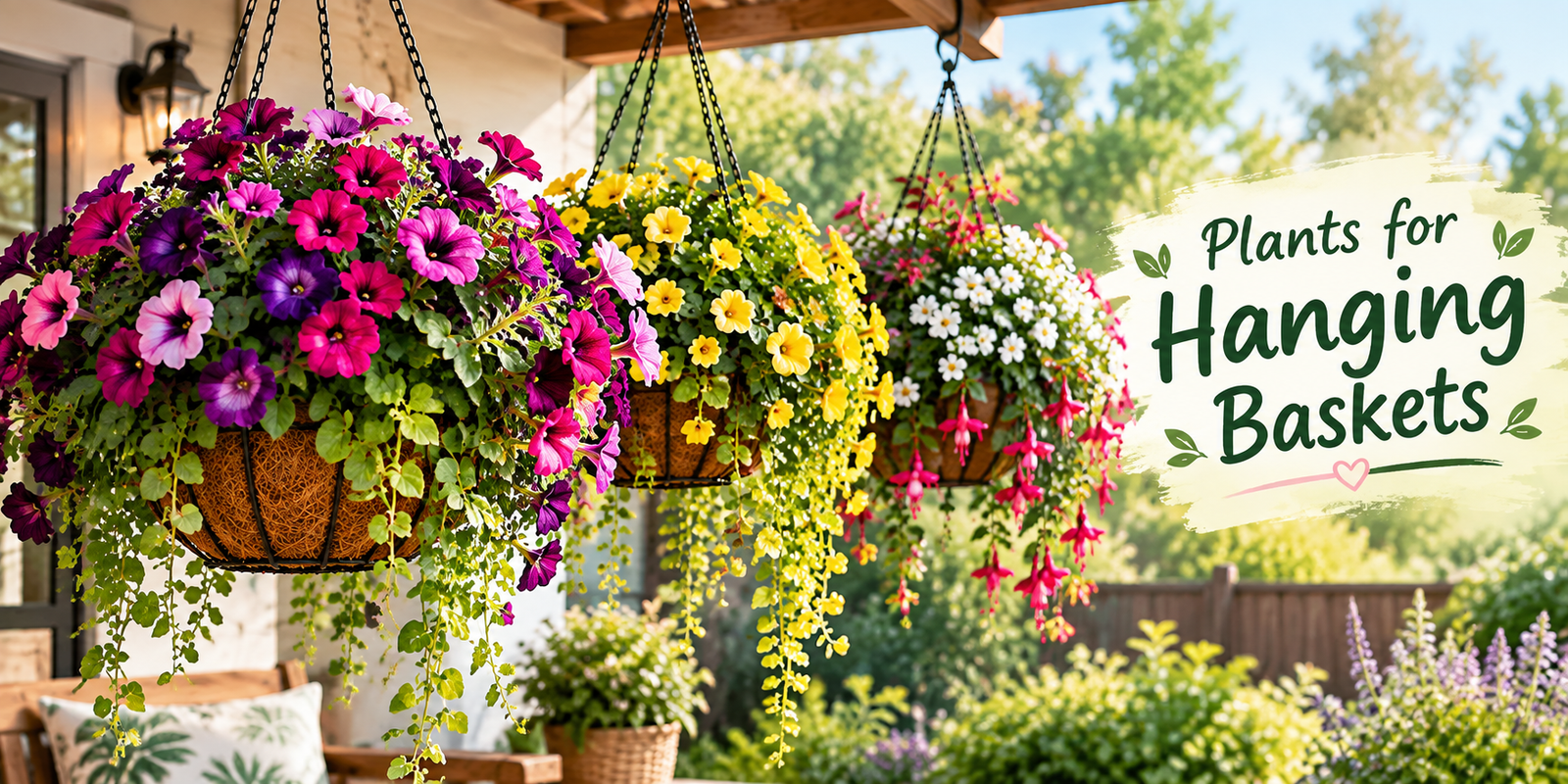
Hanging baskets are one of the easiest ways to add color, texture, and greenery to a porch, balcony, patio, doorway, or small garden. The right plants for hanging baskets can turn an ordinary outdoor space into a vibrant display without taking up valuable floor space. However, choosing the right plant is about more than picking the prettiest flowers.
Different plants for hanging baskets have different requirements for sunlight, water, soil, and maintenance. Some thrive in hot, sunny locations, while others prefer partial shade. Trailing varieties are especially popular because they spill naturally over the edges and create a fuller, more dramatic appearance.
Whether you want colorful flowers, attractive foliage, low-maintenance growth, or a basket that works in full sun, this guide will help you find the best plants for hanging baskets for your growing conditions.
What Makes a Plant Good for a Hanging Basket?
The best plants for hanging baskets usually have compact roots, attractive foliage, long-lasting flowers, or naturally trailing growth. Since hanging containers have limited soil, plants need to cope reasonably well with restricted root space.
Trailing or cascading varieties are particularly useful because their stems naturally grow downward. This creates the classic overflowing basket effect and makes the container look fuller as the plants mature.
Before choosing your plants, consider three things: how much sunlight the basket receives, how often you can water it, and how large you want the mature display to become.
20+ Best Plants for Hanging Baskets
Here is a quick comparison of popular plants for hanging baskets to help you narrow down your choices.
| Plant | Light | Water Needs | Growth Habit | Best For |
| Petunia | Full sun | Moderate | Trailing | Colorful flowers |
| Calibrachoa | Full sun to part shade | Moderate | Trailing | Easy-care displays |
| Fuchsia | Part shade | Moderate | Trailing | Shady locations |
| Bacopa | Sun to part shade | Moderate | Cascading | Mixed baskets |
| Lobelia | Sun to part shade | Moderate | Trailing | Blue and purple flowers |
| Begonia | Part shade to shade | Moderate | Mounding/trailing | Shady baskets |
| Verbena | Full sun | Low to moderate | Trailing | Long flowering |
| Lantana | Full sun | Low | Mounding/trailing | Hot conditions |
| Geranium | Full sun | Moderate | Trailing/upright | Sunny patios |
| Nasturtium | Full sun | Low to moderate | Trailing | Beginner gardeners |
1. Petunias
Petunias are among the most dependable plants for hanging baskets when you want a strong display of colorful flowers. They perform particularly well in sunny locations and come in many shades, including pink, purple, red, white, and yellow.
Trailing petunias are especially effective because their stems spill over the sides of a basket. Regular watering, occasional feeding, and removing faded flowers can help keep the display attractive throughout the growing season.
2. Calibrachoa
Calibrachoa produces masses of small, petunia-like flowers and has a naturally cascading habit. It is an excellent choice when you want plants for hanging baskets that create a dense, colorful display without requiring complicated care.
Give calibrachoa plenty of light and well-draining soil. It also works beautifully in mixed baskets with plants that have contrasting foliage or larger flowers.
3. Fuchsia
Fuchsia is one of the best plants for hanging baskets for a partially shaded porch or patio. Its pendulous flowers hang elegantly from the stems, making it particularly attractive when viewed from below.
Fuchsia generally prefers protection from intense afternoon heat. Keep the growing medium consistently moist but avoid leaving the roots in waterlogged soil.
4. Bacopa
Bacopa is a useful cascading plant that produces small flowers along trailing stems. It works well as a spiller in mixed containers and can soften the edges of a hanging basket.
Among plants for hanging baskets, bacopa is especially useful when you want a delicate appearance rather than large, dominant flowers. It pairs well with calibrachoa, petunias, and other colorful plants.
5. Lobelia
Lobelia is known for its small blue, purple, pink, or white flowers and graceful trailing habit. It can add a cool splash of color to mixed baskets.
For plants for hanging baskets in bright light or partial shade, lobelia can be a valuable filler. In hot weather, it may appreciate protection from the strongest afternoon sun.
6. Begonias
Begonias are excellent plants for hanging baskets when your growing space receives shade or filtered sunlight. Depending on the variety, they can provide large flowers, attractive foliage, or both.
Avoid keeping begonias constantly soggy. Good drainage and moderate watering are important, particularly when baskets are placed in humid conditions.
7. Verbena
Verbena is one of the most useful plants for hanging baskets for sunny locations. Many varieties have a trailing habit and produce clusters of flowers over a long period when growing conditions are suitable.
Verbena is also a good choice for gardeners who want a relatively tough plant for warm, bright areas. Light pruning can help maintain a neat shape.
8. Lantana
If you are searching for plants for hanging baskets that tolerate heat and relatively dry conditions, lantana deserves consideration. Its clusters of flowers can attract pollinators, and trailing forms work particularly well in containers.
Lantana prefers full sun. Allowing the soil to dry somewhat between thorough waterings can be preferable to keeping it constantly wet.
9. Geraniums
Geraniums are classic plants for hanging baskets, particularly trailing ivy geraniums. They perform well in sunny areas and can provide a traditional cottage-garden appearance.
Good drainage is important, and removing spent flower heads can encourage a tidier display. Geraniums also combine well with foliage plants and other sun-loving flowers.
10. Nasturtiums
Nasturtiums are colorful, easy-going plants for hanging baskets that can be grown from seed. Their trailing stems make them particularly suitable for allowing flowers to cascade over the sides.
They are a fun option for beginner gardeners and can add bright orange, yellow, or red tones to a basket.
11. Osteospermum
Osteospermum, commonly called African daisy, provides daisy-like flowers and performs best with plenty of sunlight. Trailing forms can work well in baskets and mixed containers.
Choose a location with good air circulation and avoid consistently saturated soil.
12. Sweet Alyssum
Sweet alyssum is valued for its tiny flowers and pleasant fragrance. It makes a useful filler plant because it can soften the space between larger flowers and trailing stems.
It is a good option when choosing plants for hanging baskets that provide a lighter, more delicate appearance.
13. Sweet Potato Vine
Not all plants for hanging baskets need to flower. Sweet potato vine is grown primarily for its dramatic foliage and vigorous trailing growth.
It can provide green, lime, bronze, or other foliage tones depending on the variety. Pair it with flowering plants to create contrast and visual depth.
14. Creeping Jenny
Creeping Jenny is another foliage-focused option. Its trailing stems can spill dramatically from the sides of a basket, making it useful as a spiller.
It can work particularly well when you want plants for hanging baskets that remain visually interesting even when flowers are not the main feature.
15. Ivy Geranium
Ivy geraniums have a naturally cascading growth habit, making them excellent plants for hanging baskets in sunny locations.
They are particularly attractive when allowed to trail freely over the edge. Regular feeding during active growth can support healthy flowering.
16. Impatiens
Impatiens are popular plants for hanging baskets where direct sunlight is limited. Their colorful flowers can brighten shaded or partially shaded outdoor spaces.
Keep them adequately watered, especially when temperatures rise. They generally perform best when protected from harsh, drying conditions.
17. Scaevola
Scaevola produces distinctive fan-shaped flowers and has a spreading or trailing growth habit. It can be a strong choice for sunny baskets, especially when you want something different from traditional petunias.
Its relatively tough nature also makes it worth considering among plants for hanging baskets for warm outdoor areas.
18. Vinca Vine
Vinca vine is primarily valued for attractive trailing foliage. It can spill down the sides of a container and provide a strong green backdrop for flowering plants.
Use it where you want plants for hanging baskets that contribute structure and texture rather than relying entirely on blooms.
19. Licorice Plant
Licorice plant provides silvery foliage and works beautifully with brightly colored flowers. Its foliage can create contrast against purple, pink, red, or yellow blooms.
It is particularly useful in sunny mixed baskets where different textures are needed.
20. Trailing Verbena
Trailing verbena deserves separate attention because its growth habit makes it especially suitable for baskets. Its flowers can create a soft waterfall effect as stems extend over the container.
It is a strong candidate for plants for hanging baskets when your priority is long-lasting seasonal color.
Best Plants for Hanging Baskets in Full Sun
When choosing plants for hanging baskets for full sun, look for varieties that can handle several hours of direct light and the faster drying conditions that often occur in elevated containers.
Some of the best choices include petunia, calibrachoa, verbena, lantana, geranium, osteospermum, scaevola, and nasturtium.
In very hot weather, even sun-loving plants may need more frequent watering. A sunny basket hanging against a wall can become particularly warm, so check the soil rather than following a rigid watering schedule.
Best Plants for Hanging Baskets in Shade
Shady areas require a different selection strategy. Fuchsia, begonias, impatiens, lobelia, and some bacopa varieties can perform well in partial shade or filtered light.
Remember that “shade” does not always mean complete darkness. Bright indirect light or morning sun followed by afternoon shade can provide very different conditions from deep shade.
Choose plants for hanging baskets according to the actual light your location receives rather than relying only on a plant label.
Best Low-Maintenance Plants for Hanging Baskets
For gardeners with limited time, some of the plants for hanging baskets worth considering include lantana, geranium, verbena, scaevola, calibrachoa, and selected drought-tolerant foliage plants.
However, no hanging basket is completely maintenance-free. Elevated containers have less soil than garden beds, so they can dry quickly, especially in hot or windy weather.
If you are specifically searching for low maintenance outdoor hanging plants full sun, focus on plants that tolerate heat, sunlight, and occasional drying rather than choosing a plant based only on appearance.
Best Trailing Plants for Hanging Baskets in Full Sun
Trailing plants are ideal when you want a dramatic cascading effect. Petunia, calibrachoa, bacopa, trailing verbena, ivy geranium, scaevola, and sweet potato vine can all provide strong downward growth when conditions suit them.
When selecting trailing plants for hanging baskets full sun, check both the plant’s light requirements and its mature size. A fast-growing variety can quickly become crowded if the container is too small.
Flowering vs. Foliage Plants
Flowering plants for hanging baskets provide seasonal color, while foliage plants can add texture and structure.
| Flowering Choices | Foliage Choices |
| Petunia | Sweet potato vine |
| Fuchsia | Creeping Jenny |
| Begonia | Vinca vine |
| Verbena | Licorice plant |
| Calibrachoa | Ivy |
Combining the two creates a more balanced basket. For example, bright calibrachoa can be paired with silvery licorice plant and trailing foliage for contrast.
How to Choose the Right Plants for a Hanging Basket
Start with the location rather than the plant.
For a full-sun basket, choose petunia, lantana, verbena, geranium, or scaevola.
For a part-shade basket, consider fuchsia, begonia, lobelia, bacopa, or impatiens.
For a dramatic cascading effect, choose calibrachoa, petunia, bacopa, ivy geranium, or trailing verbena.
For low-maintenance outdoor hanging plants full sun, consider heat-tolerant choices such as lantana, verbena, and selected geraniums.
If you are searching online for suitable plants “near me,” remember that local nurseries may stock different varieties depending on the climate and growing season. The best choice is always one suited to your local conditions.
How Many Plants Should You Put in a Hanging Basket?
The number of plants for hanging baskets depends on container size, plant maturity, and growth habit.
| Basket Size | General Starting Point |
| 8–10 inches | 1–3 smaller plants |
| 12 inches | 3–5 plants |
| 14–16 inches | 4–7 plants |
These are only starting points. Vigorous plants need more room, while smaller varieties can be planted more closely.
Overcrowding may produce an impressive basket initially, but it can increase competition for water, nutrients, and root space as the plants mature.
How to Plant a Hanging Basket
Choose a basket with adequate drainage and fill it with a quality container potting mix. Garden soil is generally too heavy for hanging containers.
Arrange your plants for hanging baskets before planting so you can see how the finished display will look. Put larger or upright plants toward the center and trailing varieties near the edges.
Water thoroughly after planting and allow excess water to drain away. Place the basket where its plants receive the appropriate amount of sunlight.
Create a Thriller, Filler and Spiller Basket
A simple design formula can make choosing plants for hanging baskets much easier.
Thriller: the main focal plant with height or strong visual interest.
Filler: plants that occupy the middle and create fullness.
Spiller: trailing plants that cascade over the edge.
For a sunny basket, try geranium as the focal point, calibrachoa as a filler, and bacopa as the spiller.
For shade, fuchsia can provide the focal display, begonia can fill the center, and ivy can provide trailing foliage.
How to Care for Hanging Basket Plants
Watering
Hanging baskets can dry faster than plants growing in the ground. Check the potting mix regularly, particularly during hot or windy weather.
Water deeply enough to moisten the root zone, allowing excess water to drain through the bottom.
Fertilizing
Container plants have limited access to nutrients. During active growth, regular feeding with a fertilizer appropriate for flowering or foliage plants can help maintain healthy growth.
Always follow the fertilizer label rather than assuming more fertilizer will produce more flowers.
Deadheading
Removing faded flowers can improve the appearance of many flowering varieties. It can also encourage continued blooming in plants that respond well to deadheading.
Pruning
Trim excessively long or leggy growth when appropriate. Pruning can help keep plants for hanging baskets compact and encourage branching.
Pest Monitoring
Inspect leaves and stems regularly for aphids, spider mites, whiteflies, or other common pests. Early detection is usually easier to manage than a severe infestation.
Common Hanging Basket Problems and How to Fix Them
| Problem | Possible Cause | What to Check |
| Wilting | Dry soil | Check moisture |
| Yellow leaves | Water stress | Check drainage |
| Few flowers | Poor light or nutrition | Review conditions |
| Leggy growth | Insufficient light | Move the basket |
| Brown edges | Dry conditions | Check watering |
| Root problems | Excess moisture | Improve drainage |
If a basket suddenly wilts, do not automatically assume it needs more water. Check the soil first. Roots damaged by excessive moisture can produce symptoms that look similar to drought stress.
5 Easy Hanging Basket Combinations
Sunny Color Basket
Combine petunia, calibrachoa, and bacopa for a bright display with flowers cascading over the edge.
Shady Porch Basket
Try fuchsia, begonia, and trailing ivy for a colorful combination that works well with filtered light.
Heat-Tolerant Basket
Lantana, verbena, and licorice plant can provide a combination of flowers and contrasting foliage in a sunny location.
Pollinator-Friendly Basket
Lantana, verbena, and nasturtium can create an attractive display while offering flowers that may appeal to visiting pollinators.
Foliage Basket
Sweet potato vine, creeping Jenny, and vinca vine can create a basket based primarily on foliage, texture, and trailing growth.
Seasonal Hanging Basket Ideas
The best plants for hanging baskets can change with the season and local climate.
In spring, cool-season flowers can provide early color before summer heat arrives. Summer is ideal for many heat-loving choices such as petunias, calibrachoa, lantana, and verbena.
In fall, consider seasonal flowers and attractive foliage plants. In mild climates, some perennial or evergreen choices may provide interest for longer periods.
Always check the hardiness and seasonal requirements of individual plants before expecting them to survive year-round.
Mistakes to Avoid
One of the biggest mistakes is choosing plants for hanging baskets without considering sunlight. A shade-loving plant placed in intense afternoon sun may struggle even if watering is adequate.
Other common mistakes include overcrowding the container, using heavy soil, ignoring drainage, underwatering during hot weather, and combining plants with very different moisture requirements.
It is also important to consider mature size. A basket that looks perfectly balanced when planted can become crowded within a few weeks if vigorous growers are used together.
Conclusion
Choosing the right plants for hanging baskets becomes much easier when you start with the growing conditions. Think about sunlight, available watering time, basket size, mature plant height, and whether you want flowers, foliage, or dramatic trailing growth.
For sunny locations, petunias, calibrachoa, verbena, lantana, and geraniums are excellent places to start. For shade, fuchsia, begonias, and impatiens can create colorful displays. If you want a cascading effect, add bacopa, trailing verbena, ivy geranium, or sweet potato vine.
The best basket is not necessarily the one with the most plants. Choose compatible varieties, give them enough room, provide proper drainage, and match them to their environment. With the right combination, your hanging basket can become one of the most attractive features of your outdoor space.
Frequently Asked Questions
What are the best plants for hanging baskets?
Petunias, calibrachoa, fuchsia, bacopa, verbena, geraniums, begonias, lantana, lobelia, and nasturtiums are popular choices. The best option depends on sunlight, climate, watering needs, and the appearance you want.
What plants grow well in hanging baskets in full sun?
Petunia, calibrachoa, lantana, verbena, geranium, scaevola, and osteospermum are good options for sunny locations when their other growing requirements are met.
What are the best hanging basket plants for shade?
Fuchsia, begonias, impatiens, lobelia, and some bacopa varieties can work well in partial shade or filtered light. Check the specific variety because shade tolerance varies.
What is the easiest plant to grow in a hanging basket?
Calibrachoa, lantana, verbena, nasturtium, and some geraniums can be relatively easy choices when planted in suitable conditions. No hanging basket plant is completely maintenance-free.
How many plants should I put in a hanging basket?
It depends on the basket diameter and mature plant size. A small basket may need only one to three smaller plants, while a larger 14- to 16-inch basket can accommodate several plants.
How often should hanging basket plants be watered?
There is no single schedule that works everywhere. Check the potting mix regularly and water when it begins to dry according to the needs of the specific plant. Hot, windy conditions can increase water requirements.
What plants trail the most in hanging baskets?
Trailing petunias, calibrachoa, bacopa, ivy geranium, trailing verbena, sweet potato vine, and vinca vine can create attractive cascading growth when given suitable conditions.
You May Also Read: Flowers That Grow Well in Pots
