


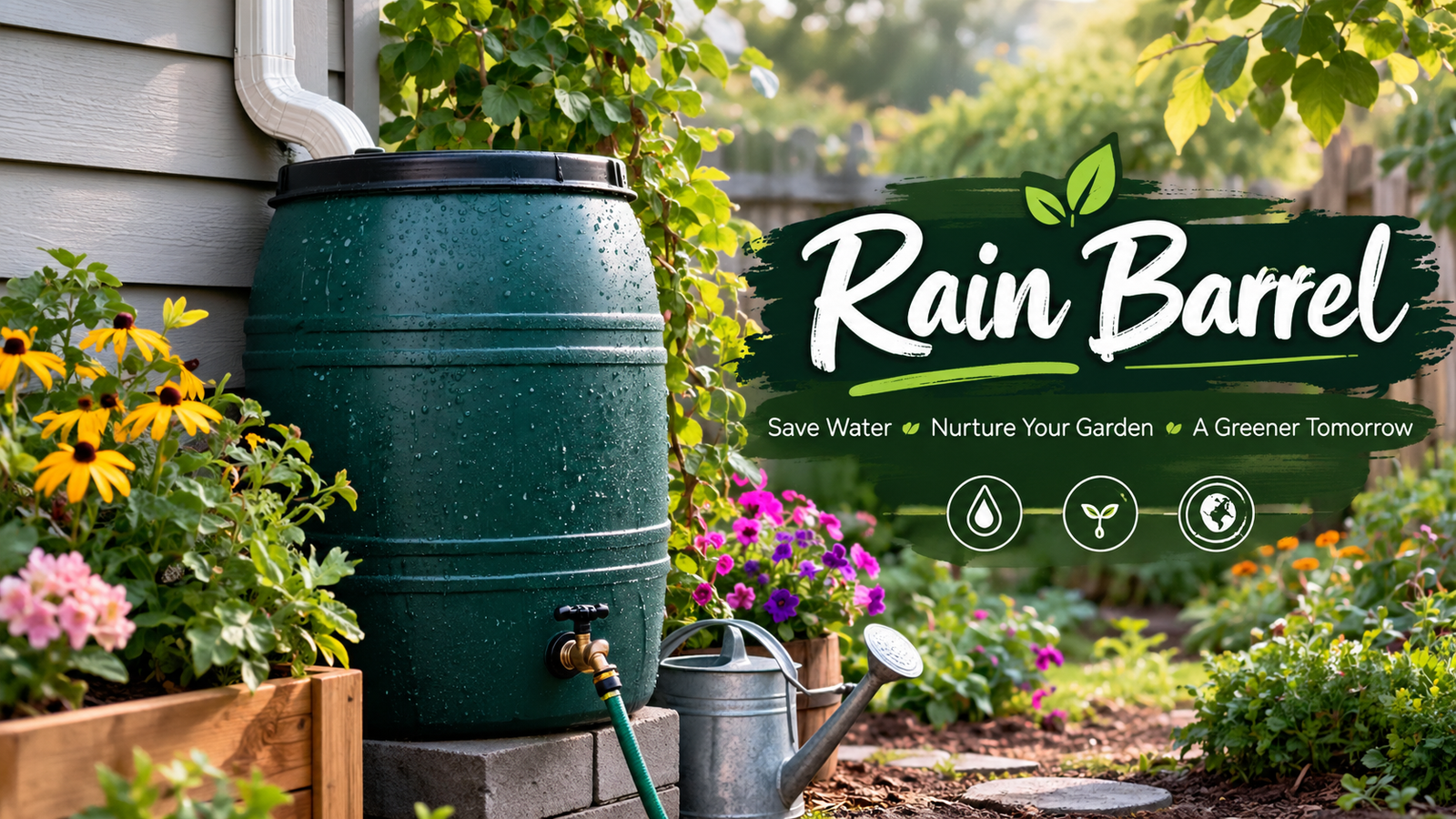
A rain barrel is a simple way to collect and store rainwater from your roof for later outdoor use. Instead of allowing every drop of runoff to flow through gutters and onto the ground, a collection system captures some of that water and makes it available when your garden needs it. For gardeners, this can be especially useful during dry periods when plants need supplemental watering.
Setting up a collection system does not have to be complicated. With the right barrel, a stable base, secure screen, proper overflow, and suitable downspout connection, beginners can create a practical setup at home. However, there are important considerations involving water quality, mosquitoes, maintenance, local regulations, and safe uses.
This guide explains how a rain barrel works, how to choose the right size, how to install one, and how to maintain it safely.
What Is a Rain Barrel?
A rain barrel is a container designed to collect runoff from a roof, usually through a gutter and downspout. The stored water can later be used for outdoor gardening tasks such as watering ornamental plants, trees, shrubs, or lawns.
Most residential models include an inlet, screened opening, storage container, spigot, and overflow outlet. Some systems also include diverters or first-flush devices to improve how water enters the container.
The basic idea is simple: rain falls on the roof, flows through the gutter, travels down the downspout, and is redirected into the storage container. When the container reaches capacity, excess water should move safely through an overflow outlet.
Main Components
| Component | Purpose |
| Barrel or tank | Stores collected water |
| Downspout connection | Directs roof runoff |
| Screen | Helps keep leaves and insects out |
| Spigot | Allows access to stored water |
| Overflow outlet | Moves excess water away |
| Stable base | Supports the filled container |
A properly designed rain barrel system should account for both water collection and overflow management. Simply placing a container beneath a downspout without planning for excess water can create drainage problems around the house.
How Does a Rain Barrel Work?
The process starts when rain reaches the roof. Water runs into gutters and travels toward a downspout. A diverter or connector then directs some of this flow into the storage container.
Once inside, a screen can help keep larger debris and insects from entering. The water remains stored until you open the spigot or connect a hose.
When the container becomes full, the overflow outlet becomes important. Excess water needs a safe route away from the home’s foundation. A properly planned overflow can direct water toward a suitable garden area or other location where it will not cause erosion or drainage problems.
If you are wondering what are rain barrels used for, the simplest answer is outdoor water storage. Their purpose is not to replace a home’s drinking-water supply but to make use of rainfall that would otherwise become runoff.
Benefits of Using a Rain Barrel
Using a rain barrel can provide several practical benefits for gardeners and homeowners.
First, it gives you a convenient supply of stored rainwater for outdoor tasks. It can also reduce the amount of runoff leaving your property during storms.
Another advantage is that collected water can be available between rainfall events. If your plants need watering a few days after a storm, stored water may be more convenient than waiting for the next rainfall.
There are disadvantages, too. Storage capacity is limited, the container requires maintenance, and a poorly installed system can overflow or become a mosquito problem. Understanding the disadvantages of rain barrels before installation helps you decide whether the system fits your property.
How Much Water Can a Rain Barrel Collect?
The amount of water you can collect depends on your roof area, rainfall amount, and collection efficiency. A large roof can produce considerably more runoff than a small container can store during a heavy storm.
A useful planning formula is:
Collected water ≈ roof catchment area × rainfall × runoff factor
For example, even a moderate rainfall event over a large roof can produce enough runoff to fill a standard residential container. This means overflow planning is just as important as storage capacity.
If your garden uses water frequently, you may benefit from installing more than one container or choosing a larger storage solution.
Choosing the Right Rain Barrel Size
Choosing the right size depends on available space, roof runoff, rainfall patterns, and how much water your garden uses.
A 20- to 30-gallon container may work for a small garden or limited-space property. A 40- to 60-gallon model is a common practical range for many residential applications. Larger systems can make more sense when there is plenty of roof runoff and greater demand for stored water.
| Approximate Capacity | Suitable For |
| 20–30 gallons | Small gardens and limited spaces |
| 40–60 gallons | Typical home gardens |
| 75–100+ gallons | Larger gardens and higher demand |
Do not choose a container solely because it holds more water. A larger full container is heavier and requires a stronger, more stable foundation.
Where Should You Put a Rain Barrel?
The best location is usually beneath or near a downspout, close enough to the garden that you can conveniently use the stored water.
The surface should be level and strong enough to support the filled container. Avoid placing it where overflow will collect against the foundation or create erosion.
Remember that water is heavy. A 55-gallon container filled with water can weigh hundreds of pounds, so a stable base is essential.
You should also leave enough room around the container to inspect the spigot, screen, connections, and overflow outlet.
What Do You Need to Install a Rain Barrel?
Before installation, gather the basic components:
- Storage container
- Downspout diverter or connector
- Screen or secure lid
- Spigot
- Overflow hose or pipe
- Stable platform
- Optional first-flush diverter
- Optional filter or gutter screen
Check your gutter and downspout configuration before purchasing anything. Not every connector fits every system, and some setups require the downspout to be modified.
How to Install a Rain Barrel Step by Step
Installing a rain barrel is relatively straightforward when the site is prepared first.
Step 1: Choose the Location
Select a spot beneath a suitable downspout. Make sure there is enough room for the container and that overflow can be directed safely.
Step 2: Prepare the Base
Create a level, solid platform. A properly supported base helps prevent tipping as the container fills.
Step 3: Position the Container
Place the container securely on the prepared base. If you plan to use gravity to feed water through a hose, raising the container can increase the available pressure.
Step 4: Connect the Downspout
Use a suitable diverter or connector to direct water into the container. Follow the instructions supplied with the specific equipment.
Step 5: Install the Screen
A secure screen helps prevent leaves, insects, and other debris from entering the stored water.
Step 6: Add the Overflow
Connect the overflow outlet and direct excess water away from the building. Never assume that the container will simply handle unlimited runoff.
Step 7: Test the Setup
After installation, inspect all connections during the next rainfall. Look for leaks, poor drainage, tipping, or unexpected overflow.
Should You Use a First-Flush Diverter?
A first-flush diverter redirects some of the initial runoff away from the storage container. This can be useful because the first water flowing from a roof may carry accumulated dust, debris, bird droppings, and other contaminants.
A screen and first-flush diverter perform different jobs. The screen primarily keeps larger debris and insects out, while a first-flush device diverts an initial portion of runoff.
If water quality is an important concern, consider your roof material, collection surface, intended water use, and local guidance before deciding which components you need.
How to Prevent Mosquitoes in a Rain Barrel
An uncovered container can provide mosquitoes with access to standing water. Fortunately, prevention is straightforward.
Keep the opening securely covered with a fine screen or properly fitted lid. Inspect the screen regularly for gaps or damage, and remove accumulated leaves and organic material.
Using stored water regularly can also help prevent long periods of stagnant storage. If mosquitoes are becoming a recurring problem, inspect every opening and overflow connection rather than treating only the visible surface.
Is Rain Barrel Water Safe to Use?
Collected rainwater should generally be considered non-potable unless it has been appropriately treated and tested for a specific purpose. A rain barrel is normally intended for outdoor applications rather than drinking.
Roof runoff can collect microorganisms, animal waste, dust, and substances from roofing materials. For this reason, do not assume that clear-looking rainwater is automatically safe to drink.
Can You Use It on Plants?
Collected water can commonly be used for many outdoor landscaping purposes, but edible gardens require additional consideration. If you plan to use stored rainwater around vegetables or herbs, check guidance from a reputable agricultural extension service or local authority.
Avoid using untreated collected water for drinking, cooking, or other household purposes unless it has been properly treated for that use.
How to Clean and Maintain a Rain Barrel
Regular maintenance keeps the system working properly.
Inspect the screen frequently and remove leaves or debris from gutters and collection points. Check the spigot and fittings for leaks, and make sure the overflow remains unobstructed.
The container itself should also be cleaned periodically according to its material and manufacturer’s recommendations. If stored water develops an unusual odor or the system accumulates excessive organic matter, investigate the cause rather than simply ignoring it.
A simple maintenance routine can prevent many common problems before they become expensive repairs.
How to Winterize a Rain Barrel
In areas where temperatures regularly fall below freezing, winter preparation is important. Water expands when it freezes, which can damage containers and fittings.
Before freezing weather arrives, drain the stored water and disconnect components when appropriate for your system. Clean the container and store removable parts according to the manufacturer’s instructions.
In warmer climates where freezing is not a concern, focus instead on seasonal cleaning, screen inspection, and overflow maintenance.
DIY vs Ready-Made Rain Barrels
A DIY container can be an affordable option for experienced homeowners, particularly when a suitable food-grade barrel is available. However, the previous contents of a reused container matter. Avoid using containers that previously held hazardous chemicals or unknown substances.
A commercial model may cost more but can offer purpose-built fittings, screening, overflow connections, and a more finished appearance.
| DIY Setup | Ready-Made Setup |
| Often lower initial cost | Usually easier to assemble |
| Highly customizable | Purpose-built components |
| Requires more planning | Simpler installation |
| Material selection is important | Specifications are clearer |
| Good for DIY projects | Good for convenience |
If you are searching for free rain barrels near me, check local municipalities, water-conservation programs, community organizations, and seasonal gardening events. Availability varies by location and program.
Common Rain Barrel Problems and Solutions
The Barrel Isn’t Filling
Check the downspout connection, gutter condition, diverter position, and leaks. The container may also be filling and emptying faster than expected if water is being used regularly.
The Barrel Is Overflowing
Overflow is normal once storage capacity is reached. The problem occurs when excess water has nowhere safe to go. Inspect and improve the overflow route.
The Water Smells Bad
Debris, organic material, and stagnant storage can contribute to unpleasant odors. Clean the collection area and container, then check that the system is properly screened.
The Spigot Has Low Pressure
Gravity-fed systems depend on the height of the water above the outlet. Raising the container can improve pressure, but the platform must be strong enough to safely support the full weight.
The Container Is Leaking
Inspect the spigot, fittings, seals, and connections. A crack in the container itself may require replacement.
How to Connect Multiple Rain Barrels
One container may not provide enough storage for a larger garden. Connecting multiple containers can increase total capacity and allow more runoff to be captured.
When designing a multi-container system, consider how water moves between containers, where overflow will go, and how each container can be inspected and cleaned.
A rain barrel system should always be designed around safe overflow and stable support rather than simply adding more containers.
How to Use a Rain Barrel With a Hose
One of the simplest uses is connecting the outlet to a garden hose. Gravity allows water to move from the elevated container toward the garden.
For the best results, keep the hose run reasonably short and avoid expecting strong pressure from a basic gravity-fed setup.
If you’re researching how to use a rain barrel with a hose, remember that outlet height, water level, hose length, and elevation differences all affect performance.
If your property does not have conventional gutters, you may also wonder how to use a rain barrel without gutters. In that situation, collection becomes more challenging because there is no downspout to concentrate runoff. Specialized catchment methods can be considered, but they require careful planning and a suitable roof drainage path.
Rain Barrel vs Rain Garden vs Cistern
Not every property needs the same water-management solution.
| Option | Best For | Storage | Complexity |
| Rain barrel | Small-scale water collection | Low–moderate | Low |
| Rain garden | Managing runoff in the landscape | No traditional storage | Moderate |
| Cistern | Larger water storage | High | Higher |
A container works well when you want accessible stored water for a garden. A rain garden is more focused on managing runoff within the landscape, while a cistern can provide significantly greater storage.
Why Are Rain Barrels Illegal in Some Places?
The question why are rain barrels illegal comes from differences in local water laws and regulations. Rules are not the same everywhere.
Some jurisdictions regulate rainwater collection because of water rights, plumbing requirements, public-health considerations, or regional water-management policies. Other areas actively encourage residential rainwater harvesting.
Before installing a system, check the rules that apply to your property. Do not rely on information written for another state, province, or country.
Rain Barrel Safety Checklist
Before using your setup, check the following:
- Use a stable and level foundation.
- Secure the container against tipping.
- Keep openings screened.
- Provide a safe overflow route.
- Keep children and pets away from open water.
- Do not drink untreated collected water.
- Keep gutters and screens clean.
- Inspect fittings for leaks.
- Follow local regulations.
- Winterize the system where freezing occurs.
Conclusion
A rain barrel can turn ordinary roof runoff into a useful source of water for outdoor gardening. The most successful setups are not simply about choosing the biggest container; they combine an appropriate size with a stable foundation, reliable downspout connection, secure screening, safe overflow, and regular maintenance.
Before installing one, consider your roof area, local rainfall, available space, intended water use, and local regulations. If you plan the system carefully from the beginning, collecting rainwater can become a simple and practical part of your garden routine.
Frequently Asked Questions
1. What is a rain barrel used for?
A rain barrel stores runoff collected from a roof so it can later be used for outdoor purposes such as watering ornamental plants, trees, shrubs, and lawns.
2. How much water can a rain barrel hold?
Residential containers commonly hold several dozen gallons, although capacity varies considerably. Choose a size based on your roof area, rainfall, available space, and garden needs.
3. Is rain barrel water safe to drink?
No. Untreated collected water should not be considered drinking water. Roof runoff can contain microorganisms, animal waste, debris, and other contaminants.
4. Can I use rain barrel water on vegetables?
This depends on the collection system, roof surface, water quality, and local guidance. Because edible crops can present additional exposure concerns, check reputable agricultural or public-health guidance before using untreated collected water on edible portions.
5. How do I keep mosquitoes out of a rain barrel?
Use a secure lid or fine mesh screen, keep collection points clean, inspect openings regularly, and avoid allowing stored water to remain stagnant unnecessarily.
6. Do rain barrels overflow?
Yes. Once the container reaches capacity, additional runoff must go somewhere. A properly installed overflow outlet directs excess water away from the home’s foundation.
7. How often should I clean a rain barrel?
Inspect the system regularly and clean it as needed. Gutters, screens, fittings, and the container should be checked for leaves, sediment, algae, leaks, and other problems.
You May Also Read: Garden Ideas
