


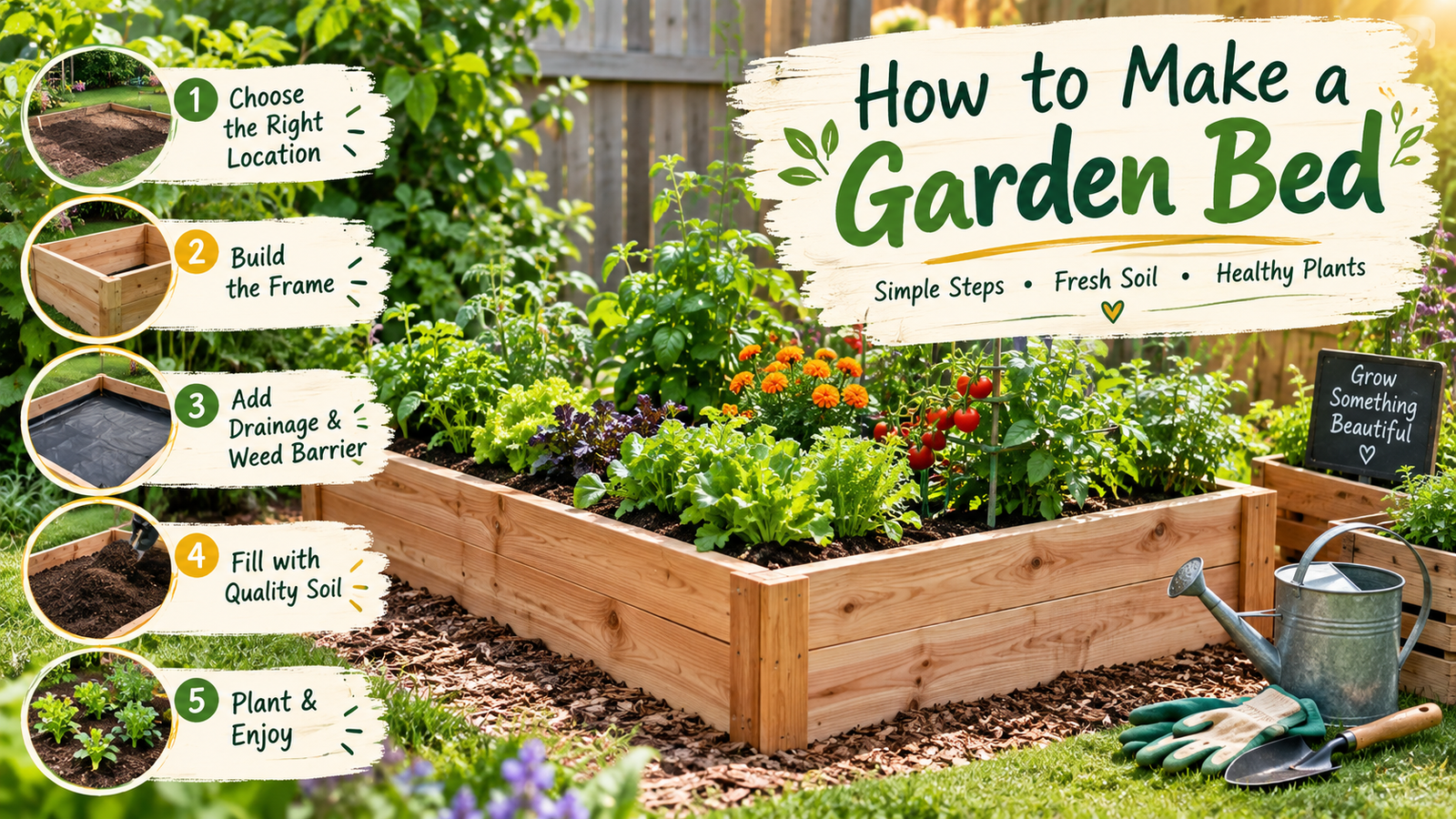
Learning how to make a garden bed is one of the easiest ways to turn an ordinary yard into a productive and attractive growing space. Whether you want flowers, vegetables, herbs, or a mix of plants, a well-prepared garden bed gives roots room to grow and makes everyday maintenance much easier.
The good news is that how to make a garden bed does not always involve hours of digging. You can create an in-ground bed using traditional methods, or choose a no-dig approach with cardboard, compost, and mulch. You can also build a raised garden bed when your existing soil has poor drainage or is difficult to work.
This guide explains how to make a garden bed step by step, from choosing the right location and measuring the space to preparing soil, removing grass, adding compost, planting, and maintaining the finished bed.
What Is a Garden Bed?
Before learning how to make a garden bed, it helps to understand what a garden bed actually is. A How to Make a Garden Bed is a defined area where plants are grown separately from surrounding lawn, pathways, or other parts of the yard.
Garden beds can be created directly in the ground or elevated above ground level. An in-ground bed is usually the simplest and least expensive option because it uses the soil already available in your yard.
A raised garden bed is surrounded by a frame made from materials such as untreated wood, stone, brick, or other suitable materials. Raised beds can be particularly useful where native soil drains poorly or is difficult to improve.
Choose the Right Location
The first step in how to make a garden bed is choosing a location that suits the plants you want to grow. A beautiful bed will struggle if it receives the wrong amount of sunlight or stays waterlogged.
Check Sunlight
Spend a day observing the proposed location if possible. Most vegetables and many flowering plants need several hours of direct sunlight, while shade-loving plants can tolerate considerably less.
If you’re planning a vegetable bed, choose a bright location whenever possible. For flowers, match the plants to the amount of sunlight your site receives.
Check Drainage
Good drainage is essential when learning how to make a garden bed. Avoid areas where water remains after rainfall unless you specifically plan to grow moisture-loving plants.
If the ground stays soggy for long periods, consider improving drainage or using a raised How to Make a Garden Bed. Simply adding more soil on top may not solve a serious drainage problem.
Think About Water Access
Place the bed somewhere that is reasonably easy to water. A garden located far from your water source may become inconvenient during hot or dry weather.
Also consider how you will reach the bed with a hose, watering can, wheelbarrow, or compost.
Check Before Digging
If you are going to dig into the ground, check for underground utility lines according to the services available in your area. This simple precaution can prevent dangerous accidents and expensive damage.
Decide the Size and Shape
Another important part of how to make a garden bed is choosing dimensions that are comfortable to maintain.
A bed that is too wide can force you to step into the planting area, which can compact the soil. A width of around 4 feet is often practical when you can reach the bed from both sides.
The length can be whatever suits your yard. For a beginner, a small rectangular bed is often easier to manage than a large complicated design.
For flower beds, curved shapes can look attractive. You can use a garden hose to experiment with the outline before removing any grass.
Gather Your Tools and Materials
You don’t need an enormous collection of gardening equipment for how to make a garden bed.
| Tool or Material | Main Purpose |
| Garden hose | Marking curved edges |
| Measuring tape | Measuring the bed |
| Spade or shovel | Digging and removing turf |
| Garden rake | Leveling soil |
| Gloves | Protecting your hands |
| Compost | Improving soil |
| Cardboard | Suppressing grass and weeds |
| Mulch | Reducing weeds and conserving moisture |
| Stakes and string | Marking straight edges |
Choose tools based on the method you plan to use. A no-dig bed, for example, requires much less digging equipment.
How to Make a Garden Bed Step by Step
Now let’s look at how to make a garden bed from an ordinary lawn or unused section of your yard.
Step 1: Mark the Garden Bed
Start by marking the outline. For straight beds, use stakes and string. For curved beds, lay a garden hose on the ground and adjust it until the shape looks right.
Walk around the proposed bed before you start. Make sure you can comfortably reach the plants and that the shape doesn’t interfere with paths, mowing, doors, or other features.
Taking a few minutes at this stage can save significant work later.
Step 2: Remove Grass and Weeds
If the area is covered with lawn, you have two main choices.
The first is to remove the turf. Use a sharp spade to cut the grass into manageable sections, lift it, and remove large roots and persistent weeds.
The second option is to smother the vegetation. This is particularly useful when considering how to make a garden bed with less digging.
Lay overlapping sheets of plain cardboard over the grass, wet them thoroughly, and cover them with compost and other organic material. Overlap the cardboard so grass and weeds don’t easily find gaps.
Step 3: Prepare the Existing Soil
Once the vegetation is under control, examine the soil. If it is compacted, loosen it where necessary rather than automatically turning over the entire bed.
Avoid working extremely wet soil because it can damage soil structure and create hard clumps when it dries.
If the existing soil is reasonably healthy, you may not need to replace it. The goal of how to make a garden bed is to create a healthy growing environment, not necessarily to remove all the original soil.
Step 4: Add Compost and Organic Matter
Compost is one of the most useful additions when learning how to make a garden bed.
Spread a layer of mature compost over the planting area and incorporate it appropriately for your chosen method. Compost can improve soil structure and contribute organic matter.
Don’t assume that adding huge amounts of fertilizer will make plants grow better. Soil amendments should address an actual need rather than being added simply because more sounds better.
Step 5: Level the Bed
Use a garden rake to smooth the surface. Remove large stones, roots, and debris that could interfere with planting.
Try to keep the soil loose without compacting it. Once the bed is prepared, avoid repeatedly walking through the planting area.
Step 6: Create a Clean Edge
A defined edge gives a new How to Make a Garden Bed a finished appearance and helps prevent lawn grass from creeping into the planting area.
You can create a simple natural edge by cutting the soil with a spade. For a decorative design, consider bricks, stones, or suitable garden edging.
If you’re learning how to make a garden bed with bricks, arrange the bricks securely along the boundary and make sure they don’t create a tripping hazard.
Step 7: Add Mulch
Apply an appropriate layer of organic mulch around plants after planting. Mulch can help conserve moisture, reduce weed growth, and protect the soil surface.
Keep mulch slightly away from plant stems to reduce the risk of excessive moisture around the base of plants.
Step 8: Plant Your Garden
The final major step in how to make a garden bed is choosing and positioning plants.
Consider the mature size of every plant instead of spacing everything according to its current size. Place taller plants where they won’t unnecessarily shade shorter plants.
Group plants with similar sunlight and watering requirements together. This makes future maintenance much easier.
How to Make a Garden Bed Without Digging
One of the most useful approaches to how to make a garden bed is the no-dig method.
This approach is especially helpful when converting an existing lawn into a planting area. Instead of removing every piece of turf, you cover the vegetation and build the growing layer above it.
Basic No-Dig Method
- Cut the existing grass short.
- Remove obvious large weeds.
- Cover the area with overlapping cardboard.
- Wet the cardboard thoroughly.
- Add compost and suitable organic material.
- Cover the surface with mulch.
- Allow the underlying vegetation to break down as needed.
- Plant when the growing layer is ready.
This method can reduce physical effort and soil disturbance. It is particularly attractive for gardeners who want to avoid intensive digging.
However, no-dig isn’t automatically the best choice for every site. Severe drainage problems, contaminated soil, major grading issues, or an immediate need to reshape the ground may require a different approach.
How to Prepare Soil for a New Garden Bed
Good soil is at the heart of how to make a garden bed successfully.
Consider a Soil Test
A soil test can be useful when you don’t know what your soil contains or when plants repeatedly perform poorly. Testing may provide information about pH and nutrient levels.
Instead of guessing which fertilizer to use, test first when appropriate and amend the soil based on the results.
Improve Poor Soil Gradually
If soil is compacted or low in organic matter, compost can be a valuable improvement. Organic matter can help create a more favorable environment for roots and soil organisms.
Don’t try to fix every soil problem with one product. Observe drainage, texture, plant performance, and test results before making major changes.
Don’t Ignore Drainage
If water collects in your bed after ordinary rainfall, investigate the cause. A raised garden bed may be more appropriate for a site where improving the existing soil alone isn’t enough.
Garden Bed Methods Compared
Choosing the right method makes how to make a garden bed much easier.
| Method | Effort | Cost | Speed | Best For |
| Traditional in-ground | Medium to high | Low | Fast | Workable existing soil |
| No-dig | Low | Low to medium | Moderate | Grass-covered areas |
| Raised garden bed | Medium | Medium to high | Fast | Poor soil or drainage |
| Sheet mulching | Low | Low | Moderate | Suppressing grass and weeds |
For a healthy patch of soil, traditional in-ground preparation may be sufficient. For an existing lawn, no-dig or sheet mulching can save considerable physical work. For difficult soil, a raised garden bed provides greater control over the growing medium.
Garden Bed Ideas for Different Situations
The best answer to how to make a garden bed depends on your space and goals.
Small Backyard Garden Bed
Use a compact rectangular bed with easy access from both sides. Herbs, leafy vegetables, and compact flowers can work well in a small space.
Flower Garden Bed
Use a curved outline and arrange plants according to height, color, bloom time, and sunlight requirements. Taller plants can go toward the back of a border where appropriate.
Vegetable Garden Bed
Straight beds make it easier to organize vegetable rows. Leave enough room around the bed for watering, harvesting, and maintenance.
Garden Bed Over Existing Lawn
A no-dig cardboard method can be useful here. Cut the grass short, overlap cardboard, add compost, and build the planting layer above it.
Poorly Drained Garden
If the ground remains saturated, consider a raised garden bed. Choose plants suited to the conditions if improving drainage isn’t practical.
Common Mistakes to Avoid
Knowing what not to do is an important part of how to make a garden bed.
Making the Bed Too Wide
A huge bed may look impressive but can become difficult to reach. Keep the width manageable so you can care for plants without walking through the soil.
Ignoring Sunlight
Don’t choose a location first and plants second without checking light conditions. Plants need an environment that matches their requirements.
Working Wet Soil
Digging or cultivating saturated soil can damage its structure. Wait until conditions are suitable.
Using Too Much Fertilizer
More fertilizer isn’t always better. Excess nutrients can create problems instead of solving them.
Forgetting Mulch
Bare soil often means more weeds and faster moisture loss. Appropriate mulch can make maintenance easier.
Planting Too Closely
Small seedlings can become surprisingly large. Check mature plant dimensions before deciding spacing.
What Can You Plant in a New Garden Bed?
Once you’ve mastered how to make a garden bed, choose plants based on your site’s conditions.
For a sunny vegetable bed, you might grow tomatoes, peppers, beans, lettuce, or other suitable vegetables.
For herbs, options can include basil, parsley, thyme, and other herbs suited to your climate. Keep spreading herbs such as mint contained if you don’t want them taking over the bed.
For flower beds, consider plants such as zinnias, marigolds, salvia, or other flowers appropriate to your growing conditions.
The key is not choosing the “best” plant in isolation. Choose plants that match your sunlight, soil, drainage, temperature, and available space.
How to Maintain a New Garden Bed
Creating the bed is only the beginning.
Water plants according to their needs and check the soil rather than relying entirely on a fixed watering schedule. Newly planted plants generally need closer attention while their roots become established.
Pull weeds while they’re small. Maintaining mulch can reduce the amount of recurring weeding.
Add compost or other soil-building materials when appropriate, rather than applying fertilizer automatically.
Keep the edges of the bed defined. Grass can quickly creep back into an otherwise well-maintained garden.
As plants mature, remove dead or damaged growth when appropriate and monitor the bed for signs of pests, disease, poor drainage, or nutrient problems.
Conclusion
Learning how to make a garden bed doesn’t have to mean tackling a huge landscaping project. Start with the right location, choose a manageable size, prepare the soil carefully, and select a method that fits your yard and gardening goals.
For an existing lawn, a no-dig approach can reduce heavy labor. If your soil has serious drainage or quality problems, a raised garden bed may offer greater control. Whatever method you choose, focus on healthy soil, suitable plants, good drainage, and easy access.
Once you understand how to make a garden bed, you can adapt the same basic principles to flower borders, vegetable plots, herb gardens, and many other growing spaces.
Frequently Asked Questions
How do you make a garden bed from scratch?
To make a garden bed from scratch, choose a suitable location, mark the shape, remove or smother grass and weeds, prepare the soil, add compost, create an edge, apply mulch, and plant according to the site’s conditions.
Do you have to remove grass before making a garden bed?
No. You can remove the turf or use a no-dig approach. Covering grass with overlapping cardboard and organic material can suppress existing vegetation while reducing the amount of digging required.
Can you make a garden bed without digging?
Yes. A no-dig garden bed can be created by covering short grass with overlapping cardboard, wetting it, and adding compost and organic material above it. The method is useful for many lawn-to-garden conversions.
How deep should a garden bed be?
The appropriate depth depends on the plants and whether you’re using an in-ground or raised design. The important goal is to provide adequate rooting space and suitable soil conditions rather than choosing one depth for every plant.
What is the best soil for a new garden bed?
There isn’t one universal soil mix for every garden. Healthy soil generally benefits from good structure, adequate organic matter, appropriate drainage, and nutrient levels suited to the plants being grown.
How much compost should I add to a garden bed?
The amount depends on the condition of your existing soil and the method you’re using. Use mature compost as a soil-building material rather than assuming that a thicker layer is always better.
What is the easiest way to make a garden bed?
For many beginners, a no-dig or sheet-mulching approach is one of the easiest options, especially when converting lawn. If the soil is already workable and you need to plant immediately, traditional preparation may be more practical.
You May Also Read: Vegetables That Grow Quickly
