

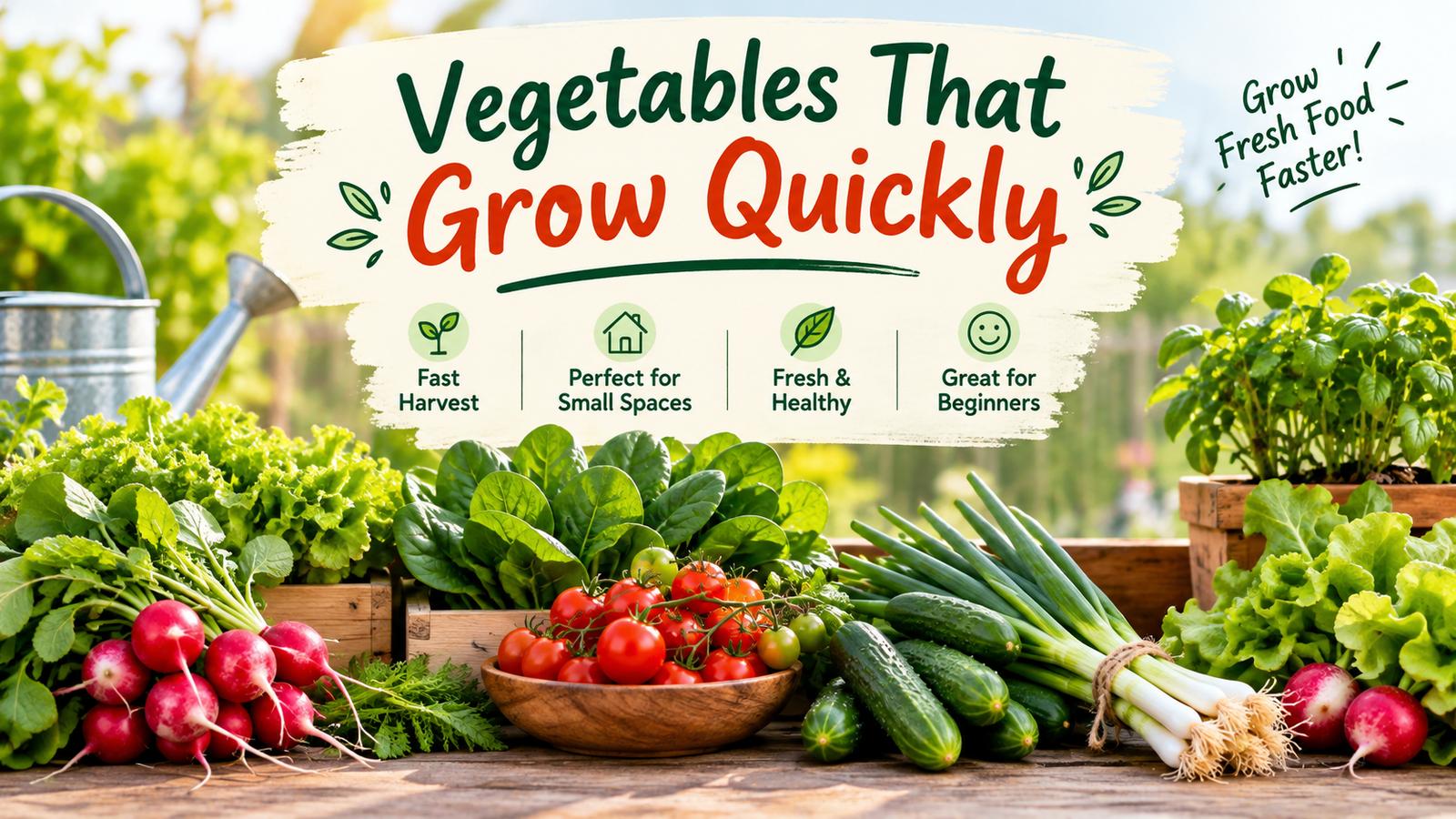
If you want fresh produce without waiting for months, choosing vegetables that grow quickly is one of the easiest ways to enjoy a rewarding garden. Some crops can provide edible leaves within a few weeks, while others produce roots, pods, or fruits surprisingly fast under the right conditions.
The best vegetables that grow quickly include radishes, arugula, lettuce, spinach, mustard greens, green onions, turnips, bok choy, bush beans, and zucchini. However, harvest times vary depending on the variety, temperature, sunlight, soil, watering, and whether you harvest the crop young or let it reach full maturity.
Whether you have a backyard garden, raised bed, patio, or balcony, there are vegetables that grow quickly from seed that can give you an earlier harvest. Understanding which crops are genuinely fast and how to grow them properly can make your gardening experience much more productive.
What Counts as a Fast-Growing Vegetable?
The phrase vegetables that grow quickly can mean different things to different gardeners. A crop might produce edible baby leaves in 20 days but require 50 or 60 days to reach full maturity.
For practical gardening, fast-growing crops can generally be grouped into four categories:
- Under 30 days: Radishes, arugula, microgreens, and baby greens
- 30–45 days: Lettuce, spinach, mustard greens, and some turnips
- 45–60 days: Bok choy, bush beans, beets, and zucchini
- 60–75 days: Some carrots, peas, kale, and other larger crops
The stated harvest time on seed packets is usually an estimate. Weather and growing conditions can significantly change the actual harvest date. This is why choosing the right variety and planting during the appropriate season is essential when growing vegetables that grow quickly.
Quick Comparison of Vegetables That Grow Quickly
Here is a simple guide to help you choose among the vegetables that grow quickly for your garden.
| Vegetable | Approx. Harvest | Sunlight | Container Friendly | Best Feature |
| Radishes | 20–30 days | Full sun | Yes | Extremely quick |
| Arugula | 20–40 days | Full/part sun | Yes | Baby-leaf harvest |
| Lettuce | 30–45 days | Full/part sun | Yes | Easy for beginners |
| Spinach | 30–45 days | Part/full sun | Yes | Cool-weather crop |
| Mustard greens | 30–40 days | Full/part sun | Yes | Fast leaf production |
| Green onions | 30–60 days | Full/part sun | Yes | Small spaces |
| Turnips | 30–60 days | Full sun | Yes | Greens and roots |
| Bok choy | 30–50 days | Full/part sun | Yes | Compact growth |
| Bush beans | 45–60 days | Full sun | Yes | Productive summer crop |
| Zucchini | 45–60 days | Full sun | Sometimes | Fast fruit production |
20 Vegetables That Grow Quickly
1. Radishes
Radishes are among the easiest vegetables that grow quickly. Many varieties can be ready for harvest in roughly three to four weeks, and some can be harvested even earlier as small roots.
They grow well from direct-sown seeds and prefer loose, well-drained soil. Because they do not need much space, radishes are also excellent vegetables that grow quickly in pots.
2. Arugula
Arugula is another excellent choice when you want vegetables that grow quickly. Young leaves can be harvested relatively soon after planting, and the plants can continue producing leaves when harvested correctly.
Arugula prefers cooler conditions and can grow successfully in containers, raised beds, and small gardens.
3. Lettuce
Leaf lettuce can provide an early harvest, especially when you pick individual outer leaves instead of waiting for the entire head to mature.
For gardeners looking for vegetables that grow quickly from seed, loose-leaf lettuce is particularly useful because it can be sown directly and harvested young.
4. Spinach
Spinach grows rapidly in cool weather and can be harvested as baby leaves before the plants reach full size. It is one of the most useful vegetables that grow quickly for spring and fall gardens.
Keep the soil consistently moist, and harvest outer leaves regularly for a longer supply.
5. Mustard Greens
Mustard greens are leafy crops that can produce a usable harvest fairly quickly. Their slightly spicy flavor makes them useful in salads, sandwiches, stir-fries, and cooked dishes.
They are especially valuable when you want vegetables that grow quickly during cooler growing periods.
6. Green Onions
Green onions are compact, practical, and well suited to small gardens. They can be grown in containers and harvested for their green leaves before a large bulb develops.
If you are searching for vegetables that grow quickly at home, green onions are an excellent option because they require little space.
7. Turnips
Turnips offer two potential harvests. Their leafy tops can be harvested relatively early, while the roots need additional time to develop.
This makes turnips one of the more versatile vegetables that grow quickly, particularly for gardeners who want both greens and roots from the same crop.
8. Bok Choy
Bok choy is a compact Asian green that can mature relatively quickly. Baby bok choy can be harvested earlier than larger mature plants.
It performs well during cool growing conditions and can be grown in containers, making it one of the useful vegetables that grow quickly in small spaces.
9. Bush Beans
Bush beans need warmer conditions than many leafy greens, but once established, they can produce pods relatively quickly.
Choose an early variety and harvest beans frequently. Regular picking can encourage the plant to continue producing.
10. Zucchini
Zucchini is one of the fastest fruit-producing garden crops under warm conditions. Once the plant becomes established, flowers and young fruits can appear quickly.
It needs more room than many leafy vegetables that grow quickly, but a compact variety can work in a large container.
11. Beets
Beets are useful because both the greens and roots are edible. Young beet leaves can be harvested before the roots reach full size.
For gardeners interested in vegetables that grow quickly, baby beets can provide a faster option than waiting for large mature roots.
12. Kale
Kale is not always the first crop people think of when discussing vegetables that grow quickly, but young leaves can be harvested well before a plant reaches its maximum size.
Harvest the lower or outer leaves while allowing the growing center to continue producing.
13. Swiss Chard
Swiss chard can provide young leaves relatively quickly and continue producing when outer leaves are harvested regularly.
It is also a useful container crop, making it a strong choice for gardeners who want vegetables that grow quickly without needing a large backyard.
14. Peas
Peas prefer cooler temperatures and can produce edible pods in a relatively short growing period when planted at the right time.
Young pea shoots can also be harvested earlier, giving gardeners another way to enjoy this crop while waiting for pods.
15. Carrots
Carrots generally require more time than radishes, but baby carrots can be harvested sooner than full-sized roots. Choosing an early-maturing variety can make a significant difference.
For vegetables that grow quickly, look for varieties specifically bred for shorter maturity periods.
16. Kohlrabi
Kohlrabi is an underrated fast-growing vegetable. It develops a swollen stem above the soil and can be harvested while still young and tender.
Its compact form also makes it useful for small gardens where space is limited.
17. Tatsoi
Tatsoi is a compact leafy green that performs particularly well in cooler conditions. Young leaves can be harvested early, while mature plants form attractive rosettes.
It is a good addition to a garden focused on vegetables that grow quickly from seed.
18. Mizuna
Mizuna is another leafy green that can provide an early harvest. Its feathery leaves are suitable for salads and cooked dishes.
Because it can be harvested young, it belongs on a list of vegetables that grow quickly for gardeners who value early greens.
19. Collard Greens
Young collard leaves can be harvested before plants reach their full mature size. They prefer good sunlight, fertile soil, and consistent moisture.
Although mature plants take longer, early harvesting makes them useful among vegetables that grow quickly when grown for tender leaves.
20. Cress
Cress can produce edible greens rapidly when provided with moisture and suitable light. It is especially useful for people who want to see results soon after planting.
For anyone exploring vegetables that grow quickly at home, cress can be an interesting small-space option.
Fastest Vegetables for Beginners
If you are new to gardening, don’t feel pressured to grow 20 crops at once. Start with a few forgiving vegetables that grow quickly and learn how your growing conditions affect them.
Radishes are particularly beginner-friendly because they grow rapidly and do not require much space. Leaf lettuce and arugula are also excellent because you can harvest young leaves instead of waiting for a perfect mature head.
For warm weather, bush beans are a good choice. If you have containers, try green onions, lettuce, spinach, or radishes. These vegetables that grow quickly allow beginners to experience harvesting without managing a complicated crop.
Fast-Growing Vegetables for Pots and Small Spaces
You do not need a large backyard to grow vegetables that grow quickly. Many quick crops perform extremely well in containers.
Best for shallow containers
Try:
- Radishes
- Arugula
- Lettuce
- Green onions
- Spinach
Best for deeper containers
Choose:
- Carrots
- Beets
- Turnips
- Bok choy
Best for vertical growing
Peas and compact cucumbers can make better use of vertical space. A trellis can keep vines off the ground and free up valuable growing area.
For balcony gardeners, combining several vegetables that grow quickly in separate containers can provide a steady supply of fresh produce.
Vegetables That Grow Quickly by Season
Season matters just as much as variety when growing vegetables that grow quickly.
Cool-season choices
Radishes, spinach, lettuce, arugula, mustard greens, peas, and bok choy generally perform best in cooler conditions.
Warm-season choices
Bush beans, zucchini, and cucumbers prefer warmer conditions. Planting them too early can slow growth even though they are normally considered quick crops.
Why timing matters
A crop that normally matures in 30 days may take much longer when temperatures are outside its preferred range. Always check the recommended planting window for your local climate.
How to Make Vegetables Grow Faster
Growing vegetables that grow quickly is not just about choosing the right seed. Your growing conditions matter enormously.
Choose early-maturing varieties
Read seed packets carefully and look for varieties with shorter days-to-maturity estimates.
Give plants enough sunlight
Most fruiting vegetables need strong sunlight, while some leafy greens tolerate partial shade.
Improve the soil
Use fertile, well-drained soil with plenty of organic matter. Healthy roots support faster and more consistent growth.
Water consistently
Too little water can slow growth, while waterlogged soil can damage roots. Aim for consistent moisture rather than constantly wet soil.
Avoid overcrowding
Overcrowded plants compete for light, water, nutrients, and airflow. Follow the recommended spacing for each crop.
Harvest at the right stage
One of the easiest ways to enjoy vegetables that grow quickly is to harvest young. Baby lettuce, spinach, arugula, beet greens, and mustard greens can all provide useful food before reaching full maturity.
Baby Harvest vs. Full Harvest
This distinction is important when comparing vegetables that grow quickly.
A seed packet might say a vegetable takes 50 days to mature, but you may be able to eat its young leaves much earlier. Similarly, baby carrots can be harvested before they reach their typical full size.
This means “days to harvest” should not always be interpreted as “days until the plant reaches maximum size.”
If your main goal is fresh food as soon as possible, focus on crops that offer an early baby-leaf or immature harvest.
How to Get Continuous Harvests
Growing vegetables that grow quickly becomes even more useful when you practice succession planting.
Instead of planting an entire packet of radish seeds on the same day, sow a small amount every week or two. When the first batch is harvested, another batch will be developing.
You can use the same strategy with lettuce, arugula, spinach, mustard greens, and other quick crops.
For example:
Week 1: Radishes and lettuce
Week 2: Arugula and spinach
Week 3: More radishes
Week 4: Another batch of lettuce
This approach creates a more consistent harvest rather than producing everything at once.
Common Mistakes That Slow Vegetable Growth
Even vegetables that grow quickly can become slow when conditions are poor.
Common mistakes include:
- Planting during the wrong season
- Choosing slow-maturing varieties
- Providing too little sunlight
- Overwatering
- Allowing plants to dry out repeatedly
- Crowding seedlings
- Using poorly drained soil
- Waiting too long to harvest young leaves
- Ignoring the recommended planting depth
If your quick-growing crop seems unusually slow, check temperature, sunlight, moisture, soil quality, and spacing before assuming there is a problem with the seed.
Which Fast-Growing Vegetable Should You Choose?
The best vegetables that grow quickly depend on your goal.
For the fastest harvest: Try radishes, cress, arugula, or baby greens.
For a balcony: Choose lettuce, spinach, radishes, green onions, or arugula.
For beginners: Start with radishes, leaf lettuce, green onions, or bush beans.
For cool weather: Spinach, peas, lettuce, arugula, and mustard greens are strong choices.
For warm weather: Bush beans, zucchini, and suitable cucumber varieties can provide relatively quick harvests.
For repeated harvesting: Choose lettuce, spinach, kale, Swiss chard, arugula, and green onions.
Conclusion
Growing vegetables that grow quickly is a simple way to make gardening more rewarding, especially if you are a beginner or have limited space. Radishes, arugula, lettuce, spinach, mustard greens, green onions, and other quick crops can provide useful harvests much sooner than many traditional garden vegetables.
The key is to choose the right variety, match each crop to its preferred season, provide good soil and consistent moisture, and understand the difference between baby harvest and full maturity.
Start with two or three vegetables that grow quickly, use succession planting, and adjust your approach based on what performs best in your garden. With the right combination, you can enjoy fresh homegrown produce without waiting months for your first harvest.
Frequently Asked Questions
What vegetable grows the fastest?
Radishes, cress, microgreens, and young leafy greens are among the quickest crops to provide an edible harvest. Exact timing depends on variety, growing conditions, and whether you harvest the plants young.
What vegetables can grow in 30 days?
Some varieties of radishes, arugula, baby lettuce, mustard greens, and other leafy crops can provide an edible harvest in around 30 days or less. Always check the variety’s maturity information.
What vegetables are easiest to grow for beginners?
Radishes, leaf lettuce, arugula, green onions, and bush beans are good beginner choices. They are relatively straightforward and can provide an early harvest when planted during the right season.
Which vegetables grow quickly in pots?
Radishes, lettuce, spinach, arugula, green onions, turnips, and beets are excellent container choices. Larger crops such as zucchini and cucumbers need bigger containers and more space.
Can vegetables grow quickly from seed?
Yes. Many vegetables that grow quickly from seed can be directly sown into the garden. Radishes, arugula, lettuce, spinach, mustard greens, turnips, and beans are examples of crops that can be started from seed.
Can vegetables grow quickly in hot weather?
Some can, but others struggle in extreme heat. Bush beans, zucchini, and cucumbers prefer warm conditions, while spinach, lettuce, and some other leafy greens may bolt or slow down when temperatures become too high.
How can I speed up vegetable growth?
Choose early-maturing varieties, plant during the correct season, provide adequate sunlight, maintain consistent moisture, improve soil quality, avoid overcrowding, and harvest young when appropriate.
You May Also Read: Plants for Hanging Baskets
