


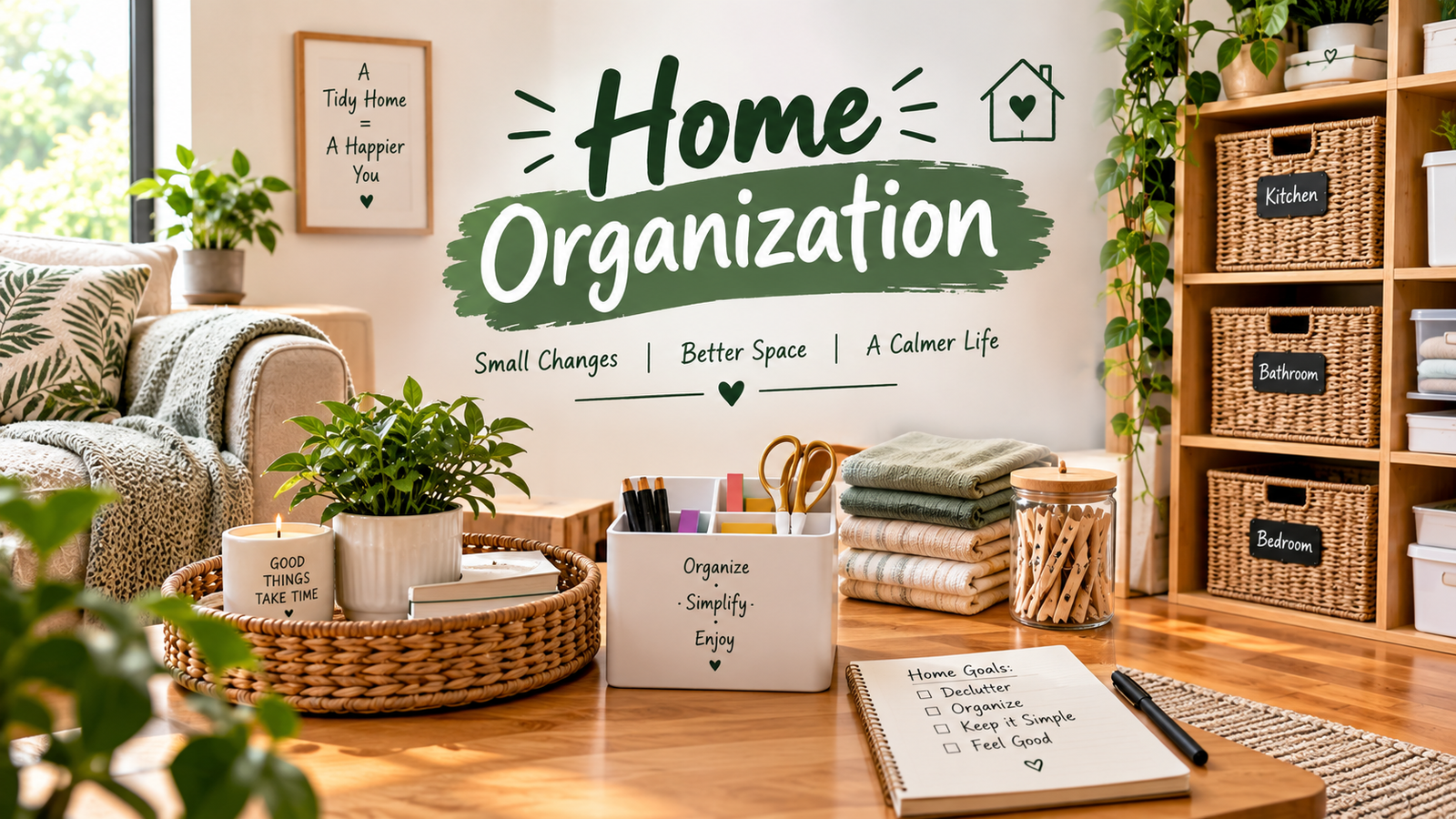
A tidy home does not have to look like a showroom. The best home organization approach is one that makes everyday life easier, helps you find things quickly, and can be maintained without spending hours resetting every room. Whether you live in a small apartment or a busy family home, the right system can turn cluttered areas into useful, comfortable spaces.
Home organization starts with a simple idea: keep what you use, give everything a practical home, and make it easy to put things back. Before buying storage containers, declutter first. Then group similar items, create zones, use available vertical space, and choose storage that matches your habits.
This guide covers practical home organization ideas for the kitchen, pantry, bedroom, closet, bathroom, living room, office, laundry room, entryway, and garage. You will also find budget-friendly solutions, small-space strategies, common mistakes, and simple routines that help your home stay organized.
What Is Home Organization?
Home organization is the process of arranging your belongings and spaces so that items are easy to find, use, and return. It is different from cleaning. Cleaning removes dirt, while decluttering removes things you no longer need. Organization creates a logical place for the things you keep.
Good home organization should support the way you actually live. If you use coffee supplies every morning, keeping them near the coffee maker makes more sense than placing them in a beautiful but inconvenient cabinet. The goal is function first, appearance second.
How to Start Organizing Your Home
Start With One Area
Trying to organize your entire house in one weekend can quickly become overwhelming. Choose one drawer, shelf, cabinet, or small room zone and finish it before moving on.
Starting small also lets you test whether your home organization system actually works. If you repeatedly struggle to return something to its assigned place, the problem may be the system rather than your habits.
Declutter Before Buying Storage
One of the most common home organization mistakes is purchasing bins before deciding what should stay. Empty the space, remove trash, set aside donations, and group similar belongings. Only then can you see how much storage you actually need.
Containers cannot solve an excess-of-stuff problem. Reducing unnecessary belongings first gives you more usable space and makes the final system much easier to maintain.
Use Four Sorting Categories
Sort items into:
- Keep
- Donate
- Sell
- Recycle or trash
Give unwanted items an exit plan instead of moving them into another box. Once the clutter has left the space, organize the items you genuinely use.
Create a Home for Everything
After decluttering, decide where each category belongs. Frequently used items should be easy to reach, while seasonal or rarely used belongings can go into higher or less accessible storage.
A useful rule for home organization is to store items close to where they are used. This reduces unnecessary movement and makes putting things away feel natural.
The 7-Step Home Organization System
1. Declutter
Remove duplicates, broken items, expired products, and things you no longer use.
2. Categorize
Group similar belongings together. For example, keep batteries together instead of storing them in several unrelated drawers.
3. Create Zones
Create small areas for specific tasks. A kitchen might have a coffee zone, baking zone, food-prep zone, and cleaning zone.
4. Assign a Home
Every item should have a logical place. If something repeatedly ends up on the counter, ask whether its assigned location is actually convenient.
5. Use Vertical Space
Walls, doors, tall shelves, and cabinet risers can add useful storage without taking up much floor space.
6. Choose the Right Storage
Select baskets, bins, dividers, hooks, shelves, or containers based on the space and items you need to store.
7. Build a Reset Routine
A home organization system only works when items can be returned easily. A short daily reset prevents small piles from becoming large clutter problems.
Home Organization Ideas for Every Room
Kitchen Organization Ideas
Kitchen home organization works best when storage follows your cooking routine. Keep everyday dishes, utensils, and ingredients close to where they are used.
Use drawer dividers for utensils, shelf risers for cabinets, and a turntable for sauces or spices. Store cutting boards vertically instead of stacking them flat. Under-sink areas can hold cleaning supplies in a pull-out bin or basket.
| Kitchen Problem | Practical Solution |
| Crowded drawers | Adjustable dividers |
| Tall cabinets | Shelf risers |
| Messy spices | Tiered rack or turntable |
| Small cabinets | Pull-out organizers |
| Too many containers | Group matching sizes and lids |
The goal is not to fill every cabinet with organizers. Good home organization makes the items you use most often easier to reach.
Pantry Organization Ideas
A pantry becomes easier to maintain when foods are grouped by type. Create zones for breakfast foods, snacks, baking supplies, canned goods, and backstock.
Clear containers can help with frequently used dry goods, while simple labels make categories easier to identify. Do not feel pressured to transfer every food item into matching containers; use them where they genuinely improve visibility or access.
Bedroom Organization Ideas
For bedroom home organization, start with clothing and surfaces that collect clutter. Remove clothes you never wear, then organize the remaining pieces by type, season, or frequency of use.
Use under-bed storage for seasonal items, luggage, spare bedding, or rarely used accessories. Keep nightstands simple by limiting them to items you actually use before bed.
Closet Organization Ideas
A closet becomes easier to manage when frequently worn clothing is accessible. Group similar clothing together, use shelf dividers where needed, and keep shoes in a defined area.
The best home organization systems do not require every item to be color-coded. Choose a system that you can maintain even on a busy morning.
Bathroom Organization Ideas
Bathrooms often contain expired products, duplicates, and small items without a permanent home. Begin by checking toiletries, cosmetics, and cleaning products.
Use drawer dividers for small items, bins for backup supplies, and vertical organizers for limited cabinet space. Keep daily-use products at the front and backups together in a separate zone.
Living Room Organization Ideas
Living room home organization should control everyday clutter without making the room feel crowded. Use baskets for blankets, toys, magazines, or electronics.
Create a dedicated place for remote controls and charging cables. If surfaces constantly collect miscellaneous objects, add a small catch-all basket and empty it during your daily reset.
Home Office Organization Ideas
An organized office needs both physical and digital home organization. Sort paperwork into action, archive, and recycle categories. Use cable clips or simple containers to prevent cords from becoming tangled.
Create a small stationery zone and keep only frequently used supplies on the desk. Digital clutter matters too, so periodically clean your downloads folder, desktop, email inbox, and duplicate files.
Laundry Room Organization Ideas
Keep detergent, stain removers, dryer supplies, and cleaning tools grouped by task. A rolling cart can make narrow laundry spaces more functional, while wall hooks can hold reusable bags or small tools.
Entryway Organization Ideas
The entryway needs a drop zone because it is where clutter naturally arrives. Add hooks for bags and coats, a defined shoe area, and a small place for keys and mail.
A simple entryway home organization system can prevent shoes, backpacks, and paperwork from spreading into the rest of the home.
Garage Organization Ideas
Garage home organization should prioritize safety and accessibility. Keep frequently used tools within easy reach and place seasonal items higher or farther back.
Use wall-mounted storage, pegboards, shelves, and labeled bins to make use of vertical space. Keep heavy objects on stable, lower shelves.
Small-Space Home Organization Ideas
Small homes require careful use of every available area. Instead of adding bulky furniture, look for storage opportunities behind doors, beneath beds, inside cabinets, and on walls.
Choose furniture that performs more than one job, such as an ottoman with hidden storage or a bed with drawers. Keep frequently used items accessible and reserve difficult-to-reach spaces for seasonal belongings.
A useful home organization rule for small spaces is to avoid filling every container to the top. A little empty space makes it easier to put things away and reduces the temptation to create overflow piles.
Home Organization Ideas on a Budget
Effective home organization does not require expensive matching containers. Before shopping, look around your home for storage you already own.
Shoe boxes can become drawer organizers. Jars can hold small craft or office supplies. Existing baskets can be reassigned to blankets, toys, or cleaning tools. Cardboard boxes can work as temporary category bins while you decide what storage you really need.
Budget home organization is especially useful for renters, students, and people living in small apartments. The goal is to solve a storage problem, not to create a picture-perfect display.
Home Organization Without Buying Anything
Try a 15-minute challenge. Choose one drawer or shelf, remove everything, throw away obvious trash, relocate misplaced items, group similar belongings, and return only what belongs there.
You can also create more space simply by changing the arrangement. Move rarely used items to the back, place daily-use products at eye level, and use empty wall or door space when appropriate.
This approach proves that home organization can begin with better decisions rather than a shopping trip.
Common Home Organization Mistakes
Buying Storage Before Decluttering
Containers cannot solve an excess-of-stuff problem. Declutter first.
Organizing for Appearance Instead of Function
A beautiful system that is difficult to use will not last. Choose convenience over perfection.
Filling Every Space
Overfilled drawers and bins are difficult to maintain. Leave enough room for items to be returned easily.
Creating Complicated Systems
If a system requires several steps every time you put something away, people are less likely to use it.
Ignoring Vertical Space
Walls, doors, and tall cabinets often provide valuable unused capacity.
Forgetting Maintenance
Even excellent home organization can fail if there is no reset routine. Build maintenance into your normal week.
How to Keep Your Home Organized
Daily 10-Minute Reset
Spend a few minutes returning misplaced items, clearing surfaces, handling obvious trash, and putting away clothes or dishes.
Weekly Reset
Choose one high-traffic area each week. Review the entryway, kitchen counters, fridge, bathroom cabinets, or home office and correct small problems before they grow.
Monthly Decluttering
Pick one category rather than an entire house. Review clothes, pantry products, paperwork, toys, cleaning supplies, or digital files.
Seasonal Reset
At the change of each season, rotate clothing, sports equipment, holiday decorations, and other seasonal items. This is an easy way to combine decluttering with home organization.
| Routine | What to Do |
| Daily | 10-minute reset and return misplaced items |
| Weekly | Review high-traffic areas |
| Monthly | Declutter one category |
| Seasonally | Rotate seasonal belongings |
Home Organization by Lifestyle
Families often benefit from labeled baskets and individual zones. Renters can use removable hooks, freestanding shelves, and over-door storage. Busy households should favor open, simple systems that make putting things away quick.
If children use the space, storage should be accessible to them. If only one person uses an area, tailor the system to that person’s habits instead of forcing a complicated shared method.
For renters, practical home organization should focus on solutions that do not require permanent changes. For families, it should prioritize easy cleanup. For small apartments, every storage choice should earn its space.
How to Decide Where Everything Belongs
Use the point-of-use principle: store an item as close as practical to where you use it.
Keep coffee supplies near the coffee maker, towels near the bathroom, pet supplies near the area where they are needed, and keys near the entryway. This simple rule makes home organization easier because the system follows your routines instead of fighting them.
If an item constantly gets left somewhere else, do not automatically blame yourself. Its current storage location may simply be inconvenient.
Room-by-Room Home Organization Checklist
Use this quick checklist to guide your next project:
Kitchen: drawers, cabinets, pantry, refrigerator, under-sink area.
Bedroom: clothing, nightstand, dresser, bedding, under-bed storage.
Bathroom: toiletries, vanity, towels, shower products, backups.
Living room: blankets, books, cables, toys, remote controls.
Office: paperwork, stationery, cables, digital files.
Entryway: shoes, coats, bags, keys, mail.
Garage: tools, sports equipment, seasonal items, gardening supplies.
A checklist turns a broad home organization project into a series of manageable tasks.
Home Organization Blog Topics and Ideas
If you are building a Home organization blog, useful content can be developed from real problems rather than generic lists. Strong home organization blog topics include small-space storage, pantry organization, decluttering checklists, renter-friendly solutions, budget organization, room makeovers, and maintenance routines.
A useful home organization blog can also publish seasonal content, printable checklists, before-and-after case studies, and practical product comparisons. These formats create natural opportunities to demonstrate first-hand experience and build topical authority.
The best home organization blog ideas are usually specific enough to solve one problem. For example, “how to organize a small bathroom with no cabinets” is more actionable than another broad list of storage products.
When evaluating the best home organization blog resources, look for content that explains not only what to buy but also why a particular system works, how to adapt it, and how to maintain it.
Conclusion
Good home organization is not about owning fewer things just for the sake of minimalism or making every shelf look perfect. It is about creating practical systems that fit your routines.
Start small, declutter before shopping, group similar items, create useful zones, and store things where you naturally use them. Then add a simple daily or weekly reset. With these habits, your home can become easier to manage without constant reorganizing.
The most effective home organization system is ultimately the one you can maintain. Focus on convenience, give every useful item a clear home, and make returning things easier than leaving them out.
Frequently Asked Questions
What is the best way to start home organization?
Start with one small area, remove unwanted items, group what remains, and give each category a convenient home. Avoid buying storage until you know what you actually need to keep.
Should I declutter before organizing?
Yes. Decluttering reduces the number of items you need to store and makes your system easier to maintain. It also helps you avoid buying storage for things you ultimately decide to remove.
How can I organize my home on a budget?
Reuse boxes, jars, baskets, and furniture you already have. Focus on removing excess belongings and improving the layout before purchasing organizers.
How do I organize a small home?
Use vertical, behind-the-door, under-bed, and multi-purpose storage. Keep everyday items accessible and reserve harder-to-reach areas for seasonal belongings.
How can I keep my home organized every day?
Use a short daily reset. Return misplaced items, clear surfaces, and put frequently used belongings back in their assigned homes. Consistency is more important than spending hours cleaning.
What room should I organize first?
Start with a room or area that causes daily frustration. A small, high-traffic area such as a kitchen drawer or entryway can provide a quick and motivating win.
Do I need matching storage containers?
No. Matching containers can look attractive, but effective home organization depends more on function, accessibility, and a system you can maintain.
You May Also Read: Pantry Organization Ideas
