


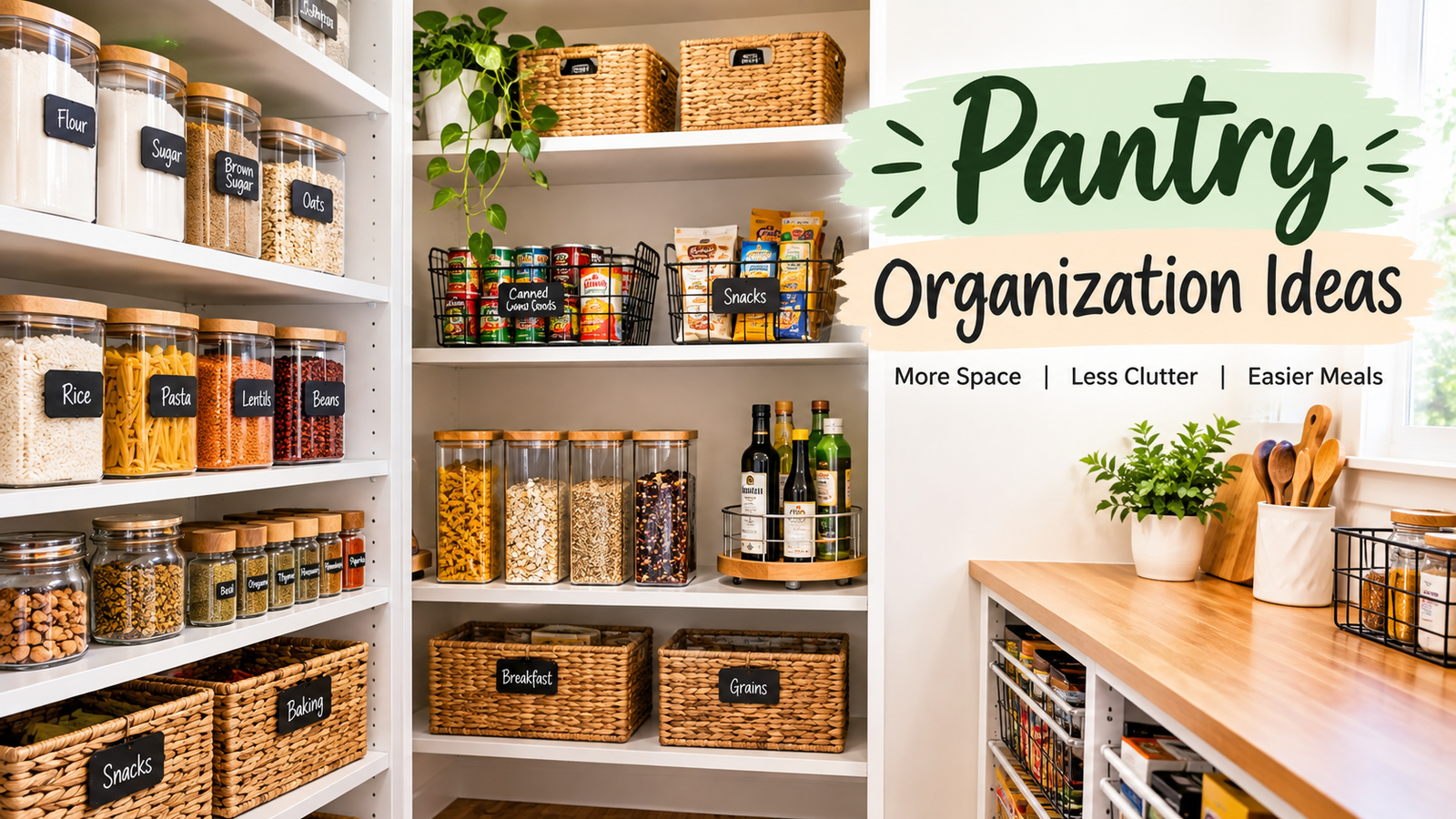
A messy pantry can make even a simple grocery trip feel frustrating. Cans disappear behind boxes, half-open snack bags take over shelves, and ingredients you already own get forgotten. The good news is that you do not need a large walk-in pantry or expensive storage products to create a functional space. The right pantry organization ideas can make a small cabinet, closet pantry, or large walk-in pantry easier to use.
The best approach is to organize around the way you actually use food. Frequently used items should be easy to reach, similar products should stay together, and everything should have a clear home. A practical pantry organization system also needs some flexibility because your shopping habits and household needs can change.
Whether you need small pantry organization ideas, budget-friendly solutions, or better ways to manage deep shelves, these pantry organization ideas can help you create a cleaner and easier-to-maintain pantry.
How to Organize a Pantry Step by Step
Before buying bins, containers, or labels, start with the space you already have. Many successful pantry organization ideas begin with decluttering rather than shopping.
1. Empty and Clean the Pantry
Remove everything from the shelves and place similar foods together temporarily. Check expiration dates, damaged packaging, duplicate products, and ingredients that nobody uses.
Once the shelves are empty, wipe them down and look for wasted areas. Notice where the shelves are unusually deep, where there is unused vertical space, and whether the pantry door could provide additional storage.
2. Group Similar Foods Together
Create broad categories instead of making dozens of tiny groups. You might have sections for canned goods, snacks, breakfast foods, pasta and rice, baking supplies, sauces, spices, and backstock.
This simple approach makes pantry organization ideas much easier to maintain because everyone in the household knows where items belong.
3. Measure Before Buying Storage
One of the most overlooked pantry organization ideas is measuring first. Measure shelf width, depth, and vertical clearance before purchasing organizers.
A container that looks perfect online may be too deep for your shelves or too tall to fit between them. Measuring prevents wasted money and helps you choose storage that actually improves the space.
4. Put Frequently Used Items Within Reach
Place everyday foods around eye level or on easily accessible shelves. Keep heavier items lower and occasional-use products higher.
For example, cereal, coffee, snacks, and breakfast ingredients can stay in the middle section, while bulk supplies can occupy lower shelves.
25 Pantry Organization Ideas That Actually Work
If you want practical pantry organization ideas, focus on solutions that solve a specific problem rather than simply making shelves look attractive.
1. Use Clear Containers for Dry Goods
Clear containers can make rice, flour, pasta, oats, and other dry goods easier to see. They are especially useful when original packaging is bulky or difficult to stack.
2. Add Lazy Susans to Deep Shelves
A lazy Susan works well for bottles, sauces, oils, and condiments. Instead of reaching behind several items, you can rotate the organizer and bring products forward.
This is one of the most useful pantry organization ideas for deep shelves.
3. Install Shelf Risers for Cans
Shelf risers create levels so cans at the back are easier to see. This prevents smaller cans from disappearing behind taller products.
4. Create a Dedicated Snack Bin
Put individual snack packets into one open basket or bin. A dedicated snack area works especially well for busy families and makes grabbing food faster.
5. Use Baskets for Backstock
If you buy items in bulk, separate unopened extras from the products currently being used. A labeled backstock basket keeps extra supplies from spreading across several shelves.
6. Make Use of the Pantry Door
The back of a pantry door is often wasted space. Narrow racks, small baskets, or removable organizers can hold spices, packets, wraps, or other lightweight products.
7. Use Vertical Space
Stackable bins and shelf inserts can take advantage of unused height. Before adding more shelves, check whether the space above your existing products is being wasted.
8. Create a Baking Zone
Keep flour, sugar, baking powder, chocolate chips, sprinkles, and other baking supplies together. A dedicated baking zone reduces searching and makes baking preparation easier.
9. Create a Breakfast Zone
Group cereal, oats, pancake mix, syrup, granola, and similar foods together. This is particularly helpful in households where several people prepare breakfast independently.
10. Use a Grab-and-Go Zone
Keep frequently used snacks or lunch ingredients in an easy-to-reach area. This is one of the simplest pantry organization ideas for busy households.
11. Choose Narrow Organizers for Small Spaces
Small pantries often benefit from narrow bins instead of large baskets. Slim storage can fit between shelves, walls, or other organizers without wasting valuable space.
12. Use Pull-Out Storage for Deep Shelves
Deep shelves can create hidden zones where food gets forgotten. Pull-out baskets or drawers make it easier to reach products stored toward the back.
13. Label Important Categories
Labels can make a pantry organization system easier for the whole household. Label broad categories such as snacks, baking, grains, and backstock instead of labeling every individual item.
14. Keep Similar Package Sizes Together
Grouping similar-sized boxes and containers creates cleaner rows and makes available space easier to judge.
15. Create a Beverage Area
If drinks occupy significant pantry space, give them a dedicated lower shelf or basket. Heavy bottles are generally easier to manage when stored lower.
16. Repurpose Magazine Holders
Magazine holders can be useful for flat packages such as wraps, parchment paper, or similar kitchen supplies.
17. Store Heavy Items Lower
Large bags, bottles, and bulk packages should generally be kept on lower shelves. This makes them easier to lift and reduces awkward reaching.
18. Keep Everyday Foods at Eye Level
One of the smartest pantry organization ideas is to prioritize convenience instead of appearance. Your most frequently used foods deserve the easiest locations.
19. Create a “Use First” Basket
Keep opened packages or products that need to be used soon in one visible basket. This can help prevent forgotten food.
20. Add Lighting to a Dark Pantry
If you cannot see the back of a shelf, organization becomes much harder. A suitable battery-powered or rechargeable light can improve visibility in a dark pantry.
21. Avoid Matching Containers Everywhere
Matching containers can look beautiful, but they are not necessary for every food. Use containers where they improve visibility, freshness, stacking, or access.
22. Separate Bulk Purchases
Keep extra packages together instead of mixing them with everyday supplies. This makes it easier to see what you already have before shopping.
23. Create a Family Snack Station
Place kid-friendly snacks in accessible bins while keeping items that require adult handling on higher shelves.
24. Leave Some Empty Space
A completely packed pantry is difficult to maintain. Leaving a little room makes it easier to return groceries and see what is available.
25. Organize Around Your Habits
The best pantry organization ideas are based on real routines. If you regularly cook pasta, keep pasta and sauces near each other. If you bake every weekend, give baking supplies a convenient location.
Small Pantry Organization Ideas That Save Space
Small spaces need strategic storage rather than more products. Start by identifying your pantry’s most valuable areas.
Use vertical space with shelf risers, stackable bins, and narrow containers. The pantry door can provide additional storage without taking up shelf space.
For small pantry organization ideas, avoid oversized baskets that consume valuable room. Shallow bins are often easier to access because you can see the contents without removing everything.
Another useful technique is to reserve prime shelf space for frequently used products. Occasional-use ingredients can move higher or toward less convenient areas.
These pantry organization ideas can make a small pantry feel less crowded without requiring a complete remodel.
Pantry Organization Ideas for Deep Shelves
Deep shelves are useful but can quickly become difficult to manage. Items pushed toward the back are easy to forget.
Lazy Susans work well for bottles and condiments. Pull-out bins are another practical option because they allow you to bring the contents forward.
Avoid filling deep shelves with several rows of identical-looking products. Instead, use risers, shallow baskets, or separate zones.
A useful rule for deep storage is simple: if you cannot see it or reach it easily, the storage system needs improvement.
Walk-In Pantry Organization Ideas
A walk-in pantry gives you more space, but more space does not automatically mean better organization.
Use clear zones for different food groups. Keep everyday staples around eye level, heavier products lower, and occasional-use items on upper shelves.
| Pantry Zone | Best Items | Useful Storage |
| Eye level | Everyday staples | Clear bins |
| Upper shelves | Occasional foods | Lidded containers |
| Lower shelves | Heavy items | Sturdy baskets |
| Door | Small packages | Narrow racks |
| Corners | Bottles and sauces | Lazy Susan |
| Floor | Bulk supplies | Large bins |
These pantry organization ideas work especially well when every zone has a defined purpose.
Pantry Organization Ideas on a Budget
You do not need an expensive makeover to improve your pantry. Some of the most effective pantry organization ideas use things you already own.
Reuse sturdy boxes as temporary dividers, repurpose jars for suitable dry goods, and make simple paper labels. Existing baskets can also be assigned to specific categories.
Most importantly, organize before shopping. Once you understand what you actually need, you can purchase only the storage products that solve real problems.
Pantry Organization Without Buying Organizers
A no-buy pantry reset can be surprisingly effective.
Start by removing everything, checking dates, and grouping similar foods. Rearrange the shelves according to frequency of use and reuse containers you already have.
Use small boxes to separate packets and larger baskets to hold backstock. Temporary labels made from paper and tape can help establish zones.
This approach proves that good pantry organization ideas are more about creating a system than purchasing matching products.
How to Organize Different Pantry Foods
Different food categories benefit from different storage approaches.
Canned foods are easier to see on tiered risers. Pasta and grains can be grouped together, while baking ingredients should have their own section. Snacks work well in open bins because they are frequently accessed.
For pantry organization containers, choose sizes that match the food and the shelf rather than transferring every product automatically. Original packaging may be perfectly practical for some foods.
| Food Type | Ideal Location | Organization Approach |
| Canned goods | Middle/lower shelf | Shelf risers |
| Pasta | Dry-goods zone | Containers or original packs |
| Flour | Baking zone | Airtight container |
| Snacks | Easy-access shelf | Open bin |
| Sauces | Accessible shelf | Lazy Susan |
| Bulk food | Lower/secondary shelf | Large labeled bin |
The goal of these pantry organization ideas is better visibility and access, not simply creating a picture-perfect pantry.
Pantry Organization Ideas for Families
Families often need organization systems that are easy for everyone to follow.
Create a dedicated snack area, lunch-preparation zone, and breakfast section. Use broad labels so children and other household members can return items without asking where everything belongs.
Keep heavy products low and less suitable items higher. A simple family-friendly pantry organization system should be intuitive enough that putting groceries away does not become another chore.
Renter-Friendly Pantry Organization Ideas
Renters can improve storage without making permanent changes. Freestanding baskets, removable hooks, shelf risers, tension solutions, and over-door organizers can provide additional flexibility.
Before installing anything, check whether the product requires drilling or permanent adhesive. Choose removable options when preserving the original space matters.
These pantry organization ideas are useful for apartments, temporary homes, and kitchens where built-in storage cannot be changed.
How to Keep Your Pantry Organized
Even the best pantry organization ideas will fail if there is no maintenance routine.
Spend a few minutes each week returning products to their assigned zones. After grocery shopping, place newer items behind older ones when appropriate so older products are used first.
Once a month, check for expired or forgotten products and wipe down areas that collect crumbs or spills.
Every few months, reconsider the layout. If a category consistently becomes messy, the problem may be the system rather than the people using it.
Common Pantry Organization Mistakes
One common mistake is purchasing containers before measuring the pantry. Another is filling every available inch, leaving no space for new groceries.
Avoid using deep opaque bins for products you frequently need. Also avoid creating too many categories because an overly complicated system can be harder to maintain.
Another mistake is organizing for appearance rather than habits. A beautiful pantry that requires extra steps every time you cook will eventually become frustrating.
The strongest pantry organization ideas make everyday tasks easier, not harder.
A Simple Pantry Makeover Example
Imagine a pantry with scattered cans, open snack bags, duplicate pasta boxes, and baking ingredients spread across multiple shelves.
First, remove everything and discard expired food. Next, create five broad zones: breakfast, snacks, canned goods, dry goods, and baking.
Add a riser for cans, a basket for snacks, and containers only for frequently used dry goods. Move heavy items lower and keep everyday foods at eye level.
The result is not simply a cleaner pantry. It is a more functional system where household members can find products quickly and recognize when something needs restocking.
Conclusion
Effective pantry organization ideas do not require a huge budget, expensive containers, or a perfectly designed kitchen. The most useful improvements come from understanding your space, removing unnecessary clutter, grouping foods logically, and making frequently used items easy to reach.
Whether you need small pantry organization ideas, solutions for deep shelves, or a complete walk-in pantry makeover, focus on function first. Measure before buying storage, use vertical and door space wisely, and create zones that match your daily habits.
A good pantry organization system should save time rather than create more work. Once every category has a logical home and you spend a few minutes maintaining it, your pantry can stay practical, visible, and much easier to use.
Frequently Asked Questions
What is the best way to organize a pantry?
Start by decluttering, grouping similar foods, measuring the shelves, creating practical zones, and placing frequently used items where they are easy to reach. The best system should also be simple to maintain.
How do I organize a small pantry?
Use vertical space, narrow bins, shelf risers, and door storage. Keep everyday foods in accessible areas and move bulk or occasional-use products to less convenient shelves.
How do you organize deep pantry shelves?
Use lazy Susans, pull-out baskets, shelf risers, and shallow bins. Avoid placing multiple hidden rows of food where products at the back become difficult to reach.
Should all pantry food go into containers?
No. Containers are most useful when they improve visibility, stacking, freshness, or access. Some foods can remain in their original packaging if it works well for your space.
How can I organize a pantry on a budget?
Declutter and rearrange first. Reuse boxes, jars, baskets, and containers you already own before purchasing new organizers.
How do I keep my pantry from getting messy?
Give each category a permanent home, return items after use, maintain a small amount of empty space, and perform a quick reset after grocery shopping.
How often should I reorganize my pantry?
A small weekly reset and monthly check are usually enough for maintenance. A larger review every few months can help when shopping habits or household needs change.
You May Also Read: Under Sink Organization Ideas
