


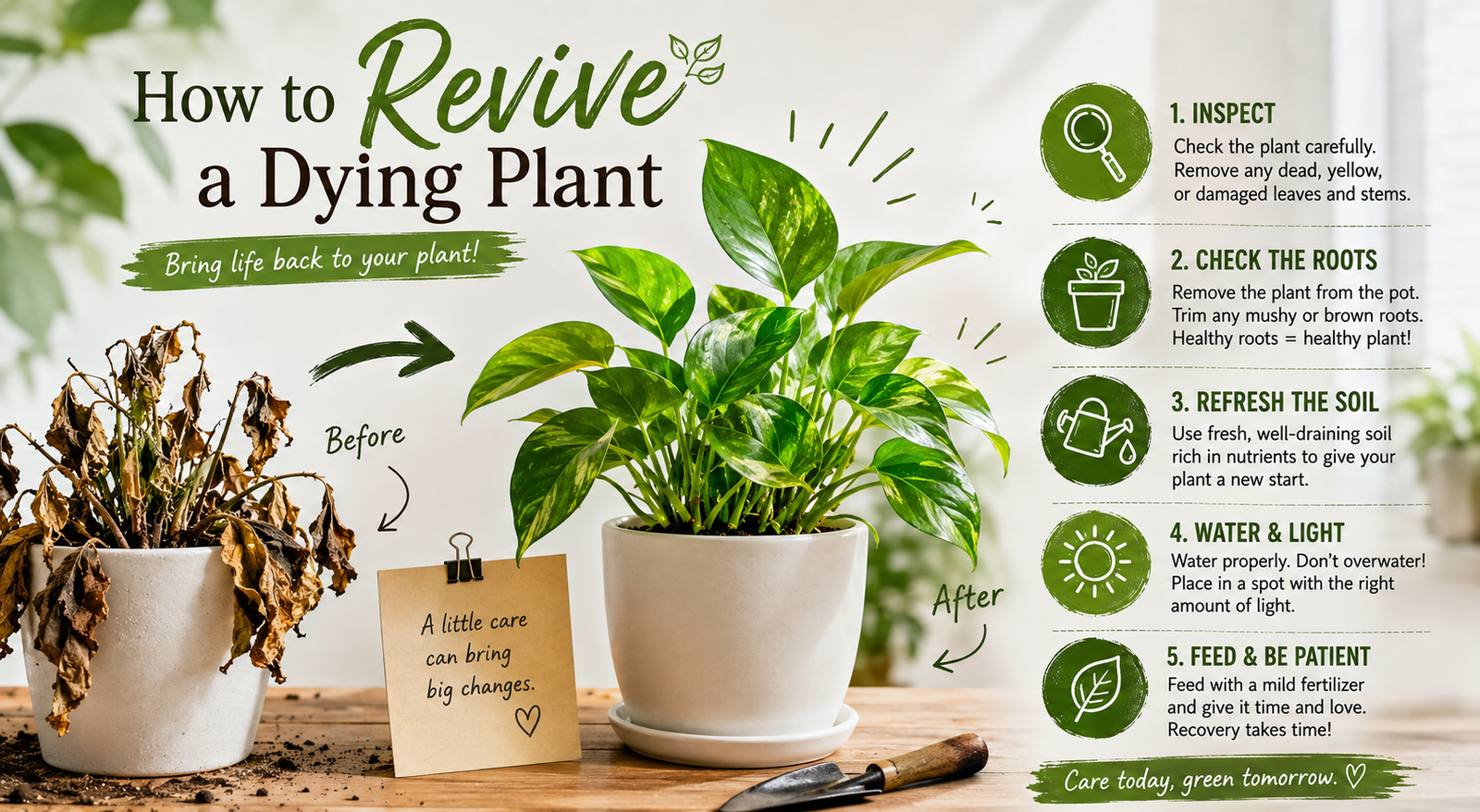
A struggling plant can look beyond saving, but many plants recover when you identify the real problem and correct it early. If you’re searching for how to revive a dying plant, the first rule is simple: don’t immediately add more water, fertilizer, or sunlight. Those actions can make the problem worse when the actual cause is root rot, poor drainage, pests, or excessive light.
The best approach is to diagnose the plant before treating it. Check the leaves, stems, soil, roots, pot, and growing conditions. Once you know what is going wrong, you can create a simple recovery plan.
This guide explains how to revive a dying plant indoors or outdoors, including what to do about overwatering, underwatering, root rot, yellow leaves, brown leaves, poor lighting, and severe damage.
Can a Dying Plant Still Be Saved?
Before learning how to revive a dying plant, determine whether the plant is actually alive. A plant can lose most of its leaves and still have healthy roots or living tissue capable of producing new growth.
Look closely at the stems. Living stems are often firm and may show green tissue underneath the outer layer. Check the roots as well. Healthy roots are generally firm, while severely damaged roots may be soft, mushy, or decaying.
New buds are another encouraging sign. If you can see tiny growth points developing on the stem, the plant may have enough stored energy to recover.
Signs Your Plant May Still Be Alive
Look for:
- Green tissue beneath the stem surface
- Firm stems
- Healthy roots
- New buds or shoots
- A few healthy leaves
- Flexible rather than completely brittle branches
If the entire stem system is dry, brittle, and dead and the roots have completely deteriorated, recovery may not be possible.
Why Is My Plant Dying?
Understanding the cause is the most important part of how to revive a dying plant. Wilting or yellow leaves don’t automatically mean the plant needs water. Several different problems can create similar symptoms.
Overwatering
Overwatering is one of the most common causes of indoor plant decline. Constantly wet soil can prevent roots from getting enough oxygen and may contribute to root rot.
Typical warning signs include yellow leaves, soft stems, persistent wilting, unpleasant soil odor, and soil that remains wet for a long time.
Underwatering
An underwatered plant usually has dry soil, drooping leaves, crispy edges, or leaves that curl inward. The pot may also feel unusually light.
If the soil has become extremely dry, simply following a fixed watering schedule may not be enough. The plant needs appropriate rehydration followed by better moisture management.
Too Much or Too Little Light
Light problems can slowly weaken an otherwise healthy plant. Too little light may result in pale leaves, slow growth, and long, stretched stems. Excessive direct sunlight can cause scorched or bleached patches.
When considering how to revive a dying plant, remember that moving it directly from a dark room into intense sunlight can create another problem. Changes in lighting should usually be gradual.
Root Rot
Root rot is particularly dangerous because the damage happens below the soil surface. A plant may appear thirsty even though the soil is wet.
If roots are dark, soft, or mushy, inspect the root system carefully and remove severely damaged sections with clean tools.
Poor Soil or Drainage
A container without adequate drainage can keep roots wet for too long. Compacted soil can cause a similar problem by restricting water movement and air circulation.
The correct pot and growing medium can make a major difference in plant recovery.
Pests and Diseases
Spider mites, aphids, mealybugs, scale, thrips, and other pests can weaken plants by feeding on leaves and stems. Look underneath leaves and around leaf joints for insects, webbing, sticky residue, discoloration, or unusual spots.
Quick Diagnosis: What Does Your Plant Look Like?
Before deciding how to revive a dying plant, use the symptoms as clues rather than assuming one cause.
| What You See | Possible Cause | What to Check First |
| Drooping + dry soil | Underwatering | Soil moisture |
| Drooping + wet soil | Root stress | Roots and drainage |
| Yellow leaves + wet soil | Overwatering | Root condition |
| Brown crispy edges | Dryness or low humidity | Soil and environment |
| Brown patches after strong sunlight | Light stress | Plant location |
| Mushy dark roots | Root rot | Root system |
| Sticky leaves | Sap-feeding pests | Leaves and stems |
| Long weak stems | Insufficient light | Light exposure |
| Slow growth | Multiple possible causes | Roots, soil, light |
This quick comparison can help you avoid treating the wrong problem.
How to Revive a Dying Plant Step by Step
The most reliable approach to how to revive a dying plant is to work through the problem systematically instead of changing everything at once.
Step 1: Move the Plant Away From Stress
If the plant is sitting next to a heater, air conditioner, cold window, or intense afternoon sun, move it to a more stable location.
If pests are present, keep the affected plant away from your other plants until you’ve identified and addressed the infestation.
Step 2: Check the Soil Moisture
Put your finger into the upper layer of soil and feel for moisture. You can also lift the pot to judge whether it feels unusually light.
Don’t water simply because several days have passed. Water requirements depend on the plant species, pot size, soil, temperature, season, humidity, and available light.
This is one of the most important principles when learning how to revive a dying plant: water according to the plant’s condition rather than the calendar.
Step 3: Inspect the Roots
If the plant continues to decline despite appropriate watering, inspect its roots.
Gently remove the plant from the container and examine the root ball. Firm roots are generally a better sign than roots that are soft and deteriorating.
Don’t cut healthy roots unnecessarily. Focus on clearly damaged tissue.
Step 4: Remove Dead or Rotten Growth
Prune completely dead leaves and severely damaged sections using clean scissors or pruning shears.
Avoid cutting healthy green growth simply because the plant looks unattractive. Healthy tissue can provide energy for recovery.
Step 5: Fix the Watering Problem
If the plant is extremely dry, rehydrate it appropriately and allow excess water to drain.
If the soil is staying wet, stop adding water and investigate drainage and root health.
The goal isn’t to give a How to Revive a Dying Plant more water. The goal is to restore the correct moisture balance.
Step 6: Correct the Lighting
Place the plant where it receives the type and intensity of light appropriate for its species.
Low-light plants generally shouldn’t be placed in harsh direct sunlight simply because they are struggling. Likewise, a plant suffering from insufficient light may need a brighter position.
Step 7: Repot if Necessary
Repotting can help when the soil is badly compacted, drainage is poor, roots are severely affected, or the container has become unsuitable.
Choose a container with drainage and avoid moving a small root system into a dramatically oversized pot. Excess soil can remain wet for longer than the roots can use it.
Step 8: Don’t Rush to Fertilize
One common mistake when figuring out how to revive a dying plant is assuming fertilizer will solve every problem.
Fertilizer cannot fix root rot, severe dehydration, poor drainage, or pest infestations. If the roots are stressed, stabilizing the growing conditions should come first.
Step 9: Monitor Recovery
Once you’ve corrected the problem, give the plant time.
Watch for firmer stems, healthier new leaves, fresh buds, and improved overall appearance. Avoid changing its location or watering routine repeatedly.
How to Revive an Overwatered Plant
If you’re researching how to revive a dying plant because the soil is constantly wet, start by stopping unnecessary watering.
Check the drainage hole and inspect the roots if the plant continues to wilt. If you find rotten roots, remove the damaged sections and place the plant in fresh, suitable growing medium.
After recovery begins, allow the soil to reach the appropriate moisture level before watering again. The exact interval depends on the plant and environment.
How to Revive an Underwatered Plant
An underwatered plant may have dry, lightweight soil and crispy or curled leaves.
When learning how to revive a dying plant that has been severely dehydrated, avoid creating a cycle of extreme drying followed by excessive watering.
Give the plant an appropriate drink, allow excess water to escape, and then monitor the soil. Damaged leaves may not return to their original appearance, but healthy new growth can indicate successful recovery.
How to Revive a Plant With Root Rot
Root rot requires a different approach. If you’re wondering how to revive a dying plant with mushy roots, adding more water is usually the wrong response.
Remove the plant carefully and inspect the root ball. Trim away roots that are clearly rotten while preserving firm, healthy tissue.
Repot the plant into fresh, suitable soil in a clean container with drainage. Afterward, keep moisture under control and provide appropriate light.
Don’t repeatedly disturb the roots to check progress. Root recovery takes time.
How to Revive a Plant With Yellow Leaves
Yellow leaves can result from several conditions, so they should be treated as a symptom rather than a diagnosis.
When considering how to revive a dying plant with yellow leaves, check the soil first. If the soil is constantly saturated, investigate overwatering and root problems. If it is extremely dry, underwatering may be responsible.
Also consider light, pests, nutrients, temperature, and natural leaf aging.
Removing every yellow leaf won’t solve the underlying problem. Fix the cause first.
How to Revive a Plant With Brown Leaves
Brown leaves can occur because of underwatering, low humidity, excessive sunlight, salt buildup, temperature stress, or other environmental problems.
If you’re learning how to revive a dying plant with brown leaves, look at the pattern of damage. Crispy edges combined with very dry soil suggest a different problem from brown patches appearing after intense sunlight.
Trim only completely damaged tissue and correct the environmental issue causing the damage.
Can You Revive a Plant With No Leaves?
A leafless plant isn’t automatically dead. When deciding how to revive a dying plant with no leaves, examine the stems and roots.
If the stem still contains living tissue and the roots are viable, the plant may produce new growth. Place it in suitable conditions and avoid overwatering while waiting.
Don’t expect immediate results. Plants need time to rebuild growth after severe stress.
How Long Does It Take to Revive a Dying Plant?
There is no universal recovery timeline. A mildly dehydrated plant may improve relatively quickly, while a plant with severe root damage may need considerably longer.
When learning how to revive a dying plant, focus on trends rather than a specific number of days.
New growth, stronger stems, healthier leaves, and stable moisture are better signs than expecting damaged leaves to become perfect again.
Signs Your Plant Is Recovering
Knowing the signs of recovery makes it easier to determine whether how to revive a dying plant efforts are working.
Look for:
- New leaf buds
- Fresh green growth
- Firmer stems
- Reduced wilting
- Healthier new leaves
- Better root condition
- More stable soil moisture
Remember that old damaged leaves may never fully recover. New growth is usually a more useful indicator.
Common Mistakes That Can Kill a Recovering Plant
Even after you learn how to revive a dying plant, recovery can fail if you overcorrect.
Avoid these common mistakes:
- Watering on a strict calendar
- Adding fertilizer too soon
- Moving the plant into harsh sunlight
- Keeping soil permanently wet
- Using a pot without drainage
- Cutting healthy tissue
- Repotting repeatedly
- Moving the plant every few days
- Ignoring pests
- Trying multiple treatments simultaneously
A recovering plant usually benefits from stability.
When Is It Too Late to Revive a Plant?
If you’re asking how to revive a dying plant, it’s important to know that not every plant can be saved.
Recovery becomes unlikely when the entire root system and stem are dead, there is no viable growth point, or decay has extensively destroyed the plant.
However, if part of the plant remains healthy, propagation may sometimes provide another option. A healthy cutting or viable node can potentially become a new plant, depending on the species.
How to Prevent Your Plant From Dying Again
Once you’ve learned how to revive a dying plant, prevention becomes much easier.
Check the soil before watering, provide appropriate light, use containers with drainage, and learn the specific needs of each plant you grow.
Inspect leaves regularly for pests and watch for changes in growth. Seasonal changes can also affect watering and lighting requirements.
Most importantly, don’t treat every problem with more water or fertilizer. Diagnosis should always come first.
Conclusion
Learning how to revive a dying plant starts with resisting the urge to guess. Look at the soil, roots, leaves, stems, lighting, and overall environment before taking action.
Once you identify the cause, make one appropriate change at a time. Correct excessive moisture, address dehydration, improve drainage, adjust lighting, remove serious damage, and give the plant enough time to respond.
The biggest lesson in how to revive a dying plant is that recovery isn’t about forcing new growth overnight. It’s about restoring the conditions the plant needs to recover naturally.
With careful observation and consistent care, a plant that looks nearly finished may still have plenty of life left.
Frequently Asked Questions
Can you really revive a dying plant?
Yes, many struggling plants can recover if living roots or stems remain and the underlying problem is corrected. How to revive a dying plant depends on whether the issue is watering, light, roots, pests, soil, or another stress factor.
How do I know if my plant is dead or still alive?
Check the stems, roots, and growth points. Green tissue, firm stems, healthy roots, or new buds are encouraging signs. Completely brittle stems and severely decayed roots indicate a much lower chance of recovery.
How do you revive an overwatered plant?
Stop unnecessary watering, check drainage, inspect the roots, and remove clearly rotten tissue if necessary. Repotting may help when the existing soil or root system is severely compromised.
Can a plant recover after losing all its leaves?
Sometimes. A plant can potentially regrow leaves if its roots and stems still contain viable tissue. Stable light, appropriate moisture, and patience are important.
How long does it take to revive a dying plant?
It depends on the plant species and severity of damage. Mild stress may improve quickly, while root damage can require much longer. Look for healthy new growth rather than expecting damaged leaves to recover.
Should I cut off dead leaves?
Yes, completely dead leaves can be removed with clean scissors. However, don’t remove healthy leaves unnecessarily because they can still contribute energy to the plant.
Does fertilizer help revive a dying plant?
Fertilizer isn’t a universal rescue treatment. If the plant is suffering from root damage, overwatering, dehydration, pests, or poor lighting, correct that problem first. Feeding a severely stressed plant too aggressively can create additional problems.
You May Also Read: Indoor Plant Leaves Turning Brown
