

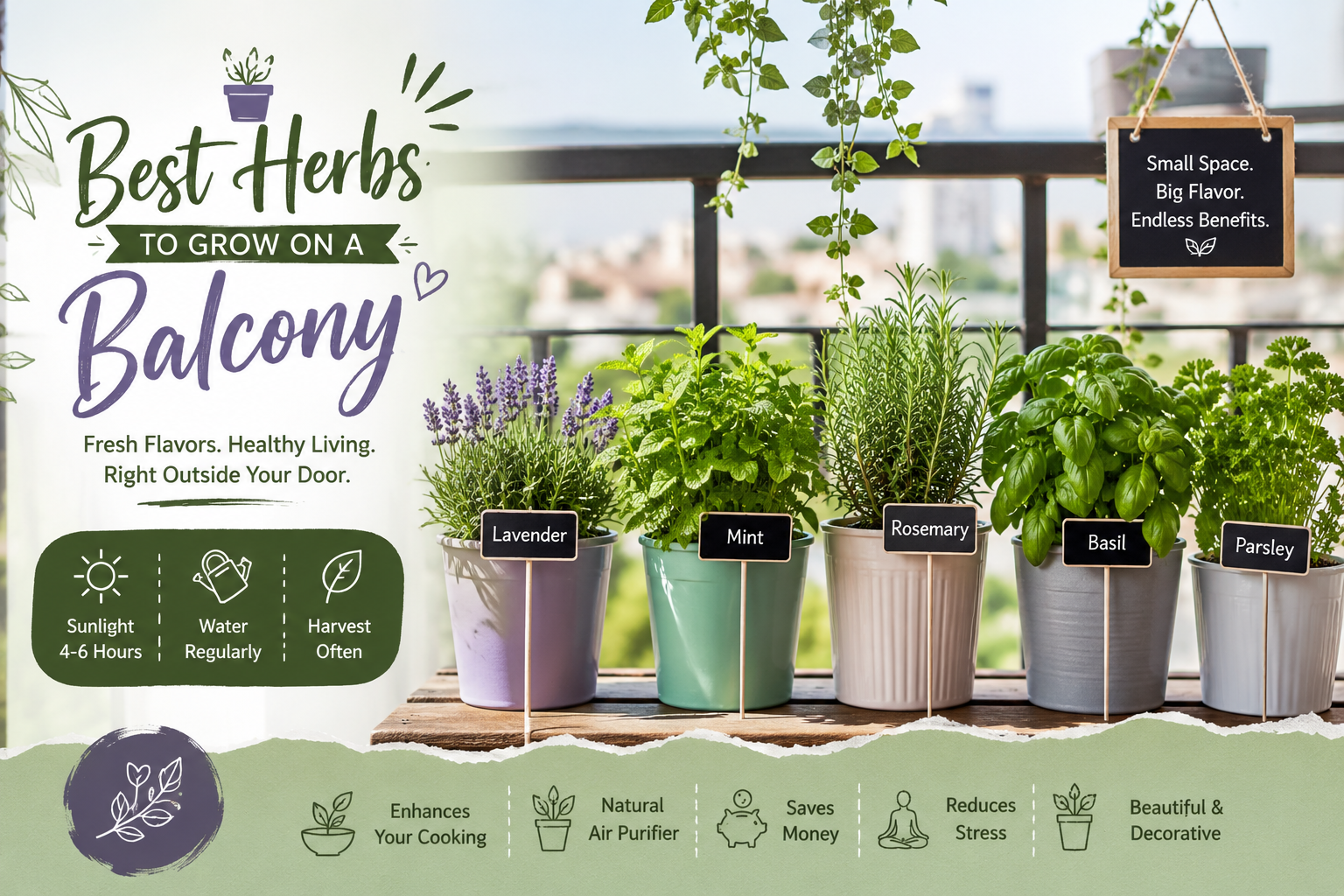
A balcony can be much more than an outdoor sitting area. With a few containers, suitable sunlight, and the right plants, you can turn even a small apartment balcony into a productive herb garden. The best herbs to grow on balcony spaces are those that adapt well to containers, don’t require a large growing area, and can provide fresh leaves for everyday cooking.
Choosing the best herbs to grow on balcony conditions starts with understanding your space. Does your balcony receive full sun or only morning light? Is it exposed to strong wind? Do your containers dry quickly? These factors can determine whether basil, rosemary, mint, parsley, or thyme will perform well.
The good news is that many culinary herbs are naturally suited to container gardening. This guide explores the best herbs to grow on balcony gardens for beginners, small spaces, full sun, partial shade, and low-maintenance gardening. You’ll also find practical container tips, planting combinations, harvesting advice, and simple balcony herb garden ideas.
Best Herbs to Grow on a Balcony at a Glance
Before buying plants, compare the best herbs to grow on balcony containers according to sunlight, watering, space, and difficulty.
| Herb | Sunlight | Water | Suggested Pot | Difficulty | Best Use |
|---|---|---|---|---|---|
| Basil | Full sun | Medium | 8–12 inches | Easy | Pesto, pasta |
| Mint | Partial/full sun | Medium-high | 8–12 inches | Very easy | Tea, drinks |
| Thyme | Full sun | Low | 6–8 inches | Easy | Seasoning |
| Rosemary | Full sun | Low-medium | 10–12 inches | Easy | Roasted foods |
| Parsley | Partial sun | Medium | 8–10 inches | Easy | Soups, salads |
| Chives | Sun/partial shade | Medium | 6–8 inches | Very easy | Eggs, salads |
| Oregano | Full sun | Low-medium | 8–10 inches | Easy | Pizza, pasta |
| Cilantro | Sun/partial sun | Medium | 8–10 inches | Medium | Curries, salsa |
| Sage | Full sun | Low-medium | 10–12 inches | Easy | Savory dishes |
| Dill | Full sun | Medium | 10 inches+ | Medium | Pickling, salads |
This comparison makes it easier to identify the best herbs to grow on balcony spaces based on your specific conditions instead of choosing plants randomly.
1. Basil
Basil is one of the best herbs to grow on balcony gardens when you have a bright, sunny location. It grows well in containers and produces fragrant leaves that can be harvested regularly.
Basil is especially useful for pesto, pasta, pizza, salads, sandwiches, sauces, and homemade dressings. Choose a container with drainage holes and use a lightweight potting mix suitable for containers.
Keep the soil reasonably moist but avoid leaving the roots in standing water. During hot weather, containers may dry faster than expected, so check the soil regularly.
Pinching the growing tips encourages a bushier plant. If flower buds develop, removing them can help redirect the plant’s energy toward leaf production.
Best for: Sunny balconies and home cooks who want fresh leaves frequently.
2. Mint
Mint is one of the best herbs to grow on balcony for beginners because it is vigorous and generally easy to grow in containers.
It can tolerate partial shade and prefers more consistent moisture than drought-tolerant Mediterranean herbs. Mint is particularly useful for tea, lemonade, iced drinks, desserts, salads, and garnishes.
There is one important consideration: mint spreads aggressively. Instead of placing it in a shared planter, give it a separate container.
A dedicated mint pot is one of the simplest balcony herb garden ideas because it keeps the plant under control while making harvesting convenient.
Best for: Beginners, partial shade, tea, and refreshing drinks.
3. Thyme
Thyme is among the best herbs to grow on balcony spaces where floor area is limited. It has a relatively compact growth habit and doesn’t require a large container.
It prefers plenty of sunlight and well-draining soil. Unlike mint or parsley, thyme doesn’t usually need consistently wet soil.
Because it stays relatively small, thyme works particularly well in railing planters, shelves, window boxes, and a compact vertical herb garden.
Best for: Small balconies, sunny spaces, and low-maintenance gardeners.
4. Rosemary
Rosemary is another excellent choice when selecting the best herbs to grow on balcony containers. It performs especially well in bright locations and can provide fresh sprigs for cooking.
Use rosemary with roasted potatoes, vegetables, chicken, meat, soups, sauces, and marinades. Its strong fragrance can also make your balcony feel more like a traditional herb garden.
Rosemary prefers good drainage. Avoid keeping the soil constantly wet, particularly if the container doesn’t drain efficiently.
Choose a sturdy container because rosemary can become larger and heavier as it matures.
Best for: Full-sun balconies and gardeners looking for a relatively low-maintenance herb.
5. Parsley
Parsley is one of the best herbs to grow on balcony spaces that receive partial sunlight. Both curly and flat-leaf varieties can perform well in suitable containers.
Flat-leaf parsley is particularly useful for cooking because its flavor works well in soups, sauces, salads, pasta, marinades, and garnishes.
Parsley prefers reasonably consistent moisture, so check the soil regularly. A container with enough depth gives its roots additional room to grow.
If your balcony receives strong afternoon heat, placing parsley where it gets suitable morning or filtered light can help prevent excessive stress.
Best for: Partial-sun balconies and everyday cooking.
6. Chives
For gardeners searching for the best herbs to grow on balcony spaces with very little room, chives are an excellent option.
They grow in compact clumps and can be maintained in small containers. Chives can tolerate sun or partial shade and don’t require complicated maintenance.
Harvest the leaves with clean scissors whenever you need them. Fresh chives are delicious with eggs, baked potatoes, soups, salads, dips, and creamy sauces.
They can also add visual interest to a balcony because their narrow green leaves create a neat, upright appearance.
Best for: Tiny balconies, beginners, and railing or window-box gardens.
7. Oregano
Oregano belongs among the best herbs to grow on balcony gardens if you regularly cook Mediterranean or Italian dishes.
It prefers full sun and good drainage. Oregano generally handles somewhat drier conditions better than moisture-loving herbs, although newly planted containers still need appropriate watering while roots establish.
Regular harvesting encourages you to use the plant and helps prevent an overgrown appearance.
Oregano works particularly well in pizza, pasta sauces, roasted vegetables, marinades, soups, and seasoning blends.
Best for: Sunny balconies and Mediterranean cooking.
8. Cilantro
Cilantro can be one of the best herbs to grow on balcony spaces when grown during suitable temperatures.
It provides fresh leaves for curries, salsa, chutneys, tacos, soups, salads, and many other dishes. However, cilantro has a major challenge: it can bolt quickly during prolonged heat.
Once flowering begins, the plant changes its growth pattern and may produce fewer desirable leaves.
A useful solution is succession planting. Instead of sowing all your seeds at once, plant smaller batches at intervals. This can give you a more continuous supply.
Best for: Fresh cooking and cooler growing periods.
9. Sage
Sage is one of the best herbs to grow on balcony locations that receive strong sunlight and have good drainage.
Its textured leaves provide an attractive contrast to softer plants such as basil and parsley. Sage is also useful for stuffing, roasted vegetables, beans, sauces, and savory recipes.
Like rosemary and thyme, sage generally doesn’t appreciate constantly wet soil.
A container with drainage holes and a well-draining potting mix can help create better growing conditions.
Best for: Full-sun balconies and cooks who enjoy savory dishes.
10. Dill
Dill is another useful option among the best herbs to grow on balcony containers. It can provide fresh leaves as well as seeds for culinary use.
Dill generally grows taller than thyme or chives, so consider its mature height before selecting its location.
It works well in salads, sauces, seafood recipes, pickling, and herb mixtures.
Give dill sufficient sunlight and a container with enough depth for healthy root growth.
Best for: Sunny balconies, pickling, and gardeners who want leaves and seeds.
Best Herbs to Grow on a Balcony Based on Sunlight
Sunlight is probably the most important factor when selecting the best herbs to grow on balcony spaces.
For Full Sun
If your balcony receives approximately six or more hours of direct sunlight, consider:
- Basil
- Rosemary
- Thyme
- Oregano
- Sage
- Dill
These are among the best herbs to grow on balcony areas with strong natural light, provided their watering and drainage requirements are also met.
For Partial Sun
If your balcony receives around three to five hours of direct sunlight, parsley, mint, chives, and cilantro can be worth considering.
Morning sunlight can be particularly useful in hot climates because plants receive light without being exposed to the strongest afternoon heat.
For Limited Light
A very shaded balcony makes growing herbs more difficult. Some plants can tolerate partial shade, but most culinary herbs still need sufficient light for vigorous growth.
Instead of buying plants first, observe your balcony at different times of day. This simple step helps you choose the best herbs to grow on balcony conditions more accurately.
Best Herbs to Grow on a Balcony for Small Spaces
The best herbs to grow on balcony spaces with limited floor area are compact herbs that can live comfortably in containers.
Thyme and chives are excellent space-saving choices. Oregano and parsley can also work well when containers are appropriately sized.
You can make use of vertical space with shelves, wall-mounted planters, hanging containers, and a secure vertical herb garden.
A properly installed railing herb garden can also free up floor space. However, railing planters must be firmly secured, and you should consider the weight of wet soil and containers.
Best Herbs to Grow on a Balcony for Beginners
If you’re new to container gardening, the best herbs to grow on balcony gardens are plants with straightforward care requirements.
Mint, chives, basil, thyme, and oregano are good starting points.
Don’t try to create a huge herb garden immediately. Begin with three or four plants and observe how quickly the soil dries, how much sunlight reaches each container, and how your plants respond to your routine.
Once you understand your balcony’s microclimate, you can expand your collection.
Best Herbs to Grow on a Balcony in Full Sun
For a full-sun balcony, the best herbs to grow on balcony containers include rosemary, thyme, oregano, basil, sage, and dill.
Mediterranean herbs are particularly useful because several naturally prefer bright light and well-draining conditions.
However, intense summer heat can create challenging conditions even for sun-loving plants. Dark containers and balcony floors can become extremely hot, while wind can increase moisture loss.
Check soil moisture more often during heat waves and move containers to a safer position if plants show signs of excessive stress.
Best Low-Maintenance Herbs for a Balcony
If you have a busy schedule, some of the best herbs to grow on balcony are rosemary, thyme, oregano, sage, and chives.
These herbs can be easier to manage because several prefer good drainage rather than constantly moist soil.
A low-maintenance herb garden still requires occasional attention. Check plants for pests, damaged leaves, dry soil, and overcrowded growth.
The goal isn’t to eliminate maintenance but to choose plants that fit naturally into your routine.
Balcony Herb Garden Ideas for Small Apartments
There are many simple balcony herb garden ideas that don’t require expensive equipment.
A narrow shelf can hold several small pots without using much floor space. Railing planters can turn unused edges into growing areas, while vertical planters can make use of walls.
For inspiration, an IKEA balcony herb garden setup can be based around simple shelves, plant pots, storage units, or compact outdoor furniture. The important factor isn’t the brand of container but whether the setup provides adequate drainage, sunlight, stability, and room for plant growth.
For renters, freestanding containers are often more practical because they can be rearranged or moved when necessary.
How to Choose Containers for Balcony Herbs
The best herbs to grow on balcony gardens still need suitable containers to perform well.
Every container should have drainage holes. Excess water needs a way to escape so the roots aren’t constantly sitting in saturated soil.
Match the pot size to the herb. Compact thyme can grow in a smaller container, while rosemary and sage generally benefit from more space.
Use a quality container potting mix instead of heavy garden soil. Lightweight containers can also make balcony gardening easier, but always consider the total weight of containers, soil, and water.
Can You Grow Different Herbs Together?
Some of the best herbs to grow on balcony can share a container, but compatibility matters.
Thyme and oregano can potentially grow together because they prefer similar sunny and well-drained conditions.
Basil and parsley may also share a container if there is enough space and their moisture requirements are being met.
Mint should usually be planted separately because its vigorous growth can overwhelm other herbs.
The easiest rule is to group plants according to similar sunlight, water, drainage, and growth habits.
A Simple Four-Pot Balcony Herb Garden
If choosing from all the best herbs to grow on balcony options feels overwhelming, start with four pots.
Pot 1: Basil
Place it in a bright, sunny position for easy access while cooking.
Pot 2: Mint
Keep it separate and place it where watering is convenient.
Pot 3: Thyme and oregano
These can potentially share a container when there is enough room and excellent drainage.
Pot 4: Parsley and chives
A practical combination when the available light and moisture conditions suit both plants.
This setup gives you a useful selection without turning your balcony into an overcrowded garden.
Common Balcony Herb Gardening Mistakes
Even the best herbs to grow on balcony gardens can fail when basic mistakes are repeated.
Here are some of the most common problems:
- Choosing herbs without checking sunlight.
- Using containers without drainage holes.
- Watering according to a fixed schedule.
- Putting too many plants in one pot.
- Growing mint alongside small herbs.
- Choosing containers that are too small.
- Ignoring strong balcony winds.
- Letting small containers become extremely dry.
- Forgetting to harvest regularly.
- Using heavy planters without considering balcony safety.
Avoiding these mistakes can make a bigger difference than purchasing expensive gardening products.
How to Harvest Balcony Herbs
Once your best herbs to grow on balcony plants become established, regular harvesting can keep your garden productive.
For basil and mint, harvest gradually rather than removing large portions of the plant at one time.
Chives can be cut with clean scissors whenever needed. Rosemary can be harvested by taking individual sprigs from established growth.
Thyme and oregano can also be trimmed regularly for cooking.
Harvesting also gives you a chance to inspect plants closely. Look for yellowing leaves, damaged stems, pests, or unusual growth.
Best Herbs to Grow on a Balcony Throughout the Seasons
The best herbs to grow on balcony can change depending on your local climate and seasonal temperatures.
Warm periods can be excellent for basil and other heat-loving herbs when adequate moisture is available.
During cooler conditions, parsley, chives, and cilantro may perform better depending on your region.
In very hot weather, small containers can dry out quickly. In cooler weather, tender herbs may need protection from unsuitable temperatures.
Rather than following one universal planting calendar, pay attention to local weather and your plants’ condition.
Other Edible Plants You Can Grow on a Balcony
Once you’ve mastered the best herbs to grow on balcony containers, you can expand into other edible plants.
Depending on available space and sunlight, compact vegetables and edible plants may include:
- Cherry tomatoes
- Green onions
- Lettuce
- Radishes
- Peppers
- Microgreens
- Strawberries
These can complement an herb garden and make a small balcony more productive.
However, don’t overcrowd the space. Herbs are often a better starting point because many varieties require less room than fruiting vegetables.
Frequently Asked Questions
What are the best herbs to grow on a balcony?
The best herbs to grow on balcony gardens include basil, mint, thyme, rosemary, parsley, chives, oregano, cilantro, sage, and dill. Your choice should depend on sunlight, available space, climate, and watering conditions.
What is the easiest herb to grow on a balcony?
Mint and chives are among the easiest choices for beginners. Basil, thyme, and oregano can also be straightforward when grown in suitable containers.
What are the best herbs to grow on a balcony with full sun?
The best herbs to grow on balcony spaces with full sun include basil, rosemary, thyme, oregano, sage, and dill. Make sure containers have good drainage and monitor soil moisture during hot weather.
Can herbs grow on a shaded balcony?
Yes. Parsley, mint, and chives can tolerate partial shade. However, very low light may result in slower and weaker growth.
Can several herbs grow in one container?
Yes, but the best herbs to grow on balcony containers together should have similar sunlight, watering, drainage, and space requirements. Mint is generally better kept in its own pot.
What are the best herbs to grow on a balcony for beginners?
Mint, chives, basil, thyme, and oregano are useful beginner choices. Starting with a few containers makes it easier to understand your balcony’s conditions.
How often should balcony herbs be watered?
There is no universal schedule. Check the soil regularly and consider the herb, container size, temperature, wind, and drainage before watering.
Conclusion
The best herbs to grow on balcony gardens aren’t necessarily the same for everyone. The right choices depend on your sunlight, container size, climate, available space, and daily routine.
For sunny balconies, basil, rosemary, thyme, oregano, and sage are excellent options. For partial shade, parsley, mint, and chives can be useful choices. Small balconies can benefit from compact herbs, railing planters, and vertical gardening.
Start with a few containers instead of trying to grow everything at once. Once you understand your balcony’s light, temperature, wind, and moisture conditions, choosing the best herbs to grow on balcony becomes much easier.
With the right setup and consistent care, even a small apartment balcony can provide fresh, flavorful herbs for everyday meals while adding attractive greenery to your outdoor space.
You May Also Read: Container Gardening for Beginners
