

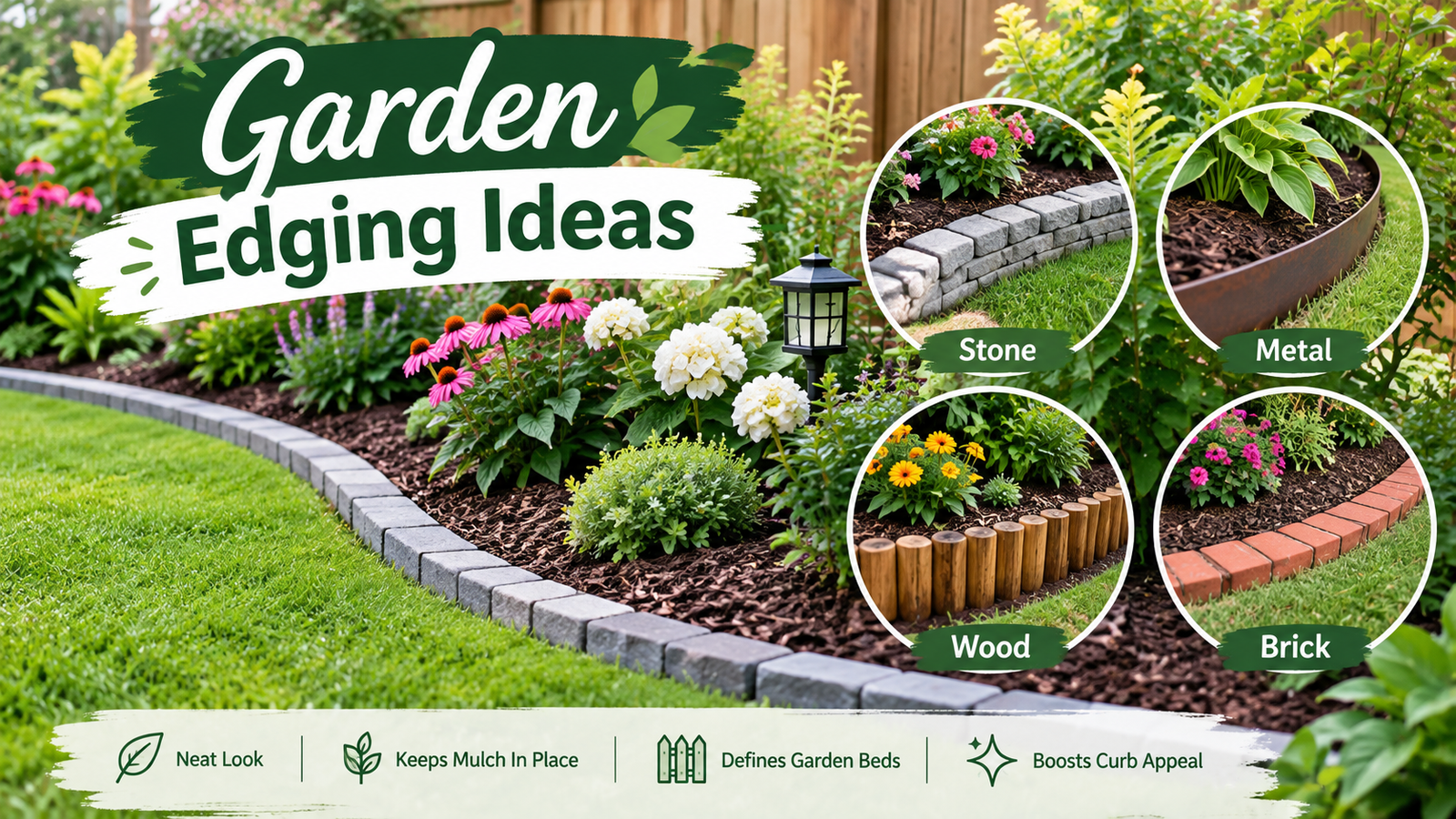
A well-defined Garden Edging Ideas can instantly look more organized, attractive, and intentional. The right border separates lawns from flower beds, keeps mulch in place, and gives pathways a cleaner finish. Fortunately, you do not need an expensive landscaping project to create a polished result. From reclaimed bricks and natural stones to simple DIY cuts and modern metal borders, there are plenty of garden edging ideas for different budgets, styles, and skill levels.
The best approach is to choose an edge that works with your garden rather than selecting a material based only on appearance. Think about maintenance, drainage, mowing, durability, and the overall style of your landscape. The following garden edging ideas include inexpensive DIY options, natural materials, modern designs, and practical solutions for flower beds, vegetable gardens, pathways, and raised beds.
What Is Garden Edging and Why Does It Matter?
Garden Edging Ideas is a defined boundary between two areas of a landscape, such as a lawn and flower bed or a pathway and planting area. Besides adding visual structure, edging can make everyday garden maintenance easier.
A clear border helps prevent grass from creeping into planting beds and can keep soil, mulch, gravel, and other materials from spreading onto paths. It also creates a finished appearance that can make even a simple garden design look more intentional.
Good garden edging ideas should balance appearance and function. A decorative border may look beautiful, but it should also be practical enough for the conditions in your garden.
25 Garden Edging Ideas to Try
1. Brick Garden Edging
Brick is one of the most versatile garden edging ideas for traditional and cottage-style gardens. You can place bricks vertically, horizontally, or at an angle to create different patterns.
Reclaimed bricks can also provide an aged appearance without requiring expensive new materials. Brick works particularly well around flower beds and paths where you want a clearly defined boundary.
2. Natural Stone Edging
Natural stone creates an organic transition between planting areas and lawns. Irregular stones are particularly effective in cottage, woodland, and informal gardens.
Choose stones that complement the existing landscape instead of introducing too many competing colors. A simple stone border can look attractive while blending naturally with plants and mulch.
3. River Rock or Pebble Edging
Small rocks and pebbles are flexible materials for garden edging ideas because they can follow gentle curves. They work well around flower beds, pathways, and drought-tolerant planting areas.
A prepared base can help keep the stones in position and reduce weed growth between them.
4. Timber Garden Edging
Timber provides warmth and works especially well with rustic or natural landscapes. Straight timber boards can create neat rectangular borders, while logs can produce a more informal appearance.
For long-term outdoor use, choose timber suitable for exterior conditions and keep it from sitting constantly in waterlogged soil.
5. Metal Garden Edging
Metal edging is a popular option for modern landscapes because it creates clean, narrow lines. Steel and aluminum can be used around lawns, pathways, flower beds, and geometric planting designs.
Among modern garden edging ideas, metal is particularly useful when you want the border to remain visually subtle while still creating a strong separation.
6. Concrete Garden Edging
Concrete offers a durable solution for homeowners who want a more permanent border. It can create straight lines, curves, or molded decorative edges.
Concrete is especially useful where the edging needs to remain stable for many years. However, installation can require more preparation than lightweight DIY materials.
7. Paver Edging
Pavers can create a broad, attractive border around lawns and flower beds. They are also useful beside patios and walkways because they visually connect different hardscape areas.
Use pavers that complement existing paths or patio materials for a cohesive landscape.
8. Gravel Garden Edging
Gravel creates a relaxed transition between planting beds and lawns. It works particularly well in contemporary, Mediterranean, and low-water gardens.
A defined boundary underneath the gravel helps prevent stones from gradually spreading into the lawn.
9. Log or Branch Edging
Logs and sturdy branches are inexpensive options for rustic garden edging ideas. They can be arranged along flower beds to create a woodland or cottage-garden appearance.
Because natural wood eventually weathers and decomposes, this option is better when you appreciate a changing, informal look.
10. Shovel-Cut Lawn Edging
One of the simplest garden edging ideas requires no purchased material at all. A sharp spade can be used to create a clean line between turf and a planting bed.
This approach costs very little and can look surprisingly polished when maintained regularly. It is particularly useful when you want to refresh an existing Garden Edging Ideas quickly.
11. Recycled or Upcycled Edging
Old bricks, suitable reclaimed timber, stones, or other safe landscaping materials can become creative borders. This approach is useful for inexpensive garden edging ideas and gives old materials a second purpose.
Avoid sharp, unstable, or hazardous materials, especially in gardens used by children or pets.
12. Rubber Garden Edging
Rubber edging is flexible and can follow curves more easily than many rigid materials. It can be useful around lawns and planting beds where a soft, low-profile boundary is preferred.
Check the product’s outdoor durability before installation, particularly if the garden receives intense sunlight or frequent foot traffic.
13. Plastic Garden Edging
Plastic is lightweight, relatively easy to handle, and available in different styles. It can work well for simple borders where affordability and easy installation are priorities.
It may not provide the same visual character as natural stone or brick, but it can be practical for straightforward projects.
14. Raised Garden Bed Edging
Raised beds need borders that can retain soil while creating a clear planting area. Timber, brick, stone, concrete blocks, and other suitable materials can all be used.
When considering raised garden edging ideas, focus on structural stability as well as appearance. The taller the bed, the more important proper construction becomes.
15. Flower Bed Edging
Flower beds benefit from borders that contrast gently with foliage and flowers. Brick, stone, metal, and timber can all work depending on the garden style.
A low-profile border is often enough when the main goal is to visually separate flowers from surrounding lawn.
16. Vegetable Garden Edging
Vegetable gardens need practical borders that help define beds and pathways. Brick, timber, stone, and metal can all work.
Useful garden edging ideas for vegetable gardens should leave enough space for walking, weeding, watering, and harvesting without creating unnecessary obstacles.
17. Garden Path Edging
Pathway edging helps prevent gravel, soil, mulch, or plants from spreading into walking areas. Pavers, bricks, stone, and metal can create a crisp transition.
For frequently used paths, choose stable materials that will not shift easily under foot traffic.
18. Curved Garden Edging
Curved borders can make a garden feel softer and more natural. Flexible metal, plastic, rubber, or carefully positioned stones can follow sweeping curves.
Before installing a curved border, mark the proposed shape with a garden hose or rope. This makes it easier to adjust the design before committing to it.
19. Modern Minimalist Edging
Modern landscapes often benefit from narrow, clean borders. Metal strips, concrete, and simple pavers can create strong geometric lines without distracting from the planting.
These modern garden edging ideas work particularly well with ornamental grasses, structured shrubs, gravel, and contemporary outdoor spaces.
20. Rustic Cottage Garden Edging
For a cottage garden, consider irregular stones, weathered timber, reclaimed bricks, or natural logs. The goal is usually a relaxed transition rather than a perfectly straight line.
Allowing a few plants to soften the edge can make the border feel more established and natural.
21. Living Plant Edging
Low-growing plants can serve as a living boundary around beds and pathways. Compact herbs, flowering ground covers, or other suitable low plants can create a softer alternative to hard materials.
Living edging requires regular trimming and should be chosen according to sunlight, soil, moisture, and climate.
22. No-Dig Garden Edging
No-dig products can be useful when you want to define an existing bed without extensive excavation. Flexible edging systems can be positioned along lawns, paths, and planting areas.
Although no-dig solutions can simplify installation, they still need to be positioned securely and maintained over time.
23. Cheap DIY Garden Edging
Some of the most inexpensive garden edging ideas involve materials you already have. Existing stones, reclaimed bricks, fallen branches, or a simple shovel-cut edge can transform a bed without a large budget.
The key is consistency. Even inexpensive materials look better when the border follows a deliberate shape.
24. Low-Maintenance Garden Edging
If you want to spend less time maintaining borders, consider durable materials such as stone, concrete, quality metal, or properly installed pavers.
The best low-maintenance choice depends on your garden conditions. A stable border that does not move, rot, or require frequent repositioning can save considerable effort over time.
25. Mixed-Material Garden Edging
Combining materials can create some of the most unique garden edging ideas. Try stone with gravel, brick with plants, metal with mulch, or timber with natural rocks.
Keep the number of materials controlled so the design does not become visually cluttered. One dominant material with a smaller contrasting element is often enough.
Garden Edging Ideas by Budget
Your budget does not have to determine whether your garden looks finished. The following comparison can help you narrow down suitable options.
| Budget | Edging Options | Best For | Difficulty |
| Free | Shovel-cut edge, existing stones | Quick garden refreshes | Easy |
| Low | Branches, reclaimed bricks, gravel | DIY projects | Easy |
| Medium | Timber, pavers, rubber | Defined beds | Moderate |
| Higher | Stone, concrete, metal | Permanent landscapes | Moderate |
For example, if you are refreshing a small flower bed, a shovel-cut border or reclaimed brick may be enough. If you are redesigning an entire front yard, investing in durable stone or metal may make more sense.
How to Choose the Right Garden Edging
The best garden edging ideas depend on how your garden is used.
Consider Your Garden Style
Modern gardens generally suit clean metal or concrete lines, while rustic landscapes can benefit from stone, timber, and logs. Traditional gardens often pair naturally with brick and pavers.
Think About Maintenance
Ask how much time you want to spend trimming, cleaning, repositioning, or replacing the edging. A decorative material that constantly moves may become frustrating in a high-maintenance garden.
Consider Your Lawn Mower
Borders beside lawns should be easy to maintain. A suitable edge can reduce the amount of hand trimming required around flower beds.
Check Drainage and Soil Conditions
Edging should not unintentionally prevent water from draining away from planting areas. Consider the slope, soil, and typical rainfall before installing a continuous barrier.
Think About Curves
If your garden contains sweeping curves, flexible edging may be easier to install than rigid boards or heavy blocks.
Garden Edging Materials Compared
| Material | Cost | Durability | Maintenance | Style |
| Brick | Medium | High | Low | Traditional |
| Natural stone | Medium–High | High | Low | Natural |
| Timber | Low–Medium | Medium | Medium | Rustic |
| Metal | Medium–High | High | Low | Modern |
| Concrete | Medium–High | Very High | Low | Modern/Classic |
| Plastic | Low | Medium | Low | Simple |
| Rubber | Low–Medium | Medium | Low | Flexible |
| Gravel | Low–Medium | Medium | Medium | Natural |
This comparison shows why there is no single material that works for every garden. Your decision should account for appearance, installation, expected lifespan, maintenance, and budget.
DIY Garden Edging: Basic Installation Tips
Start by marking the border with a hose, rope, or suitable landscape marking tool. Step back and look at the shape before digging or placing materials.
Prepare the edge by removing unwanted grass, roots, and loose material where necessary. The amount of preparation depends on the edging type.
Install the material according to its design and make sure it is stable. Avoid creating sharp protrusions or unstable pieces that could become trip hazards.
Finally, add mulch, soil, gravel, or plants to finish the bed. A clean transition between the edging and surrounding lawn can make a major visual difference.
Common Garden Edging Mistakes to Avoid
Even attractive garden edging ideas can cause problems when installed incorrectly.
Avoid choosing a material based only on its appearance. Consider how it will behave in rain, sunlight, changing temperatures, and regular garden maintenance.
Do not install edging without considering drainage. Also avoid creating borders that make mowing difficult or leave awkward gaps where grass can spread.
Another common mistake is using too many materials in one small area. A simple, consistent design usually looks more intentional than a collection of unrelated borders.
Garden Edging Ideas for Different Garden Situations
For small gardens, narrow edging keeps the planting area from feeling crowded. Metal strips, simple bricks, or low-profile stone can work well.
For sloped gardens, stability becomes particularly important. Choose materials and installation methods that can handle soil movement and water runoff.
For flower beds, prioritize appearance while maintaining enough separation to make mowing and trimming easier.
For vegetable gardens, practical garden edging ideas should define beds without reducing access. Leave enough room for watering, harvesting, and maintenance.
For front yards, choose an edge that complements the home’s architecture and existing paths. A clean border can improve the overall appearance without requiring major landscaping changes.
Conclusion
The right border can make a garden feel cleaner, more organized, and easier to maintain without requiring a complete landscape makeover. From inexpensive reclaimed materials and simple shovel-cut lines to durable stone, concrete, and modern metal, there are garden edging ideas for almost every style and budget.
Start by considering what your garden actually needs. If maintenance is the priority, choose a durable and stable material. If appearance matters most, match the border to your home’s style and existing landscape. For a budget project, begin with simple DIY options and materials you already have. With thoughtful planning, even simple garden edging ideas can give flower beds, lawns, vegetable plots, and pathways a polished finish.
Frequently Asked Questions
What is the easiest garden edging to install?
A shovel-cut edge is among the simplest options because it does not require additional materials. Flexible plastic, rubber, and some surface-installed edging products can also be relatively beginner-friendly.
What is the cheapest way to edge a garden?
A shovel-cut border can cost almost nothing if you already have the necessary tools. Reclaimed bricks, existing stones, and suitable branches can also provide inexpensive alternatives.
What is the best material for garden edging?
There is no universal best material. Stone and concrete can provide durability, metal can create a modern appearance, timber suits rustic gardens, and brick works well in traditional landscapes.
How deep should garden edging be?
The required depth depends on the material, soil, purpose, and installation method. Follow the manufacturer’s instructions for manufactured edging and ensure the finished border is stable and safe.
Does garden edging stop grass from spreading?
Proper edging can reduce grass encroachment, but it does not eliminate maintenance completely. Grass may still spread through gaps or over the top of low borders.
Is metal edging better than plastic edging?
They serve different purposes. Metal can provide a strong, refined appearance and good durability, while plastic is generally lightweight and easy to handle. Consider your budget, garden style, and installation needs.
Can I install garden edging myself?
Many simple DIY garden edging ideas are suitable for beginners, including shovel-cut borders, reclaimed brick, small stones, and some flexible edging products. More complex concrete, retaining, or structural installations may require additional expertise.
You May Also Read: Winter Vegetables
