

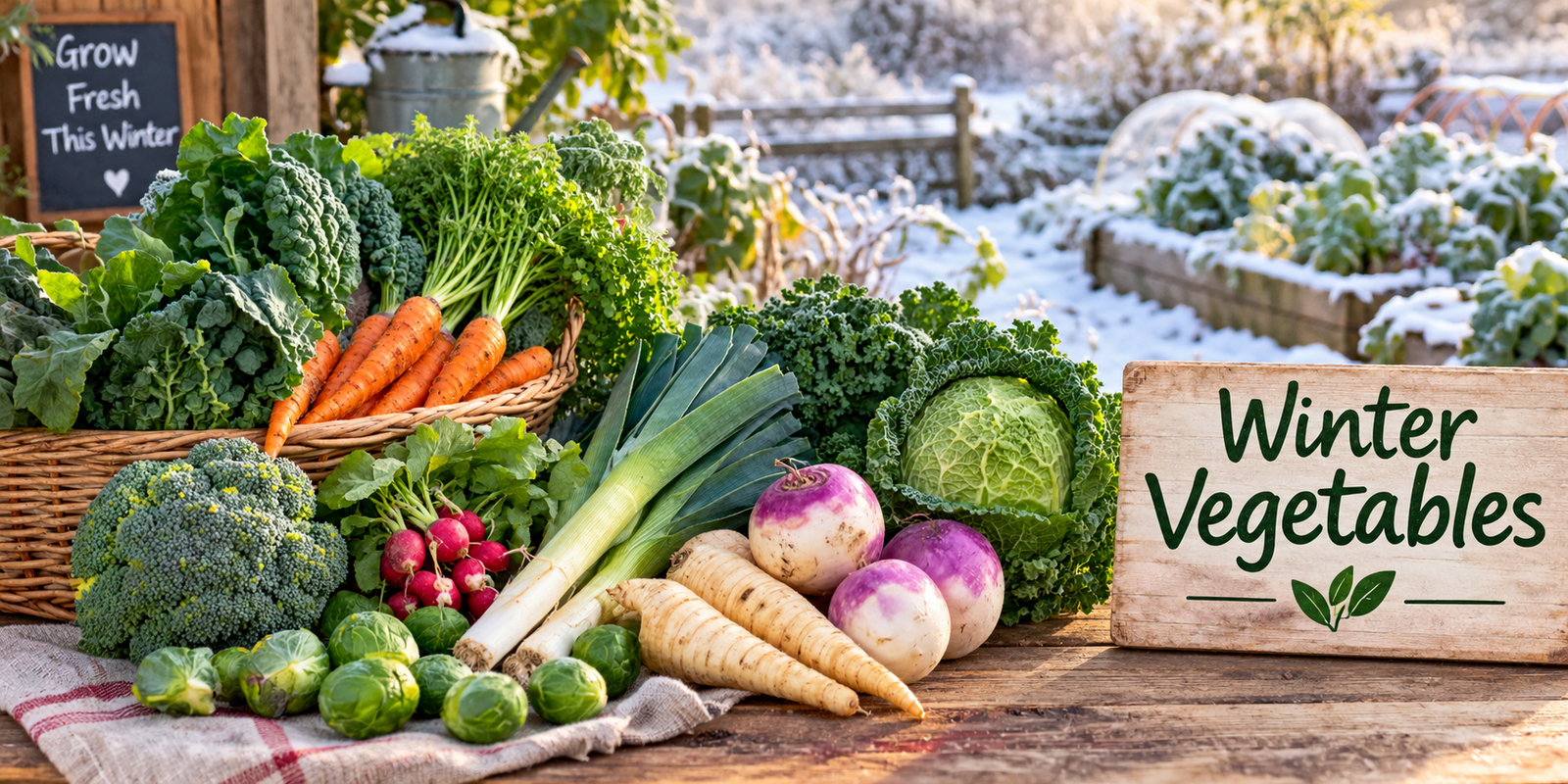
When temperatures begin to drop, many gardeners assume the growing season is over. However, plenty of winter vegetables can continue growing, overwinter in the garden, or provide fresh harvests during the cooler months. The key is choosing crops that can handle lower temperatures and planting them at the right time.
Unlike summer crops such as tomatoes, peppers, and cucumbers, winter vegetables generally prefer cool conditions. Some tolerate light frost, while others can withstand much colder weather once they are established. Your local climate, first frost date, soil condition, and available sunlight all affect what you can successfully grow.
Whether you have a large backyard garden, raised beds, or only a few containers, growing winter vegetables can keep your garden productive for much longer. Below, you’ll find 20 useful crops, planting guidance, frost-protection tips, container ideas, and practical ways to extend your harvest.
What Are Winter Vegetables?
The term winter vegetables usually refers to cool-season crops that can grow, mature, or remain harvestable during colder months. Some are harvested in fall and stored, while others remain in the soil or garden bed throughout winter.
It is helpful to divide them into two broad groups. Hardy crops such as kale and spinach can tolerate significant cold, while semi-hardy crops such as lettuce and some varieties of peas are better suited to milder conditions.
One important point is that winter vegetables are not necessarily planted in the middle of winter. In colder regions, many should be planted in late summer or early fall so they have enough time to establish before severe cold arrives.
20 Best Winter Vegetables to Grow
The following crops are popular choices for a productive cool-season garden. Exact planting dates vary by climate and variety, so always check the recommendations for your area and seed packet.
1. Spinach
Spinach is one of the easiest winter vegetables for gardeners who want leafy greens. It prefers cool temperatures and can provide repeated harvests when you pick the outer leaves instead of removing the entire plant.
2. Kale
Kale is extremely useful for a cold-season garden because established plants can tolerate frost better than many tender crops. Plant it in a sunny location with fertile, well-drained soil and harvest individual leaves as needed.
3. Carrots
Carrots are excellent winter vegetables when planted in loose soil that allows their roots to develop properly. In suitable climates, roots can remain in the ground and be harvested as needed. A layer of mulch can also help protect them from harsh conditions.
4. Radishes
Radishes are a great choice for beginners because they mature relatively quickly. Cooler weather can also help produce crisp roots. For a continuous supply, sow small batches rather than planting everything at once.
5. Broccoli
Broccoli performs best during cool growing periods. It needs fertile soil, consistent moisture, and plenty of sunlight. Starting plants early enough is important because very late planting may not allow the heads to develop before extreme cold.
6. Cabbage
Cabbage is a dependable cool-season crop and comes in varieties suited to different growing periods. Good spacing and airflow can help reduce disease problems, while consistent watering supports healthy head development.
7. Brussels Sprouts
Brussels sprouts take longer to mature than quick crops such as radishes. They are worth considering if you have enough garden space and want a crop that can continue producing into cooler weather.
8. Cauliflower
Cauliflower prefers cool conditions but can be somewhat less forgiving than kale or spinach. Give plants fertile soil, steady moisture, and adequate space for good airflow.
9. Turnips
Turnips provide both edible roots and nutritious greens. They are among the more convenient winter vegetables for gardeners who want a relatively quick root crop.
10. Beets
Beets grow best when the soil remains reasonably cool and evenly moist. Both the roots and young leaves can be harvested, making them a productive choice for smaller gardens.
11. Swiss Chard
Swiss chard can provide leafy harvests over an extended period in mild climates. It is particularly useful when you want a crop that can be picked gradually rather than harvested all at once.
12. Leeks
Leeks have a long growing period but can tolerate cool conditions well. Their slow development makes planting time especially important if you want substantial stalks during winter.
13. Peas
Peas are cool-season crops that generally dislike intense heat. In regions with suitable winters, they can be grown during cooler periods, although severe freezes may require protection.
14. Arugula
Arugula grows quickly and provides a peppery addition to salads. It can be particularly useful for succession planting because small batches can be sown at intervals.
15. Mustard Greens
Mustard greens grow well during cool weather and offer a stronger flavor than many mild salad greens. They are a good option when you want something productive and different from standard lettuce.
16. Kohlrabi
Kohlrabi develops a swollen stem above the soil and is relatively compact. Its unusual shape makes it an interesting addition to raised beds and small gardens.
17. Lettuce
Lettuce is another excellent option for a cool-season garden. Choose varieties appropriate for your climate and protect young plants when temperatures are expected to fall sharply.
18. Collard Greens
Collard greens are hardy leafy crops that can provide repeated harvests. Pick the larger outside leaves while allowing the plant to continue producing new growth.
19. Mache
Mache, also called corn salad, is a lesser-known leafy crop that performs well during cool conditions. It can be useful for gardeners looking to expand beyond familiar greens.
20. Mizuna
Mizuna is an Asian green with attractive, finely divided leaves. It grows quickly and can add variety to a winter garden, especially when grown alongside spinach, lettuce, and other salad greens.
Winter Vegetables Comparison Table
Choosing crops becomes easier when you compare their characteristics before planting.
| Vegetable | Cold Tolerance | Growth Speed | Sunlight | Beginner Friendly | Container Friendly |
| Spinach | High | Fast | Full/partial sun | Yes | Yes |
| Kale | Very high | Medium | Full sun | Yes | Yes |
| Radish | Moderate | Fast | Full sun | Yes | Yes |
| Carrot | High | Medium | Full sun | Yes | Yes |
| Lettuce | Moderate | Fast | Full/partial sun | Yes | Yes |
| Turnip | High | Fast | Full sun | Yes | Yes |
| Broccoli | High | Medium | Full sun | Moderate | Sometimes |
| Peas | Moderate | Medium | Full sun | Yes | Yes |
When Should You Plant Winter Vegetables?
Timing is one of the most important factors when growing winter vegetables. Instead of choosing one universal planting date, work backward from your area’s expected first frost and consider how many days each crop needs to mature.
Late Summer
Late summer is often a useful time to start slower crops such as kale, cabbage, broccoli, and leeks in climates where winter arrives early.
Early Fall
Early fall can be suitable for faster crops including spinach, radishes, lettuce, arugula, turnips, and mustard greens. Planting several small batches can provide a longer harvest window.
Late Fall and Winter
In mild regions, some winter vegetables can still be planted or harvested during late fall and winter. In colder regions, it is usually more important to protect established plants than to start new crops outdoors during the coldest period.
How Much Sun Do Winter Vegetables Need?
Most winter vegetables grow best with good sunlight, although leafy greens can often handle some partial shade. Winter days may provide fewer hours of strong sunlight, so selecting the brightest part of your garden can make a noticeable difference.
Place taller crops where they will not shade smaller plants. If your garden receives limited sunlight, prioritize crops such as spinach, lettuce, and other leafy greens that can tolerate less direct light than many fruiting vegetables.
How to Grow Winter Vegetables Successfully
Successful winter vegetables start with healthy soil and appropriate timing.
Prepare the Soil
Before planting, remove old plant debris and loosen compacted soil. Adding mature compost can improve soil structure and provide organic matter. Good drainage is especially important because cold, waterlogged soil can create stressful growing conditions.
Choose the Right Varieties
Look for varieties described as cold-tolerant, hardy, or suitable for fall and winter growing. A variety bred for a short growing season may perform differently from one requiring a longer period to mature.
Water Carefully
Cool weather does not mean plants never need water. Check the soil regularly and water when necessary, while avoiding consistently soggy conditions.
Mulch Around Plants
Organic mulch can help moderate soil temperature and reduce moisture loss. Keep mulch slightly away from plant stems to improve airflow and reduce the risk of moisture-related problems.
How to Protect Winter Vegetables From Frost
Even hardy winter vegetables benefit from protection during severe weather. A sudden temperature drop can be more damaging to young plants than a gradual period of cold.
Row Covers
Lightweight row covers can provide an additional layer of protection against frost. Secure the edges so wind cannot lift the material.
Cold Frames
A cold frame creates a sheltered growing environment and can help extend the season. It is especially useful for leafy greens and other compact crops.
Mulch
A thick layer of suitable organic mulch can help insulate roots and moderate temperature fluctuations around the soil.
Cloches and Tunnels
Individual cloches or low tunnels can protect smaller plants from cold wind and frost. Ventilation is important when temperatures rise during the day.
Best Winter Vegetables for Beginners
If you are new to gardening, start with crops that offer relatively simple care. Radishes, spinach, kale, lettuce, turnips, mustard greens, and carrots are practical choices.
For example, a beginner could dedicate one small raised bed to spinach and kale, another section to radishes and turnips, and use a few containers for lettuce. This approach makes it easier to learn how different winter vegetables respond to your local conditions without managing too many crops at once.
Best Winter Vegetables for Containers
You do not need a large backyard to grow winter vegetables. Containers work especially well for compact crops and leafy greens.
Good choices include:
- Spinach
- Radishes
- Lettuce
- Kale
- Green onions
- Turnips
- Carrots in deeper containers
- Peas with suitable support
Choose containers with drainage holes and enough depth for the crop. Place them where they receive the best available sunlight, and remember that containers can cool down and dry out differently from garden soil.
Common Problems With Winter Vegetables
Slow growth is common during cold periods because plants naturally develop more slowly when temperatures and daylight levels decrease. Late planting can also result in small plants that never become fully established.
Frost damage is another concern, especially for young or less-hardy crops. Row covers, mulch, and sheltered locations can reduce exposure during cold snaps.
Pests do not disappear completely in winter. Slugs, snails, caterpillars, and other garden pests may still affect plants depending on local conditions. Good garden hygiene and regular inspection can help identify problems early.
Poor drainage can also cause trouble. If water remains around plant roots for extended periods, plants may become stressed even when temperatures are not extremely low.
When to Harvest Winter Vegetables
Harvesting depends on the crop. Leafy winter vegetables such as spinach, kale, arugula, and chard can often be harvested gradually by removing outer leaves.
Root crops such as carrots, radishes, beets, and turnips should be harvested when they reach a useful size for their variety. Broccoli and cauliflower require closer attention because waiting too long can reduce quality.
A useful approach is to inspect your plants regularly instead of relying only on a calendar. Harvest when leaves, roots, or heads reach the expected size and appearance.
How to Keep Harvesting Winter Vegetables Longer
Succession planting is one of the easiest ways to extend your supply. Rather than sowing all your seeds on one day, plant smaller quantities at regular intervals when the climate allows.
You can also combine crops with different maturity times. For example, fast-growing radishes can be planted alongside slower-growing carrots or kale. As the radishes are harvested, the remaining space becomes available for the slower crop.
Protective covers can further extend the season by reducing exposure to freezing temperatures. This combination of staggered planting and weather protection can make a small garden surprisingly productive.
A Simple Winter Vegetable Garden Example
Imagine a gardener with a small 4-by-8-foot raised bed. One section could contain kale and spinach, another could hold carrots and turnips, while a smaller area could be dedicated to radishes and lettuce.
For a balcony garden, three or four containers may be enough. One deep pot could hold carrots, a shallow container could grow radishes, another could contain spinach, and a larger pot could support kale.
The best plan depends on your climate, available sunlight, and the amount of time you can spend caring for the plants. Start small and expand after you learn which crops perform best in your conditions.
Winter Vegetables by Climate
Climate is more important than a generic calendar when planning winter vegetables.
In mild-winter areas, gardeners may be able to grow and harvest cool-season crops continuously for much of the season. In colder regions, crops generally need to become established before severe freezes arrive, with additional protection used when necessary.
Areas with heavy snow require a different approach from regions with cool but relatively mild winters. Always consider local frost dates, typical winter temperatures, and the specific recommendations for your vegetable varieties.
Conclusion
Growing winter vegetables is an excellent way to keep your garden productive beyond the traditional summer season. Crops such as kale, spinach, carrots, radishes, turnips, lettuce, and broccoli can provide useful harvests when temperatures fall.
The most important steps are choosing suitable varieties, planting at the right time, maintaining healthy soil, managing moisture, and protecting plants when severe frost threatens. If you are new to winter gardening, begin with a few easy crops and observe how they perform in your local conditions. With the right planning, the colder months can become another productive part of your gardening year.
Frequently Asked Questions
What vegetables grow best in winter?
Some of the most useful winter vegetables include spinach, kale, carrots, radishes, turnips, cabbage, broccoli, lettuce, mustard greens, and leeks. The best choices depend on your local winter temperatures.
What vegetables can survive frost?
Kale, spinach, carrots, and several other hardy crops can tolerate frost once established. However, tolerance varies by crop, variety, plant maturity, and the severity of the freeze.
What is the fastest winter vegetable to grow?
Radishes are among the quickest options. Some leafy greens can also provide relatively fast harvests, particularly when harvested as baby leaves.
Can I grow winter vegetables in pots?
Yes. Lettuce, spinach, kale, radishes, turnips, and carrots can work well in containers when the pots have adequate drainage and enough growing space.
When should I plant winter vegetables?
Planting time depends on your climate and the crop. In colder areas, many crops should be planted in late summer or early fall so they establish before hard freezes. Mild climates may offer a longer planting window.
Do winter vegetables need full sun?
Many winter vegetables perform best in full sun, but some leafy greens can tolerate partial shade. During winter, maximizing available sunlight is generally helpful because daylight hours are shorter.
How do I protect vegetables from freezing?
Use methods such as row covers, cold frames, cloches, low tunnels, and mulch. Protection should match the crop and the expected severity of the weather.
You May Also Read: Vegetable Garden
