


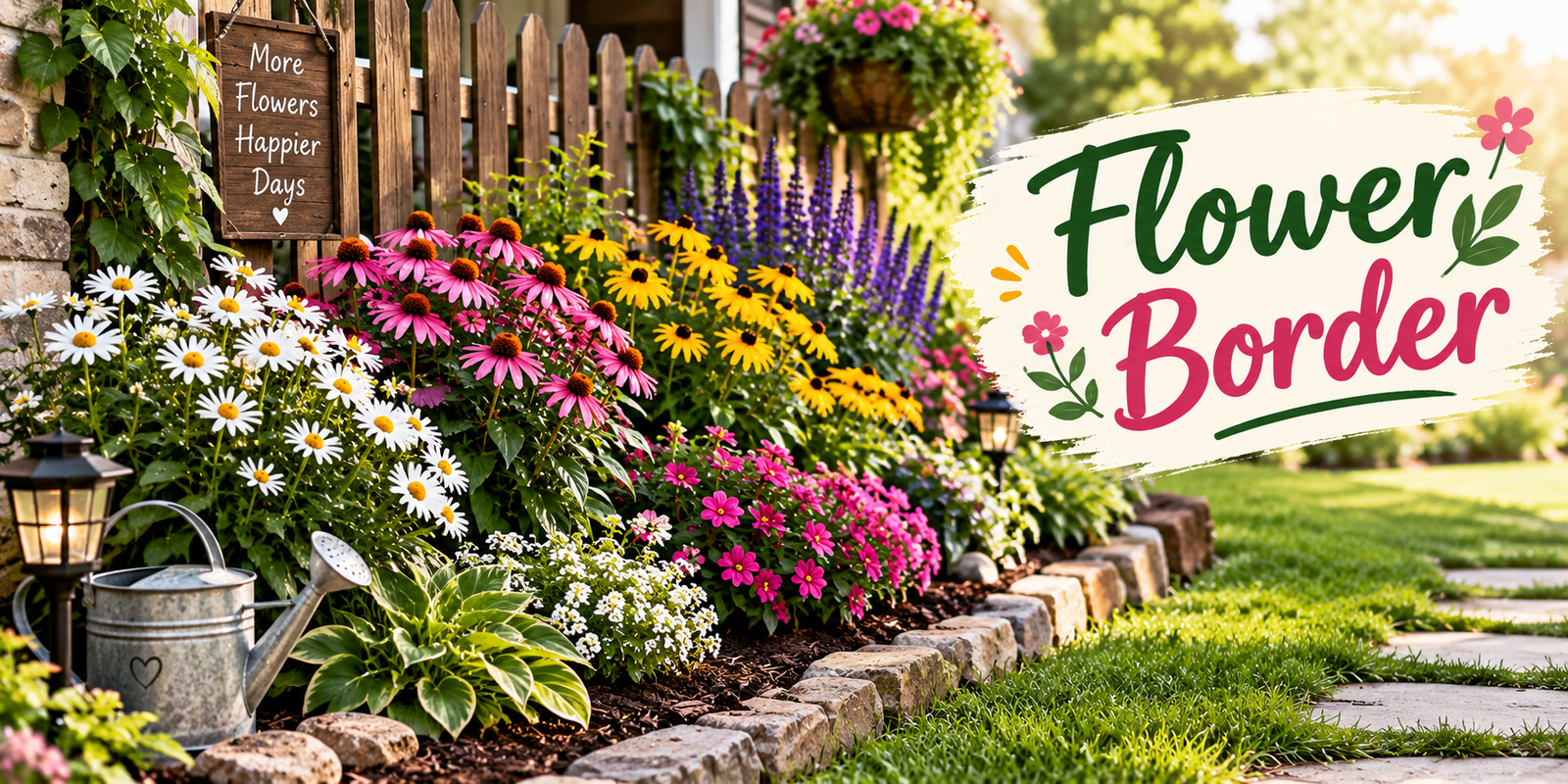
A beautiful flower border can instantly transform an ordinary lawn, pathway, fence, or front yard into a colorful and welcoming garden. Whether you have a large backyard or a small outdoor space, the right Flower can add structure, seasonal color, texture, and personality without requiring a complete garden makeover.
The secret to a successful flower border is not simply planting as many flowers as possible. Good planning involves choosing plants according to sunlight, soil, mature size, bloom time, and maintenance needs. By combining tall, medium, and low-growing plants, you can create a layered display that looks attractive from spring through fall.
In this guide, you’ll discover practical flower border ideas, the best plants to consider, simple layout techniques, spacing advice, and an easy step-by-step method for creating your own colorful garden border.
What Is a Flower Border?
A flower border is a planted area positioned along the edge of a lawn, pathway, fence, driveway, patio, house, or another garden feature. It can be narrow and simple or deep enough to contain several layers of flowering plants.
Unlike a random collection of flowers, a planned Flower usually has a clear structure. Taller plants can provide a backdrop, medium-height flowers can fill the center, and shorter plants can create a softer front edge.
A flower border can also have practical benefits. It can soften hard landscaping, define different areas of the garden, attract pollinators, and provide changing color throughout the growing season.
How to Plan a Flower Border Before Planting
Before buying flowers, take time to understand the space. A few minutes of planning can prevent overcrowding and help your plants perform better.
Choose the Right Location
Start by observing how much sunlight the area receives. Full-sun locations can support many sun-loving flowers, while areas beneath trees or beside buildings may require plants that tolerate shade.
Also look at drainage. Some flowers prefer consistently moist soil, while others perform better where excess water drains away quickly.
For a successful flower, consider sunlight, soil, moisture, wind exposure, nearby trees, and the amount of space available for maintenance.
Measure the Available Space
Measure the length and depth before deciding how many plants you need. For example, a 10-foot-long and 4-foot-deep area gives you enough room to create several planting layers.
Knowing the measurements also makes it easier to estimate plant quantities and avoid buying more plants than the space can accommodate.
Decide on the Shape
Straight edges create a formal appearance, while curved edges can make a garden feel softer and more natural. Use a garden hose or rope to mark your proposed shape before digging.
This simple trick lets you walk around the area and see whether the shape works from different viewpoints.
Choose a Color Scheme
Color can give your flower a strong visual identity. You could combine purple and yellow, pink and white, blue and pink, or use different shades of a single color.
Don’t focus only on flowers. Foliage in green, silver, burgundy, or variegated shades can provide interest between flowering periods.
15 Flower Border Ideas for Different Gardens
1. Cottage-Style Flower Border
A cottage-style flower border uses relaxed combinations of flowers, foliage plants, herbs, and other garden favorites. Instead of arranging every plant in a perfectly straight line, use repeated groups to create an informal but organized appearance.
2. Low-Maintenance Flower Border
For a low-maintenance design, select plants that are naturally suited to your local climate and growing conditions. Hardy perennials, drought-tolerant plants, and ornamental grasses can reduce maintenance when planted in appropriate locations.
3. Full-Sun Flower Border
A sunny flower border can include lavender, salvia, coneflowers, daylilies, and other plants that tolerate strong light. Always check the requirements of individual species because sun and moisture preferences can vary.
4. Shade Flower Border
Shade doesn’t mean your garden has to lack interest. Choose shade-tolerant flowering plants and combine them with foliage plants for texture and contrast.
5. Small Flower Border
For a small garden, keep the plant palette simple. Repeating three or four compatible varieties can make a compact flower border look more organized than filling the area with many unrelated flowers.
6. Front-Yard Flower Border
A front-yard design can improve the appearance of an entrance, lawn, or walkway. Choose plants that remain attractive even when they are not flowering.
7. Pathway Flower Border
A pathway design should use plants that don’t constantly spill onto the walking surface. Low-growing flowers can create a neat transition between the path and the rest of the garden.
8. Fence-Line Flower Border
Use the fence as a natural background. Taller plants can sit near the fence, while medium and shorter flowers gradually move toward the lawn or walkway.
9. Pollinator-Friendly Flower Border
A pollinator-friendly flower border can include a variety of suitable flowering plants with different bloom periods. This provides visual interest while creating useful resources for visiting bees, butterflies, and other beneficial insects.
10. Long-Blooming Flower Border
Instead of selecting plants that all flower at the same time, combine early-, mid-, and late-season varieties. This can help the flower border maintain color for a longer portion of the growing season.
11. Perennial Flower Border
A perennial design can provide recurring structure and seasonal color. When selecting perennial flowers, check their mature height, spread, sunlight requirements, soil preferences, and hardiness for your location.
12. Annual Flower Border
Annual flowers are useful when you want strong seasonal color or enjoy changing your garden design each year. They can also fill spaces while slower-growing perennial plants become established.
13. White-and-Green Flower Border
White flowers combined with green foliage can create a calm and elegant appearance. This simple color scheme works particularly well when you want a clean, cohesive garden.
14. Wildflower-Style Flower Border
A wildflower-inspired flower border can use groups of compatible flowers with different heights, shapes, and textures. The goal is an informal appearance while still choosing plants that can grow successfully together.
15. Modern Flower Border
For a modern design, use repetition, clean shapes, limited colors, and strong foliage forms. Ornamental grasses can be combined with flowering plants to provide structure and movement.
Best Flowers for a Flower Border
The best plants for a flower border depend on your growing conditions. Instead of selecting flowers only because they look attractive, consider their mature height, spread, sunlight requirements, bloom period, and maintenance needs.
| Flower | Typical Role | Light Preference | Bloom Interest | Maintenance |
| Lavender | Front/Middle | Full sun | Summer | Low |
| Catmint | Front | Full sun | Spring-Summer | Low |
| Salvia | Middle | Full sun | Summer | Low |
| Coneflower | Middle/Back | Full sun | Summer-Fall | Low |
| Daylily | Middle | Sun/Part shade | Summer | Low |
| Heuchera | Front | Part shade | Seasonal | Low |
| Ornamental grasses | Back/Middle | Varies | Seasonal foliage | Low-Moderate |
Exact height, spread, bloom time, and hardiness can vary between species and cultivars. Always check plant labels or reliable local gardening information before making final selections.
How to Arrange Flowers in a Flower Border
Plant arrangement has a major effect on the final appearance. Even beautiful flowers can look messy when every plant is placed at the same height or scattered without a plan.
Put Tall Flowers at the Back
For a flower border viewed mainly from one direction, taller flowers generally work best toward the rear. They can create a backdrop without hiding smaller plants.
Place Medium Flowers in the Middle
Medium-height flowers connect the taller and shorter layers. Repeating the same varieties in several groups can make the design feel intentional.
Keep Low Flowers at the Front
Low-growing flowers can create a softer transition between the planting area and lawn or pathway. They can also help cover exposed soil as they mature.
Repeat Plant Groups
Avoid planting one of every flower you find. Repeating groups of the same plant can create rhythm and make the flower border look more cohesive.
For an island bed viewed from all sides, taller plants can be positioned closer to the center, with medium and shorter plants moving outward toward the edge.
How Far Apart Should Flowers Be Planted?
Spacing is one of the most important parts of creating a healthy flower border. Use the mature width listed on the plant label rather than judging spacing by the size of a young nursery plant.
Newly planted flowers can look small and leave empty spaces, but many varieties expand significantly during the growing season. Planting too closely can lead to competition for water, nutrients, and sunlight.
At the same time, very large gaps can make a new flower border look unfinished. Check mature spread and use it as the foundation for your planting plan.
How to Create a Flower Border Step by Step
Step 1: Mark the Area
Use a garden hose, rope, or marking tool to outline the proposed flower border. Stand back and view it from different angles before you start digging.
Step 2: Remove Weeds
Clear existing weeds and unwanted vegetation. Removing persistent roots before planting is much easier than trying to eliminate them after flowers become established.
Step 3: Prepare the Soil
Loosen compacted soil and improve it when appropriate with suitable organic matter. Don’t assume every garden needs the same amendments. A soil test can provide useful information about pH and nutrient conditions.
Step 4: Arrange the Plants
Place potted plants on the soil surface before digging. This allows you to experiment with spacing, colors, groups, and plant heights.
Step 5: Plant From Back to Front
For a one-sided flower border, begin with taller plants at the back and work toward the front. Follow the recommended planting depth and spacing for each variety.
Step 6: Water Thoroughly
Water newly planted flowers thoroughly so the soil settles around their roots. Continue monitoring moisture while plants establish, especially during hot or dry weather.
Step 7: Add Mulch
A suitable mulch can help conserve moisture and suppress weeds. Keep mulch away from direct contact with plant crowns and stems.
Example Flower Border Layout
Imagine you have a 10-foot-long by 4-foot-deep sunny planting area. You don’t need dozens of varieties to create an attractive display.
A simple layout could be:
Back: Tall flowering plants
Middle: Salvia and coneflowers
Front: Lavender and catmint
Rather than planting everything in one straight row, use repeated groups. This gives the flower border more rhythm and allows the planting to look fuller as the flowers mature.
For a smaller area, reduce the number of varieties instead of squeezing too many plants into limited space.
How to Keep a Flower Border Blooming Through the Season
A good flower border doesn’t need every plant to bloom at exactly the same time. Different flowering periods can make the garden more interesting.
Combine early-season flowers with summer bloomers and late-season plants. This creates a succession of color rather than one short flowering display.
Foliage is equally important. Attractive leaves, ornamental grasses, evergreen plants, and interesting shapes can keep the garden visually appealing when fewer flowers are open.
Deadheading can encourage continued flowering in some plants, but care requirements vary. Follow the recommendations for each species rather than treating every plant identically.
Flower Border Ideas for Sun and Shade
Full-Sun Flower Border
A full-sun flower border offers many possibilities. Lavender, salvia, coneflowers, and other sun-loving plants can work well when the soil, drainage, and moisture conditions are suitable.
Partial-Shade Flower Border
Partial shade can provide useful protection from intense afternoon sunlight. Combine flowering plants with foliage plants to maintain interest when flowering slows.
Shade Flower Border
For deeper shade, choose plants specifically adapted to lower-light conditions. Foliage becomes particularly valuable because fewer flowering plants may thrive in very dark areas.
How to Maintain a Flower Border
Once established, a flower border generally requires regular but manageable care. Water according to plant needs and weather conditions rather than relying on a rigid schedule.
Remove weeds while they are small, refresh mulch when necessary, and deadhead or prune plants according to their individual requirements.
At the end of each growing season, review the planting. Some flowers may have spread too much, while others may have struggled because their location was unsuitable. Replacing or relocating problem plants can gradually improve the garden.
Common Flower Border Mistakes to Avoid
One of the biggest mistakes is choosing plants based only on flower color. A beautiful plant can struggle if it doesn’t receive the right amount of sunlight or moisture.
Other common problems include ignoring mature plant size, overcrowding, using too many varieties, forgetting foliage, and selecting flowers that all bloom during the same short period.
Another mistake is failing to consider how the flower border will be viewed. A planting plan that works beautifully from one direction may not look balanced when people can walk around it.
How to Choose Flowers for Your Flower Border
Start with your garden conditions rather than starting with a shopping list.
If your site receives full sun, select flowers that can handle those conditions. If the area is shaded, focus on shade-tolerant varieties. If low maintenance is your priority, select plants that are well adapted to your climate and soil.
For a pollinator-focused garden, choose appropriate flowering plants that provide useful resources. If year-round interest is important, combine flowering periods with foliage, grasses, bulbs, and other structural plants.
This approach makes your flower border easier to maintain and more likely to thrive.
Conclusion
Creating a flower border is less about finding one perfect design and more about matching plants to your garden’s conditions. Start with sunlight, soil, available space, and mature plant size. Then build your planting scheme around height, color, texture, and flowering periods.
Whether you prefer a cottage-style display, a low-maintenance perennial planting, a modern design, or a simple border beside a pathway, thoughtful plant selection and good spacing can make a major difference.
Start small if you’re a beginner, observe how the plants develop, and make adjustments each season. With careful planning, your flower border can become one of the most attractive features in your garden.
FAQs About Flower Borders
1. What is the best flower for a flower border?
There isn’t one universally best flower. The right choice depends on sunlight, soil, moisture, climate, mature size, and maintenance preferences. Lavender, salvia, catmint, coneflowers, and daylilies are examples that can work in suitable conditions.
2. How wide should a flower border be?
The ideal width depends on the available space, mature plant sizes, and whether the flower border is viewed from one or both sides. Deeper planting areas allow more layers, while narrow borders work well beside paths and other restricted spaces.
3. How do you arrange flowers in a flower border?
For a one-sided flower border, place taller plants toward the back, medium-height varieties in the middle, and shorter flowers near the front. Repeating plant groups helps create visual consistency.
4. What flowers look good together?
Flowers usually work well together when their colors, heights, textures, and growing requirements are compatible. Combining different bloom periods can also create a longer-lasting display.
5. How far apart should flowers be planted?
Use the mature width shown on the plant label as your starting point. Exact spacing varies according to species, cultivar, climate, soil, and the appearance you want.
6. How can I keep my flower border blooming all summer?
Combine plants with different flowering periods instead of choosing varieties that all bloom simultaneously. Include foliage plants and long-flowering varieties to maintain interest between major flowering periods.
7. Are perennial flowers good for a flower border?
Yes. Perennial flowers can provide recurring structure and seasonal color for several years when planted in suitable conditions. They can also be combined with annuals, bulbs, grasses, and foliage plants for additional interest.
You May Also Read: Rain Barrel
