


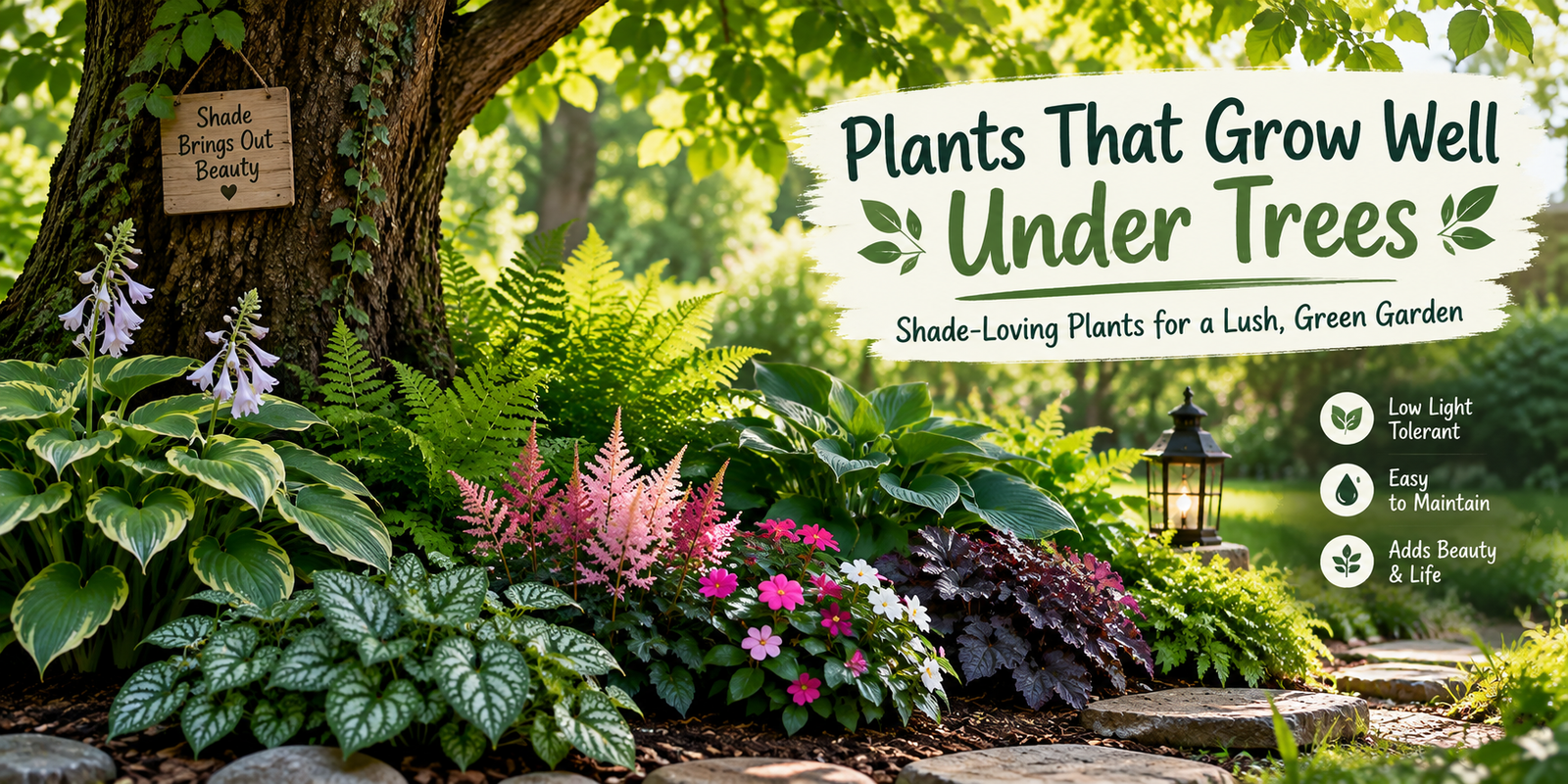
Finding plants that grow well under trees can feel challenging, especially when the ground beneath a mature tree is dry, shady, and crowded with roots. Many gardeners try ordinary flowers or lawn grass, only to discover that the Plants That Grow Well Under Trees struggle to establish or slowly disappear.
The good news is that plenty of plants that grow well under trees can transform a bare, difficult area into an attractive part of your garden. The key is choosing plants that match the conditions beneath your particular tree.
Some areas receive dappled sunlight, while others remain in deep shade for most of the day. Some trees create dry soil because their roots compete heavily for moisture, while other locations stay naturally moist. Understanding these differences makes it much easier to choose successful plants.
In this guide, you’ll discover beautiful plants that grow well under trees, including perennials, flowering plants, groundcovers, and options for dry soil. You’ll also learn how to plant around tree roots without causing unnecessary damage.
Why Is It Difficult to Grow Plants Under Trees?
The area beneath a tree may look like an ideal place for a flower bed, but it presents several challenges.
Limited Sunlight
A dense tree canopy can block a significant amount of sunlight. Even if an area receives some light in spring, conditions may change dramatically once the tree develops a full canopy.
This is why many plants that grow well under trees need to tolerate partial shade, dappled shade, or full shade.
Tree Roots Compete for Water
Established trees have extensive root systems that compete with smaller Plants That Grow Well Under Trees for moisture. After a period without rain, the soil beneath a large tree may become surprisingly dry.
This is especially important when choosing plants to grow under trees in dry soil. A plant may tolerate shade but still struggle if it requires consistently moist soil.
Nutrient Competition
Tree roots also compete with surrounding plants for nutrients. Newly planted flowers and perennials may need time to establish before they can compete successfully.
Exposed and Shallow Roots
Some trees have roots close to the soil surface, making digging difficult. Cutting or damaging large roots can harm the tree, so planting needs to be done carefully.
First, Identify What Type of Shade You Have
Before choosing plants, spend a day observing the area beneath your tree. The amount of sunlight and soil moisture will help determine which plants that grow well under trees are most suitable.
| Shade Type | Typical Conditions | Best Plant Type |
| Dappled shade | Filtered sunlight through leaves | Many woodland perennials |
| Partial shade | A few hours of gentle sunlight | Flexible shade-tolerant plants |
| Full shade | Very little direct sunlight | Deep-shade perennials and ferns |
| Dry shade | Low light and dry soil | Drought-tolerant shade plants |
| Moist shade | Low light and consistently moist soil | Woodland plants and moisture-loving perennials |
Check the area in the morning, around midday, and later in the afternoon. Also remember that a deciduous tree may allow more sunlight in early spring before its leaves fully develop.
Once you understand your conditions, choosing plants that grow well under trees becomes much easier.
15 Plants That Grow Well Under Trees
Here are 15 attractive choices that can work beneath trees when matched to the right conditions.
1. Hosta
Hostas are among the most popular plants that grow well under trees because of their large, attractive leaves and excellent shade tolerance.
They perform best in soil that retains some moisture. Hostas are particularly useful beneath trees that provide dappled or partial shade.
Their foliage comes in many sizes and patterns, making them useful for creating a lush, layered garden.
2. Hellebore
Hellebores are excellent perennial Plants That Grow Well Under Trees that grow well under trees, especially where the soil is reasonably well-drained.
They produce attractive flowers early in the season and can tolerate shaded conditions once established. Their evergreen or semi-evergreen foliage can also add interest beyond the flowering period.
3. Heuchera
Heuchera, often called coral bells, is valued for its colorful foliage. Depending on the variety, leaves may feature shades of green, purple, bronze, or other tones.
These plants work well in partial shade and can brighten darker garden areas. They are a good option for gardeners who want foliage interest rather than relying entirely on flowers.
4. Ferns
Ferns are classic woodland Plants That Grow Well Under Trees and natural choices for shaded areas.
They can create a soft, layered look beneath trees and work particularly well in gardens with moist or moderately moist soil. Different fern species have different moisture requirements, so choose one suited to your climate and conditions.
5. Epimedium
Epimedium is one of the strongest choices for difficult dry shade.
Its delicate flowers and attractive foliage make it useful as a low-growing perennial. Once established, it can handle conditions that cause many ordinary shade Plants That Grow Well Under Trees to struggle.
For gardeners searching for reliable plants to grow under trees in dry soil, Epimedium deserves serious consideration.
6. Bigroot Geranium
Bigroot geranium is a tough perennial with aromatic foliage and attractive flowers.
It can tolerate shade and relatively dry conditions, making it a practical choice beneath mature trees. It also forms a spreading clump that can help cover bare areas.
7. Foamflower
Foamflower is a charming woodland perennial that produces delicate flower spikes.
It works especially well in moist or moderately moist shade and can be combined with ferns and hostas for a natural woodland appearance.
8. Solomon’s Seal
Solomon’s seal adds height and graceful structure to shaded gardens.
Its arching stems and hanging flowers create an elegant appearance beneath trees. It is particularly effective when planted in groups rather than as isolated individual plants.
9. Wild Ginger
Wild ginger is a low-growing perennial that can work as a groundcover in shady locations.
Its attractive foliage helps fill empty spaces beneath trees, and it can contribute to a layered woodland-style planting design.
When choosing native plants for under trees, look for species appropriate to your region rather than assuming every plant with a common name will suit your local climate.
10. Brunnera
Brunnera is known for its attractive foliage and delicate blue flowers.
It performs well in shade and is particularly effective in areas with reasonably moist soil. Varieties with silver-patterned leaves can brighten darker corners of the garden.
11. Bleeding Heart
Bleeding heart produces distinctive heart-shaped flowers and is a beautiful choice for woodland gardens.
It generally prefers soil that does not become excessively dry. Plant it where it receives shade but still has enough moisture during its active growing period.
12. Hardy Cyclamen
Hardy cyclamen can add unexpected color beneath deciduous trees.
Because some species grow actively when trees are not in full leaf, they can take advantage of available seasonal light. Their patterned leaves can also provide visual interest.
13. Sedge
Sedges are grass-like plants that can add texture and movement to shaded areas.
They are useful when you want something different from traditional flowering perennials. Choose a species that matches your moisture conditions, as different sedges have different needs.
14. Woodland Phlox
Woodland phlox can provide spring color in locations with partial shade.
It works particularly well in naturalistic gardens and can be combined with ferns, foamflower, and other woodland perennials.
15. Sweet Woodruff
Sweet woodruff is a low-growing plant often used as a groundcover.
It can create a soft carpet of foliage and small flowers in suitable shaded locations. Before planting spreading groundcovers, check whether they are appropriate for your region and garden, as growth behavior can vary.
Quick Comparison of the Best Plants Under Trees
This table can help you narrow down which plants that grow well under trees best match your garden conditions.
| Plant | Shade Tolerance | Water Needs | Best Feature | Best Use |
| Hosta | High | Moderate | Large foliage | Moist shade |
| Hellebore | High | Low to moderate | Early flowers | Dry to moderate shade |
| Heuchera | Moderate to high | Moderate | Colorful foliage | Borders |
| Fern | High | Moderate | Woodland texture | Shaded gardens |
| Epimedium | Very high | Low to moderate | Tough dry-shade growth | Difficult areas |
| Bigroot Geranium | High | Low to moderate | Tough and spreading | Dry shade |
| Foamflower | High | Moderate | Delicate flowers | Moist shade |
| Solomon’s Seal | High | Moderate | Elegant form | Woodland gardens |
Best Plants for Dry Shade Under Trees
Dry shade is one of the most difficult gardening conditions. The tree canopy reduces sunlight while the roots compete for available moisture.
The best plants to grow under trees in dry soil are those capable of handling both challenges.
Epimedium
Epimedium is a standout choice because it combines shade tolerance with the ability to handle relatively dry conditions once established.
Hellebores
Hellebores can perform well in shaded locations with reasonably well-drained soil. They also provide valuable early-season flowers.
Bigroot Geranium
This tough perennial is useful for dry shade and can gradually fill open spaces beneath trees.
Choose Moisture Needs Carefully
Not every shade plant belongs in dry soil. Hostas, bleeding hearts, and certain ferns may struggle if the tree roots leave the soil consistently dry.
This is why selecting plants that grow well under trees should always involve checking both light and moisture.
Best Flowering Plants to Grow Under Trees
A shaded garden does not have to be green and boring. Several flowers that grow under trees can provide color at different times of the year.
Early-Season Flowers
Deciduous trees allow more sunlight to reach the ground before the canopy fills out. This makes early-flowering plants particularly useful.
Consider:
- Hellebores
- Hardy cyclamen
- Woodland phlox
- Bleeding heart
Plants With Long-Lasting Interest
Choose plants with attractive foliage as well as flowers. Heuchera, hellebores, and hostas can continue providing visual interest after their blooms fade.
A combination of flowering perennials and foliage plants usually creates a more balanced under-tree garden.
Best Groundcover Plants Under Trees
Groundcovers can help transform bare soil into a finished-looking garden area.
Good options include:
- Wild ginger
- Sweet woodruff
- Epimedium
- Bigroot geranium
Groundcover plants can help reduce the visual impact of bare soil and create a softer transition around the tree.
However, avoid selecting a spreading plant simply because it grows quickly. Always consider how aggressively it spreads and whether it is suitable for your local environment.
Best Plants for Exposed Tree Roots
Exposed roots can make gardening underneath trees more difficult, but they do not mean the area cannot be improved.
Choose smaller plants that grow well under trees and place them in natural pockets of soil between roots.
Good choices may include:
- Epimedium
- Small geraniums
- Wild ginger
- Certain sedges
- Compact native plants suited to your region
Avoid cutting major roots just to create a planting hole. Work around the existing root system whenever possible.
What to Plant Under Different Types of Trees
Different trees create different growing environments.
Plants Under Oak Trees
Oak trees can create dry shade and significant root competition. Tough perennials and drought-tolerant shade plants are often the best starting point.
Plants Under Maple Trees
Maples may have dense surface roots that make digging challenging. Choose smaller perennials and plant carefully between roots.
Plants Under Pine Trees
Pine trees can create year-round shade and dry conditions. Check your soil conditions and choose plants that tolerate the specific light, moisture, and soil environment.
Plants Under Birch Trees
Birch trees can compete strongly for moisture. Plants that tolerate some dryness may be more successful than moisture-dependent varieties.
Plants Under Fruit Trees
Fruit trees may provide more seasonal light than dense evergreen trees. This can create opportunities for flowering plants and perennials that benefit from spring sunshine.
How to Plant Under Trees Without Damaging Roots
Choosing the right plant is only half the job. Proper planting is equally important.
Step 1: Inspect the Root Zone
Look for large exposed roots and areas where soil is naturally deeper.
Step 2: Avoid Cutting Major Roots
Never aggressively remove large roots simply to create space for flowers.
Instead, search for natural pockets where a small plant can fit.
Step 3: Start With Smaller Plants
Smaller nursery plants are often easier to place between roots than large, mature specimens.
This approach can also reduce the amount of digging required.
Step 4: Improve Soil Carefully
Add organic matter where appropriate, but avoid piling a deep layer of soil directly against the tree trunk.
The goal is to support your new plants without unnecessarily changing the environment around the tree.
Step 5: Water During Establishment
Even drought-tolerant plants that grow well under trees need regular attention while developing their root systems.
Water according to your soil, climate, rainfall, and plant requirements.
Step 6: Mulch Properly
A moderate layer of suitable mulch can help conserve moisture and suppress weeds. Keep mulch away from direct contact with the trunk.
How to Care for Plants Growing Under Trees
Monitor Soil Moisture
Don’t assume shaded soil is always moist. Check beneath the surface, especially during warm or dry weather.
Water New Plants Consistently
Newly planted perennials have not yet developed deep or established root systems.
Give them enough water to settle into their new location, then gradually adjust care according to their mature needs.
Refresh Mulch When Needed
Mulch can help conserve moisture, but avoid excessive buildup around the base of the tree.
Watch for Seasonal Changes
An area that seems suitable in spring may become much darker once the tree develops a full canopy.
Observe your garden throughout the year and adjust future planting decisions accordingly.
Plants That Often Struggle Under Trees
Plants that require intense sunlight, consistently wet soil, or deep disturbance-free soil may struggle beneath mature trees.
Common problem categories include:
- Full-sun annuals
- Moisture-loving plants in dry root zones
- Large plants requiring deep planting holes
- Plants that need heavy feeding
- Species poorly suited to your climate
The most important lesson is simple: shade tolerance alone does not guarantee success.
The best plants that grow well under trees must also tolerate the moisture and root conditions of the site.
Common Mistakes When Planting Under Trees
Avoid these common mistakes:
- Choosing a plant based only on its shade tolerance.
- Ignoring dry soil beneath the canopy.
- Cutting major tree roots.
- Digging large planting holes.
- Adding excessive soil around the trunk.
- Selecting plants that grow too large.
- Planting too densely.
- Forgetting that sunlight changes throughout the year.
- Overwatering without checking soil moisture.
- Ignoring local climate and hardiness requirements.
Simple Under-Tree Garden Ideas
A Dry Shade Garden
Combine Epimedium, hellebores, and bigroot geranium to create a layered planting that can handle difficult conditions.
A Woodland Garden
Use ferns, foamflower, Solomon’s seal, and Brunnera to create a natural, textured design.
A Small Urban Garden
Choose compact perennials and low-growing groundcovers. A simple planting around the outer root zone can make the area look finished without overcrowding the tree.
For landscaping under trees, repeating a few reliable plants often creates a cleaner and more intentional appearance than planting one of everything.
How to Choose the Right Plant for Your Tree
Use these quick guidelines when selecting plants:
Deep shade and dry soil: Choose tough dry-shade perennials such as Epimedium and suitable geraniums.
Moist shade: Consider hostas, ferns, foamflower, and Brunnera.
Dappled shade: You have a wider selection of plants that grow well under trees, including many flowering perennials.
Exposed roots: Choose smaller plants and work with natural soil pockets.
Seasonal sunlight: Take advantage of early spring light beneath deciduous trees with suitable early-flowering plants.
The best choice depends on your tree, climate, soil, available moisture, and the amount of light reaching the ground.
Conclusion
The best plants that grow well under trees are those suited to the real conditions in your garden. Shade is important, but moisture, root competition, soil depth, climate, and tree type matter just as much.
Start by observing how much sunlight reaches the area and checking whether the soil stays moist or dries quickly. Then choose suitable perennials, flowering plants, or groundcovers that can handle those conditions.
With the right combination of plants and careful planting around the root zone, a bare patch beneath a tree can become a beautiful, low-maintenance part of your landscape. Whether you prefer colorful flowers, lush foliage, native plants, or simple groundcover, there are plenty of plants that grow well under trees to help you create a healthier and more attractive garden.
Frequently Asked Questions
What plants grow well under trees?
Many plants that grow well under trees include hostas, hellebores, ferns, Epimedium, Heuchera, bigroot geranium, foamflower, and Solomon’s seal. The best choice depends on whether the area is dry, moist, deeply shaded, or partially shaded.
What are the best perennial plants that grow well under trees?
Some of the best perennial plants that grow well under trees include hellebores, Epimedium, Heuchera, ferns, bigroot geranium, and Solomon’s seal. Match the plant’s moisture needs to the conditions beneath your tree.
What plants grow under trees in dry soil?
Strong options include Epimedium, hellebores, and bigroot geranium. These are among the better plants to grow under trees in dry soil because they can tolerate shade while handling relatively limited moisture once established.
Can you grow flowers under trees?
Yes. Several flowers that grow under trees can add color to shaded spaces. Hellebores, bleeding hearts, woodland phlox, and hardy cyclamen are examples, although their success depends on light and soil moisture.
What is the best groundcover for under trees?
There is no single best option for every garden. Epimedium, wild ginger, sweet woodruff, and bigroot geranium can work well in suitable conditions. Consider how quickly each plant spreads before planting.
Can you plant around exposed tree roots?
Yes, but plant carefully. Avoid cutting large roots and use natural pockets of soil where smaller plants can be placed without major disturbance.
Are there plants for under trees that get full sun?
Yes. If the area beneath a tree receives several hours of direct sunlight, particularly around the outer canopy, you may have more options than a deep-shade location. Choose plants for under trees in full sun based on the actual amount of light and moisture rather than assuming the entire area is shaded.
You May Also Read: Best Plants for Morning Sun
