


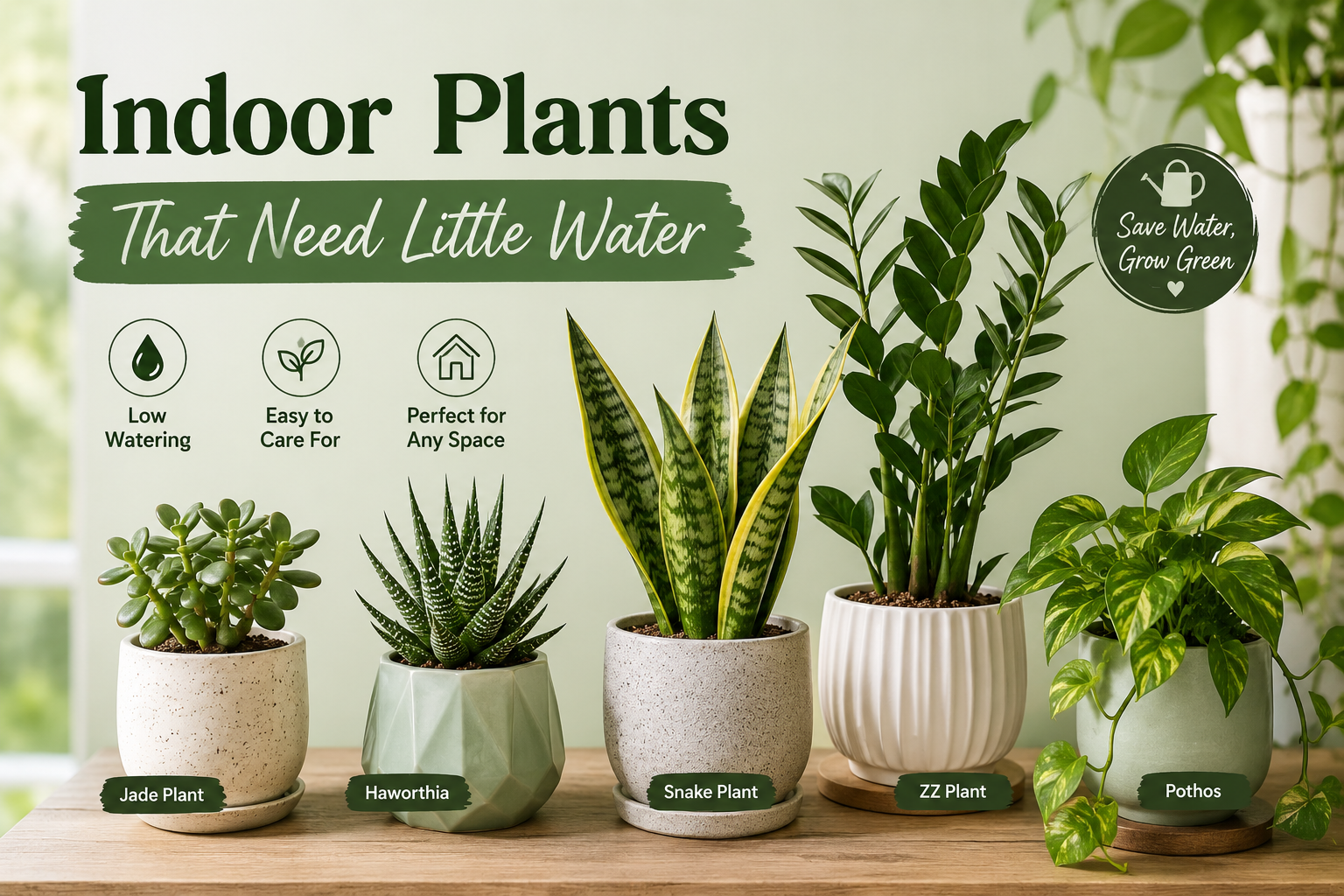
If you love greenery but often forget to reach for the watering can, choosing the right plant can make indoor gardening much easier. Indoor plants that need little water are especially useful for busy households, offices, apartments, frequent travelers, and beginners who want attractive greenery without constant maintenance.
The best indoor plants that need little water are not completely water-free. Instead, they can tolerate longer dry periods than thirsty tropical plants. Many store moisture in their thick leaves, stems, or underground structures, allowing them to handle occasional missed watering.
Another important point is that low water does not automatically mean low light. Some indoor plants that need little water thrive in bright sunshine, while others tolerate lower-light rooms. Understanding that difference will help you choose a plant that actually fits your home.
What Does “Low-Water” Mean for Indoor Plants?
Low-water Indoor Plants That Need Little Water are varieties that can remain healthy with less frequent watering than many common houseplants. Some are naturally adapted to dry environments, while others have thick foliage or water-storing roots and stems.
When choosing indoor plants that need little water, don’t rely on a fixed watering calendar. Soil type, pot size, temperature, humidity, season, and light all affect how quickly moisture disappears.
A plant sitting beside a sunny window may dry much faster than the same plant placed several feet away from a window. That’s why checking the soil before watering is generally more useful than automatically watering every seven days.
Quick Comparison of Indoor Plants That Need Little Water
| Plant | Water Needs | Light | Beginner Friendly | Best For |
| Snake Plant | Very Low | Low to Bright Indirect | Excellent | Beginners |
| ZZ Plant | Very Low | Low to Bright Indirect | Excellent | Offices |
| Ponytail Palm | Low | Bright | Very Good | Sunny Rooms |
| Aloe Vera | Very Low | Bright | Very Good | Windowsills |
| Jade Plant | Very Low | Bright | Very Good | Sunny Homes |
| Haworthia | Very Low | Bright Indirect | Very Good | Small Spaces |
| Cast Iron Plant | Low | Low to Medium | Excellent | Low-Light Rooms |
| Pothos | Low | Low to Bright Indirect | Excellent | Shelves |
| Spider Plant | Low | Bright Indirect | Excellent | Beginners |
| Cactus | Very Low | Bright | Very Good | Sunny Windows |
This table makes it easier to compare indoor plants that need little water before choosing one for your space.
15 Indoor Plants That Need Little Water
1. Snake Plant
Snake Plant is one of the easiest choices for anyone looking for indoor plants that need little water. Its upright, thick leaves store moisture, allowing the plant to tolerate dry periods.
It can adapt to low or bright indirect light, although growth is usually stronger with better light. Let the soil dry considerably before watering again.
Best for: Beginners, bedrooms, offices, and people who frequently forget watering.
2. ZZ Plant
ZZ Plant is another excellent low-maintenance option. Its underground rhizomes store water, which helps it cope with periods of dryness.
It also tolerates lower-light environments better than many drought-tolerant succulents. Avoid keeping the soil constantly wet because excessive moisture can cause serious root problems.
Best for: Offices, apartments, busy people, and darker rooms.
3. Ponytail Palm
Despite its name, Ponytail Palm is actually a drought-tolerant plant with a distinctive swollen trunk that stores water. This makes it one of the more interesting indoor plants that need little water.
Give it plenty of bright light and use a well-draining potting mix. Allow the soil to dry before watering.
Best for: Sunny rooms and people who want a tall statement plant.
4. Aloe Vera
Aloe Vera is a classic succulent that stores moisture in its thick leaves. It needs considerably less frequent watering than many leafy tropical houseplants.
The biggest requirement is bright light. A sunny windowsill can work particularly well, provided the plant is acclimated to the conditions.
Best for: Sunny kitchens, windowsills, and beginners.
5. Jade Plant
Jade Plant has thick, fleshy leaves designed to retain moisture. It prefers bright light and generally performs well when its soil is allowed to dry between waterings.
Avoid treating it like a tropical plant. Frequent watering can leave the roots sitting in excess moisture.
Best for: Bright rooms, desks near windows, and decorative containers.
6. Haworthia
Haworthia is a compact succulent that works especially well when space is limited. Its thick leaves hold moisture, so it doesn’t require constant watering.
Use a fast-draining growing medium and provide bright indirect light. Small pots make it a convenient choice for desks and shelves.
Best for: Small apartments, desks, shelves, and succulent collections.
7. Cast Iron Plant
Cast Iron Plant is particularly useful if your home doesn’t receive strong sunlight. It is known for tolerating lower-light conditions and generally doesn’t demand constant attention.
Although it is not as drought-tolerant as a cactus, it can handle periods between waterings better than many moisture-loving houseplants.
Best for: Low-light corners, hallways, and beginner plant owners.
8. Pothos
Pothos is famous for being adaptable and easy to grow. It isn’t as drought-resistant as Snake Plant or ZZ Plant, but it can tolerate some missed waterings when established properly.
Let the upper portion of the soil dry before watering again, and avoid keeping the roots constantly saturated.
Best for: Hanging baskets, shelves, offices, and beginners.
9. Spider Plant
Spider Plant is another forgiving option for people who want easy-care greenery. It prefers bright indirect light but can adapt to a range of indoor conditions.
Although it needs more moisture than a cactus or Snake Plant, it can tolerate occasional missed watering.
Best for: Hanging baskets, bedrooms, and beginner collections.
10. Cactus
Cacti are among the most obvious choices when discussing indoor plants that need little water. Their specialized structures allow them to survive in naturally dry environments.
The trade-off is light. Most indoor cacti need strong sunlight, so they are better suited to bright windows than dark corners.
Best for: Sunny windowsills and people who want extremely drought-tolerant Indoor Plants That Need Little Water.
11. Echeveria
Echeveria forms attractive rosettes from thick, fleshy leaves that store moisture. It is compact and visually striking, making it useful for small spaces.
Bright light is important for maintaining healthy growth and attractive shape. Water only when the growing medium has dried sufficiently.
Best for: Sunny desks, shelves, and small containers.
12. Kalanchoe
Kalanchoe is a succulent with thick leaves and, in many varieties, colorful flowers. Its water requirements are relatively modest when compared with moisture-loving houseplants.
Place it somewhere bright and use a well-draining pot. Too much moisture is generally more concerning than allowing the soil to become somewhat dry.
Best for: Bright rooms and people who want flowers with relatively easy care.
13. Dracaena
Dracaena varieties are popular indoor foliage Indoor Plants That Need Little Water because they can provide a larger vertical presence without demanding constant watering.
They generally prefer the soil to dry somewhat between waterings. Their exact light preference can vary by variety, so check the needs of your particular plant.
Best for: Offices, living rooms, and larger indoor spaces.
14. Peperomia
Peperomia is a compact option with attractive foliage and relatively modest watering needs. Many varieties have thick leaves that help them tolerate periods of dryness.
Because Peperomia often stays fairly compact, it is particularly useful for shelves, desks, and apartments where floor space is limited.
Best for: Desks, shelves, bedrooms, and small apartments.
15. Burro’s Tail
Burro’s Tail is a trailing succulent with plump leaves that retain moisture. It looks especially attractive in hanging planters where its stems can cascade downward.
Give it bright indirect light and allow the growing medium to dry properly between waterings.
Best for: Hanging planters, sunny rooms, and succulent enthusiasts.
Which Low-Water Plant Is Best for Your Home?
The best indoor plants that need little water depend on your environment rather than simply choosing the most drought-tolerant species.
Best for Beginners
Snake Plant and ZZ Plant are excellent starting points because both tolerate missed watering and a range of indoor conditions.
Best for Low Light
Snake Plant, ZZ Plant, and Cast Iron Plant are better choices when natural light is limited.
Remember that low light and low water are different requirements. A plant can tolerate dry soil but still need bright light to grow well.
Best Tall Indoor Plants That Need Little Water
If you want height, consider Ponytail Palm, Snake Plant, or suitable Dracaena varieties.
Ponytail Palm is especially attractive as a statement plant because of its unusual trunk and long foliage.
Best Large Indoor Plants That Need Little Water
For larger spaces, tall Snake Plants, Ponytail Palms, and Dracaena can create a stronger visual impact without requiring constant watering.
Best for Sunny Windows
Aloe Vera, Jade Plant, Cactus, and Echeveria are strong choices for bright areas.
Best for Small Spaces
Haworthia, Peperomia, Aloe Vera, and smaller succulents can fit comfortably on desks, shelves, or narrow windowsills.
Best for Frequent Travelers
Snake Plant and ZZ Plant are among the easiest choices for people who regularly spend time away from home.
However, even indoor plants that need little water should not be intentionally neglected for extremely long periods without considering their light, temperature, pot, and soil.
How Often Should You Water Indoor Plants That Need Little Water?
There is no universal watering schedule that works for every plant or home.
Instead of asking whether it has been exactly seven or fourteen days, check the soil. A plant receiving strong light may use water faster, while one in a cool, dim room may remain moist much longer.
Factors that influence watering include:
- Light exposure
- Room temperature
- Humidity
- Pot size
- Soil composition
- Drainage
- Season
- Plant size
- Root development
The goal isn’t to keep indoor plants that need little water completely dry. The goal is to give them appropriate moisture while allowing the soil to dry sufficiently between waterings.
How to Water Low-Water Indoor Plants Correctly
When your plant is ready for water, water the soil thoroughly rather than giving it tiny amounts every day.
Make sure the container has drainage holes so excess moisture can escape. If water collects in a decorative outer pot or saucer, empty it rather than allowing the roots to remain submerged.
For succulents and similar drought-tolerant varieties, fast-draining soil is particularly important.
A useful routine is simple: check the soil, water when appropriate, allow drainage, and check again later.
Why Overwatering Can Kill Low-Water Plants
One of the biggest mistakes beginners make with indoor plants that need little water is assuming that a small amount of water every few days is safer.
Constantly moist soil can reduce air around the roots and create conditions that encourage root problems.
Watch for:
- Yellowing leaves
- Mushy stems
- Soil that stays wet for a long time
- Unpleasant odors
- Fungus gnats
- Soft or dark roots
If the soil remains wet far longer than expected, look at the pot size, drainage, soil mix, and amount of light before simply changing your watering schedule.
Low Water Does Not Mean Low Light
This distinction is essential when choosing indoor plants that need little water.
Aloe Vera may need very little water but still require bright light. Cactus has extremely low watering needs but generally performs poorly in a dark room.
On the other hand, Snake Plant and ZZ Plant can combine relatively low watering needs with better tolerance of lower indoor light.
Think about both requirements before buying a plant.
Choosing the Right Soil and Pot
Good drainage is one of the foundations of successful care for indoor plants that need little water.
Choose containers with drainage holes whenever possible. For succulents, cacti, Aloe, Jade Plant, and Haworthia, a fast-draining growing medium is usually preferable.
Avoid placing a small plant in an unnecessarily huge pot. Extra soil can hold moisture around the roots for longer than expected.
Terracotta pots can also be useful for plants that prefer faster drying because the porous material can allow moisture to escape more readily than some nonporous containers.
Common Mistakes to Avoid
Even the easiest indoor plants that need little water can struggle when their basic needs are ignored.
Watering on a fixed calendar
Check the soil instead of automatically watering every Sunday.
Assuming low-water means no water
Drought-tolerant plants still need water to remain healthy.
Ignoring light
Choosing a low-water plant without considering its lighting requirements can lead to weak growth.
Using poorly draining soil
Water-retentive soil can be especially problematic for succulents and cacti.
Overwatering after forgetting
Don’t compensate for missed watering by repeatedly soaking the plant before it has actually dried.
Conclusion
The best indoor plants that need little water aren’t necessarily the plants that can survive the longest without attention. They’re the plants whose watering, light, soil, and size requirements match your home and lifestyle.
For beginners, Snake Plant and ZZ Plant are excellent starting points. For bright windows, Aloe Vera, Jade Plant, and Cactus are attractive choices. If you need a taller statement plant, Ponytail Palm or Dracaena can work well.
Most importantly, don’t confuse low-water care with neglect. Even indoor plants that need little water need appropriate light, good drainage, and careful watering. Choose the plant that fits your environment, check the soil before watering, and you’ll have a much better chance of keeping your indoor garden healthy.
Frequently Asked Questions
What indoor plant needs the least water?
Snake Plant, ZZ Plant, many cacti, Aloe Vera, and several succulents are among the strongest choices. Their water requirements are low because they can store moisture or tolerate dry conditions.
Which houseplants can go weeks without water?
Established Snake Plants, ZZ Plants, Ponytail Palms, and some succulents can tolerate extended dry periods. However, how long a plant can go without water depends on light, temperature, pot size, soil, and season.
What are plants that need very little water to survive called?
They are commonly described as drought-tolerant, drought-resistant, or low-water plants. Many succulents are included in this category because they have adaptations that help them conserve or store moisture.
Can low-water plants survive in low light?
Some can. Snake Plant, ZZ Plant, and Cast Iron Plant are better options for lower-light interiors. However, low water does not automatically mean low light, so always check the plant’s specific lighting needs.
How do I know when a low-water plant needs water?
Check the growing medium rather than relying only on a calendar. If the soil has dried to the level appropriate for that particular plant, it may be ready for watering. Also consider the plant’s leaves and overall condition.
Are succulents the only plants that need little water?
No. Succulents and cacti are well known for drought tolerance, but Snake Plant, ZZ Plant, Ponytail Palm, Cast Iron Plant, and several other foliage plants can also handle relatively infrequent watering.
Can I leave low-water plants alone while traveling?
Some can tolerate short trips better than thirsty houseplants. Snake Plant and ZZ Plant are particularly forgiving. Before leaving, check the soil, drainage, light, and temperature rather than simply giving every plant extra water.
You May Also Read: diy crafts with mason jars
